
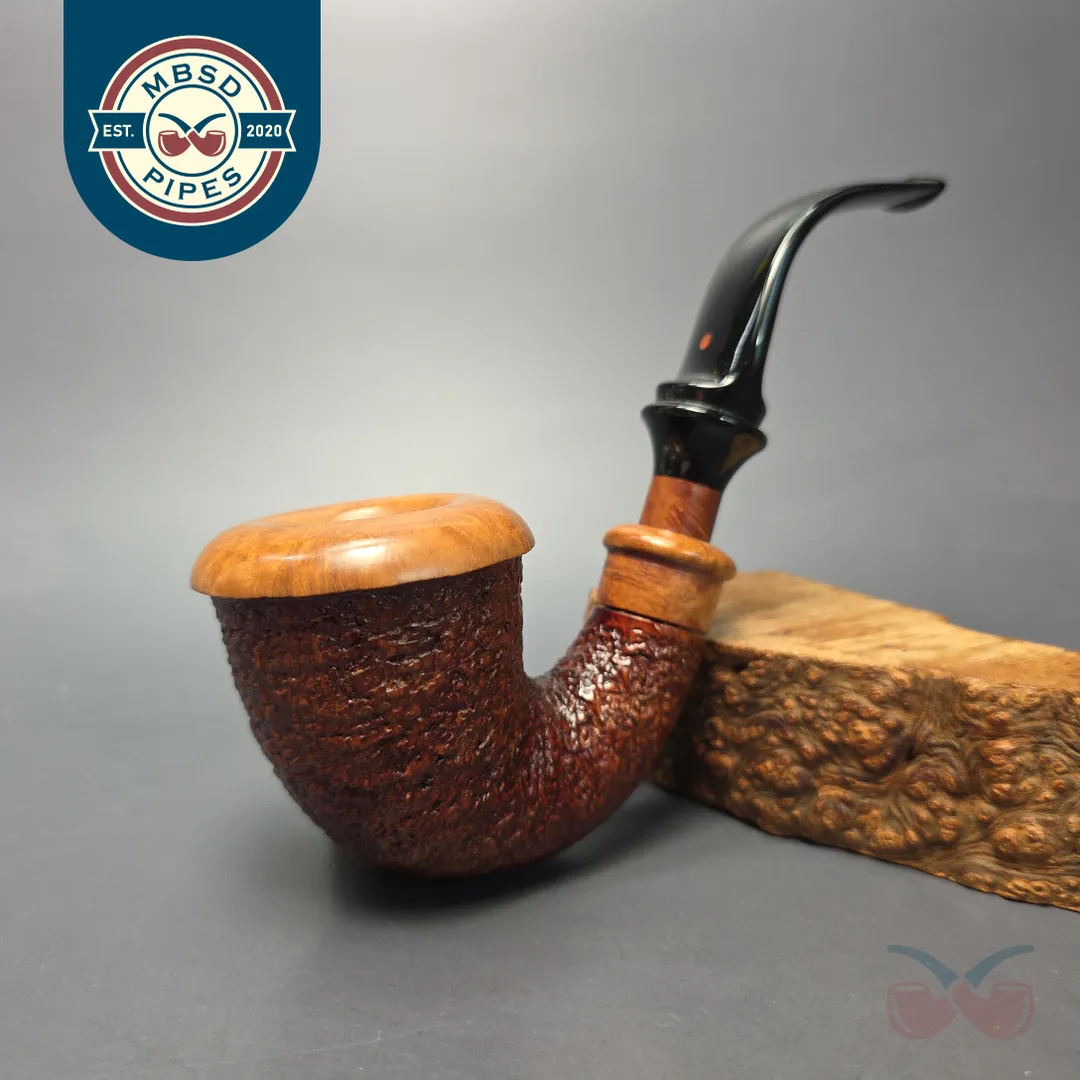
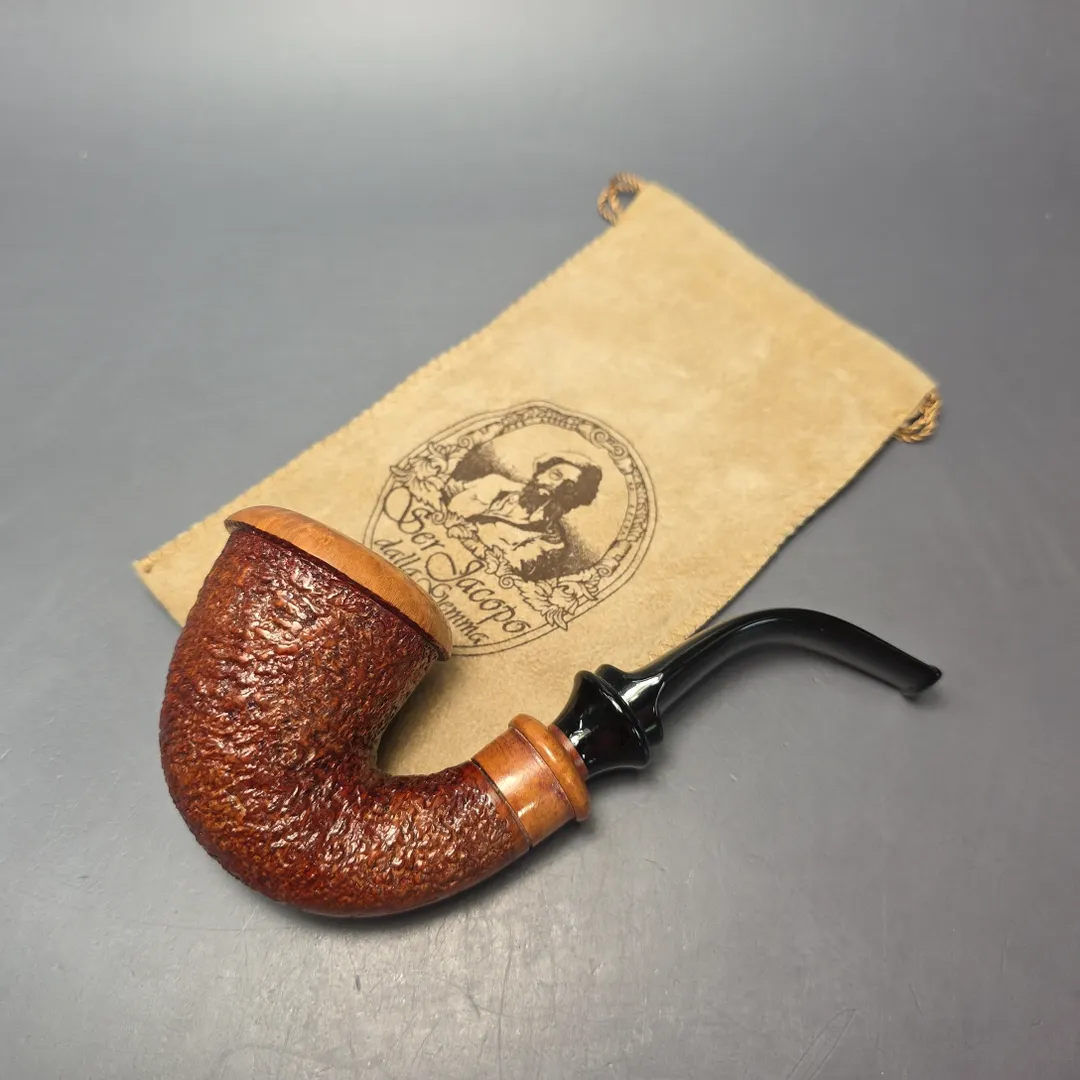
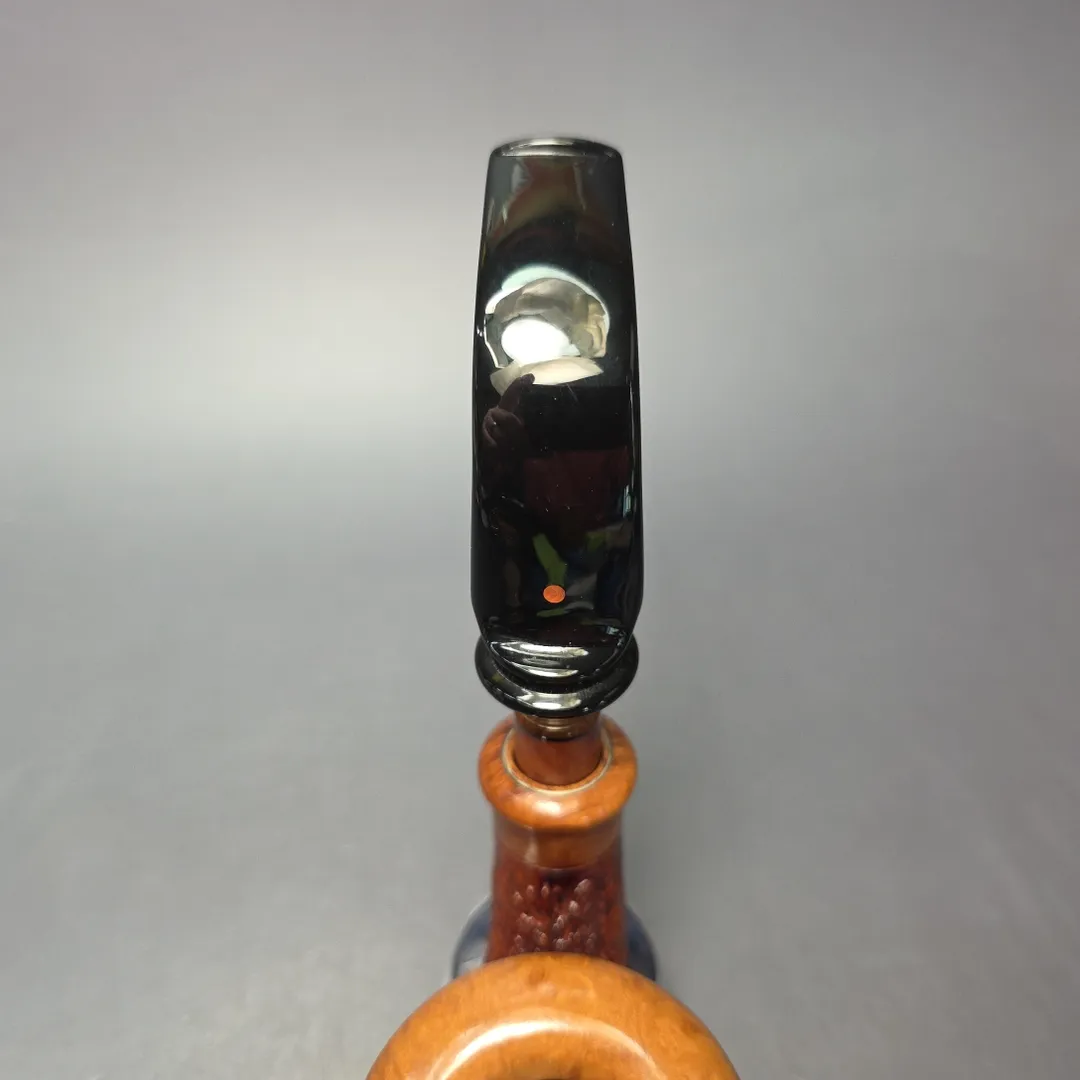
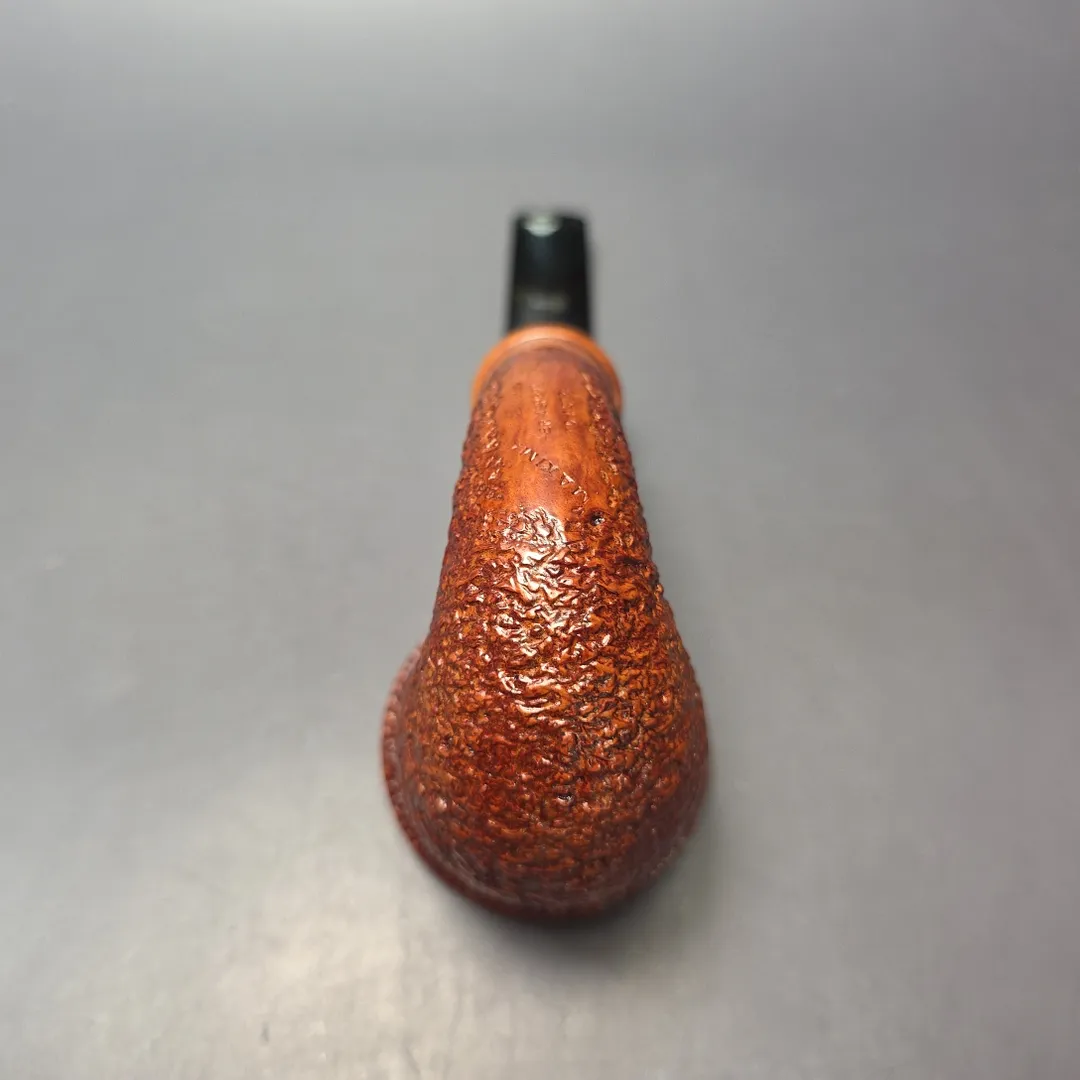
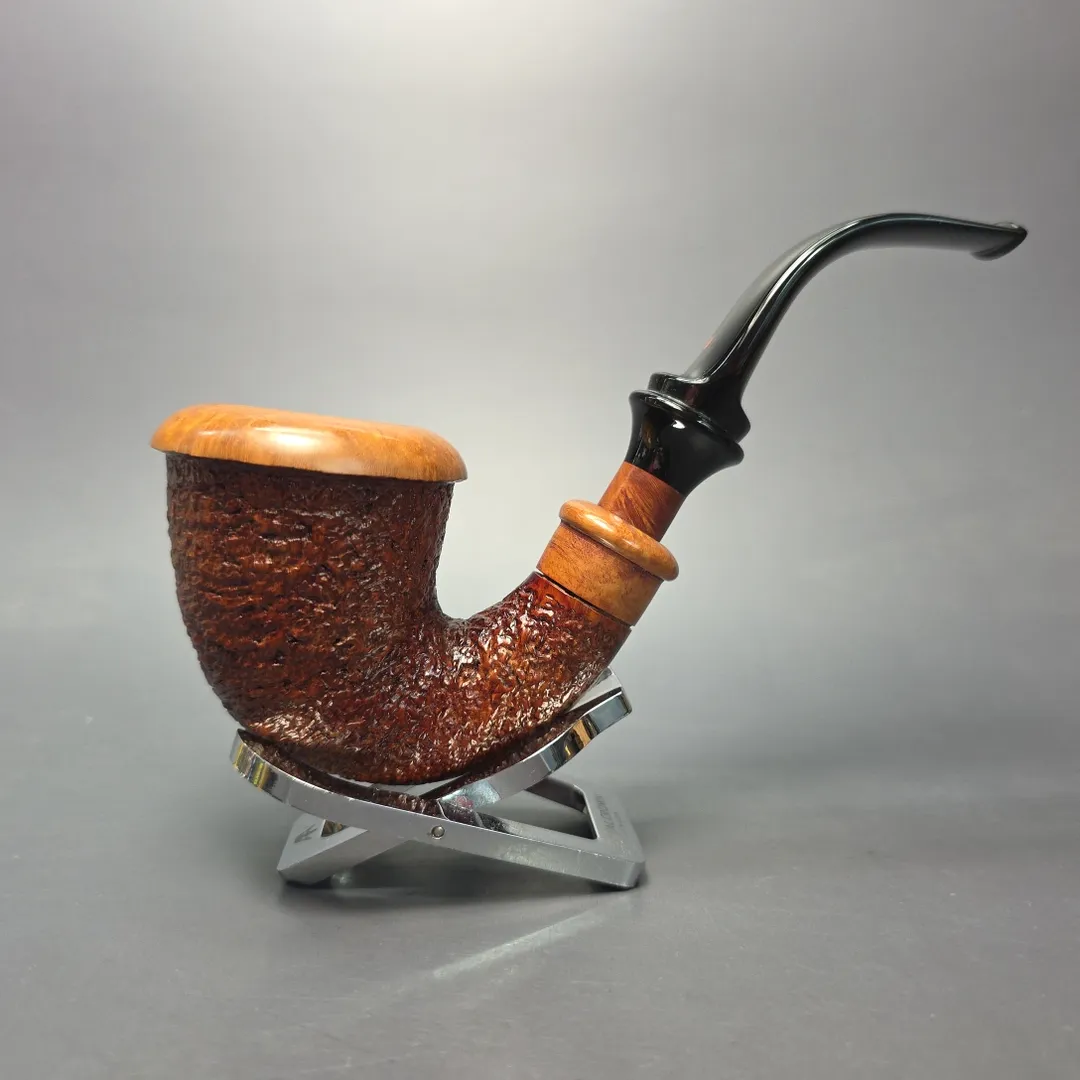
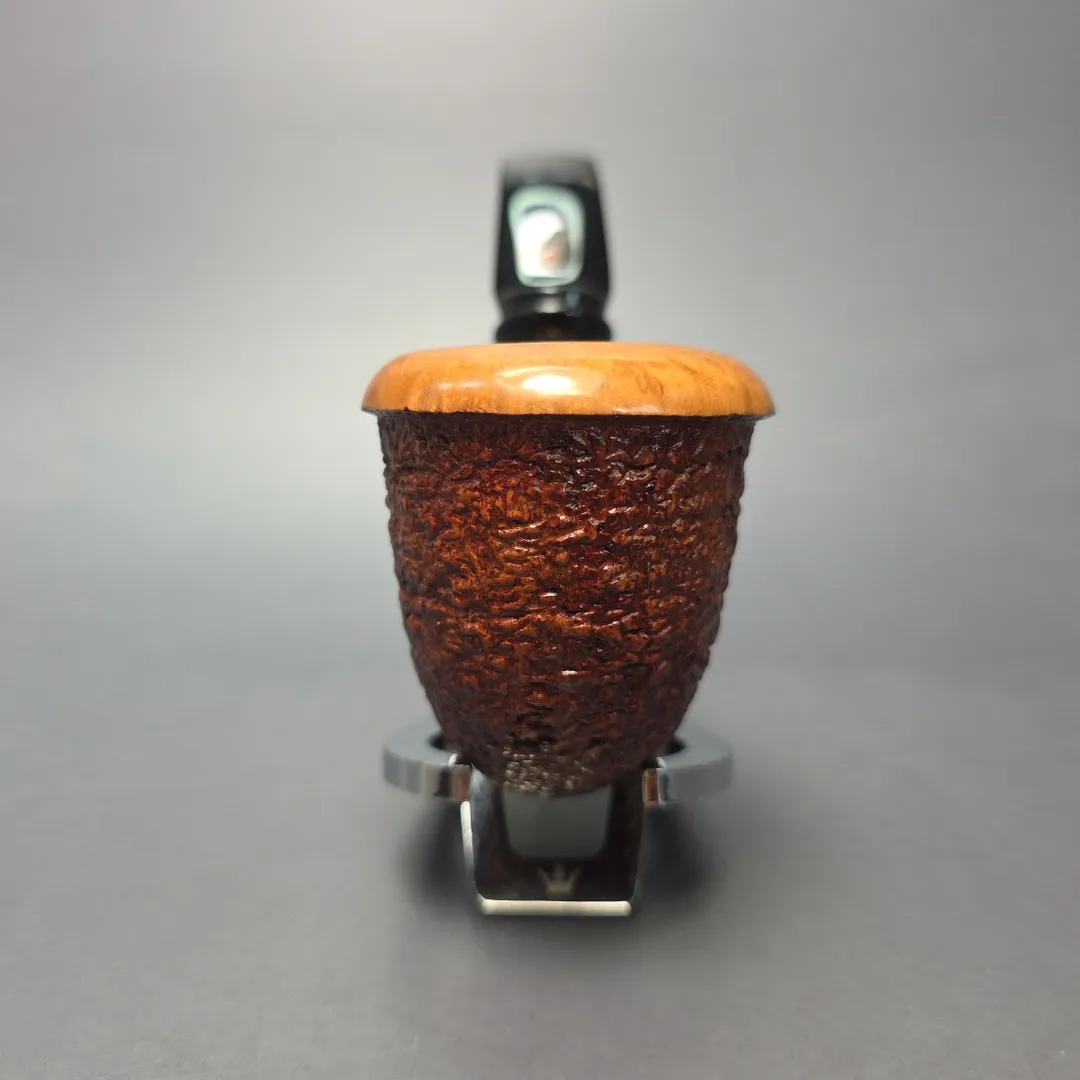
Ser Jacopo Pre-1994 Delecta Maxima R1 Partially Rusticated Calabash Estate Briar Pipe, Unsmoked
Out of stock





Ser Jacopo is one of the most famous contemporary examples of high-grade, workshop-made Italian pipes. It also belongs to a very special tradition in Italian pipe making, having been established by Giancarlo Guidi and Bruno Sordini after the two had left another great Italian workshop, Mastro de Paja. Together, Guidi and Sordini created a brand of pipes that reflected their Renaissance sensibilities – even the figurehead of Ser Jacopo happens to be taken from a painting of a nobleman from centuries past—one that would soon become esteemed for creating unique and beautiful tobacco pipes that smoked just as perfectly as they looked.
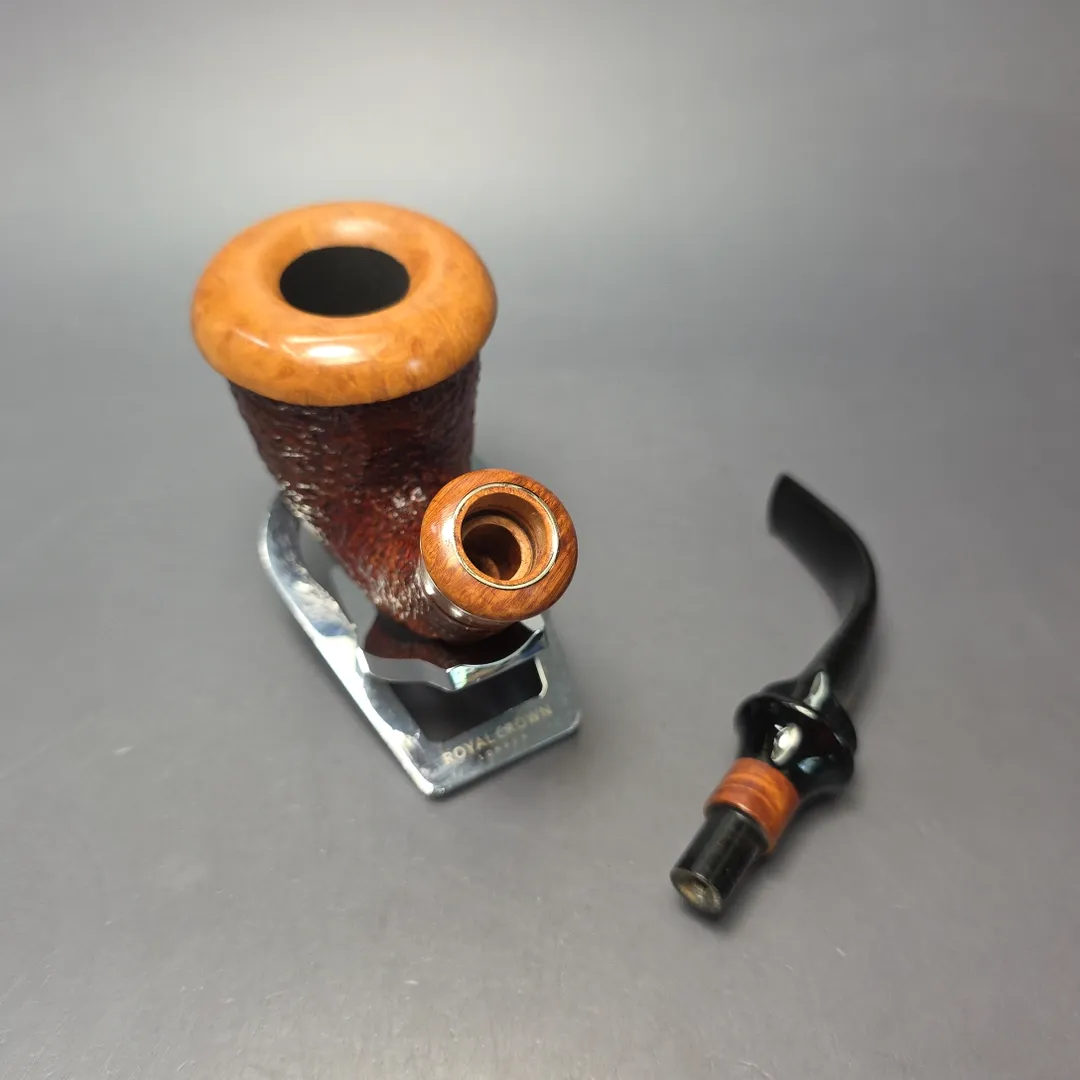
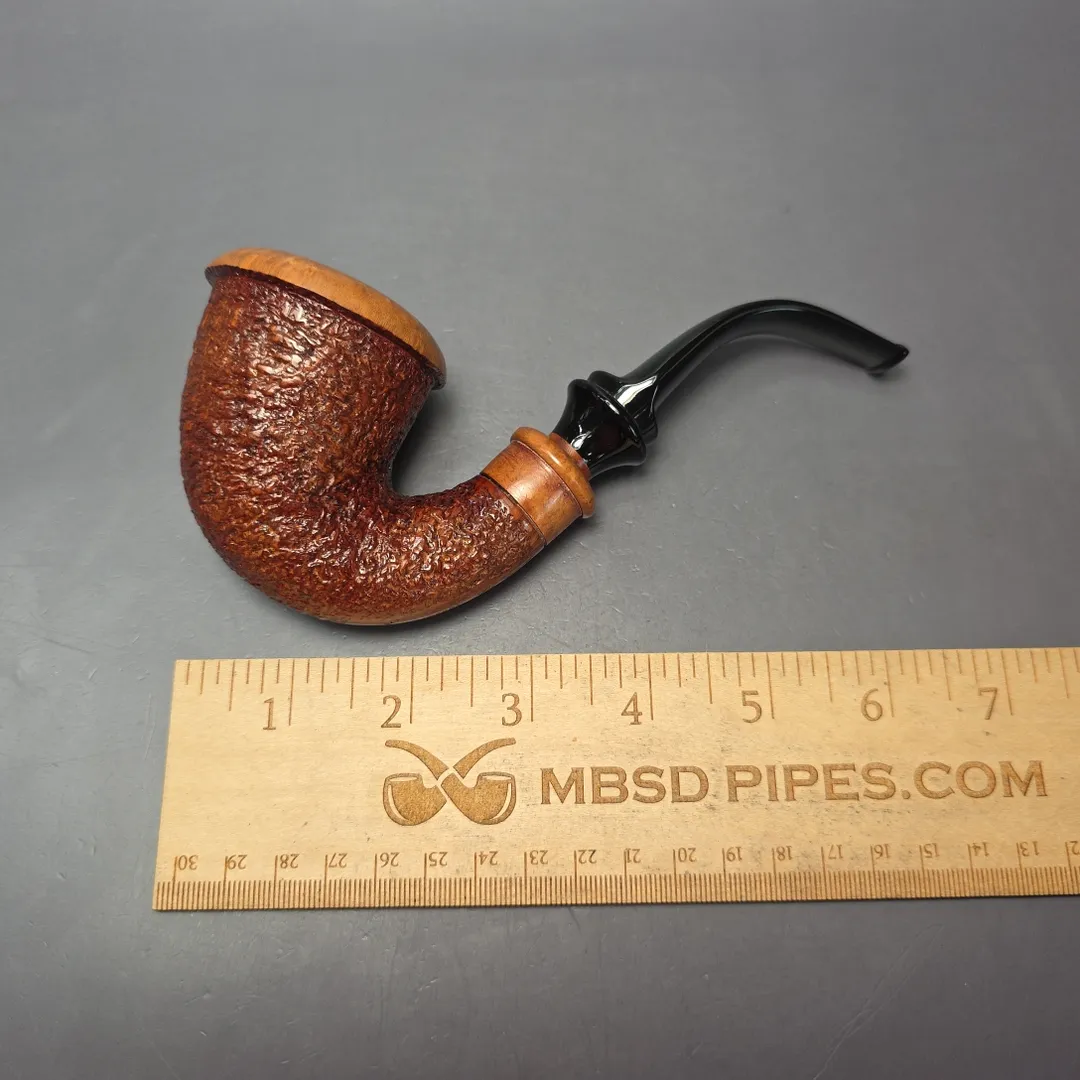
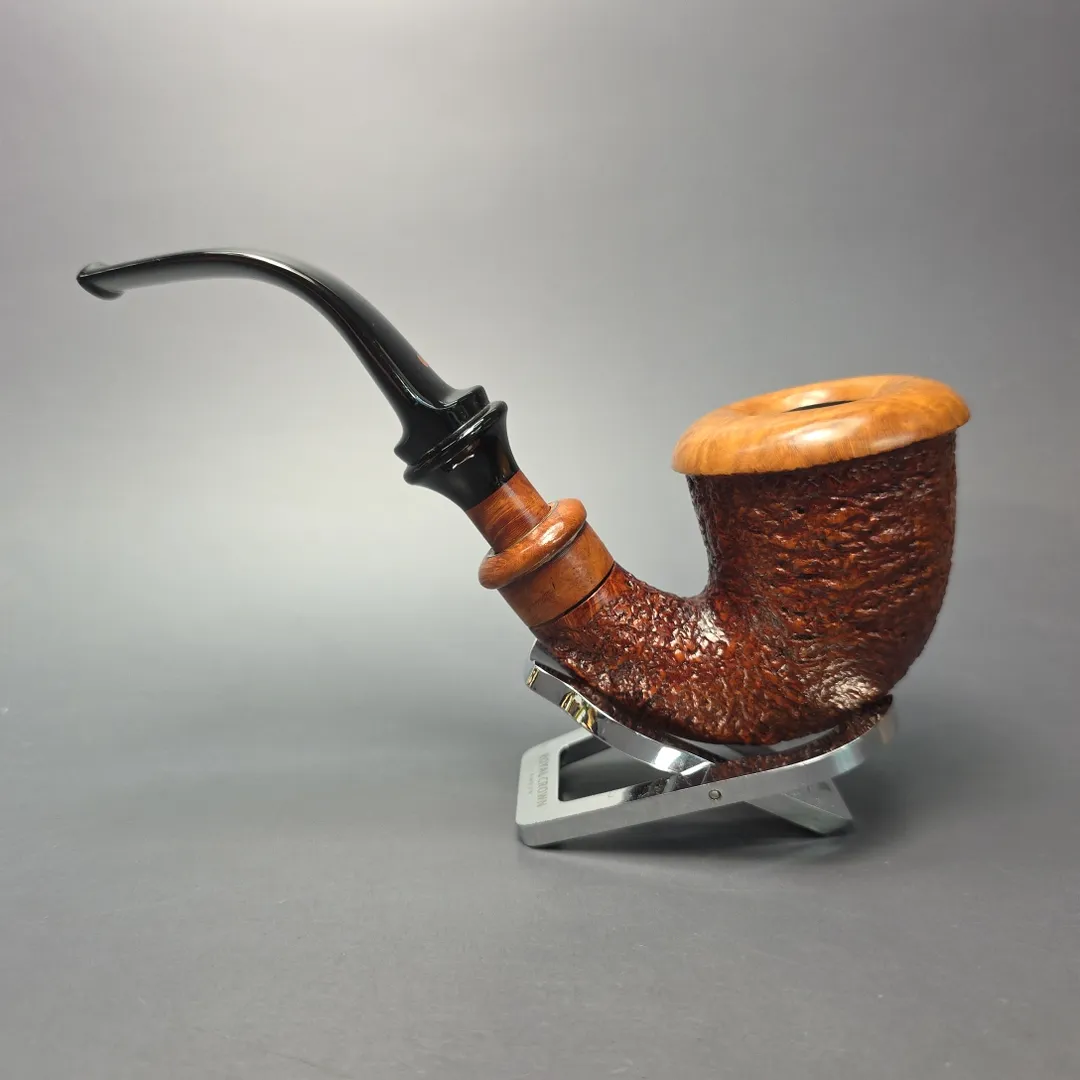
Ser Jacopo pipes generally don’t need descriptions. They look great and they smoke great. This one is no different; it’s a lovely, partially rusticated calabash rendition, which I’ve always found Ser Jacopo to excel at. But leaving it at that wouldn’t earn me my paycheck, so let’s go into the minutiae of Ser Jacopo nomenclature and history a little—including a little bit of broader, but very much relevant, political history.
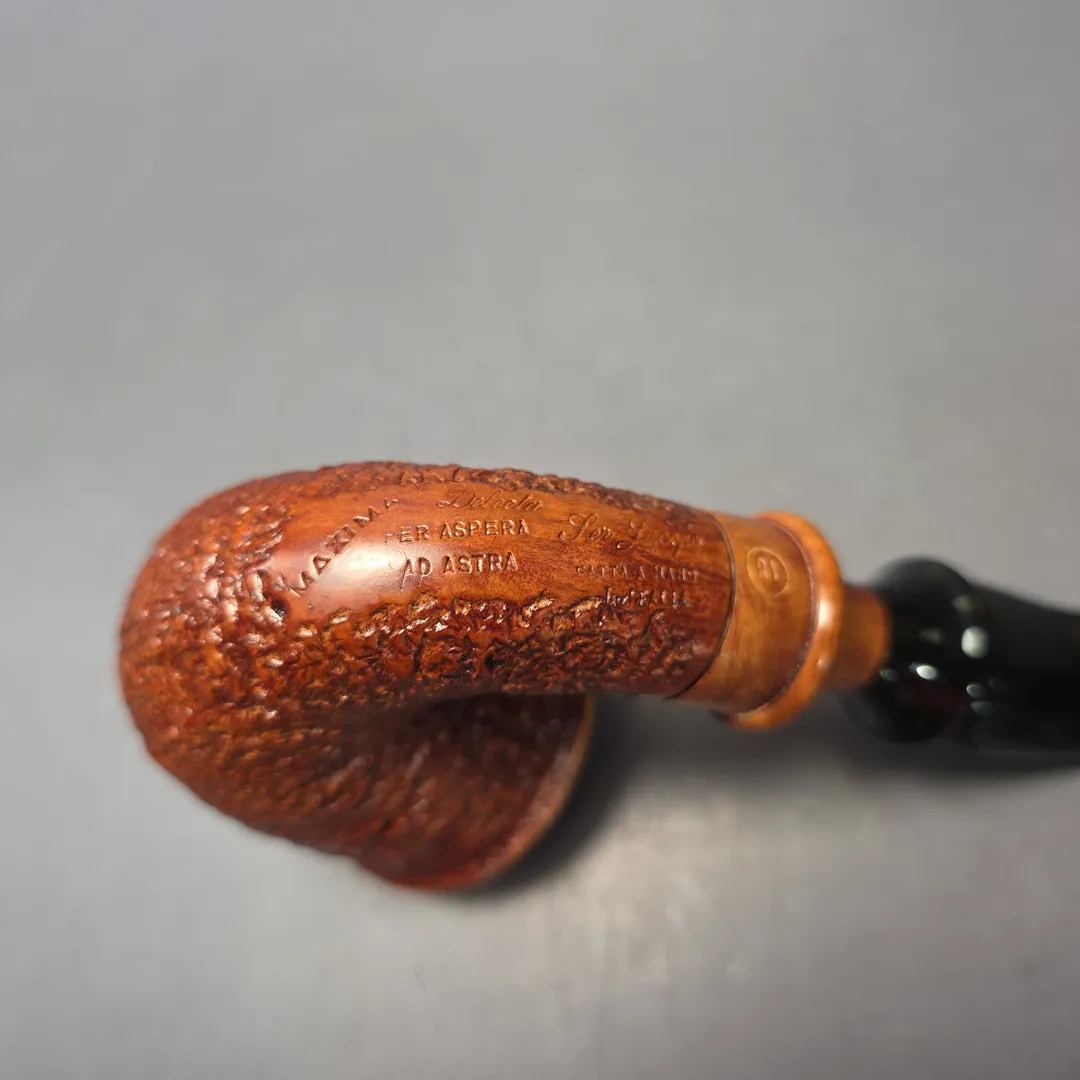
This pipe is somewhat larger than the average Ser Jacopo. For such pipes, Giancarlo Guidi introduced the “Maxima” designation, which, as with almost all Ser Jacopo nomenclature, is rooted in the lingua franca of the Renaissance: Latin. No points for guessing what “maxima” means in Latin, especially if you’re a speaker of a Romance language. Slightly less intuitive is this pipe’s “Delecta” designation, which refers not to a size or a shape, but a design element, that being a delightful faux spigot mount (there’s that Latin again), here carefully and ornately carved from briar itself.
What about political history? Well, there’s a reason that Ser Jacopo pipes today use a silver “J” stem inlay as a logo, rather than the light orange dot seen on this pipe. That reason boils down to environmental regulations. Ser Jacopo has gone through several different stem logos over the decades, from gold-mounted gemstones (now reserved exclusively for the Gem Series) to red plexiglass (now reserved exclusively for certain lower end, but by no means “low-end,” series, like the La Fuma and Modica). Between the mid-1980s and the mid-1990s, however, a species of Italian sea coral was used, which has its own history within other luxury goods, like jewelry. But sea coral is a living organism (at least, before it ends up on the mouthpiece of a pipe), one that is both highly desirable for human purposes and a common casualty of dredge fishing. In order to prevent the wholesale destruction of its coral populations, Italy introduced environmental protections regarding its harvesting and associated fishing practices in the late 1980s. In 1994, the European Union as a whole followed suit. The sea coral Ser Jacopo used for its mouthpiece logos fell under those protections, which led to the workshop exploring non-sea coral workarounds for a few years (this is where the red plexiglass of the Modica and La Fuma first made its appearance), before a silver “J” was finally adopted in its place. A pipe like this one will thus have been made in the early 1990s at the latest, and could even be from the previous decade, as while the year of the EU-wide legislation is well documented, the timing of the Ser Jacopo switch is not.
Why does this matter? Some people prefer the older Ser Jacopo pipes to newer ones, some people like the coral dot inlay (myself included), and others simply like having a rough window as to when their pipe was made.
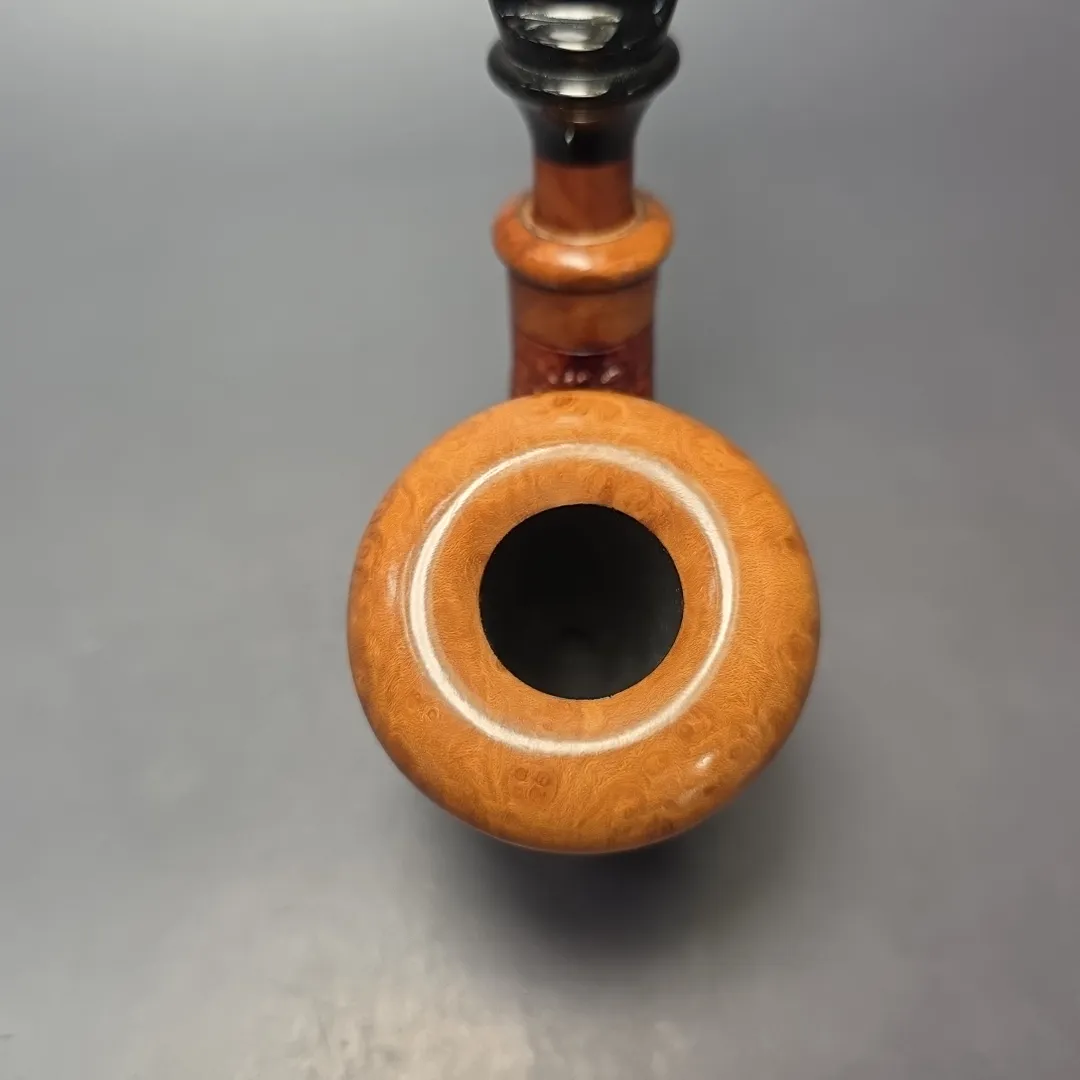
This pipe is completely unsmoked, with an original bowl coating, and comes with its original sleeve.
Details:
Length: 6.3″ / 160.0mm
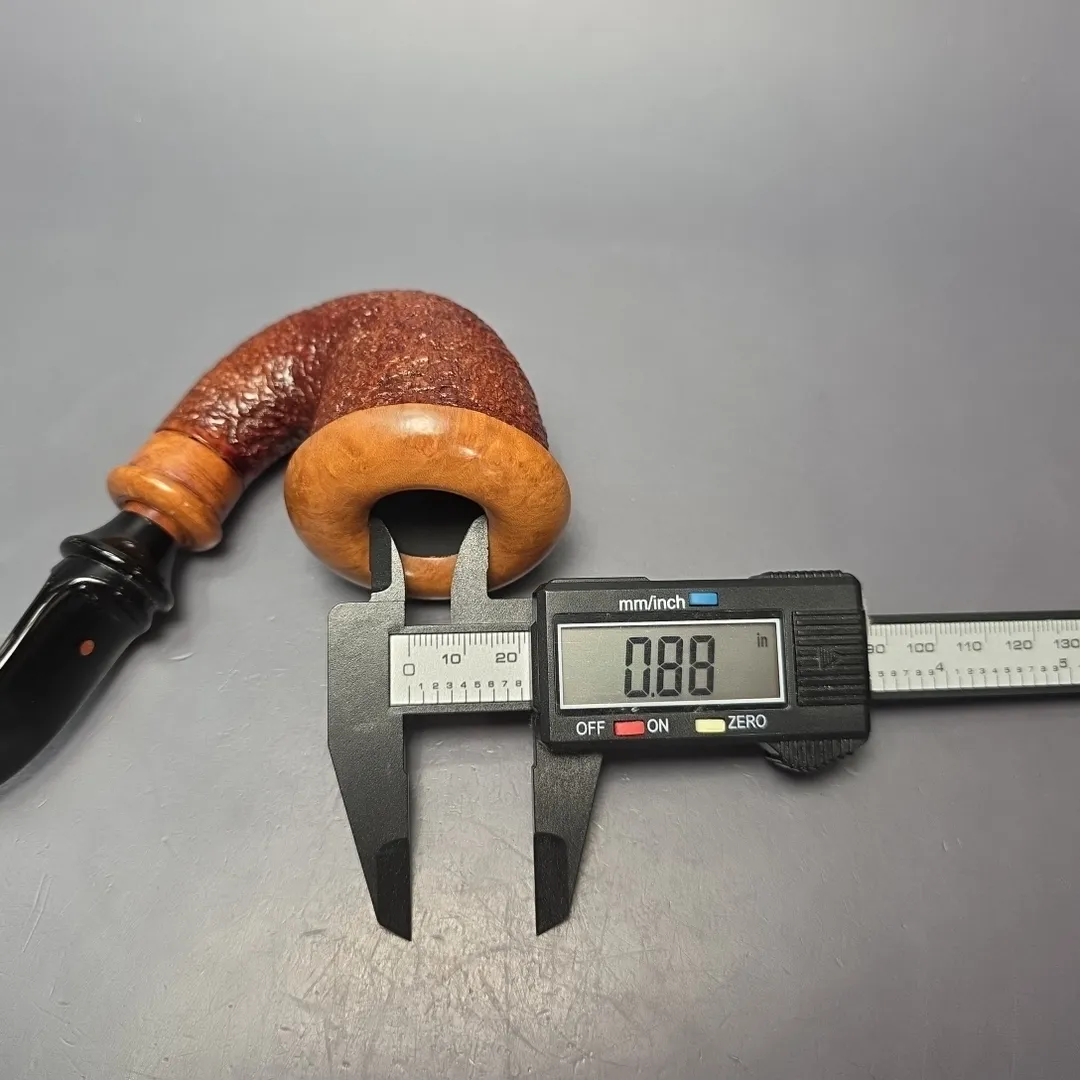
Bowl Width: 0.88 / 22.35mm
Bowl Depth: 1.92″ / 48.76mm
Weight: 3.2oz / 92g
| Weight | 15 oz |
|---|
| Condition | Used |
|---|---|
| Notes | Unsmoked estate. |


