
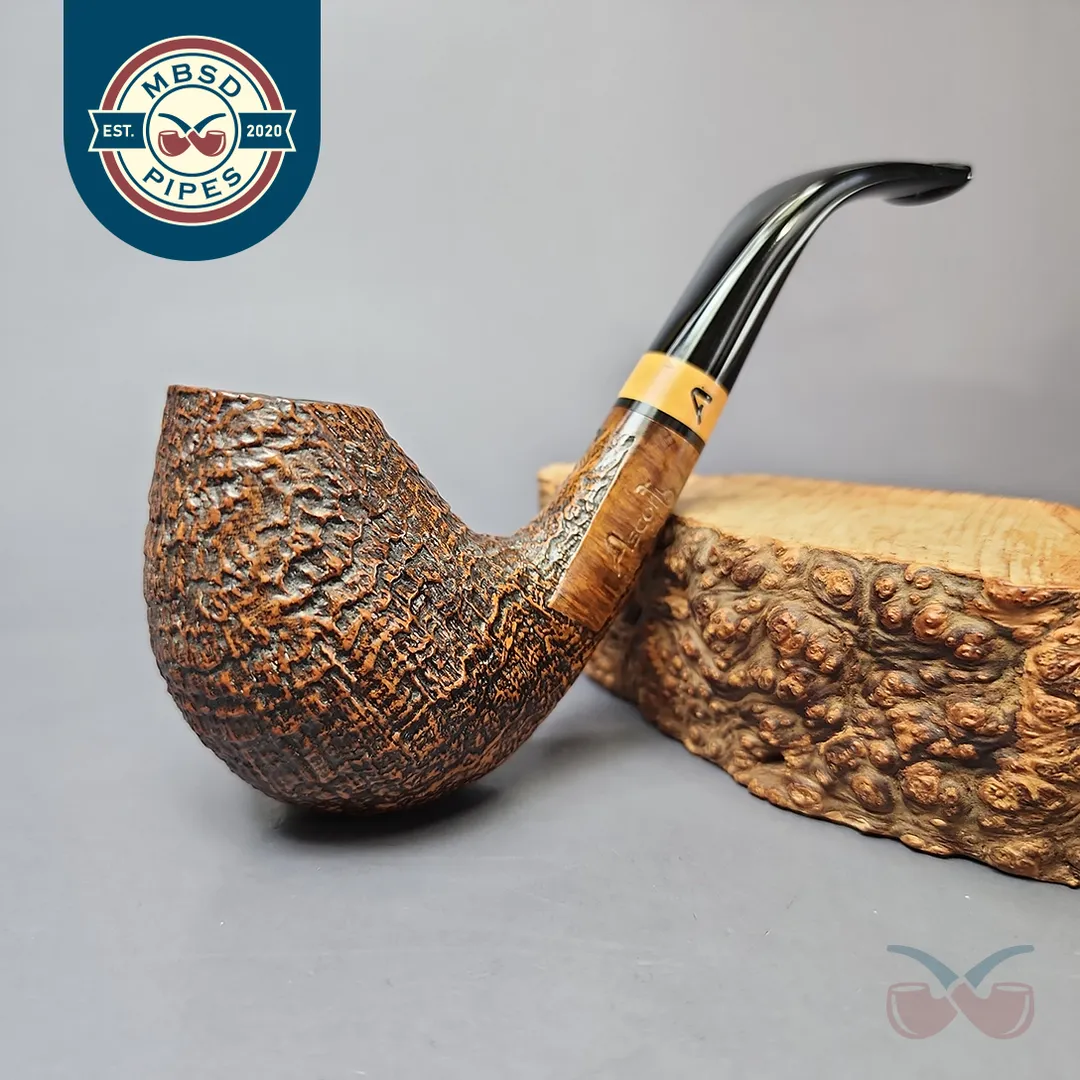
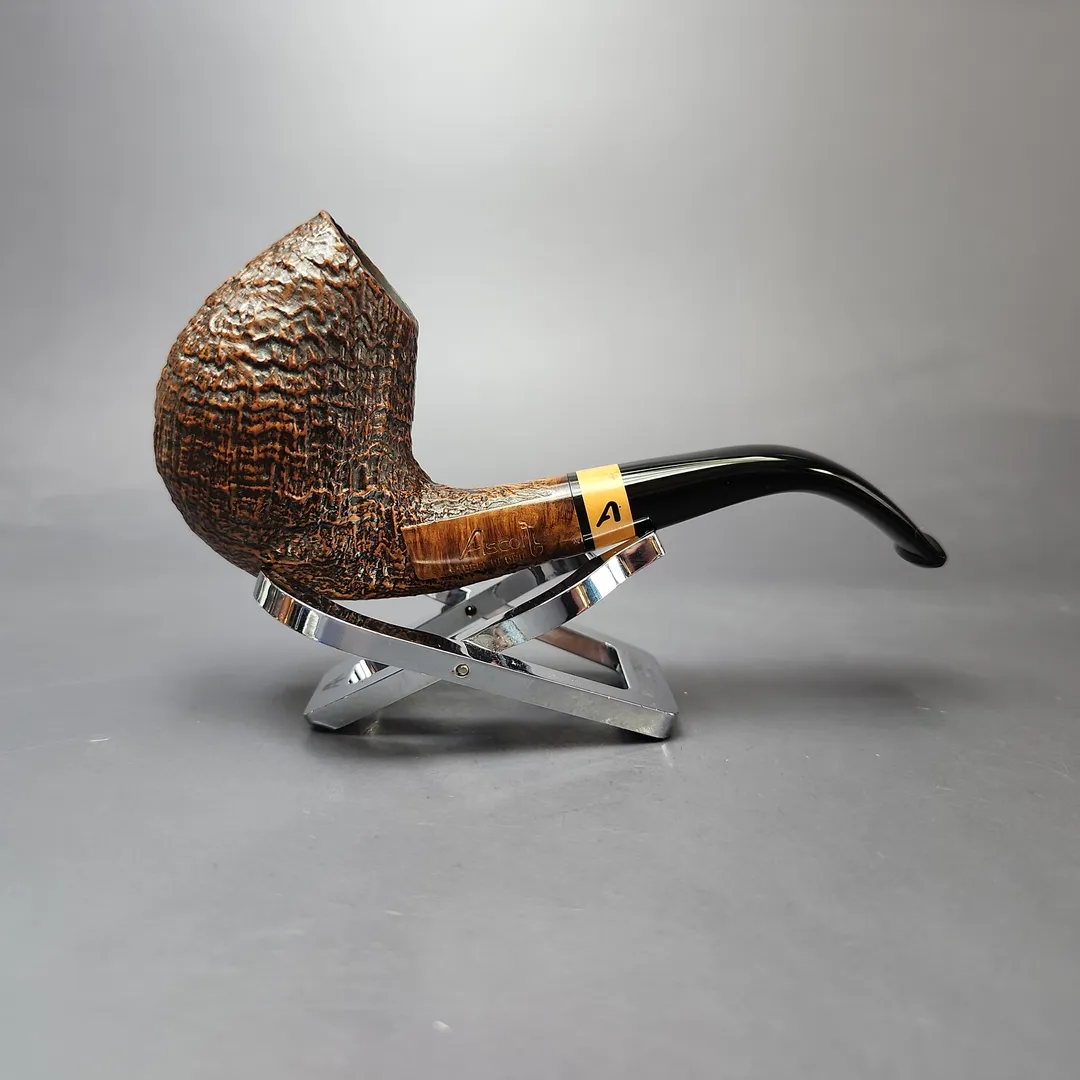
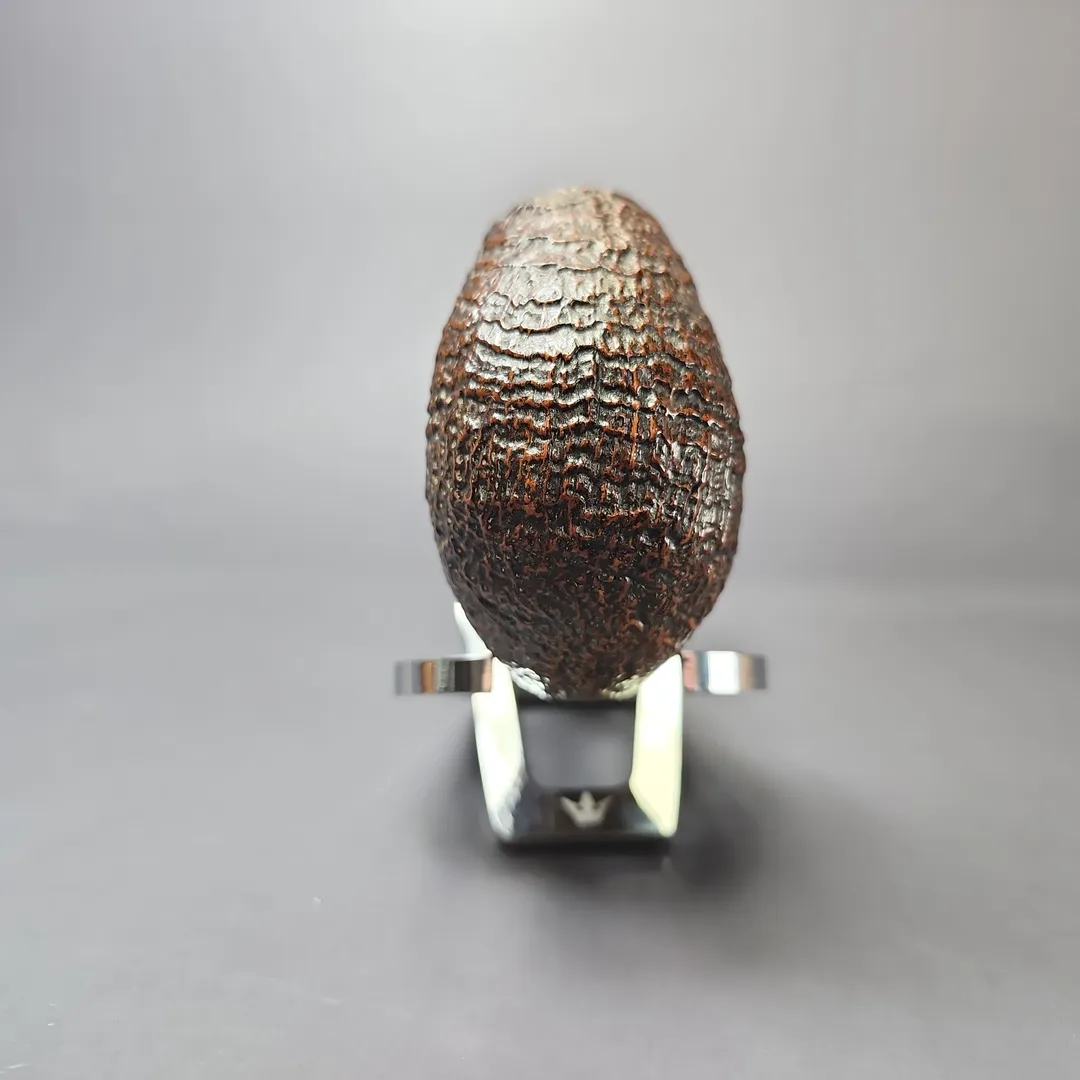
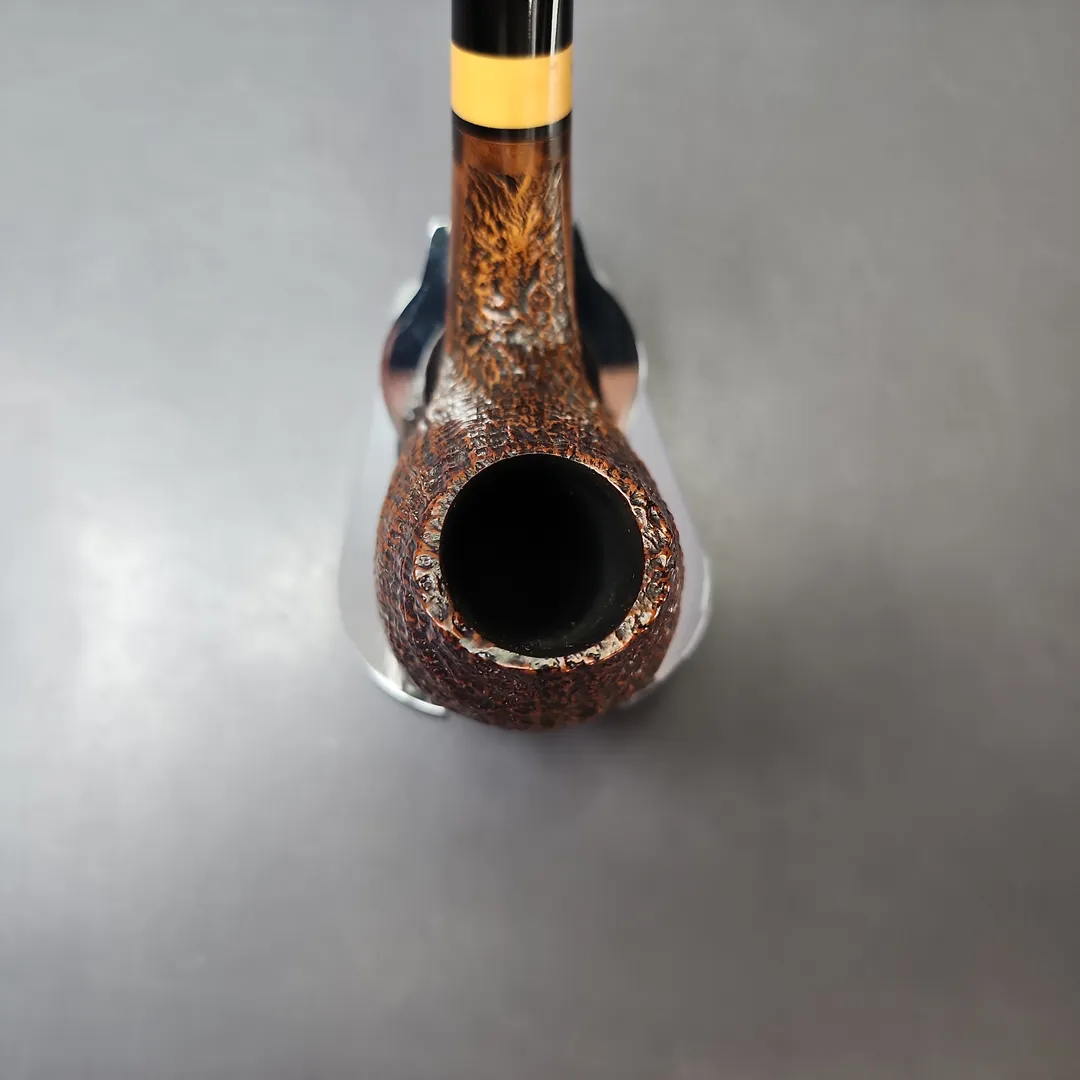
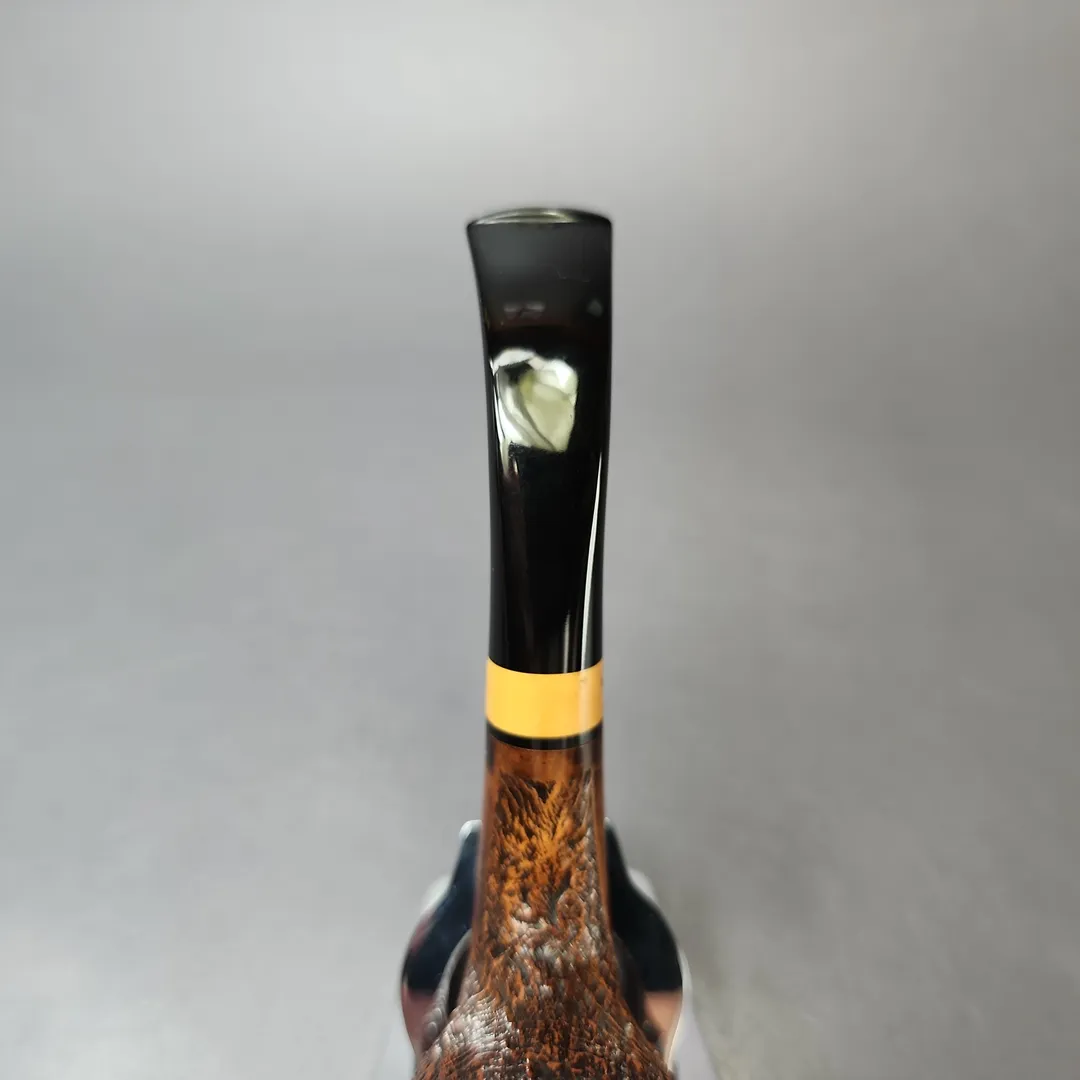
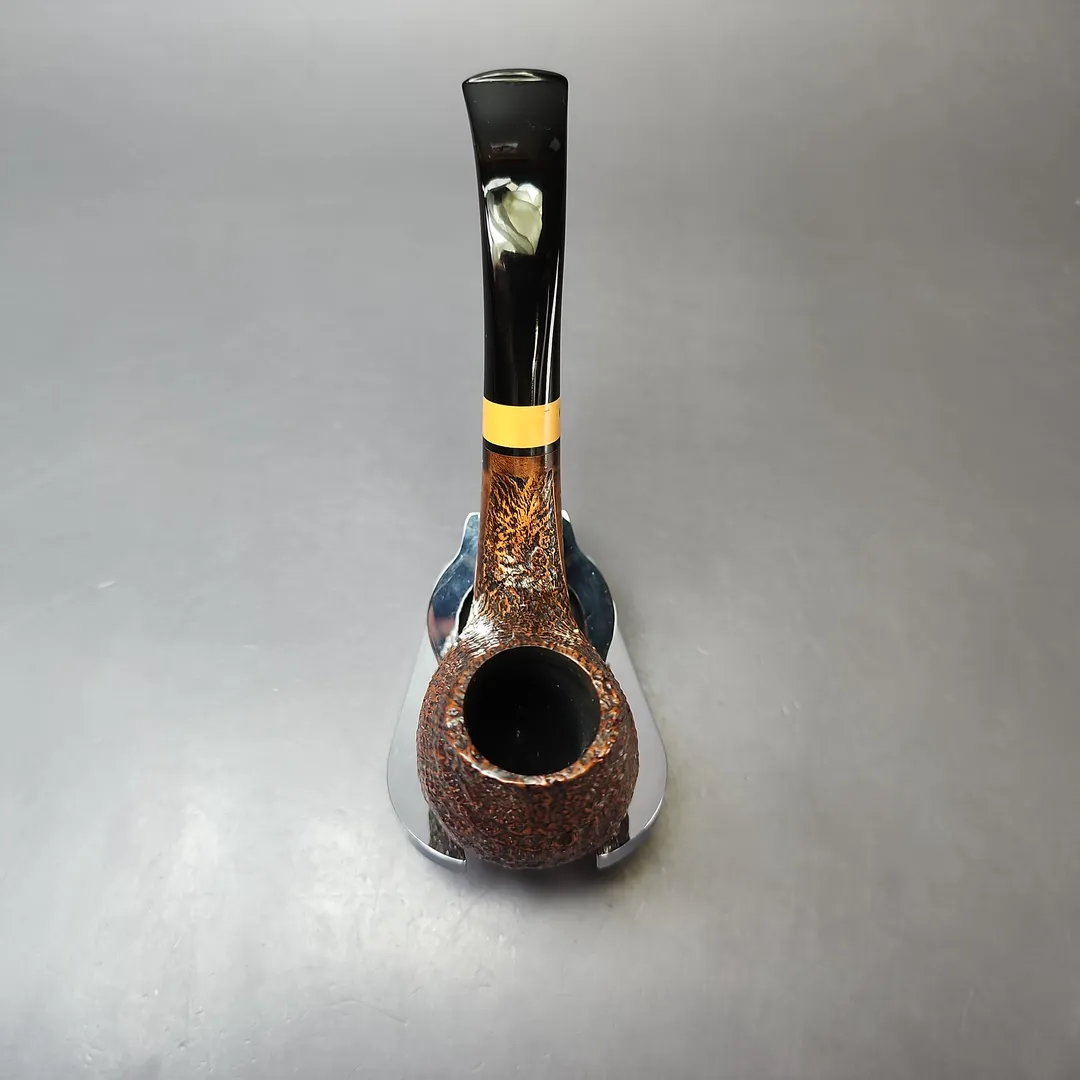
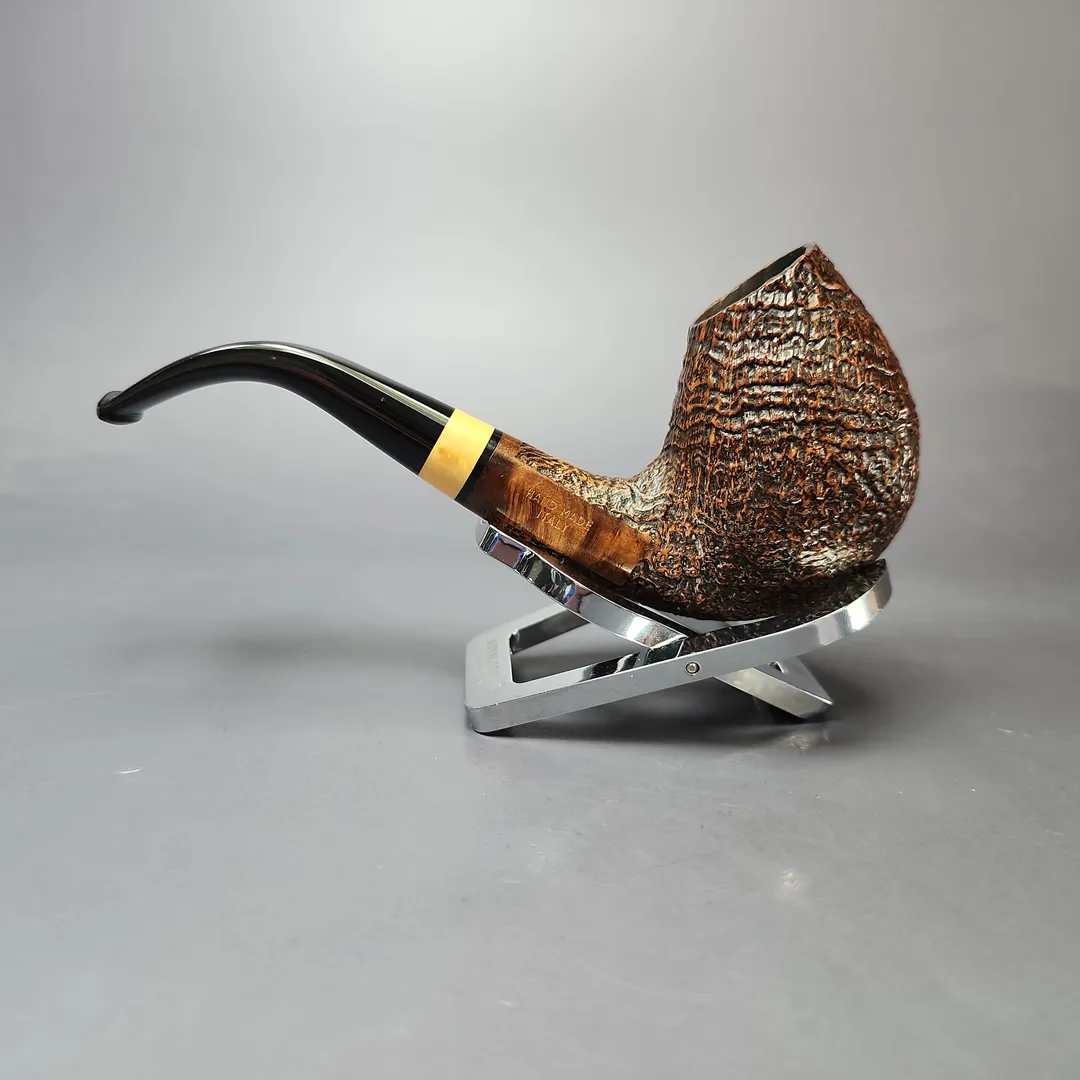
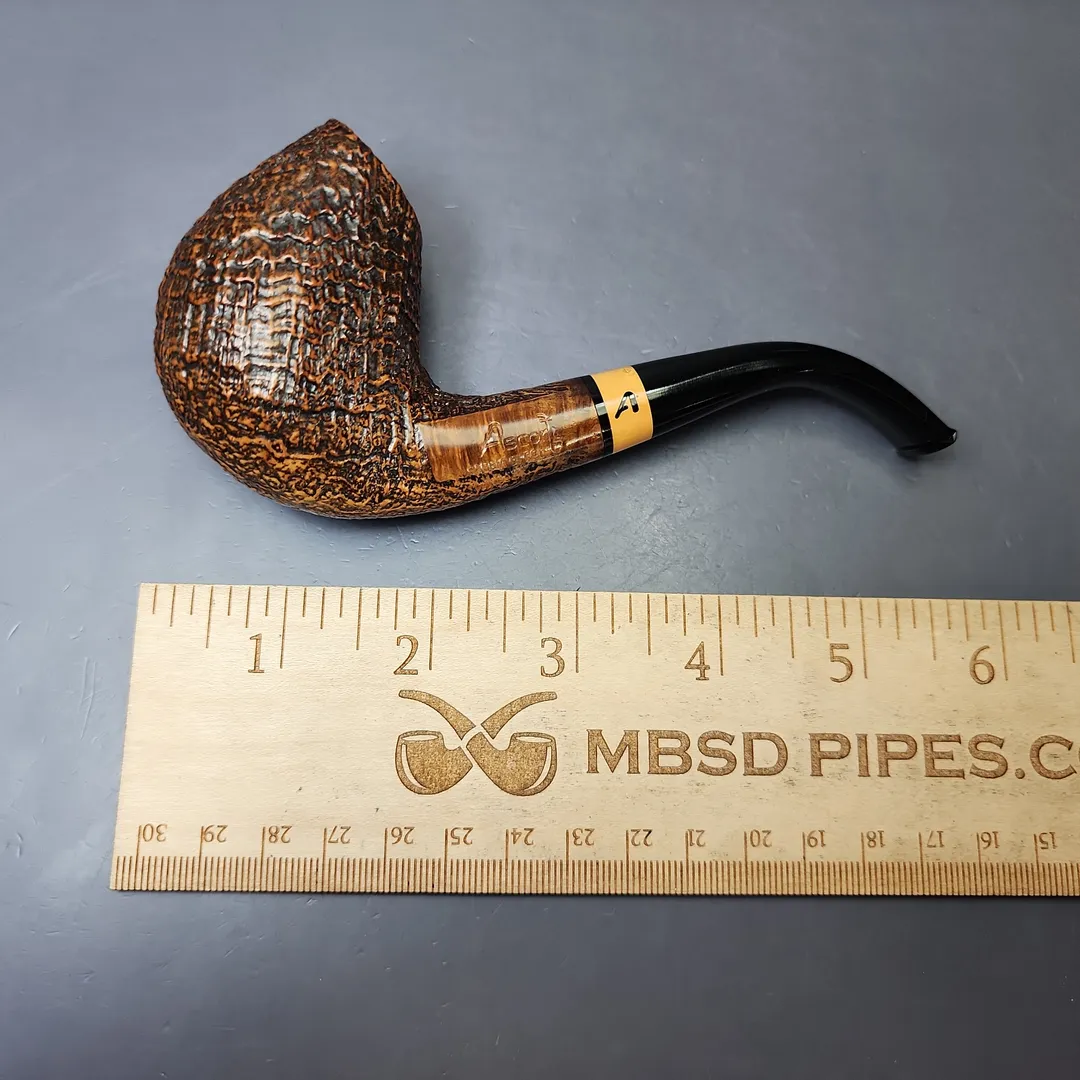
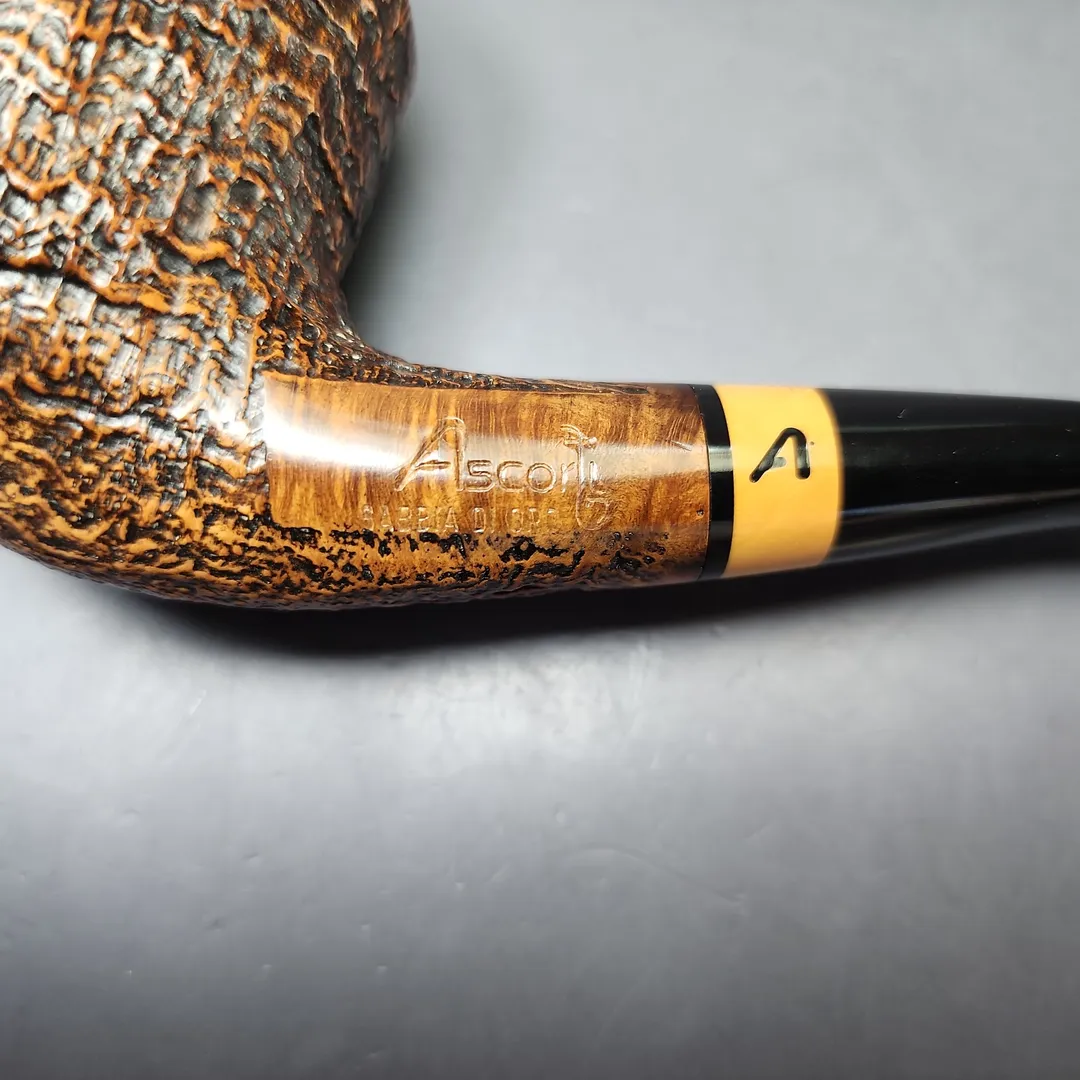
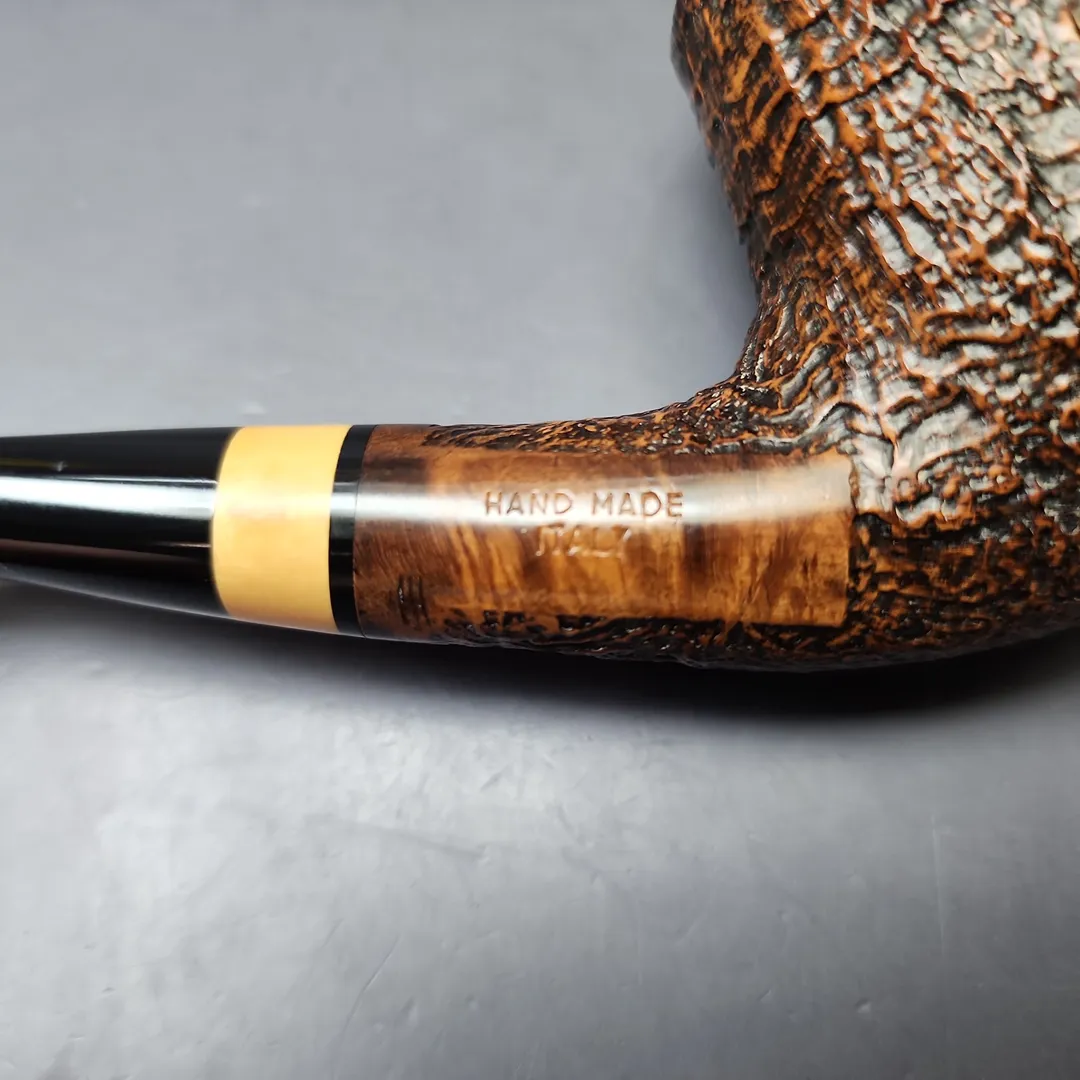
Ascorti Sabbia Di Oro Sandblasted Egg w/ Boxwood Estate Briar Pipe, Unsmoked
Out of stock





Ascorti belongs to a historic lineage in Italian artisan pipe-making. Guiseppe “Peppino” Ascorti was first employed as a pipe-maker in the 1950s, in Carlo Scotti’s Castello workshop in Cantu. There he met Luigi Radice, and in the 1960s the two decided to leave Castello to create their own pipe-making workshop, under the name “Caminetto.” At the end of the 1970s, Guiseppe Ascorti and Luigi Radice left Caminetto and once more decided to start new ventures. Luigi Radice founded the Radice pipe workshop, and Guiseppe’s son Roberto Ascorti, who had also worked in the Caminetto workshop since he was a child, decided to create a workshop under his own name. Roberto was joined not only by his father, but also many of the talented craftsmen who had formerly worked for Caminetto. In 1980, the Ascorti workshop was born.
Back in the early days of Caminetto, Luigi Radice and Guiseppe Ascorti created the Sable D’Or, or “golden sable” in English. Though relatively few Sable D’Or pipes were produced compared to other Caminetto lines, like the Business, it was, nonetheless, a flagship sandblast finish used by the workshop. Not long after the original Caminetto partnership was dissolved at the end of the 1970s, both Radice and Ascorti went their separate ways and, oddly enough, both began making sandblasted pipes with far greater frequency. Radice’s sandblasts were represented by the Silk Cut series, which typically employed deep contrast finishes to accentuate their grain patterns. Ascorti, on the other hand, opted for a far more traditional approach, typically focused on deep, ring grain reliefs under a more classical, golden brown top-coat. In other words, Ascorti’s Sabbia D’Oro (English: “golden sand”) approach to sandblasted pipes was closer to Caminetto than Radice’s was. Thus it’s quite appropriate that the Ascorti family chose a more evocative name for their Caminetto-adjacent sandblasts, especially considering the great amount of overlap between the early Caminetto and the aeshetics of Ascorti. As for shaping, on the other hand, that’s where things get a little different. Though the Ascorti have, in the past, recreated some of Caminetto’s classic shapes as part of commemorative, limited releases, neither Guiseppe Ascorti nor Luigi Radice were ever especially fond of using shape charts, and it appears that their use at Caminetto was one of the reasons that project—undertaken alongside another managing partner—collapsed. The birth of Ascorti pipes gave the family far more freedom to explore novel forms for their work, including incorporating influences from elsewhere. There’s a definite Danish streak to this tall bent egg from Ascorti, for example, which would have been far less possible back in Caminetto’s heyday.
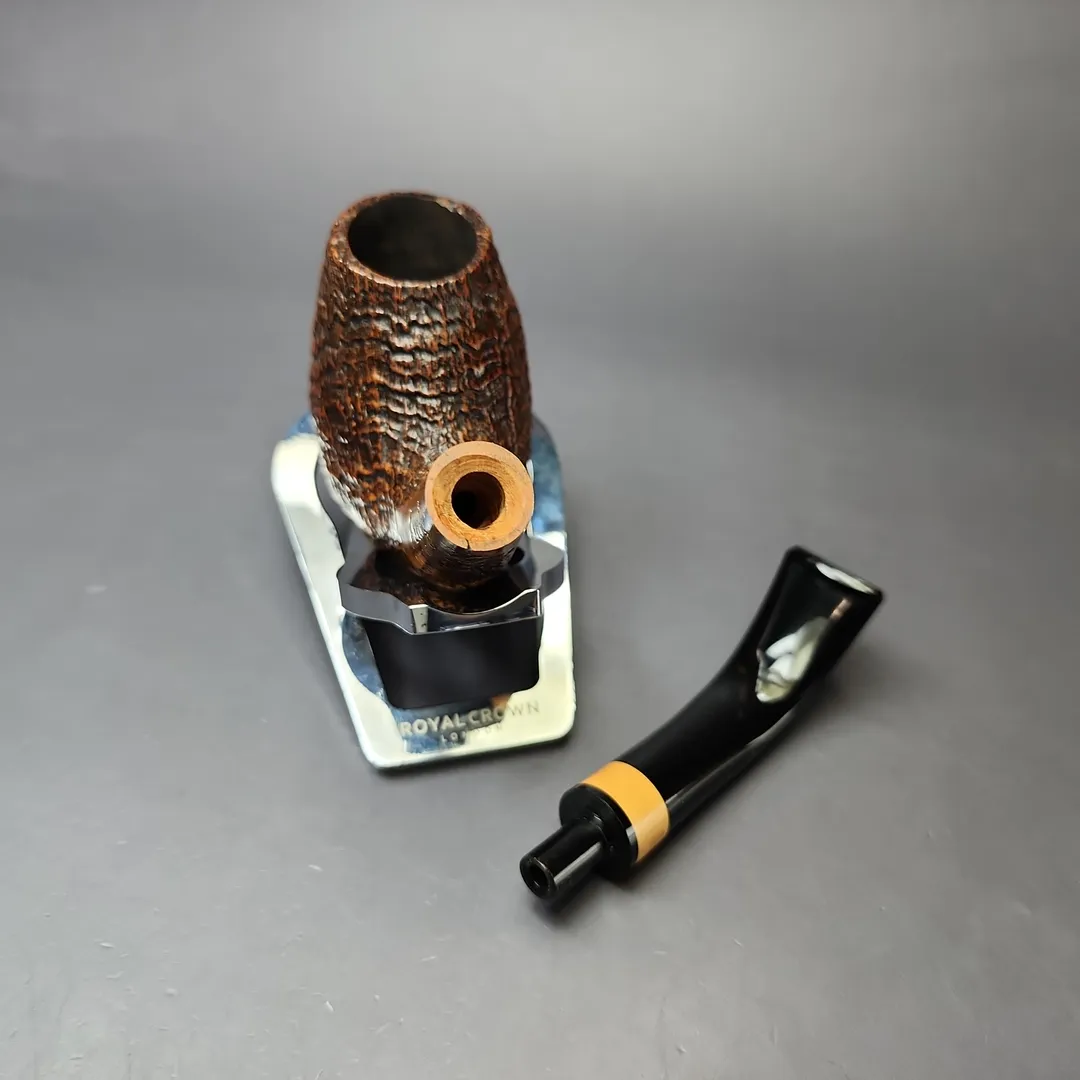
This pipe is completely unsmoked, with an original bowl coating. There is a small, natural flaw in the outside of the briar at the pipe’s shank end. It’s cosmetic and hasn’t affected the structural integrity of the bowl, though I’ve reduced the price a little just to factor it in.
Details:
Length: 5.7″ / 144.7mm
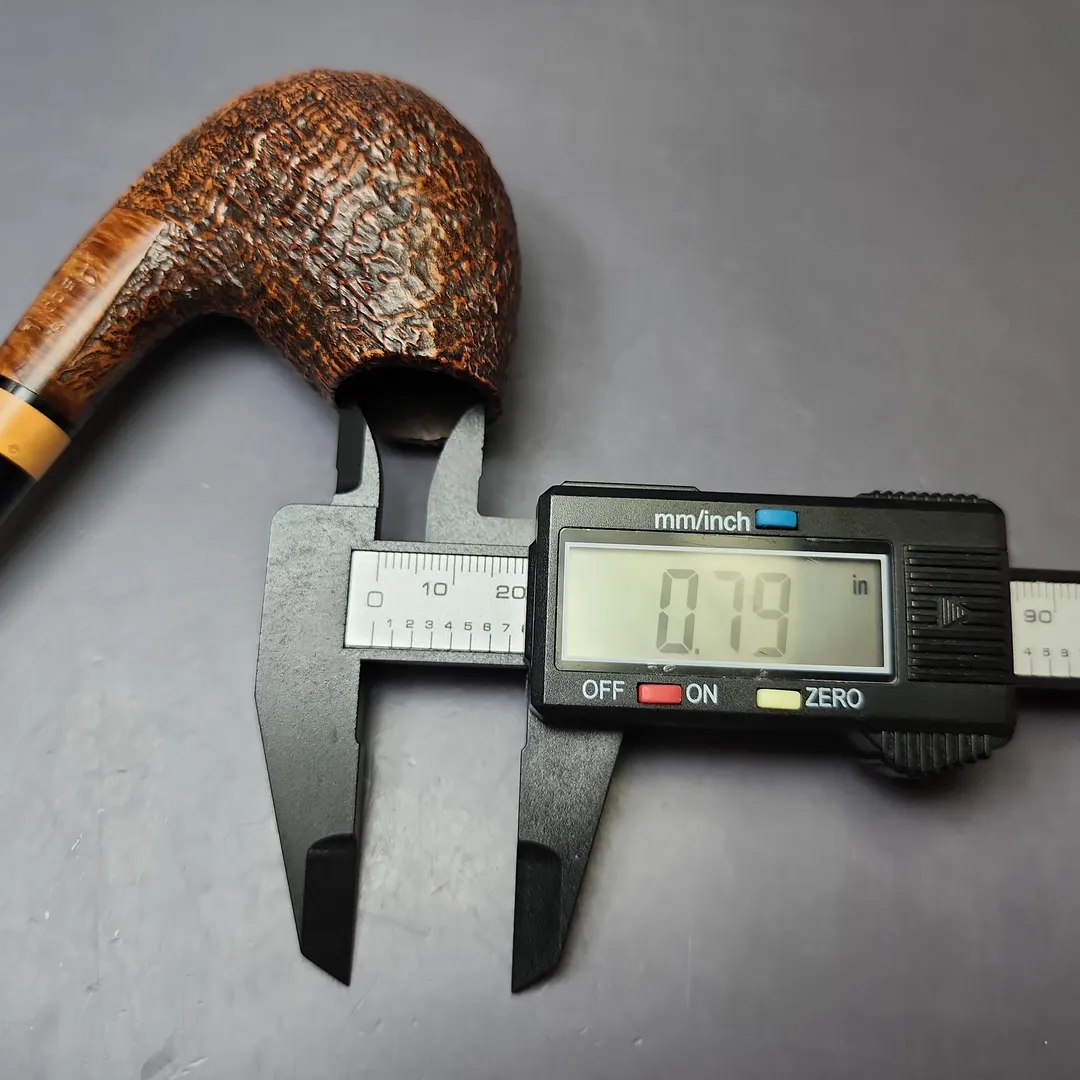
Bowl Width: 0.79 / 20.06mm
Bowl Depth: 1.73″ / 43.94mm
Weight: 1.6oz / 46g
| Weight | 15 oz |
|---|
| Condition | Used |
|---|---|
| Notes | Unsmoked new old stock (NOS). |


