Pipe Knowledge
A Practical Guide to Pipe ShapesHow Each One Smokes, Clenches and Carries

A pipe's shape is named almost entirely by its bowl, with the shank and stem as tiebreakers. A billiard has a straight-sided cylinder of a bowl, a Dublin flares toward the rim, a bulldog is two cones meeting at a beadline, and an Oom Paul hangs straight down from a full bend.
For pipe smokers and collectors, this guide covers how to spot each classic shape and how it smokes, with standout pipes from MBSD. One caution: shape names are a matter of convention, not law. Bill Burney, whose shape chart Pipedia still hosts, admits that "the naming of pipes doesn't always follow set rules. It's confusing to everyone" (Pipedia). Use the names as a common language, not a rulebook.
How to read a pipe shape
Check three things, in order:
- The bowl profile. Straight sides, a flare, a curve or a double cone. This names the family.
- The shank. Round, oval or diamond-sectioned, and how long it runs compared with the bowl's height.
- The stem. Tapered or saddle, straight or bent, short or long.
The one big exception is the churchwarden, which is defined by its long stem rather than its bowl. We gave it its own article: The Churchwarden Pipe: A Collector's Guide.
Straight to full bent: the bend scale
Almost any bowl can be made straight or bent, so collectors describe the bend on a rough scale: straight, 1/4 bent, 1/2 bent, 3/4 bent and full bent. A quarter bend drops the stem slightly; a full bent brings the bowl up almost parallel to the stem, as on an Oom Paul. There is no universal standard for the angles, and one maker's half bent is another's three-quarter.
What the bend changes in practice:
- Clenching. The more a pipe bends, the closer its bowl hangs under your mouth and the less leverage it puts on your teeth. That is why bents are the classic hands-free pipes.
- Moisture and gurgle. Smoke cools as it travels, and the water in it condenses. In a bent pipe gravity lets that moisture run back toward the bowl, so bents have a reputation for gurgling more than straights, especially when clenched. Drilling matters as much as shape, and drier tobacco and a slower pace help any bent.
- Cleaning. A pipe cleaner passes easily through a straight pipe mid-smoke. Many bents need coaxing; some full bents will not take one at all.
Chamber geometry and the smoke
The chamber is where shape turns into flavor and burn:
- Tall and narrow (stack, chimney, many pokers). Long, steady smokes that many smokers find concentrate flavor. Harder to light evenly to the bottom.
- Wide and shallow (pot, prince, tomato). Easy to light and quick to smoke; many smokers like them for flake.
- Conical (Dublin, Zulu, acorn). Wide at the top and narrow at the heel, so the wall stays even and the bowl burns down cleanly with less dottle.
The classic pipe shapes, with a few showpieces
Every shape below comes with a pipe worth stopping for, and the smoking notes are collector experience, not lab results. Estate pieces are one of a kind; check each listing for current availability. Pipes described as having come through our shop have already found new homes.
Billiard
Identify it: an upright cylinder of a bowl with a round shank roughly as long as the bowl is tall. Collectors often judge a carver by how well they render one (Smokingpipes).
Smokes and carries: the all-rounder. Balanced in hand, fine to clench at moderate weight, and pocketable in standard sizes.
Featured pipe · check availability
1984 Dunhill Root Briar 4103
A 1984 Dunhill Root Briar 4103 that was first prize at that year's European slow smoking competition in Copenhagen. Dunhill gave it an 18 karat solid gold collar and a cedar case, and it is still unsmoked.
Pot and stack
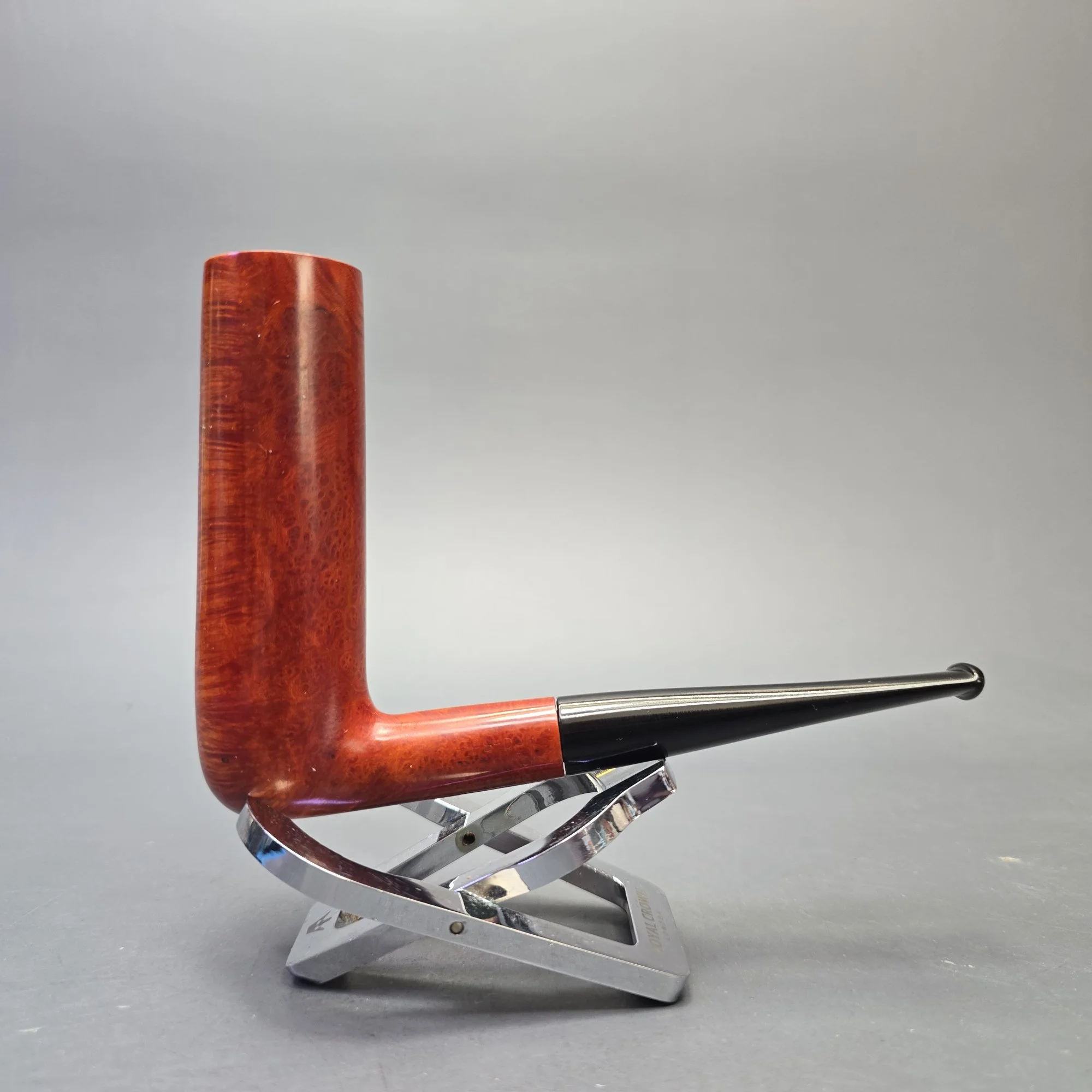
Identify them: a pot is a billiard with a shorter, wider bowl; a stack (or chimney) is a billiard with a notably tall bowl and narrow chamber.
Smokes and carries: the pot lights fast and pockets easily; the stack gives a long, slow bowl.
Featured pipe · check availability
Pipe-Dan Smooth "Full Chimney" Stack
The Pipe-Dan Smooth "Full Chimney" Stack, the tallest of the postwar Dan Shapes, hand-turned with a chamber over three inches deep.
Dublin
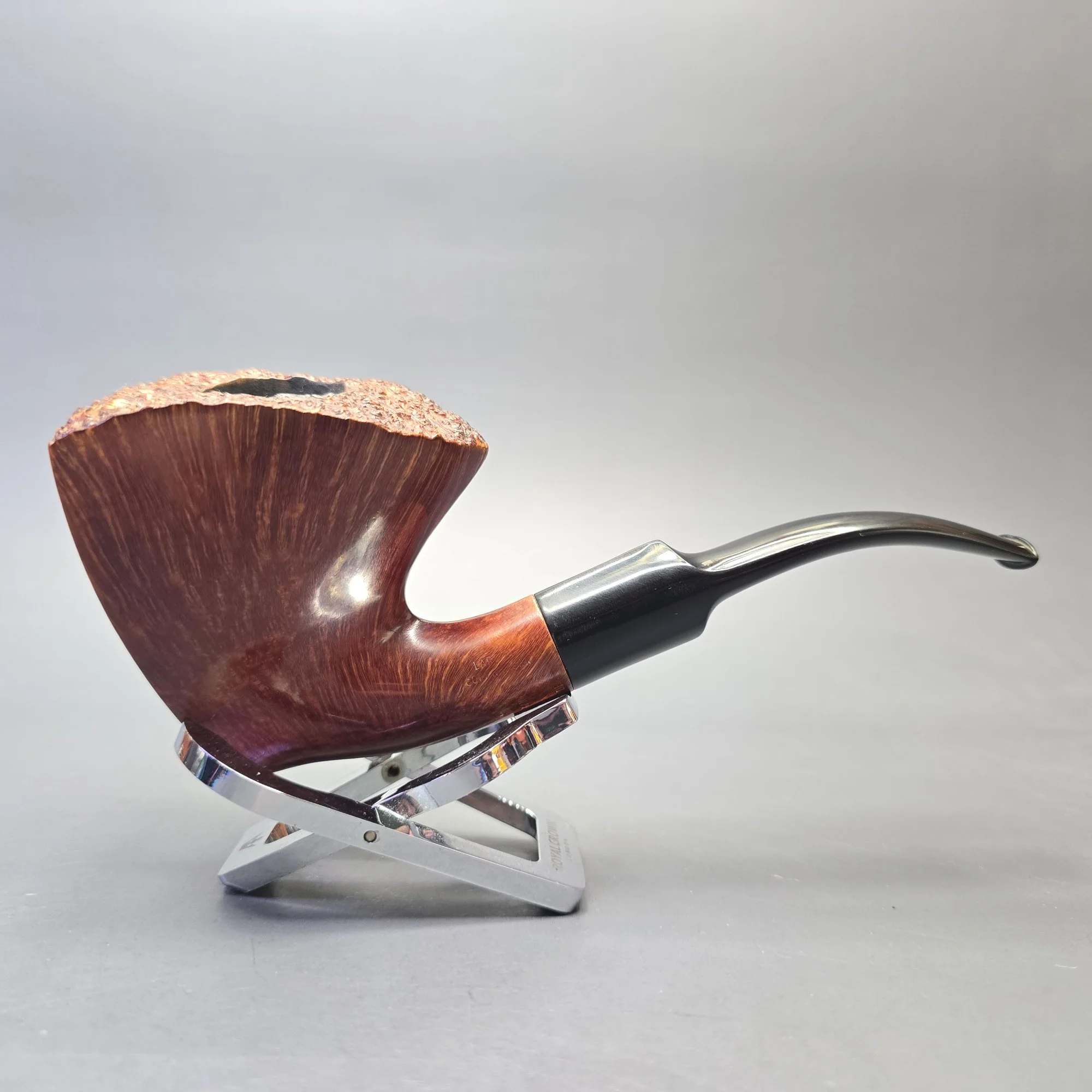
Identify it: a cone of a bowl that flares toward the rim and narrows toward the heel, on a billiard-style shank and stem. ISPE records it as one of the oldest bowl shapes, inherited from the clay pipe tradition (ISPE).
Smokes and carries: the conical chamber burns down evenly, and the flared bowl sits well in the hand.
Featured pipe · check availability
W.O. Larsen Straight Grain freehand Dublin
An early W.O. Larsen Straight Grain freehand Dublin, from around the 1960s and the Copenhagen workshop's top grade. The bowl stands almost three inches tall, giving the straight grain plenty of room to run. More in our Dublin pipes.
Bulldog
Identify it: two cones set base to base, with one or two beadlines around the widest point, on a diamond-sectioned shank, usually with a saddle stem (ISPE).
Smokes and carries: a short straight bulldog is a favorite clencher and a natural pocket pipe.

Featured pipe · check availability
Baldo Baldi Magnum Smooth Diamond Bulldog
A Baldo Baldi Magnum Smooth Diamond Bulldog, unsmoked. Baldi, an architect turned pipe maker, carried the bulldog's diamond shank faceting right up through the bowl, and set on its base the pipe looks like a miniature house. More in our bulldog pipes.
Rhodesian
Identify it: the bulldog's double-cone bowl and beadlines on a round shank, often with a slight bend.
Smokes and carries: like the bulldog, but a touch easier to hang in the teeth.

Featured pipe · check availability
SU Pipes Smooth "Dancing" Rhodesian
The SU Pipes Smooth "Dancing" Rhodesian by Sebahattin Urgan, a former apprentice to meerschaum master Emre Bay. Sweeping Danish curves meet a curiously footed base.
Dublin, bulldog or stack? Telling them apart
The quick test:
- Rim wider than the base, no beadline: Dublin.
- Widest point in the middle, marked by a beadline, diamond shank: bulldog. Round shank: Rhodesian.
- Straight sides, bowl much taller than it is wide: stack.
Apple, egg, brandy and acorn
Identify them: the round-bowled family. An apple is rounded with a gentle taper toward the heel; an egg is a taller, egg-shaped version; a brandy is wide at the base and tapers up toward the rim, like the glass; an acorn swells at the rim and tapers sharply at the heel (Smokingpipes).
Smokes and carries: soft lines with no corners make these the most comfortable shapes to hold, and they are common in 1/4 to full bent.

Featured pipe · check availability
Jess Chonowitsch "Standard Shape" Smooth Apple
A Jess Chonowitsch "Standard Shape" Smooth Apple. The Danish master (1947 to 2025) stamped his Anglo-French-style pipes "Standard Shape" for a time to set them apart from his Danish designs.
Prince
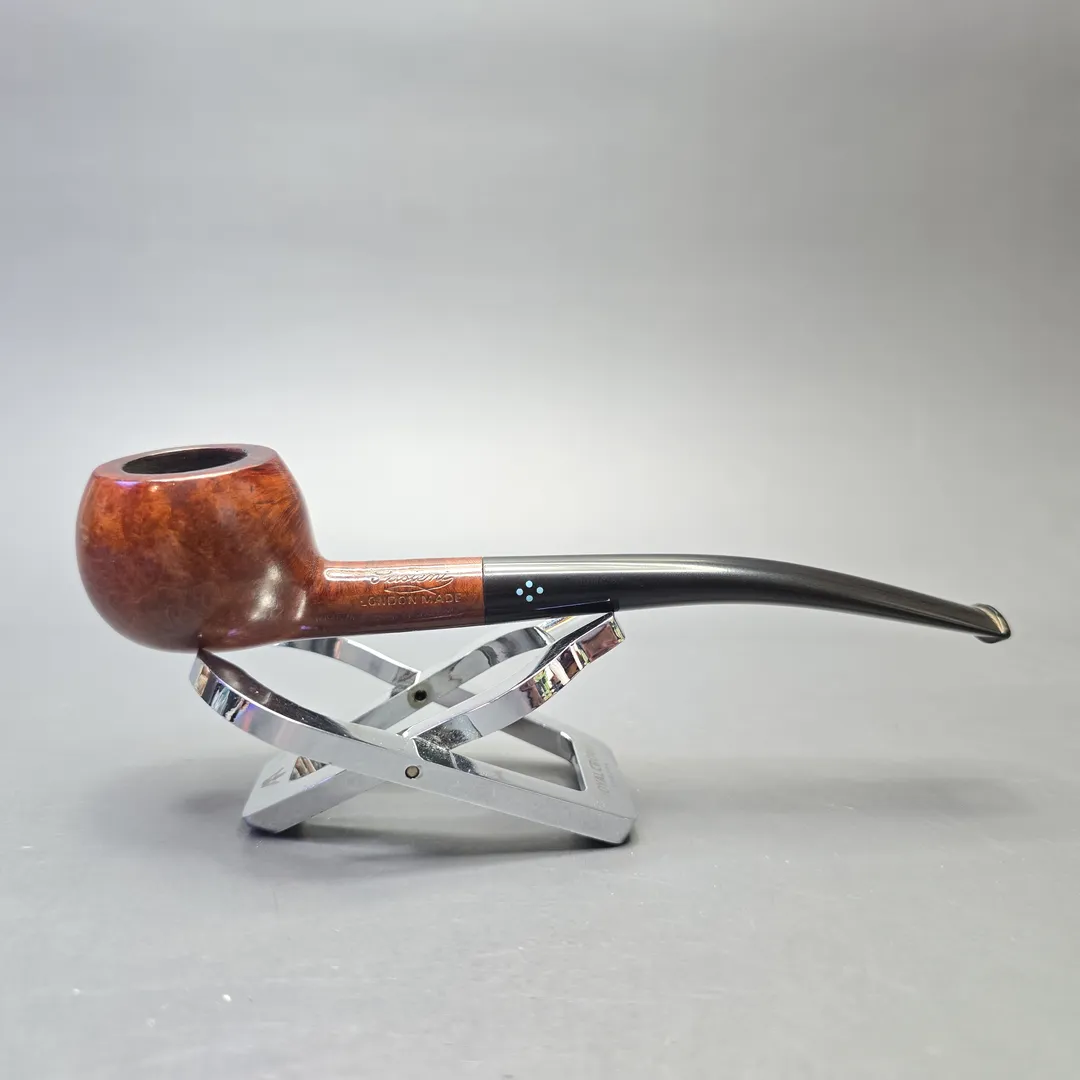
Identify it: a squat, rounded bowl, often with a slight forward cant, on a long, slender stem that is usually gently bent. It is commonly said to be named for Albert Edward, Prince of Wales, later King Edward VII (Smokingpipes).
Smokes and carries: light, elegant and quick to smoke, with a shallow, wide chamber. Long for a pocket, light in the teeth.
Archive example · sold
Sasieni Eight Dot Patent "Prince"
A Sasieni Eight Dot Patent "Prince" from around the 1930s. Sasieni made the Eight Dot only for American importers, and the war ended the series for good, so few survive. This one weighed just 0.9 oz.
Poker and cherrywood
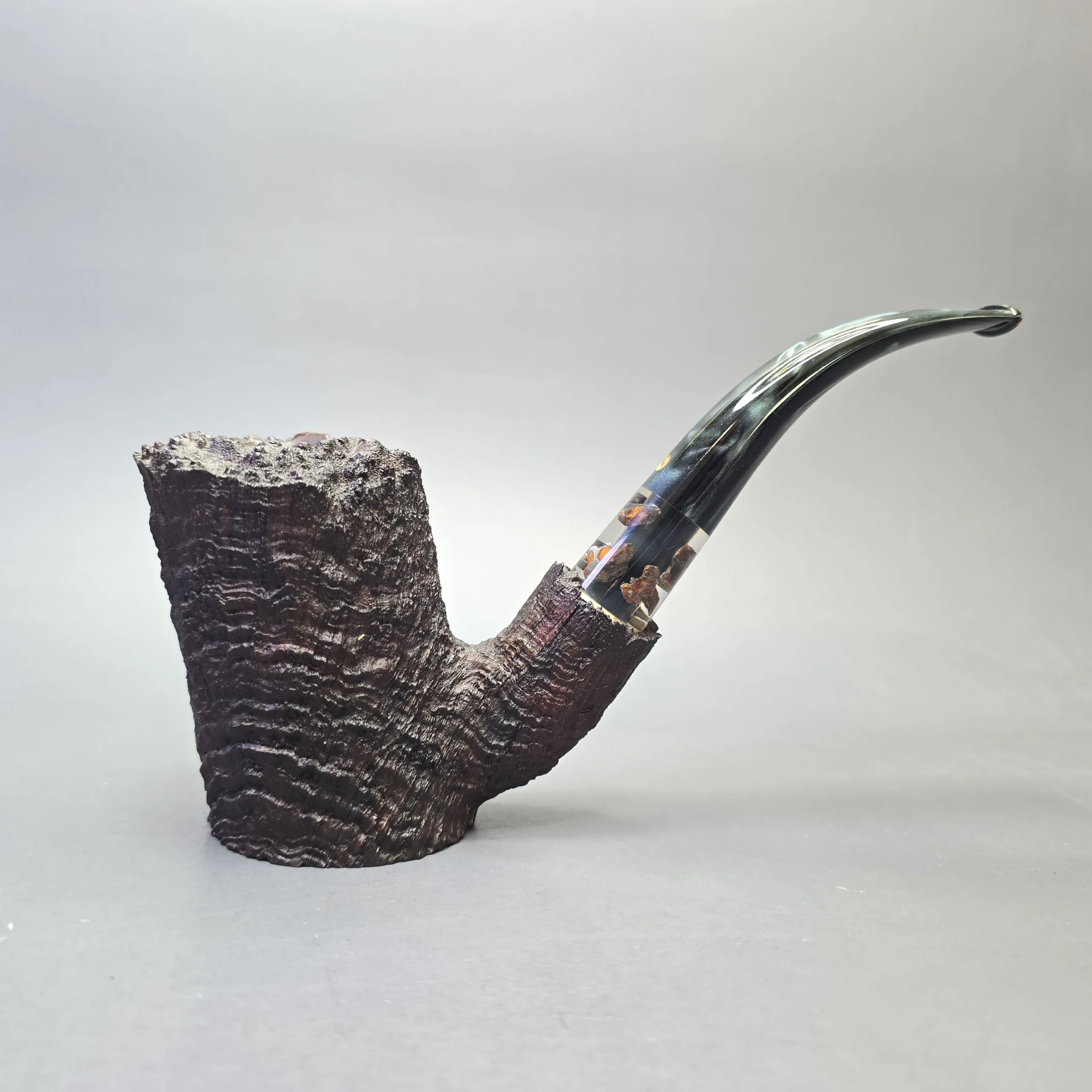
Identify it: a cylindrical bowl with a flat bottom so the pipe stands on its own (Pipedia). A bent poker is a cherrywood.
Smokes and carries: the classic desk pipe. Straight pokers can be heavy to clench; cherrywoods hang better.
Featured pipe · check availability
Michael Parks Magnum Poker Sitter
A 2009 Michael Parks Magnum Poker Sitter in a craggy chestnut blast, with a ring of fossilized mammoth ivory and a band of resin holding fragments of the Imilac meteorite from Chile's Atacama Desert. At 5.6 oz, it is no pocket pipe.
The long shanks: Canadian, lumberman, Liverpool, lovat
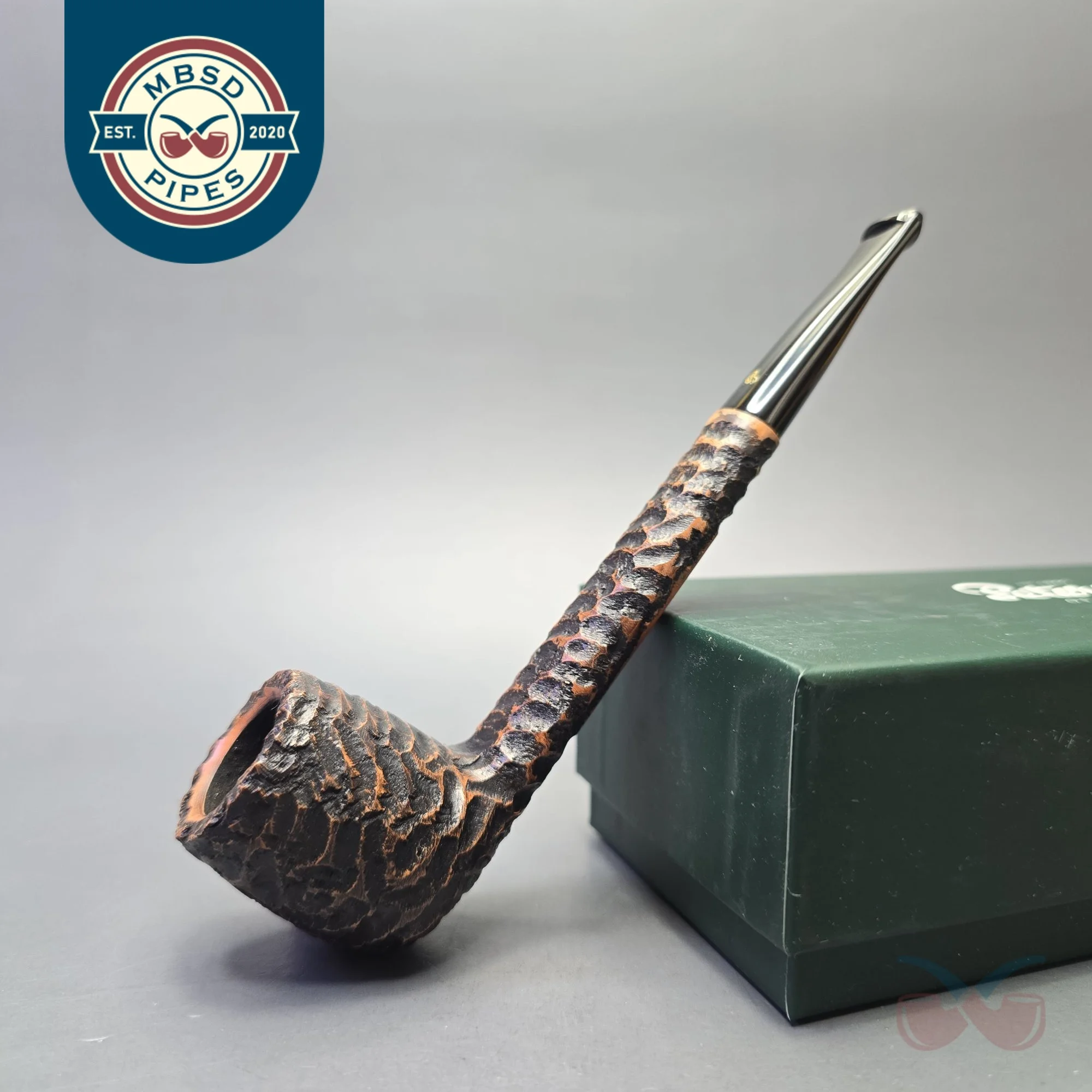
Identify them: billiard bowls with a shank longer than usual and a short stem to compensate. The shank section and the stem type separate them (Pipedia):
| Shape | Shank | Stem |
|---|---|---|
| Canadian | Oval | Short, tapered |
| Lumberman | Oval | Short, saddle |
| Liverpool | Round | Tapered |
| Lovat | Round | Saddle |
Smokes and carries: light and lean, but long, so better in a jacket than a jeans pocket.
Featured pipe · check availability
Peterson Aran 264 Rusticated Canadian
The Peterson Aran 264 Rusticated Canadian is a classic, lightweight take on the long-shanked shape, with a rusticated briar finish and a short vulcanite mouthpiece. At 6.15 inches long and just 30 grams, it pairs a lean profile with the Aran line’s traditional styling.
Zulu (Yachtsman)
Identify it: a forward-canted, flaring Dublin-like bowl, an oval shank and a stem that curves gently down by roughly the same angle as the bowl's cant (Smokingpipes).
Smokes and carries: a Dublin's even burn with a slight bend that makes it easy to clench.

Archive example · sold
1995 Castello Limited Edition paneled Zulu
The 1995 Castello Limited Edition paneled Zulu, one of only 235 made that year, unsmoked in its box, with a paneled sterling army mount engraved with flowers and the Castello castle.
Calabash
Identify it: a deep, usually 3/4 bent pipe with a flared bowl and domed top, inspired by the gourd calabash (Pipedia).
Smokes and carries: the air space under the bowl of a gourd or reverse calabash is prized for a cool, dry smoke. See our calabash pipes.

Archive example · sold
J. Mouton XL Pierced Calabash
A J. Mouton XL Pierced Calabash, a true calabash with a hollowed briar body and removable bowl, its cap and the shank extension that pierces the bowl carved from fossilized walrus. Read more about the maker in our J. Mouton spotlight.
Oom Paul and other full bents
Identify it: a full bent with a tall, billiard-like bowl and a shank that rises almost vertically. The name, "Uncle Paul", comes from Paul Kruger, president of the South African Republic; it is also called a Hungarian (Pipedia).
Smokes and carries: the easiest of all shapes to clench for its size. The full bend is the least forgiving for moisture, and many will not pass a cleaner.
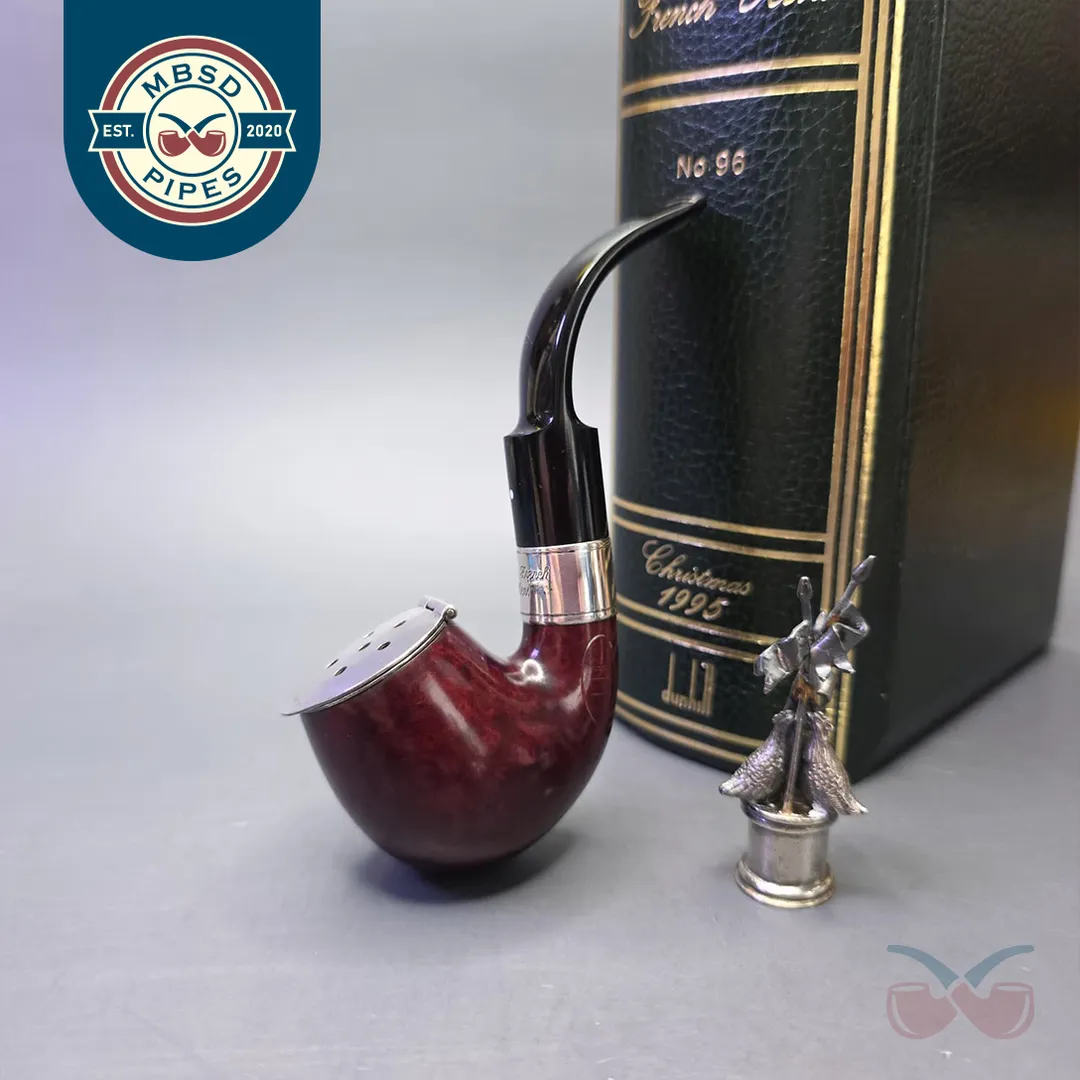
Featured pipe · check availability
Dunhill 1995 Christmas Pipe, "Three French Hens"
The Dunhill 1995 Christmas Pipe, "Three French Hens", a full bent Bruyere billiard from Dunhill's Twelve Days of Christmas series. It has a silver wind cap and a sterling tamper of the three hens, and it is number 96 of 500.
Freehand
Identify it: no fixed template. A true freehand lets the grain of the briar decide the shape instead of a predetermined pattern (Pipedia), a tradition rooted in Danish pipe making. Read more in What (and Why) is a 'Freehand' Pipe? Part One.
Smokes and carries: varies with every pipe, so check weight and chamber depth on each one.

Featured pipe · check availability
Ben Wade 7 Day Set by Preben Holm
A rare Ben Wade 7 Day Set by Preben Holm: seven unsmoked, matched-grain Hand Model freehands, each a different form, hand-shaped by a pioneer of Danish design, in their original wooden case.
Quick comparison
| Shape | Spot it by | Clenching | Chamber | |
|---|---|---|---|---|
| Billiard | Straight cylinder bowl | Good | Good | Medium, even |
| Dublin | Bowl flares to rim | Good | Good | Conical |
| Bulldog | Double cone, beadline, diamond shank | Very good | Very good | Shorter |
| Stack | Very tall bowl | Fair | Fair | Deep, narrow |
| Apple / egg | Rounded bowl | Good | Good | Medium |
| Prince | Squat bowl, long slim stem | Very good | Fair | Wide, shallow |
| Poker | Flat bottom, stands up | Fair | Good | Medium to deep |
| Canadian family | Long shank, short stem | Good | Fair | Medium |
| Oom Paul | Full bend, upright shank | Excellent | Fair | Deep |
Choosing your shape
- If you clench while you work or read, look at bents, bulldogs and princes, and keep the weight modest.
- If you mostly smoke at a desk, a poker or a sitter saves you a pipe stand.
- If you want a pipe for your pocket, short bulldogs, Rhodesians and compact billiards travel best.
Browse every shape we carry in our pipe shapes section.
FAQ
What is the most common pipe shape?
The billiard. It is found in nearly every maker's catalog, and most other classic shapes can be described as variations on it.
What is the difference between a bulldog and a Rhodesian?
Both have a double-cone bowl with a beadline. A bulldog has a diamond-sectioned shank, usually with a saddle stem; a Rhodesian has a round shank and is often slightly bent.
Do bent pipes gurgle more than straight pipes?
They tend to, because condensed moisture can run back toward the bowl. Good drilling, drier tobacco and a slower pace keep most bents smoking dry.
What pipe shape is best for clenching?
Bent shapes put less leverage on your teeth. Full bents like the Oom Paul, light princes and short bulldogs are favorite clenchers.
What is the difference between a Canadian and a lovat?
Both are long-shanked billiards. A Canadian has an oval shank and a short tapered stem; a lovat has a round shank and a saddle stem.
Find your shape
Explore classic silhouettes and one-of-a-kind designs in the MBSD collection.
Get first look at new arrivals
Pipes sell fast. Our Monday newsletter rounds up last week’s additions and previews the week ahead. One email a week, unsubscribe anytime.