
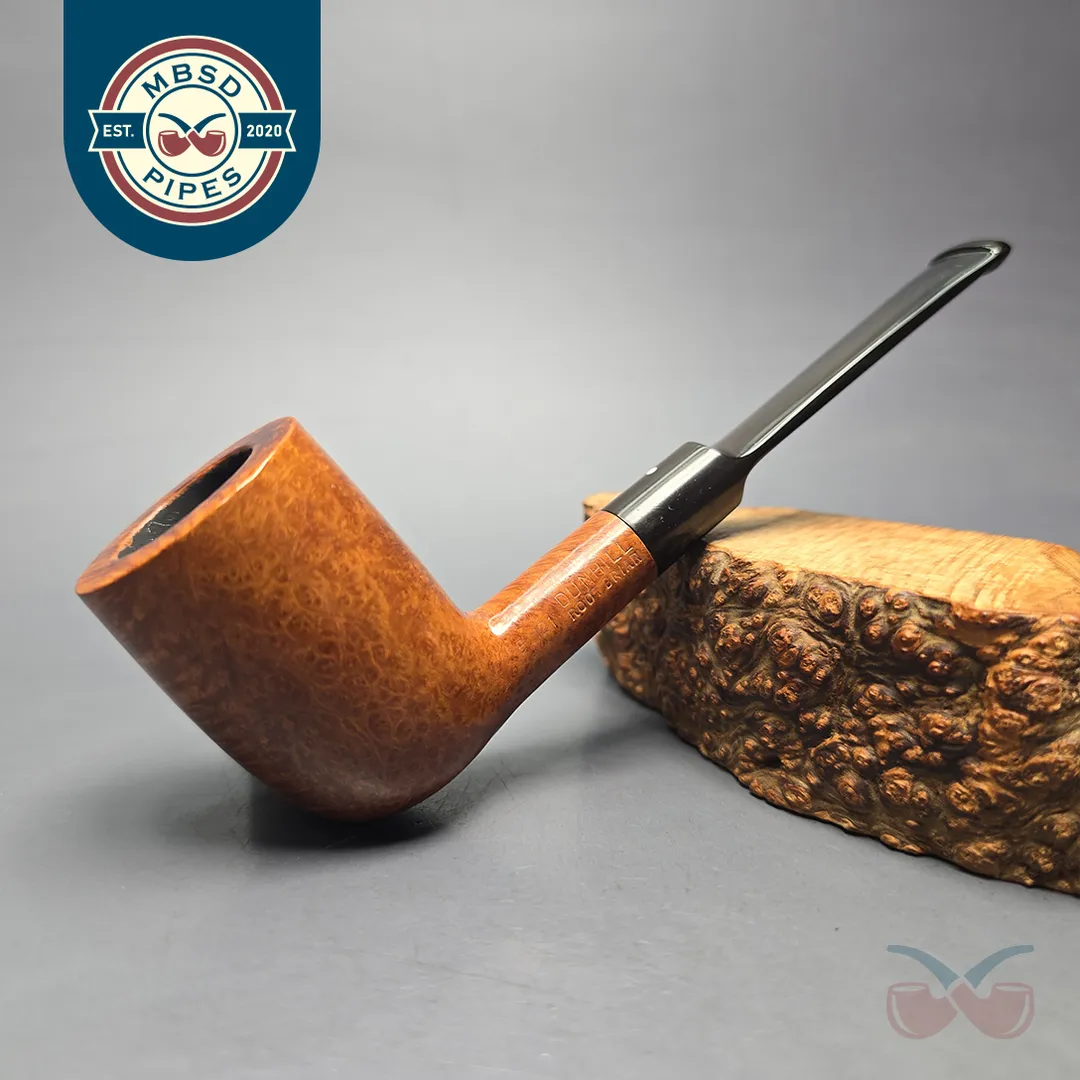
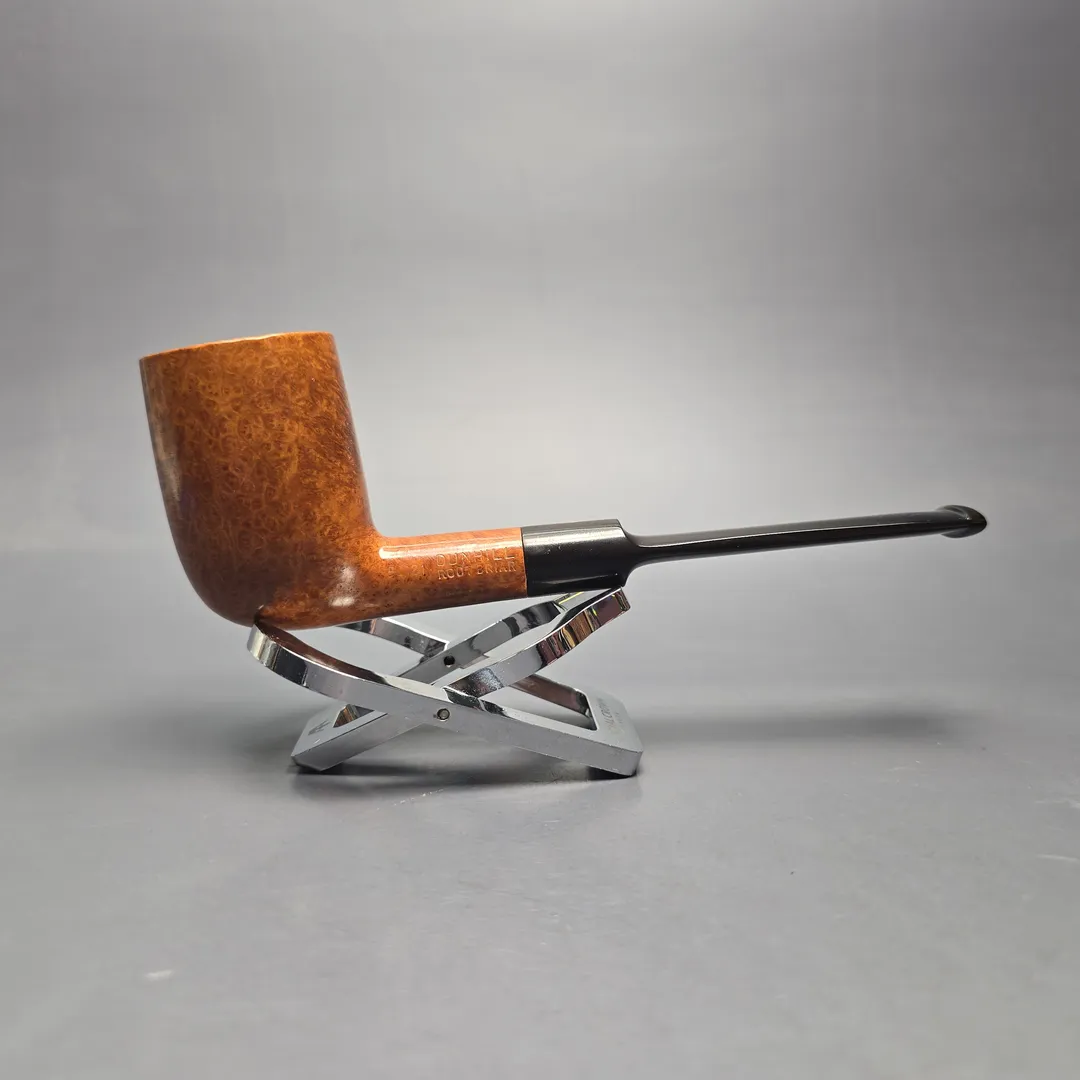
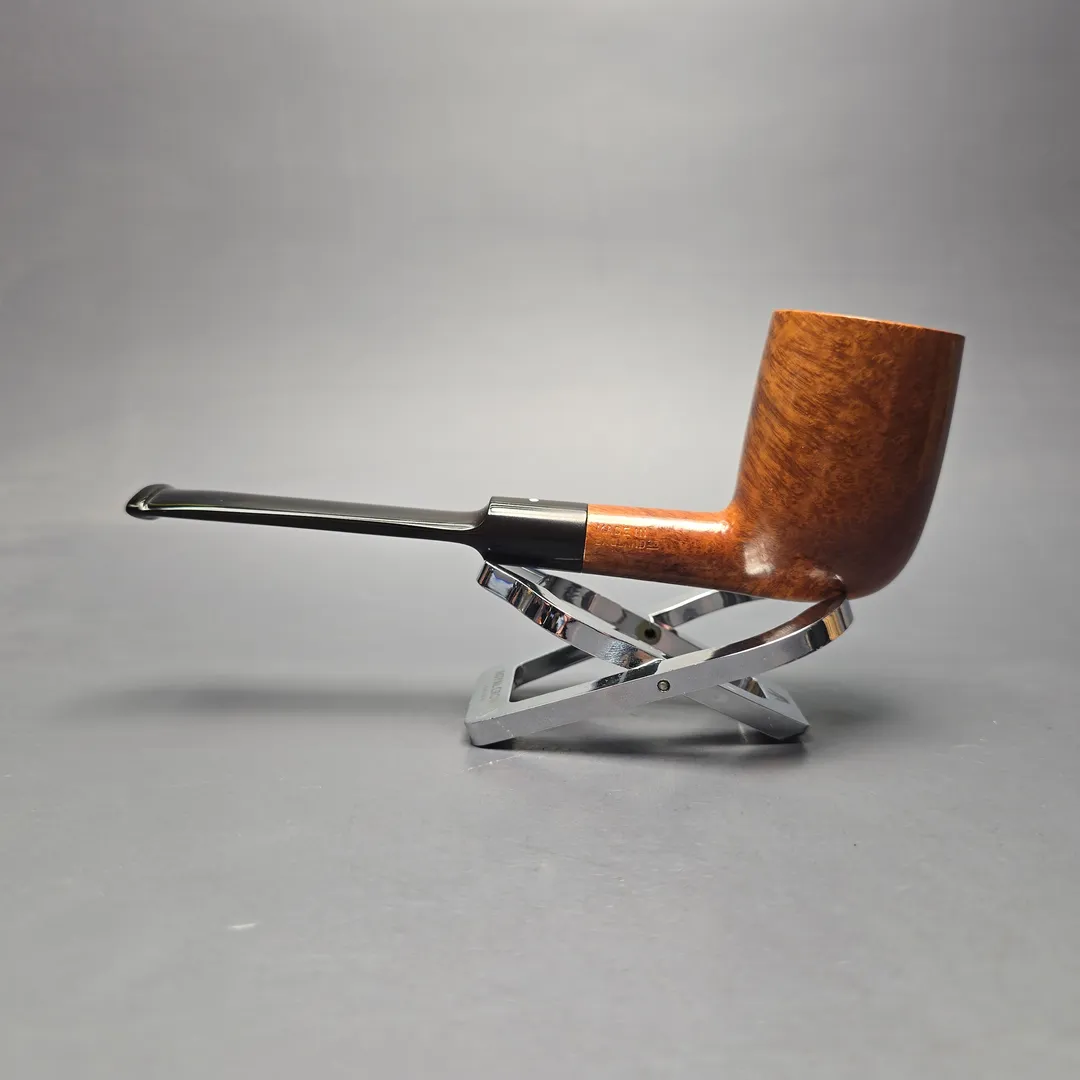
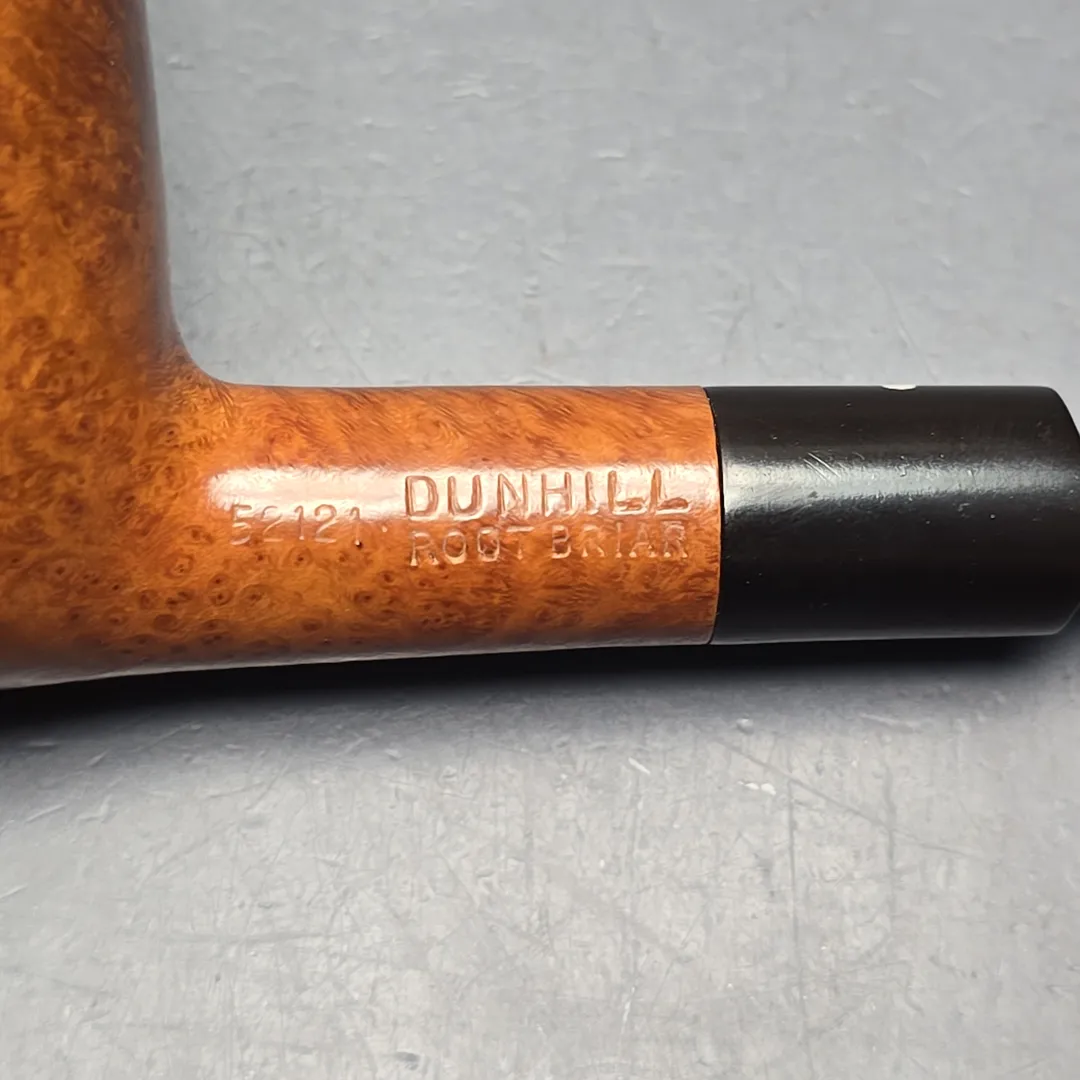
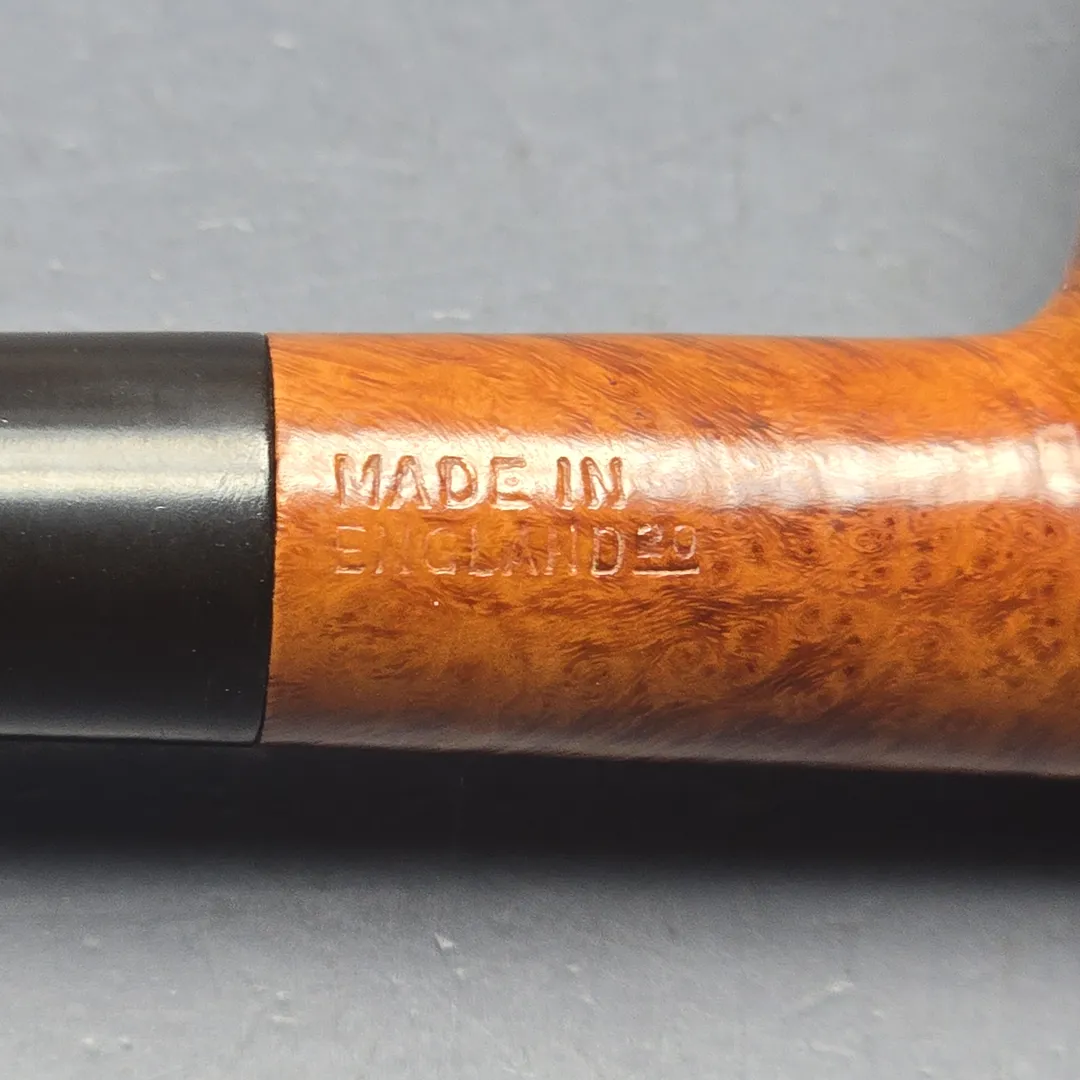
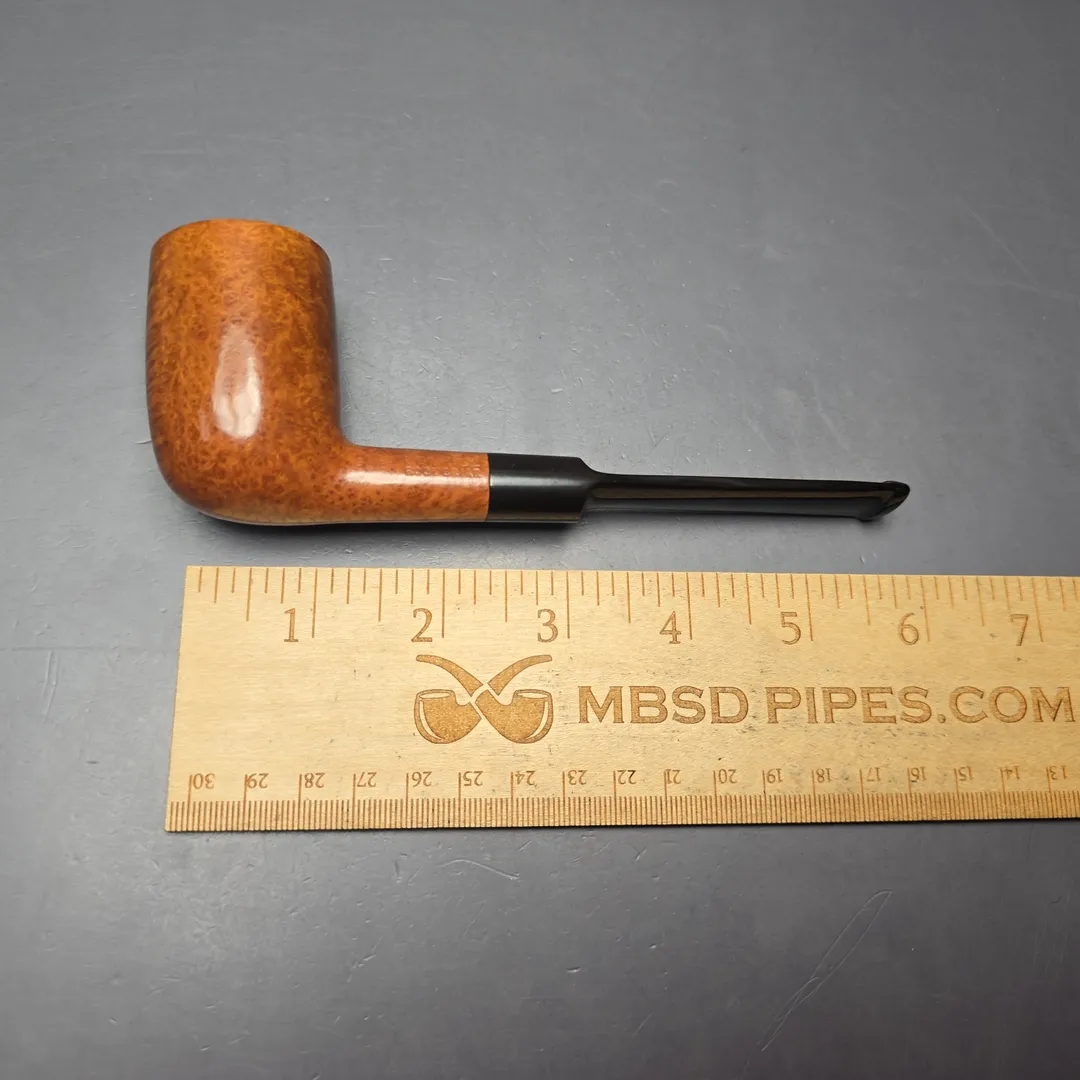
Dunhill 1980 Root Briar 52121 Smooth Stack Estate Briar Pipe, English Estates
Out of stock





To veteran pipe smokers, Dunhill needs no introduction. Beginning in 1907, Alfred Dunhill began selling Dunhill pipes at the tobacconist shop he owned on London’s Duke Street. Very quickly, these pipes gained the reputation of being the “Rolls-Royce” of pipes due to how expertly crafted they were. Today, Dunhill is likely Britain’s most famous pipe manufacturer, and continues to produce some of the most treasured pipes a smoker can buy.
The mid-1970s to mid-1980s was an interesting time for Dunhill from the perspective of pipe design. This was the period when Alfred Dunhill Ltd. rolled out its new, standardized shape system, compressing the scores of shapes within the make’s catalog into a modular schema. Each major component of a pipe shape, from as its overall size, to the style of the bowl, to the cut of the mouthpiece, being assigned a number and a position in a simple sequence of digits; almost every pipe shape that Dunhill made could be expressed in such a sequence. Counterintuitively, however, this standardization of Dunhill’s aesthetics brought with it, for a time at least, a whole host of unusual shapes, many of which are not in production today, or only appear in the form of occasional Quaint shapes.
The reason that the early years of Dunhill’s shape standardization coincided with the production of some of its most unusual and non-standard shapes came down to the last digit in the new system. Today, the shape of a Dunhill pipe is specified by a 4-digit code, but originally such codes were 5-digit, with the last denoting variations on the basic shape specified by the first 4. These variations could be subtle or they could be substantial but, either way, one consequence of Dunhill ultimately shifting to a 4-digit code in the 1980s was that most of these variations were very short-lived.
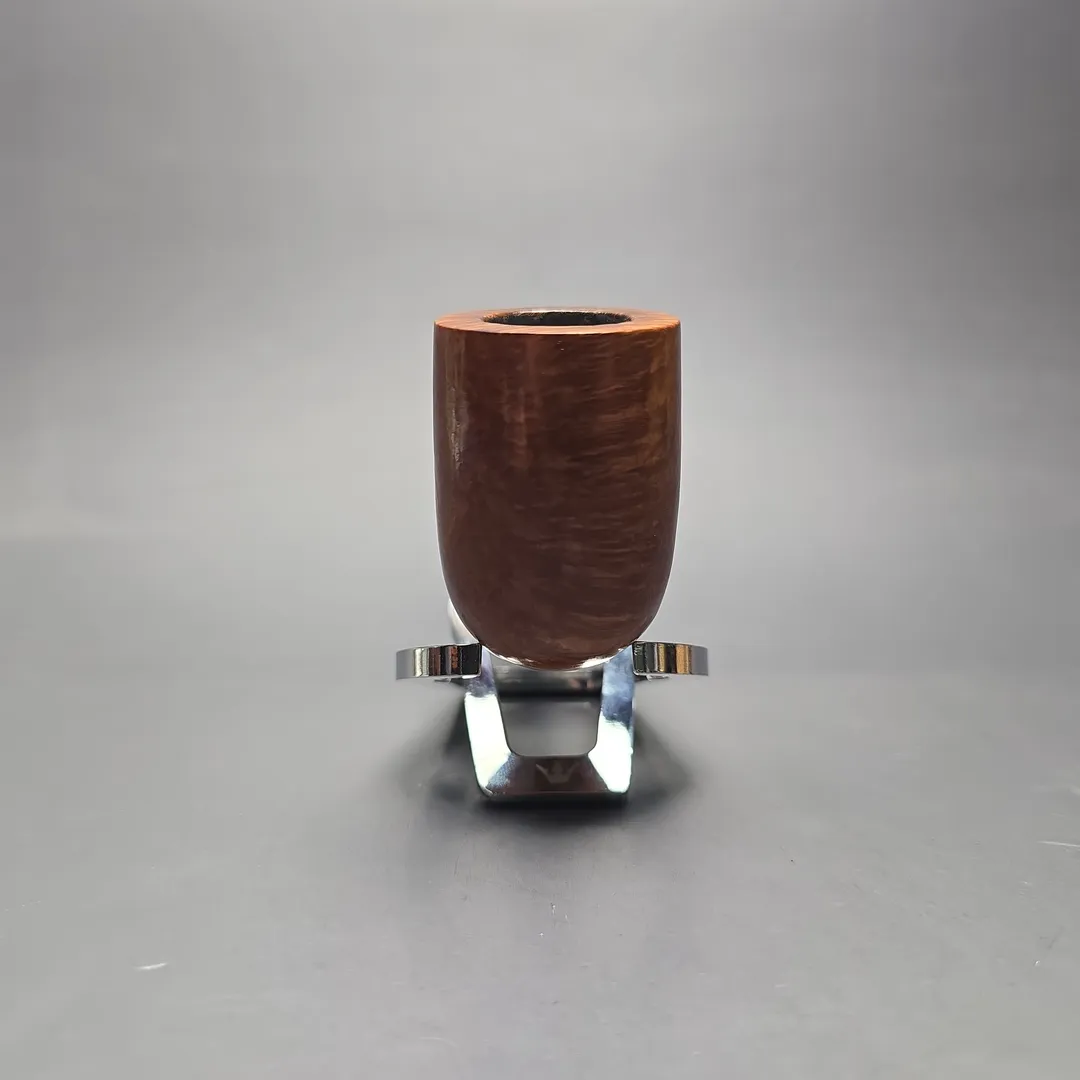
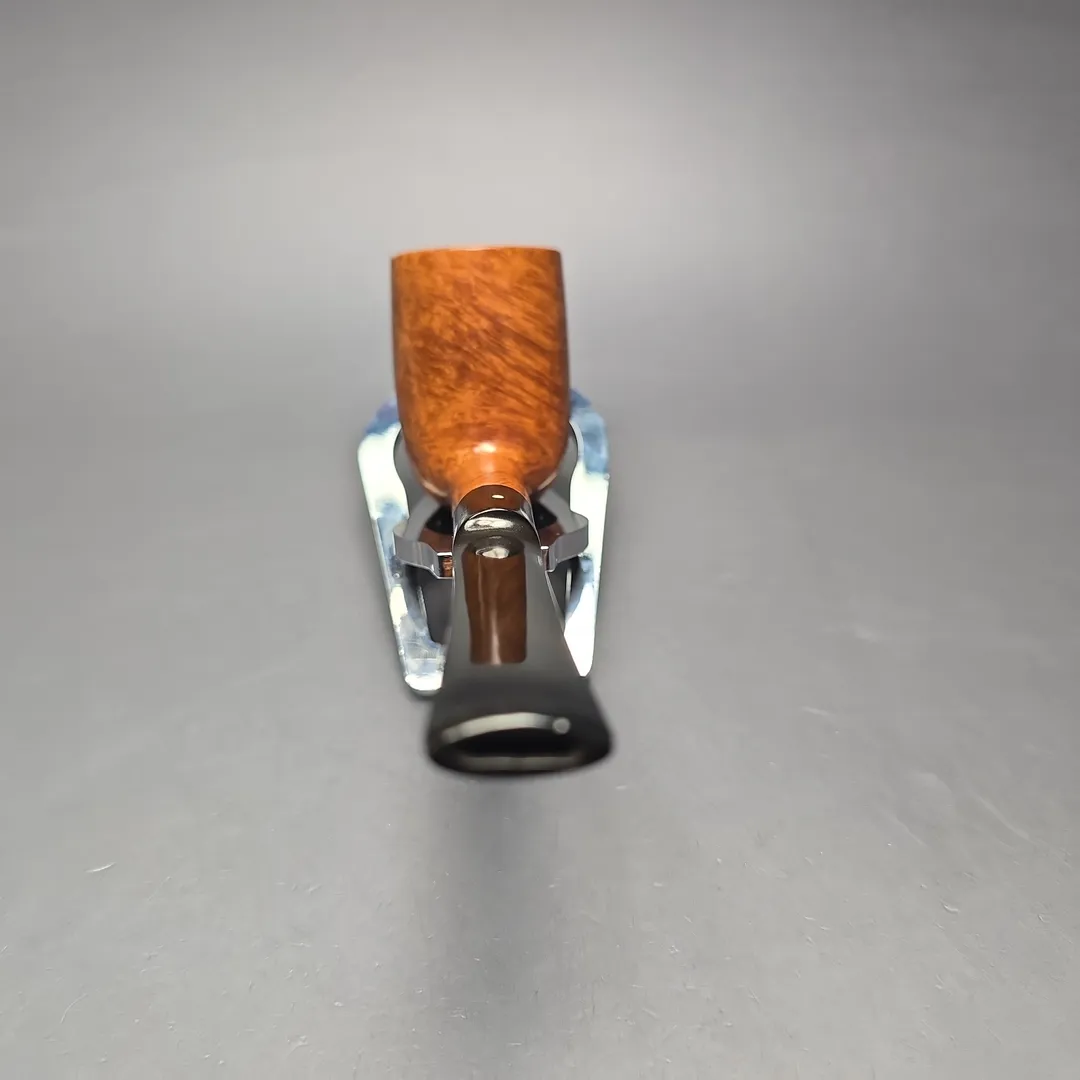
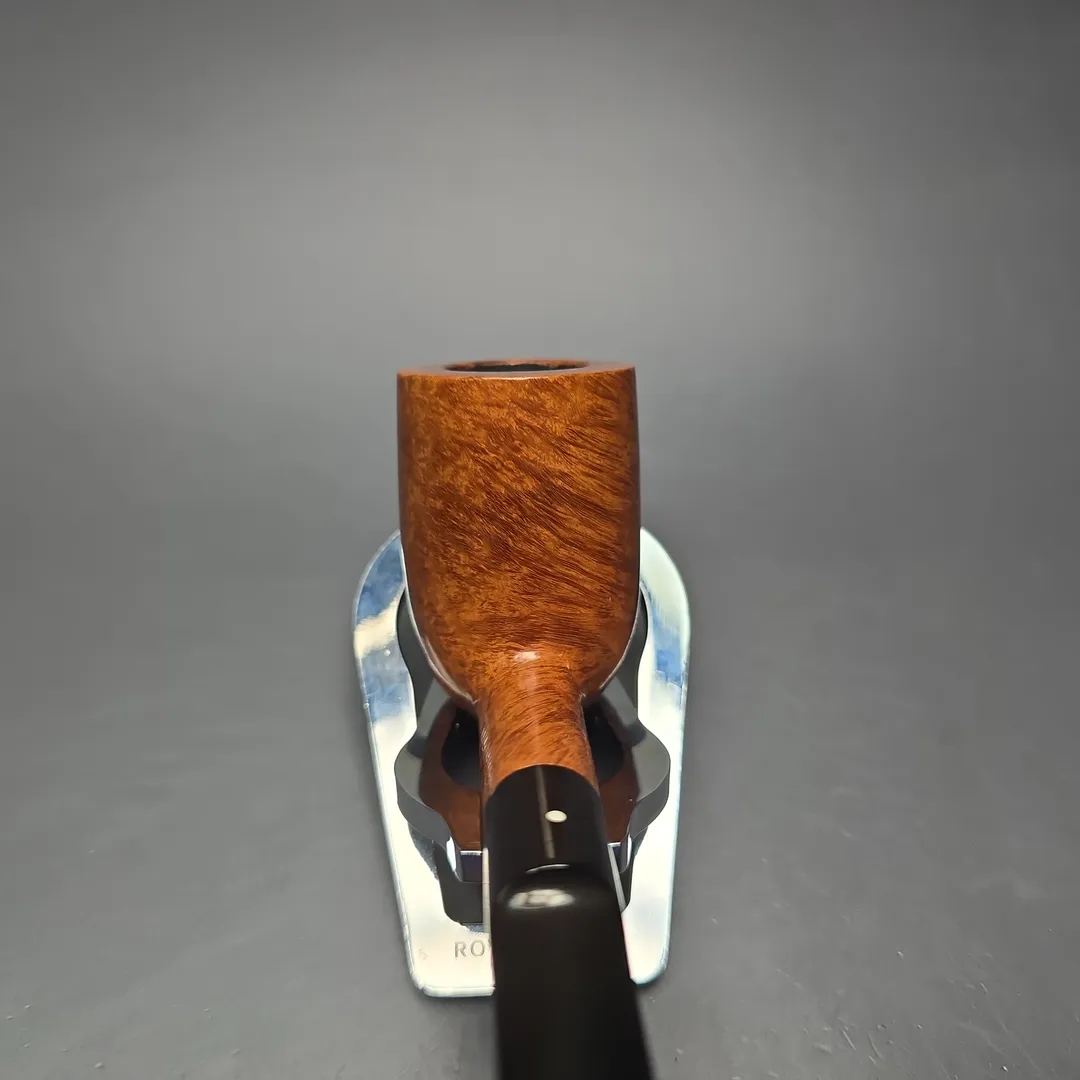
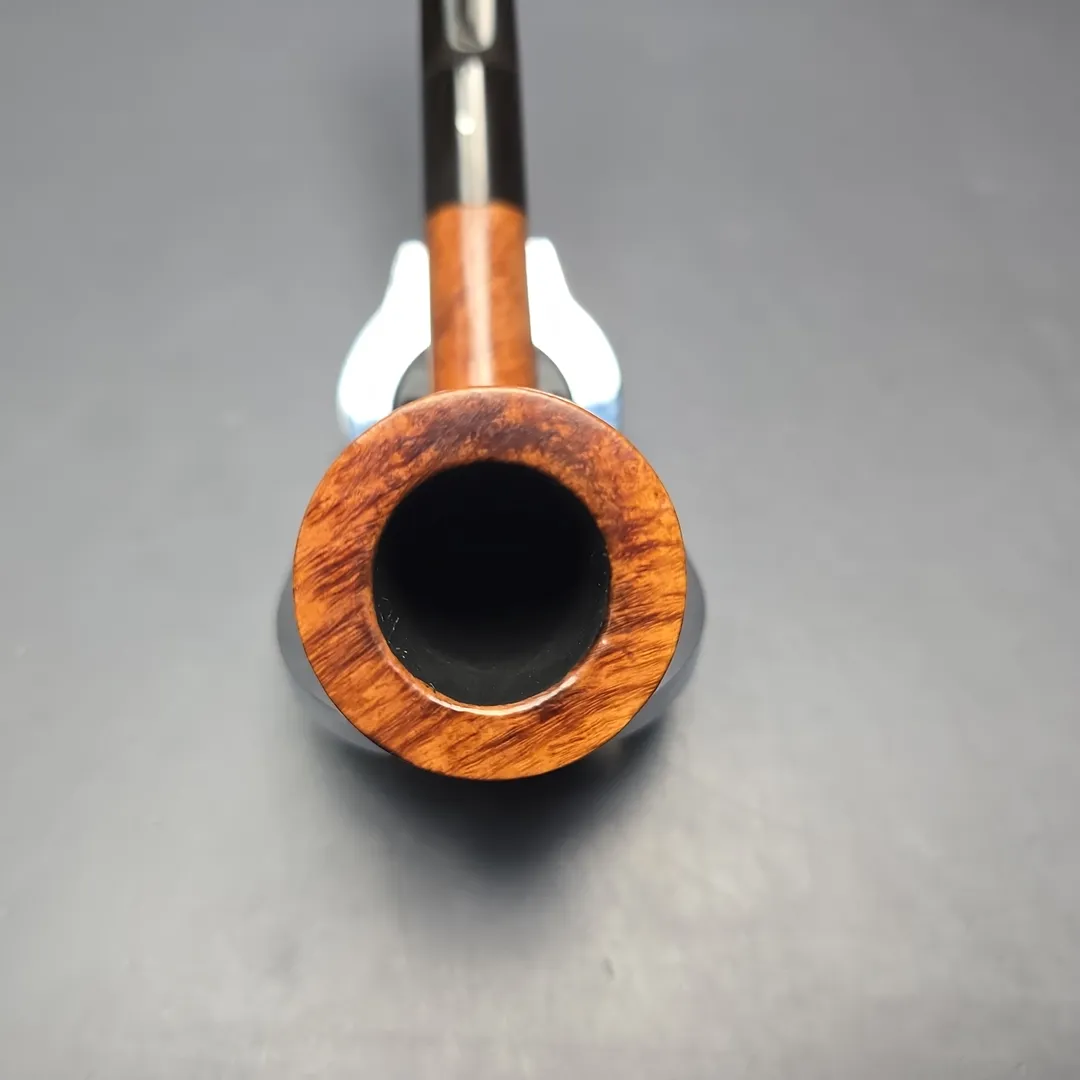
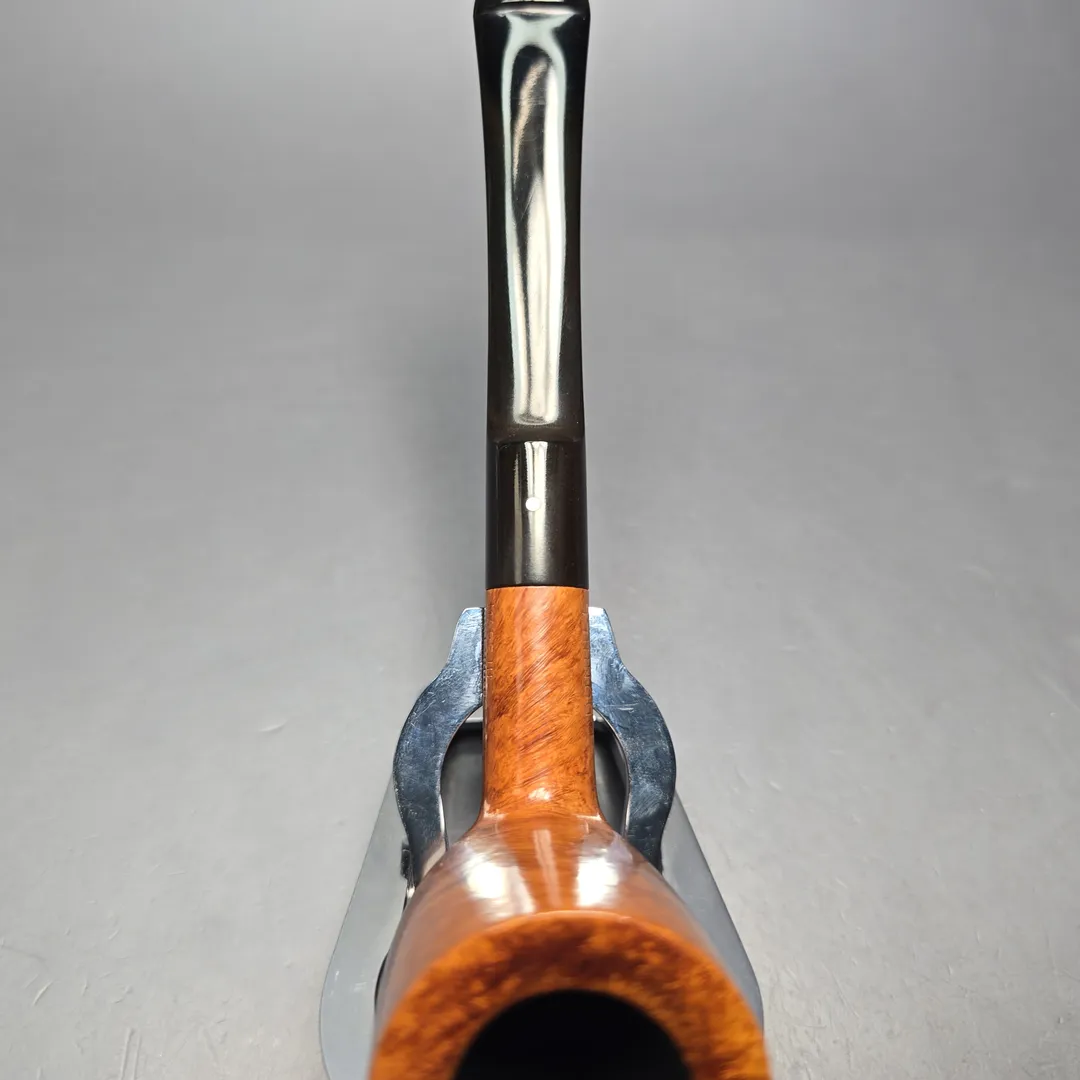
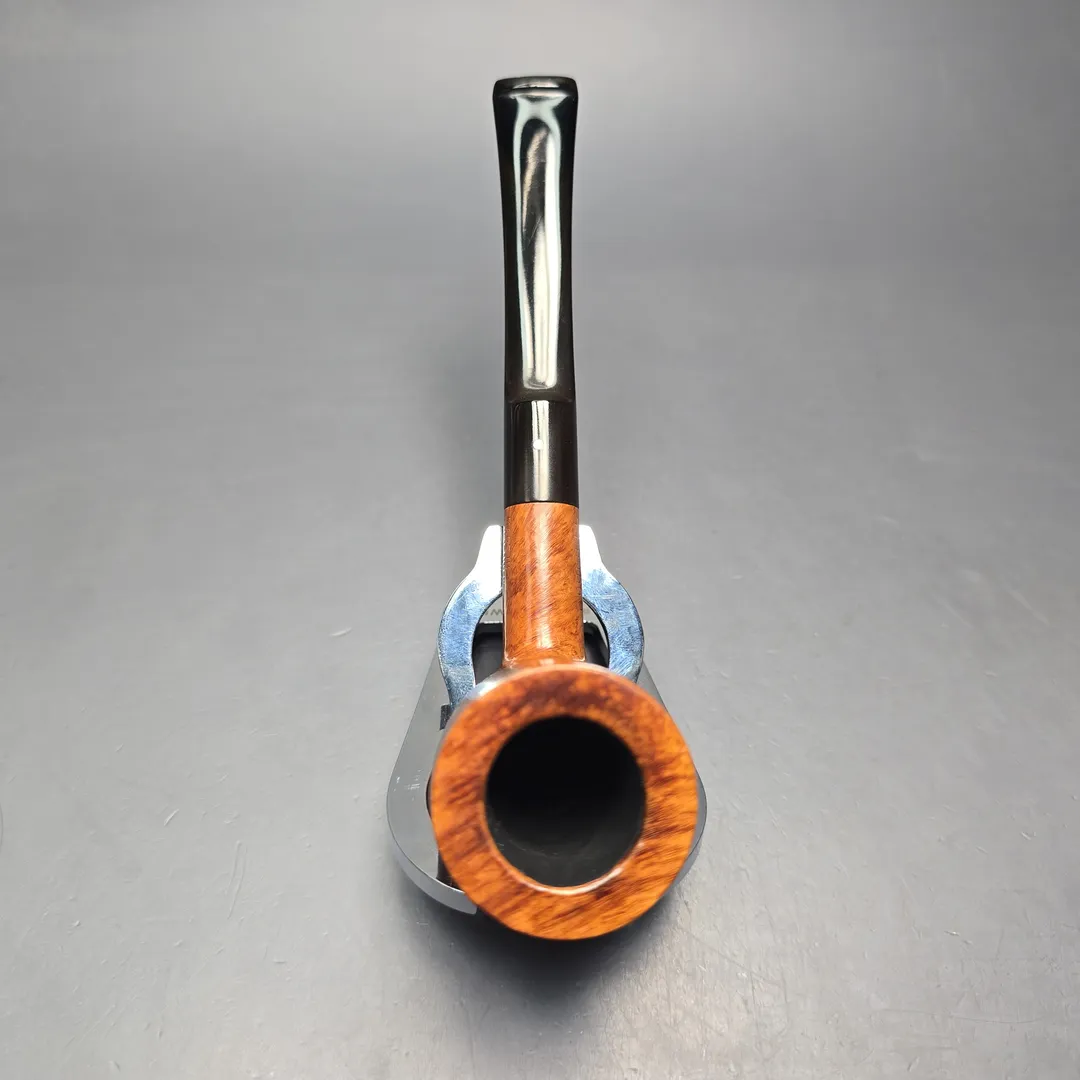
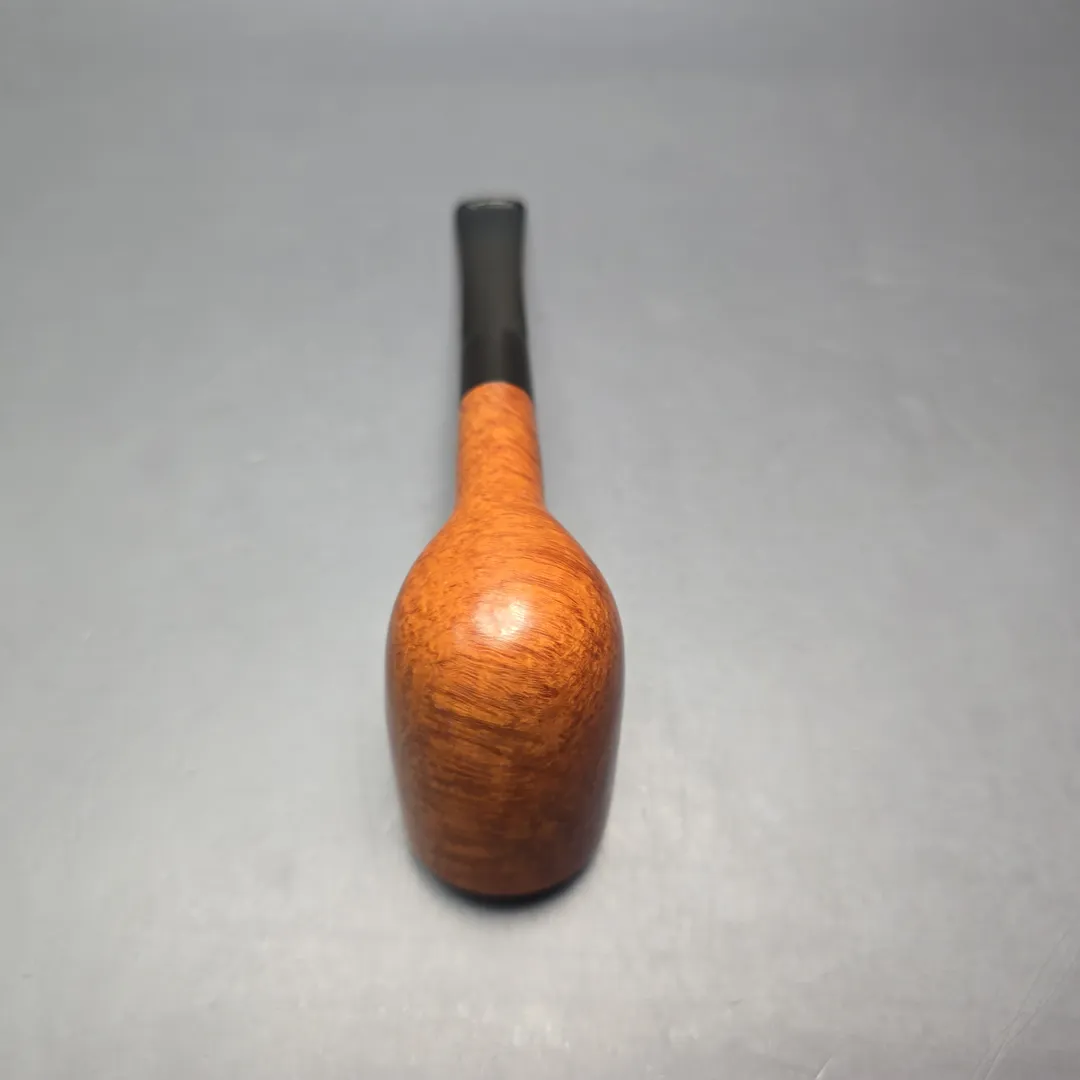
As with a few Dunhills that have come in recently, this 1980 Root Briar is an example of one of those short-lived shapes. Its basic shape is a group 5 (“5”), saddle stem (“2”) stack, or chimney, (“12”), and if one looks at Dunhill pipes today, one can still find a shape that fits that description, the “5212.” But things change once that last digit is taken into account. For the “52121,” it meant that the bowl was still very tall, as a stack should be, but also much wider than it would otherwise have been, and if one compares the “52121” with the “5212” that all but replaced it, it becomes very apparent how different the shapes are. There is a stoutness to the bowl of the former that simply isn’t there for the latter, and a much wider chamber with it. The extra breadth certainly works in the pipe’s favor here, giving even more space to the mass of bird’s-eye grain exploding across the surface of the briar.
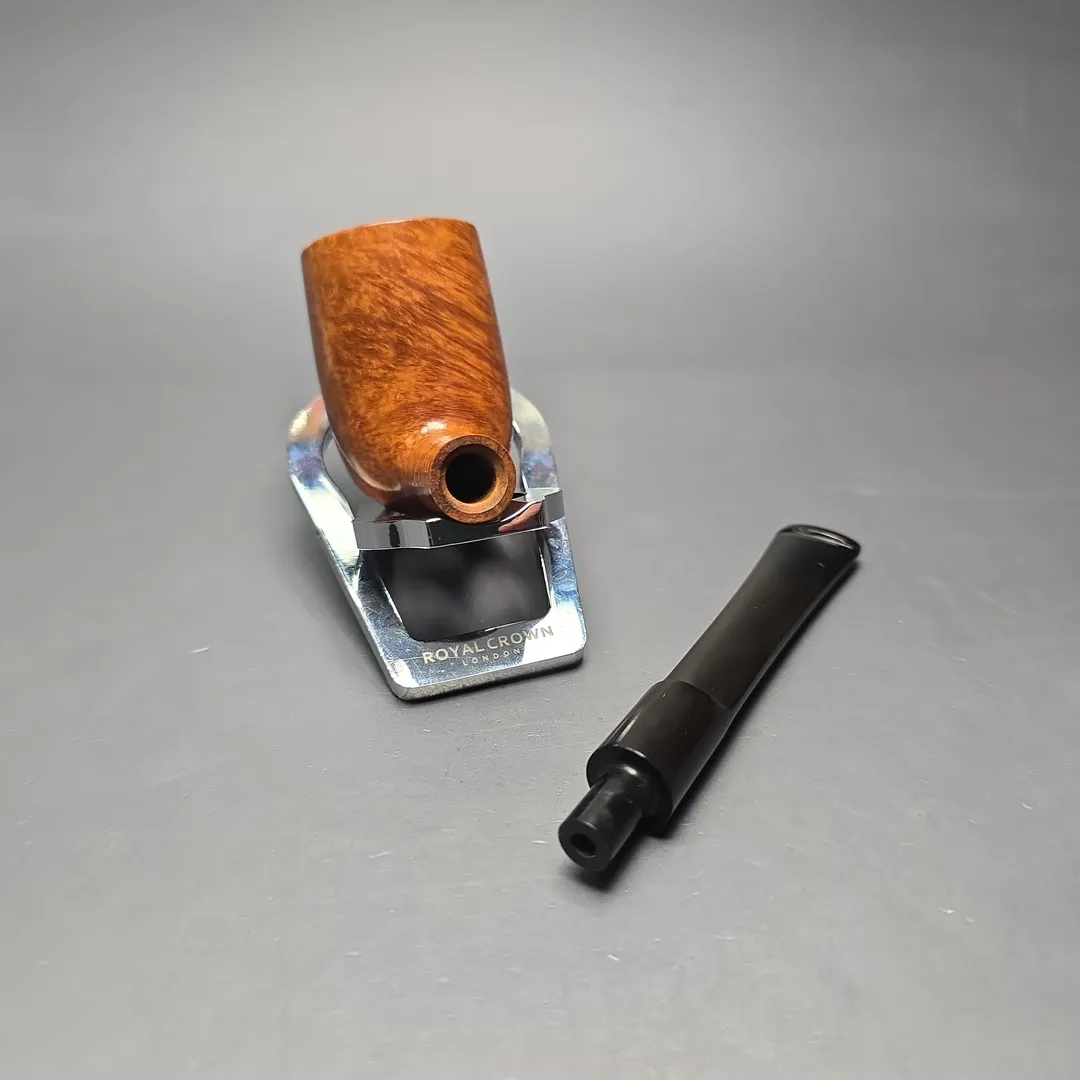
The condition is good. Some darkening and slight scratches on the rim, and minor finish fading.
Details:
Length: 5.9″ / 149.8mm
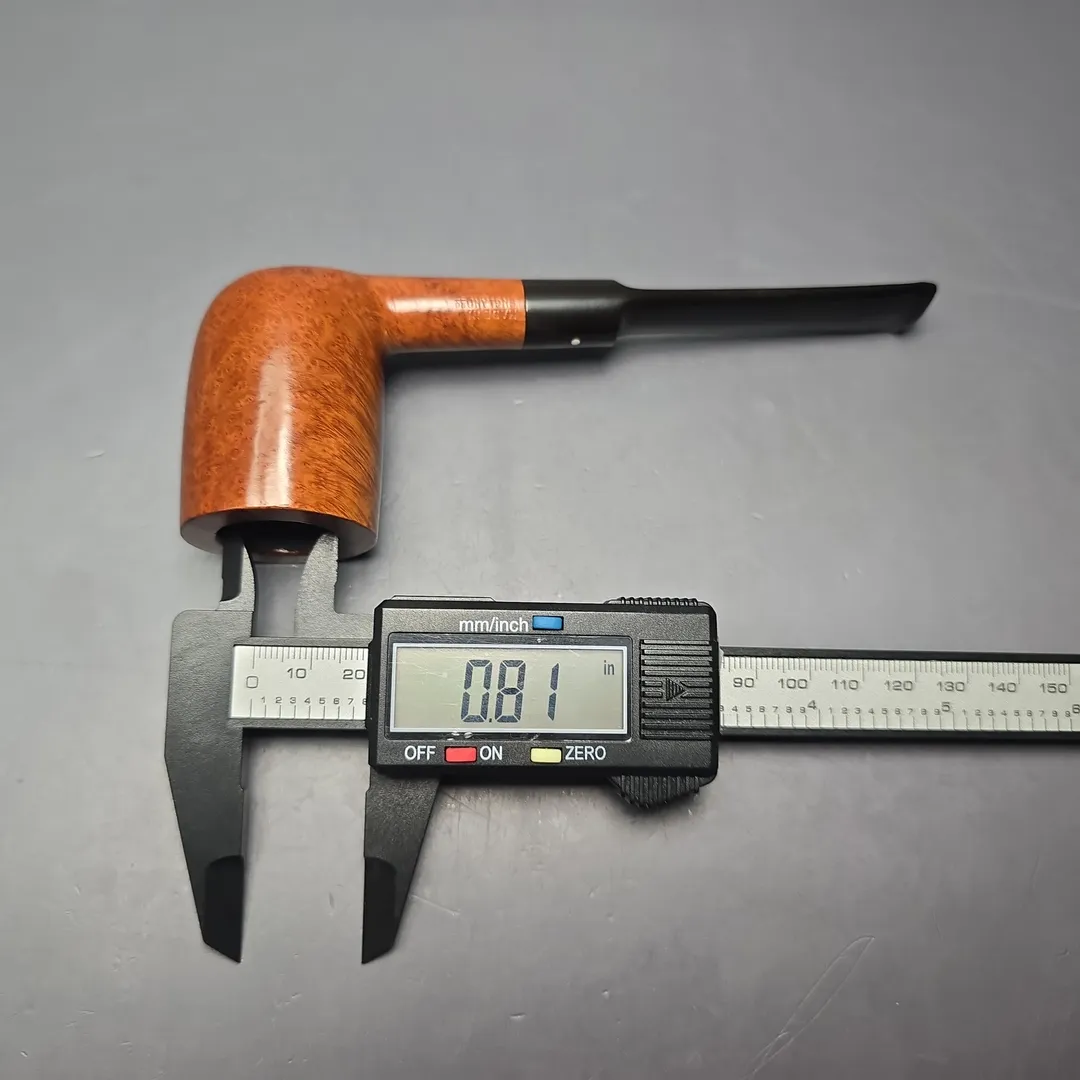
Bowl Width: 0.81 / 20.57mm
Bowl Depth: 1.83″ / 46.48mm
Weight: 1.1oz / 34g
| Weight | 15 oz |
|---|
| Condition | Used |
|---|---|
| Notes | Refurbished. |


