
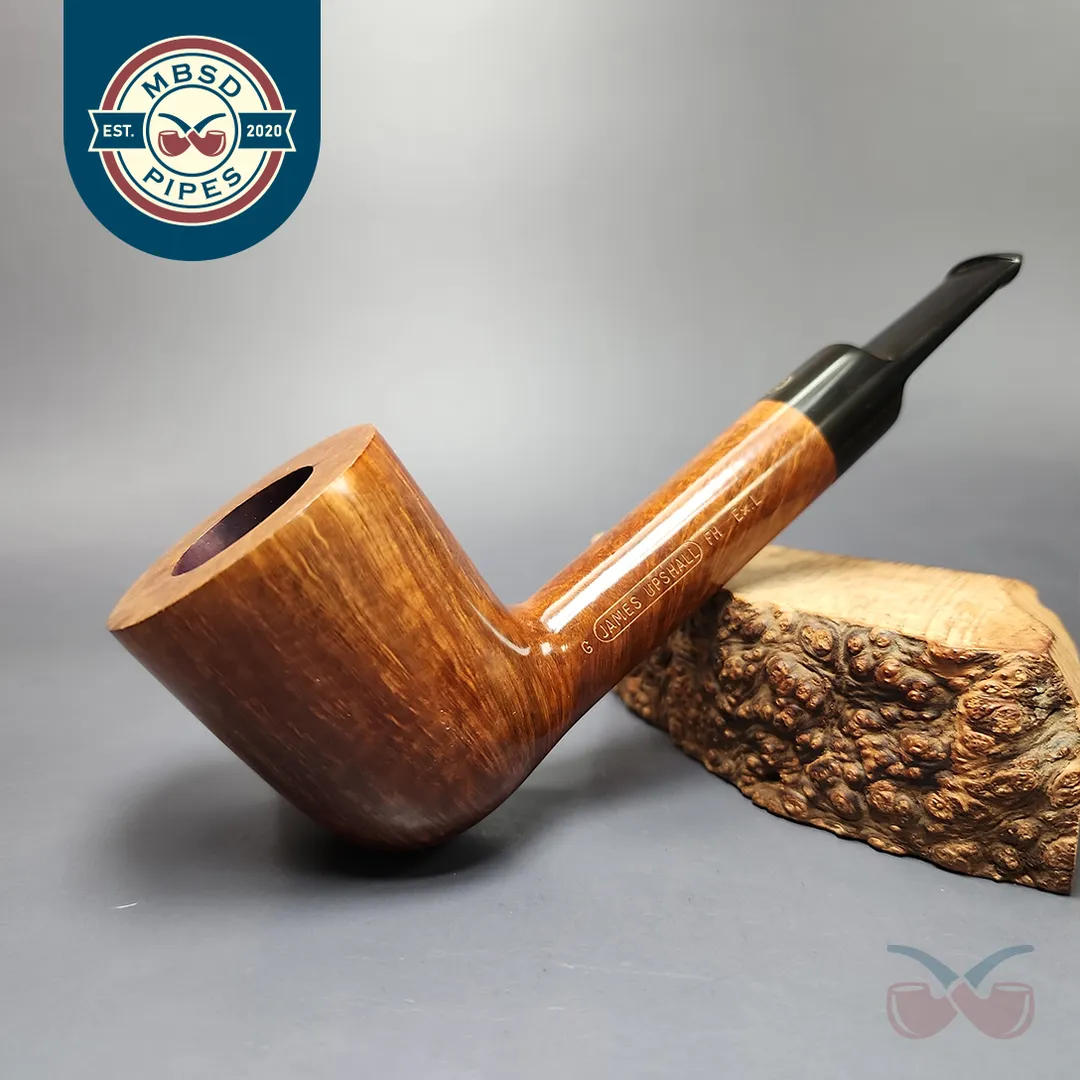
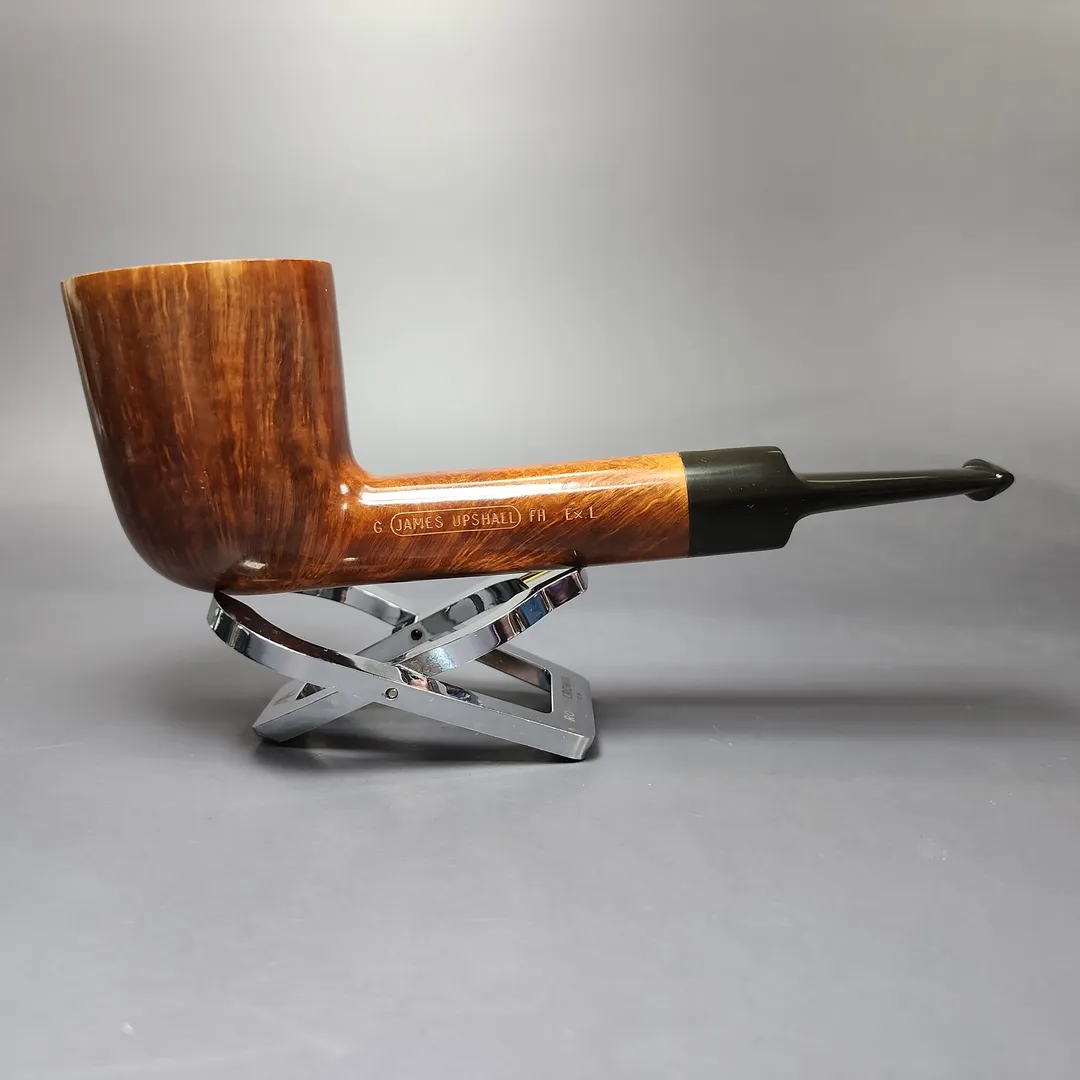
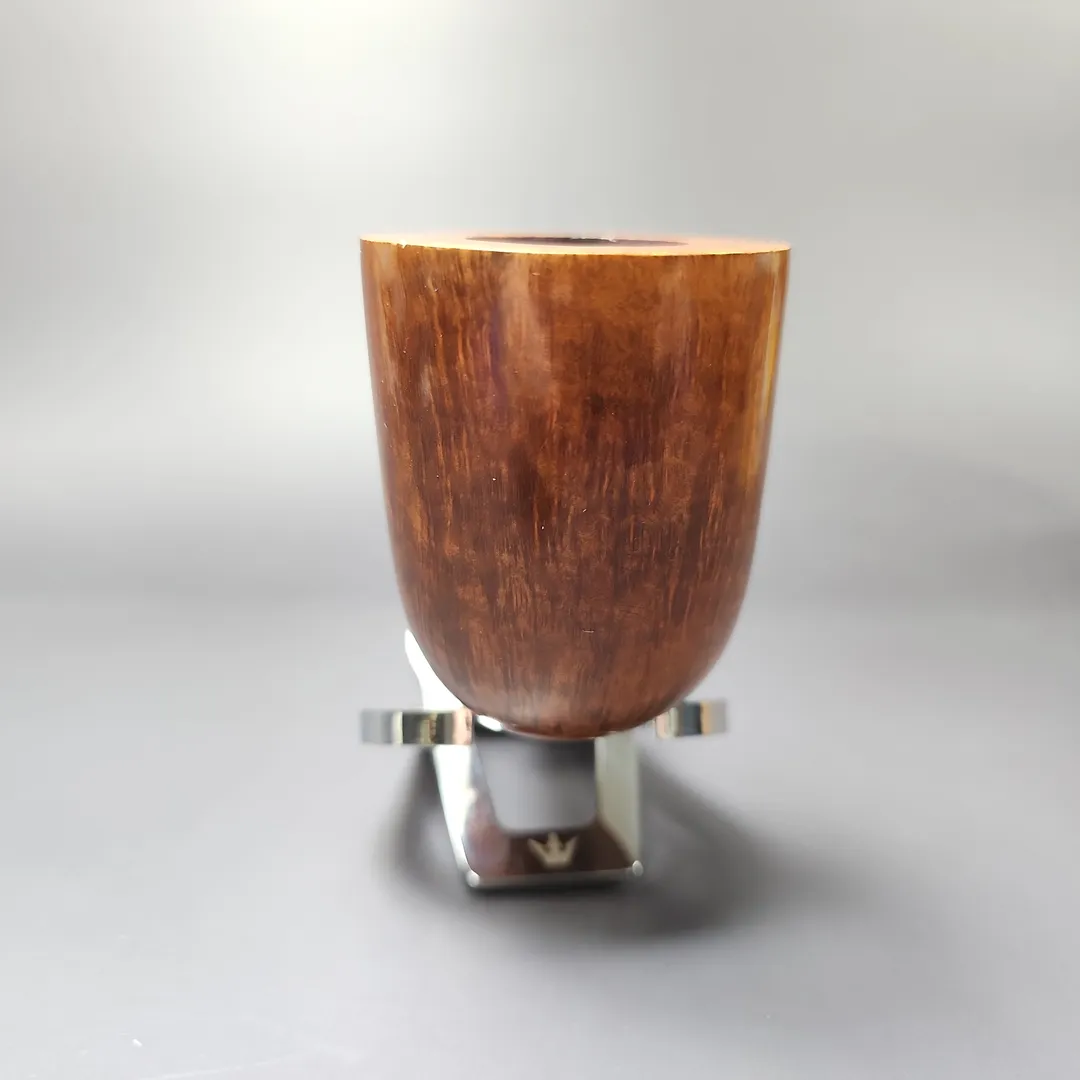
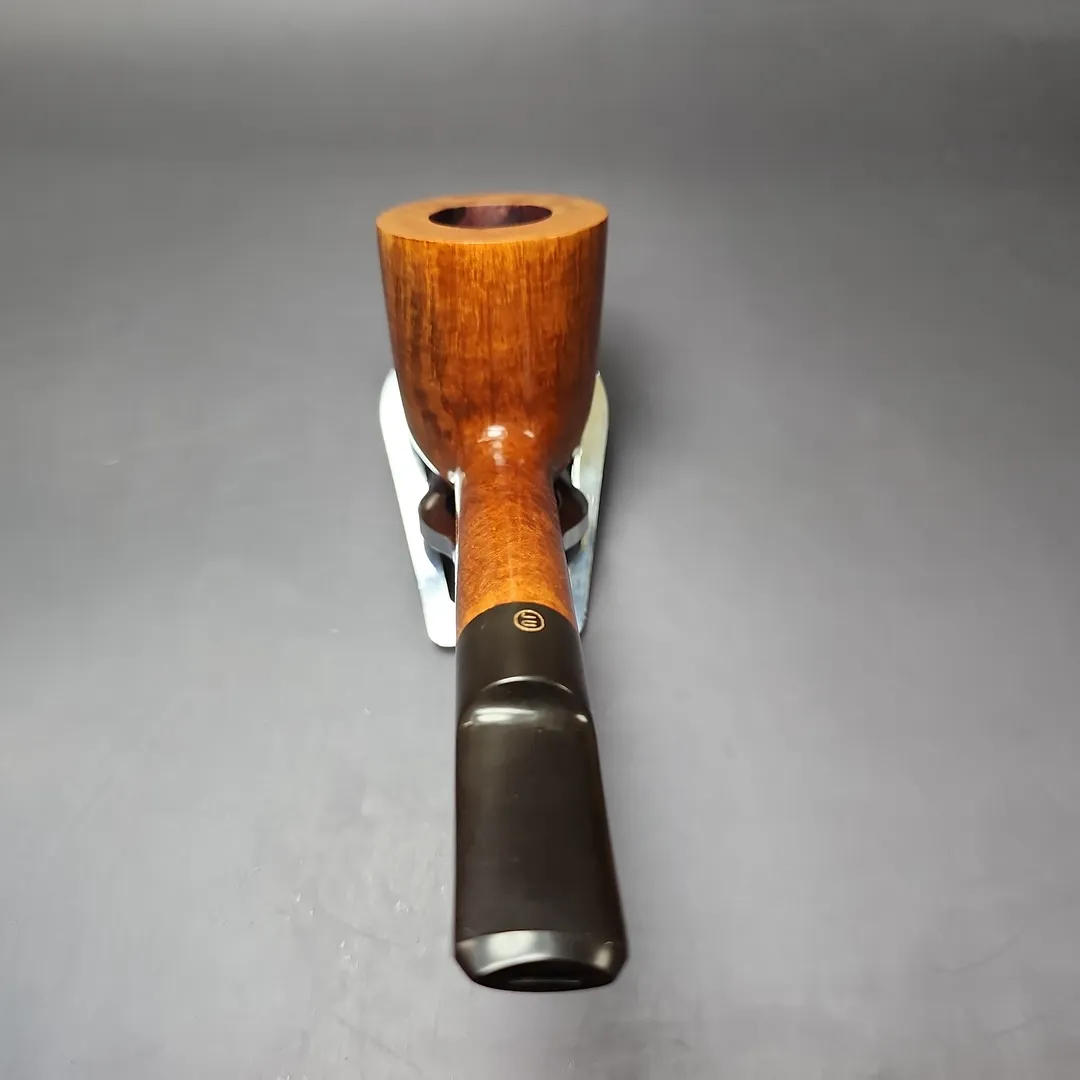
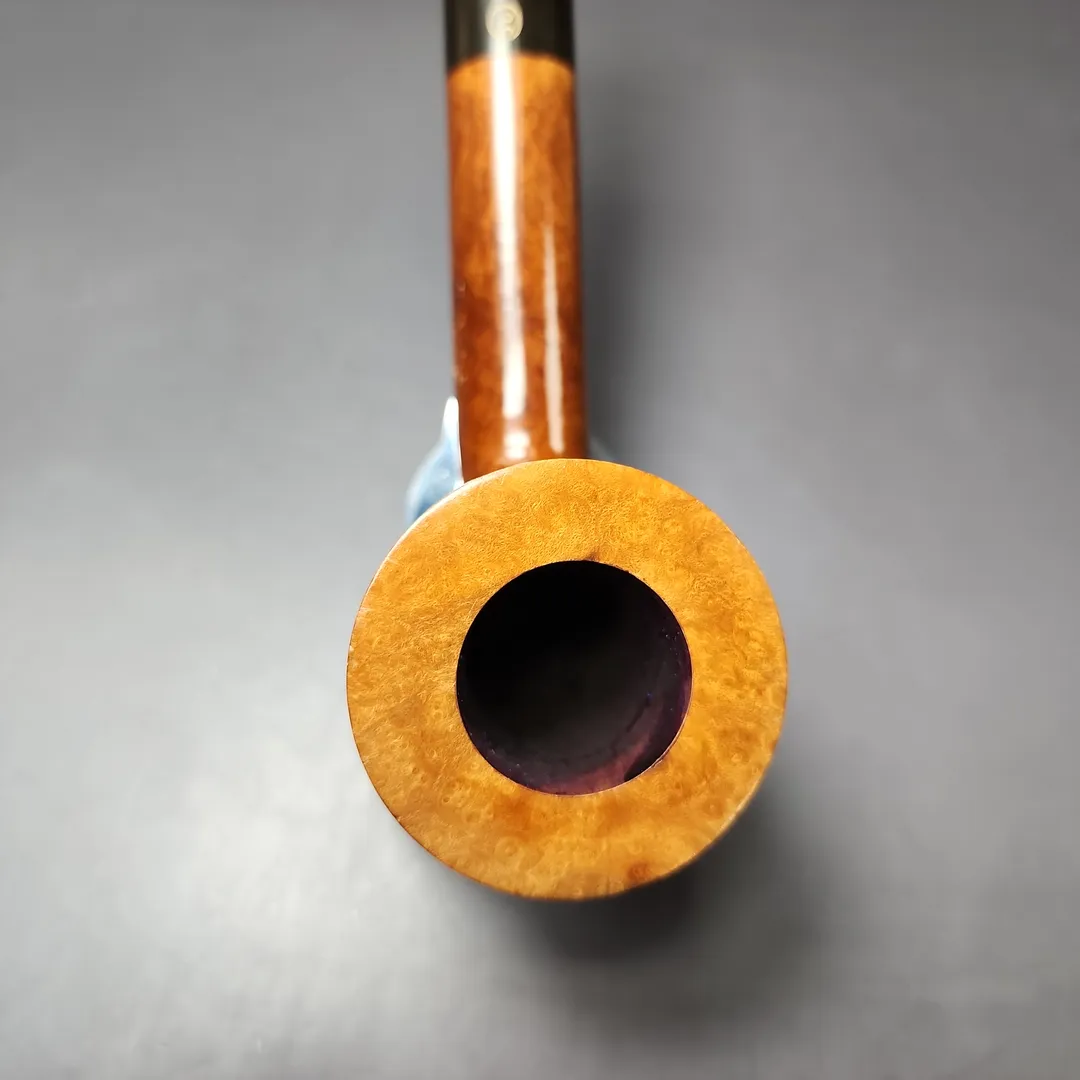
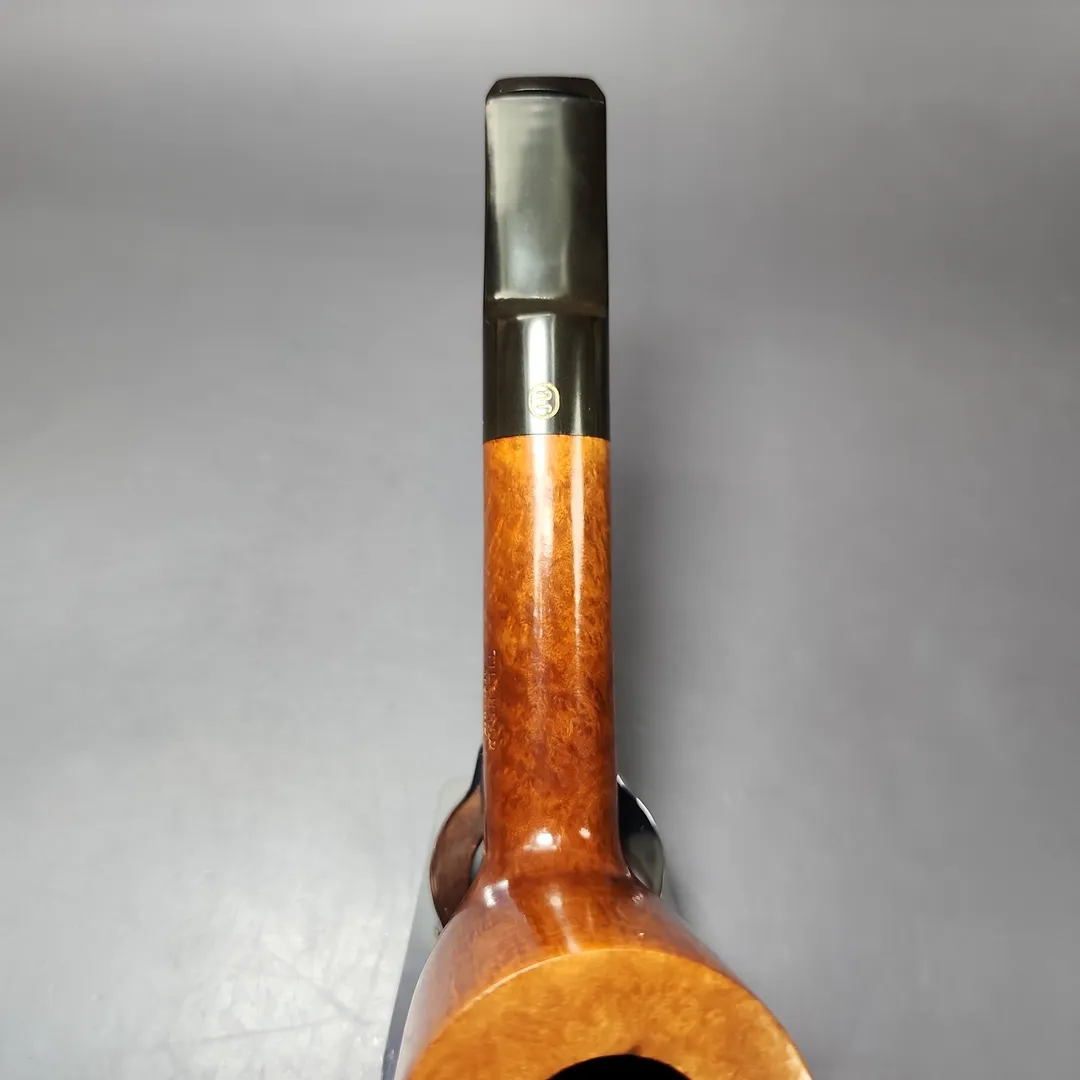
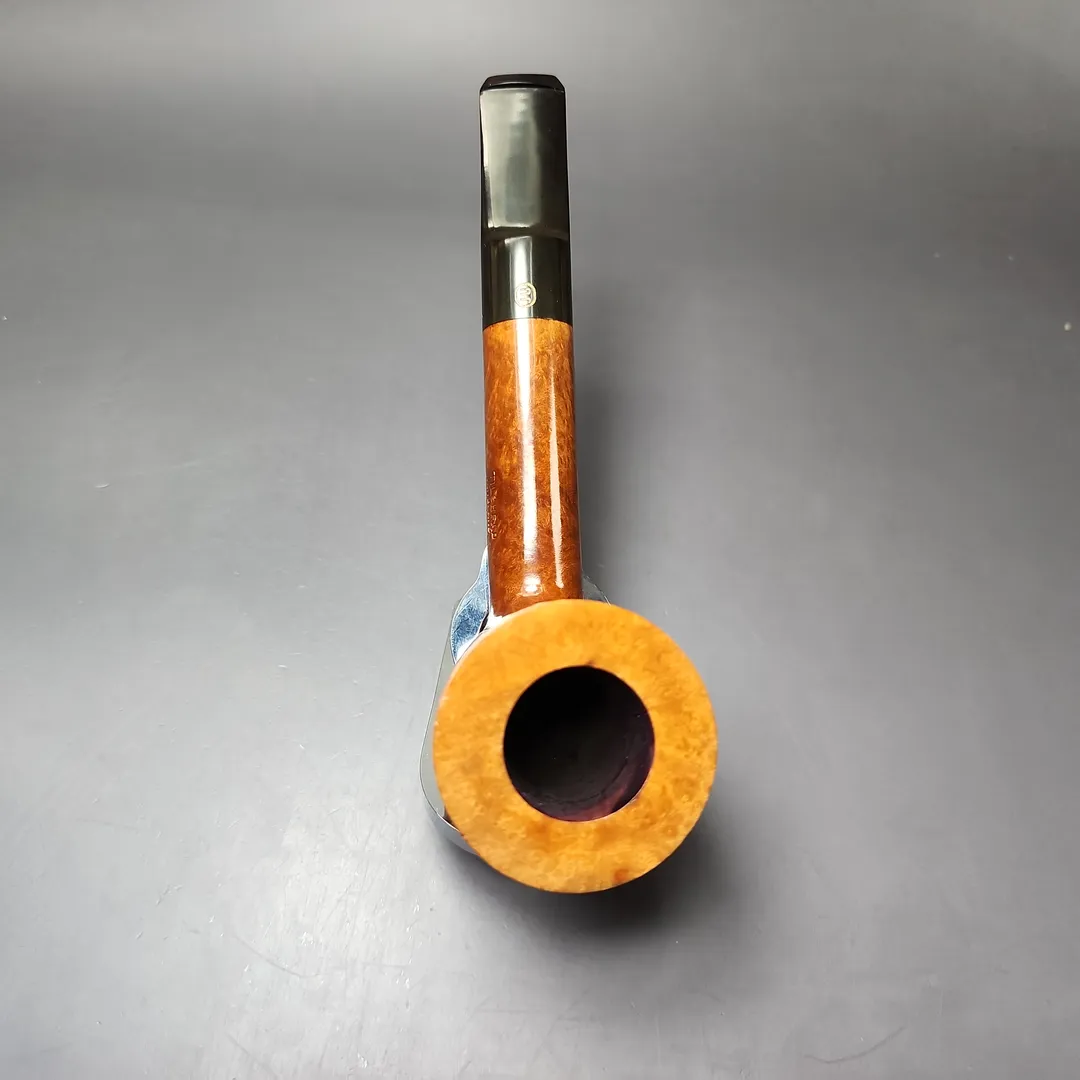
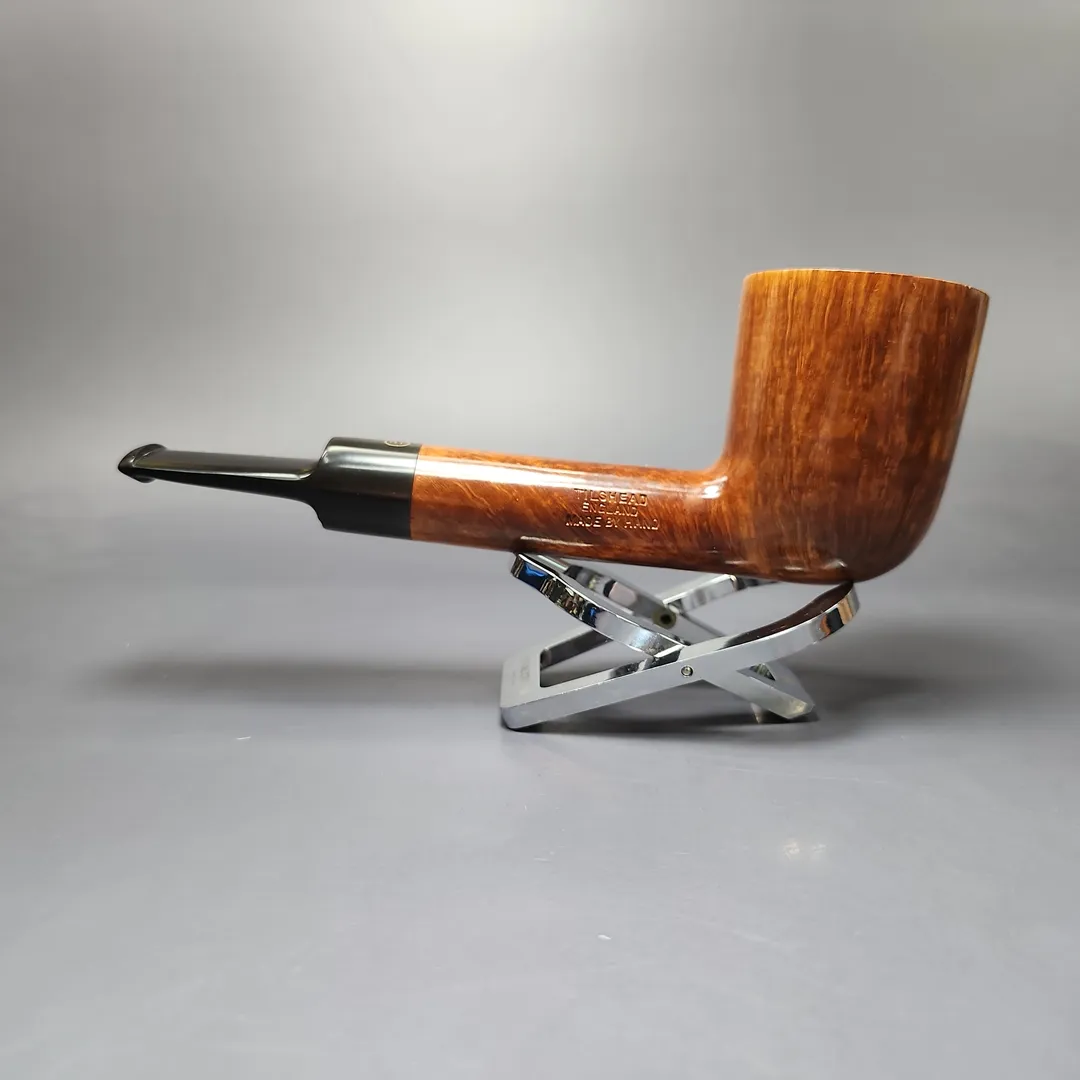
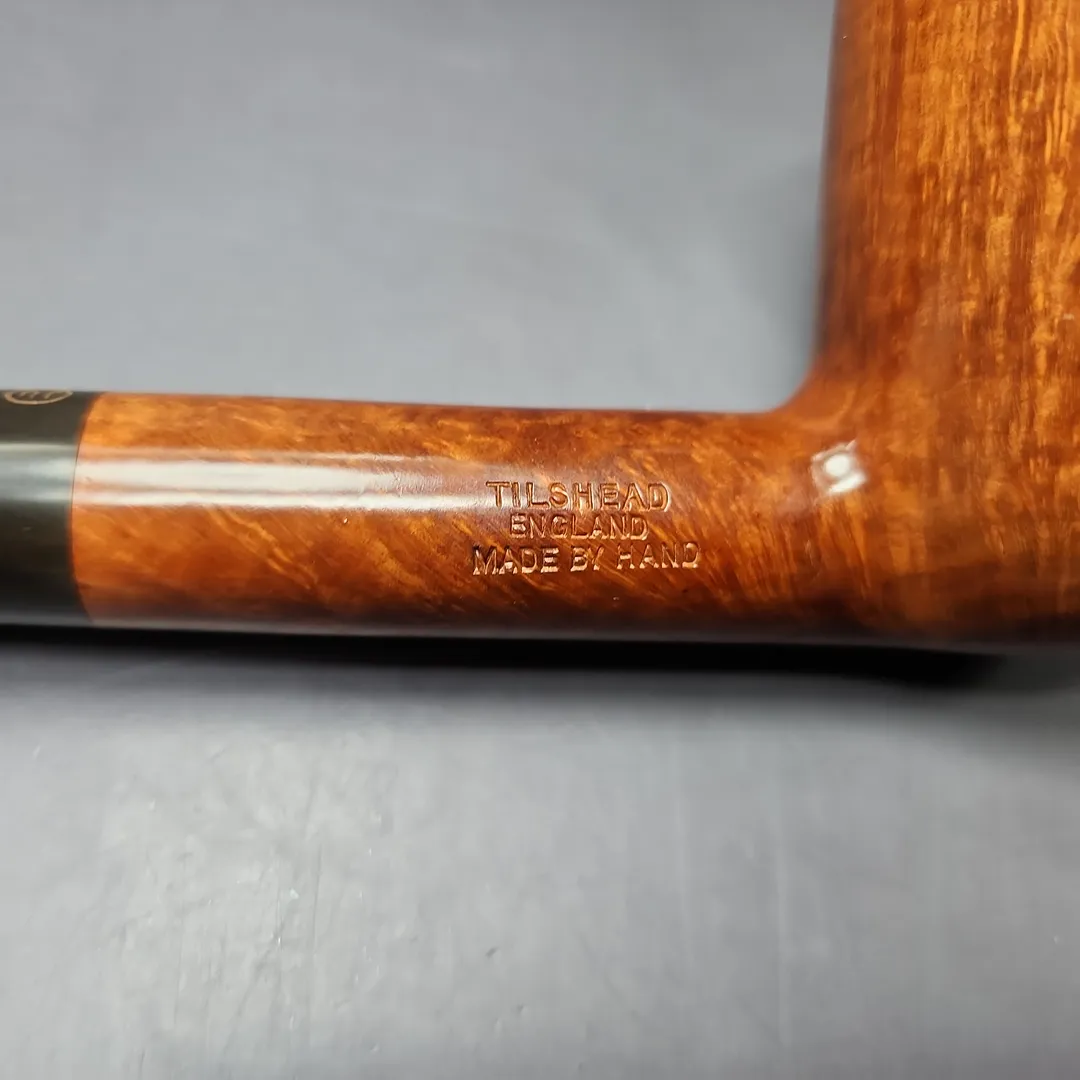
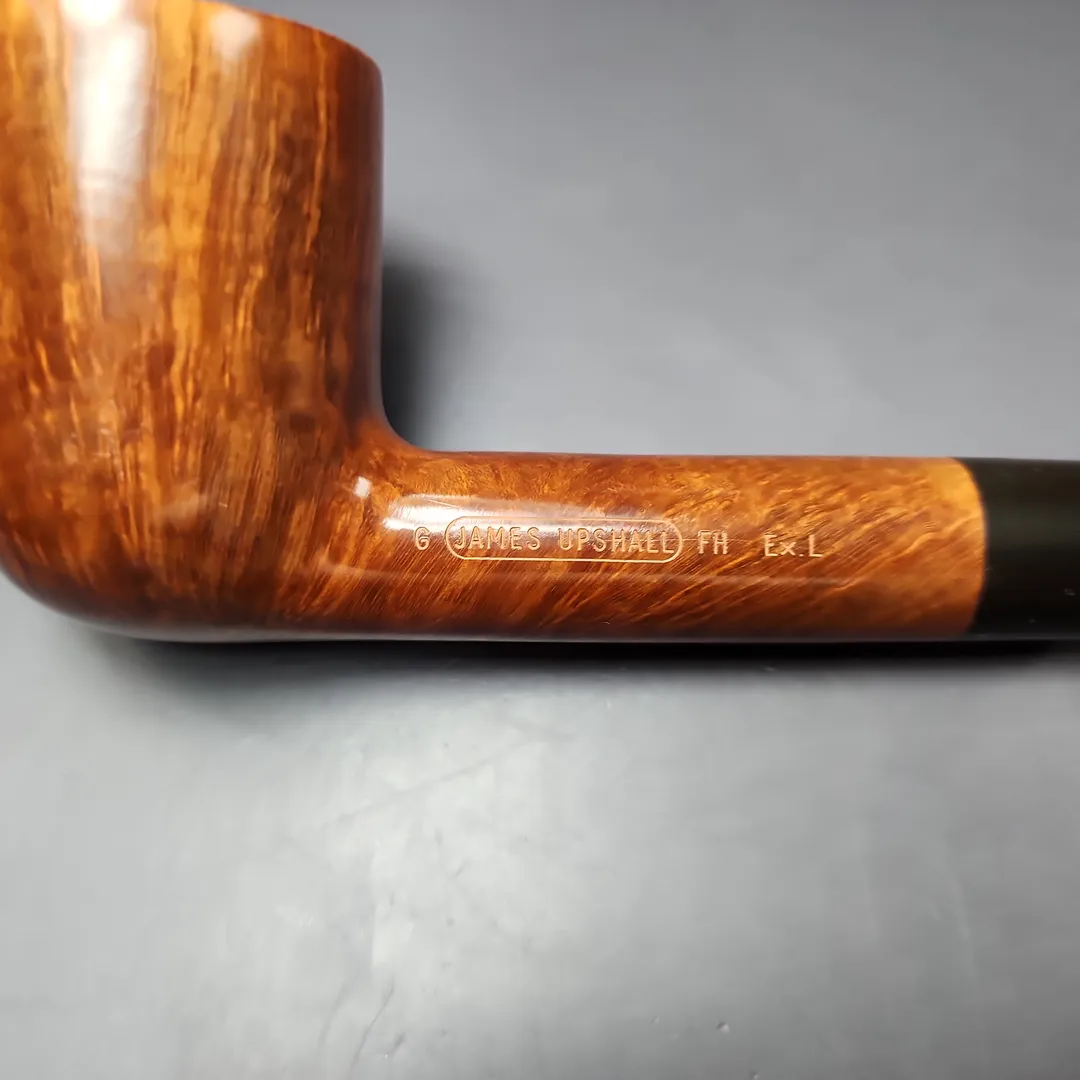
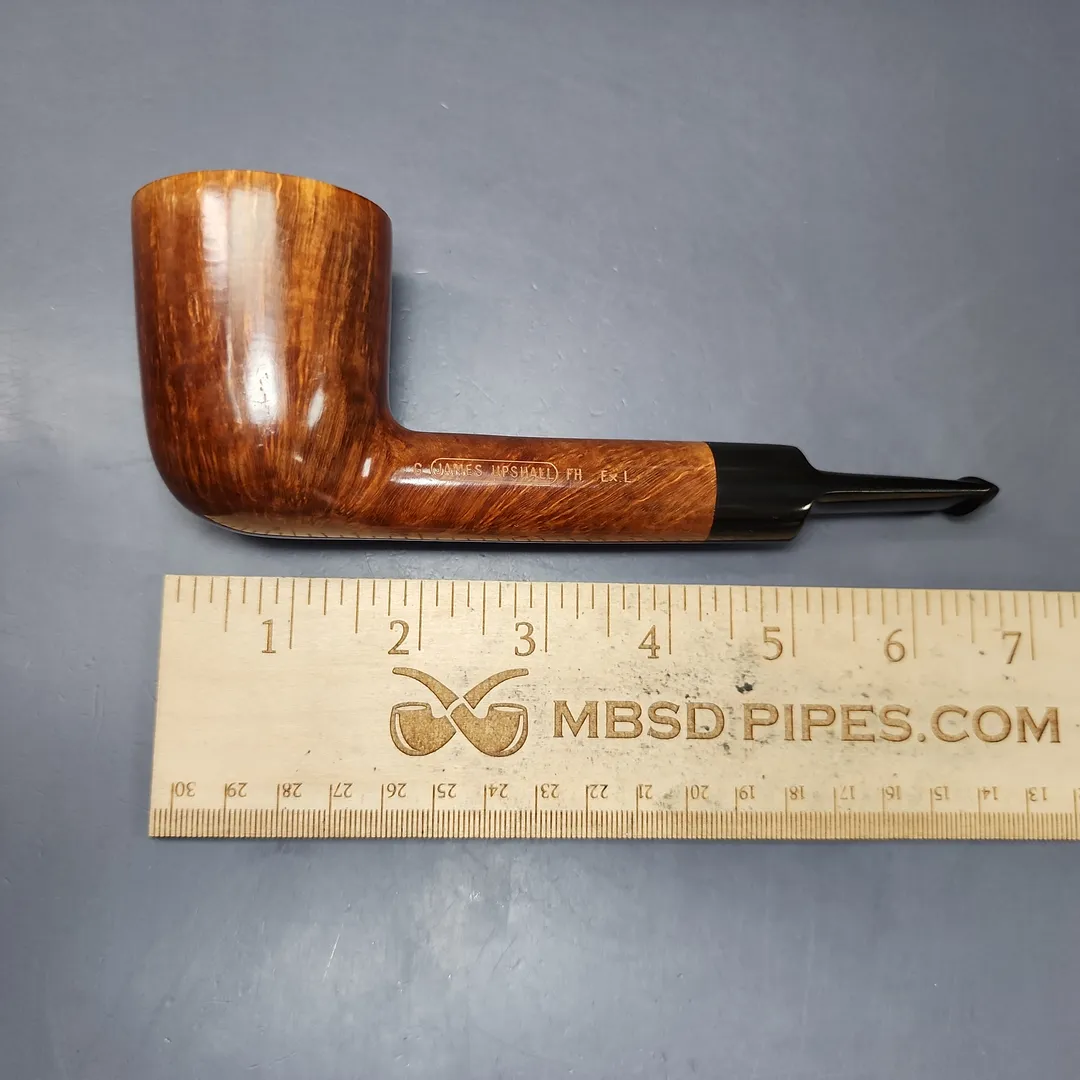
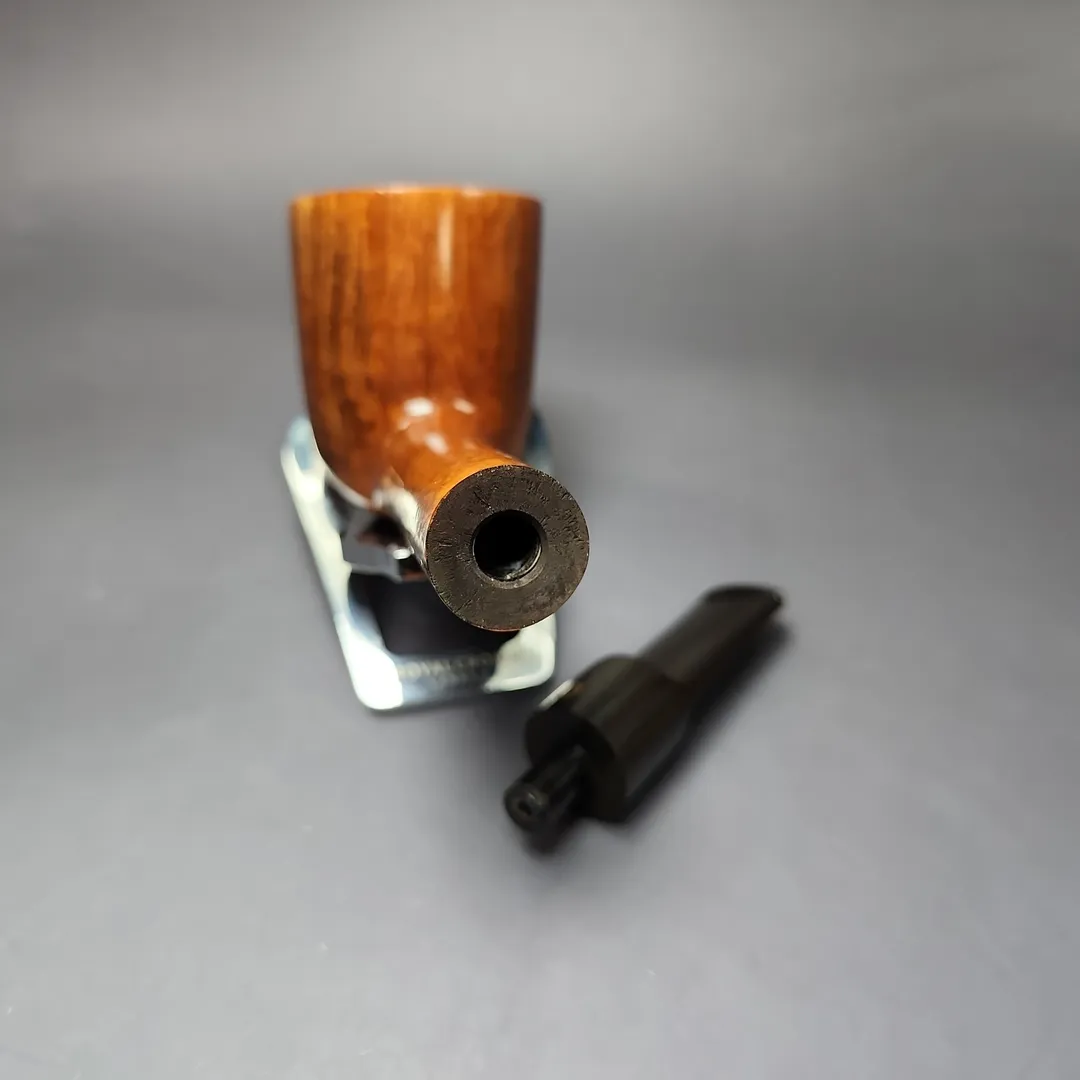
James Upshall G Grade EXL Smooth Long Shank Dublin Estate Briar Pipe, Unsmoked
$795.00
1 in stock
Please fill in the fields below with the shipping destination details in order to calculate the shipping cost.
Description
James Upshall was, along with Ferndown and Ashton, part of a new wave of British hand-made, high-grade pipes in the late 20th century, with their founders largely coming from previous positions in the factories of companies such as Dunhill and Charatan. James Upshall was founded in 1978 by Barry Jones and Ken Barnes, both of whom had previously worked for Charatan and who had worked their way up to being carvers Charatan’s higher-end, non-standard shapes. Jones and Barnes’ pipes quickly grew to being something of a status symbol, and were enjoyed by King Hussein of Jordan, Anwar Sadat, Bing Crosby, Yul Brynner, Robert Wagner and Tom Selleck. The company also made house-brand pipes for Astleys in London, along with many of the other major makes of the era. James Upshall pipes are no longer made, but their reputation as some of the finest hand-turned British pipes continues to endure.
As I have mentioned many times, the grading system used for James Upshall pipes was far from intuitive. For the most part, it was an alphabetical system, but it did not proceed in an alphabetical order, nor indeed in a reverse alphabetical order. In other words, James Upshall grades did not begin at “A” and move down the alphabet, through “B,” “C,” “D,” and so on, and nor did it begin at “Z” and move back up as the quality of the pipe increased. Ken Barnes and Barry Jones were far less focused on creating neat little grading schemes than they were on simply making high-grade pipes, which, to a significant extent, all James Upshall pipes were. How, then, should we understand the grading system used by the Tilshead Pipe Company? For a start, by the time the workshop closed, the lettered grading system for non-magnum pipes proceeded (in ascending order), as follows: S, A P, B G, E, X, XX. S, A, and P were the “Standard Grades,” while B, G, E, X, and XX were the “High Grades.” Grades ascended by virtue of grain quality, as is quite typical for pipes, though without looking at an example of each grade side by side it is still a little difficult intuit the exact difference that would qualify a pipe for a P grade, rather than, say, a B. But there is one trick that can be of great help: comparison. James Upshall pipes were deeply indebted to the pipes of Charatan and the grades used by the former could, per Ken Barnes, be analogized to those of the latter. A James Upshall P grade was, according to Barnes, comparable in grain quality to a Charatan Distinction; a B grade was comparable to an Executive; and, mostly importantly for this pipe, a James Upshall G grade was comparable to a Charatan Selected, or perhaps even a Supreme. Given that one of Barnes’s duties when he worked at F. Charatan & Son was grading Charatan pipes, this was something he was intimately familiar with. Looking at this very Charatan-esque, Extra Large, long shank Dublin, it’s difficult to argue with Barnes’s analogy, save for the thought that it might have been too modest.
This pipe is completely unsmoked with an original (slightly time-worn) bowl coating. Some very minor oxidation on the mouthpiece.
Details:
Length: 6.6″ / 167.6mm
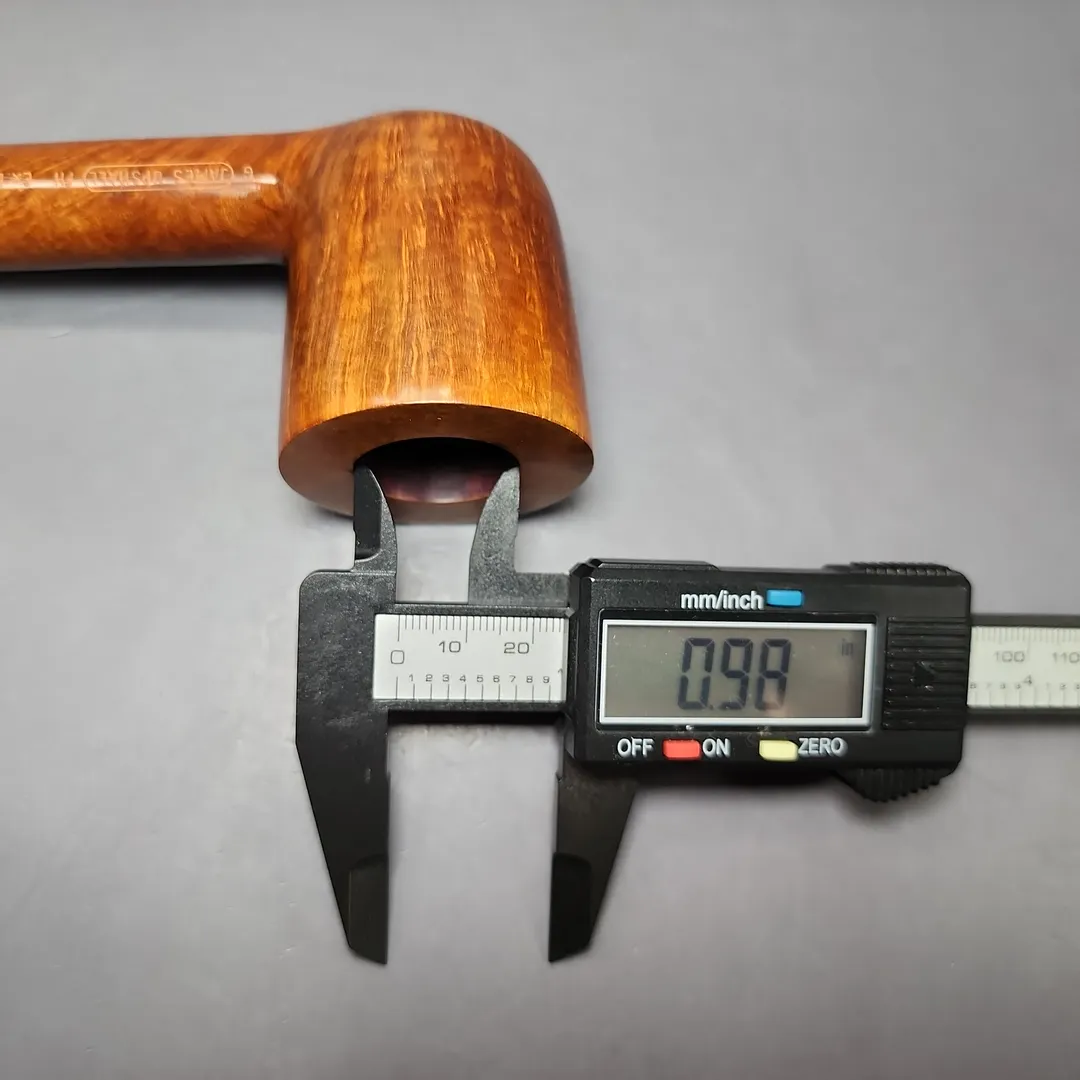
Bowl Width: 0.98 / 24.89mm
Bowl Depth: 1.75″ / 44.45mm
Weight: 2.8oz / 80g
Additional information
| Weight | 15 oz |
|---|
| Condition | Used |
|---|---|
| Notes | Unsmoked estate. |