Chris Herriot Smooth Swimming Fugu (New)
$370.00





About this pipe:
In 2003, one of France’s preeminent pipe luminaries, Erwin Van Hove, jubilantly proclaimed, “Hallelujah! One of the very best American artisans has recently settled on French soil.” Two decades later, Antoine Grenard, director of Chapuis-Comoy and president of the Confrérie des Maîtres-Pipiers de Saint-Claude, oversaw the induction of another artisan originally from the Anglophone world into its hallowed brotherhood. Van Hove was, of course, welcoming Trever Talbert. The Confrérie, on the other hand, was welcoming Chris Herriot. Parallels between the two are difficult to ignore; both were outsiders who laid down roots in France and, crucially, thrived by it. Both forged connections with the Francophone pipe community, developing friendships and associations that would help them lay the foundations of their respective brands. And both would build something on these foundations that garnered them significant national and international acclaim. In Herriot’s case, this meant apprenticing under Bruno Nuttens (himself a former student of Pierre Morel and Tom Eltang), spending several days each week laboring in Nuttens’ Charpey workshop, and the rest of his time in his own.
In biological contexts, “fugu” and “blowfish” refer to the same creature. But in pipes, the words have slightly different meanings. The blowfish shape came out of Denmark, through figures such as Lars Ivarsson and Peter Heeschen, while the fugu shape came after, and from elsewhere in the world. Fugu shapes, on the other hand, came out of the Japanese artisan scene, which makes sense given that “fugu” is Japanese for “blowfish.” But it wasn’t just the name that Japanese artisans modified; the shape itself was transformed, incorporating novel approaches to proportion and symmetry (or, rather, asymmetry), resulting in pipes that were visibly related to their Danish counterparts, but also very different. In more recent times, the fugu has been transformed again and again as artisans around the world put their own spin on it, resulting in a shape with more distinct variations than there are extant species of their namesake.
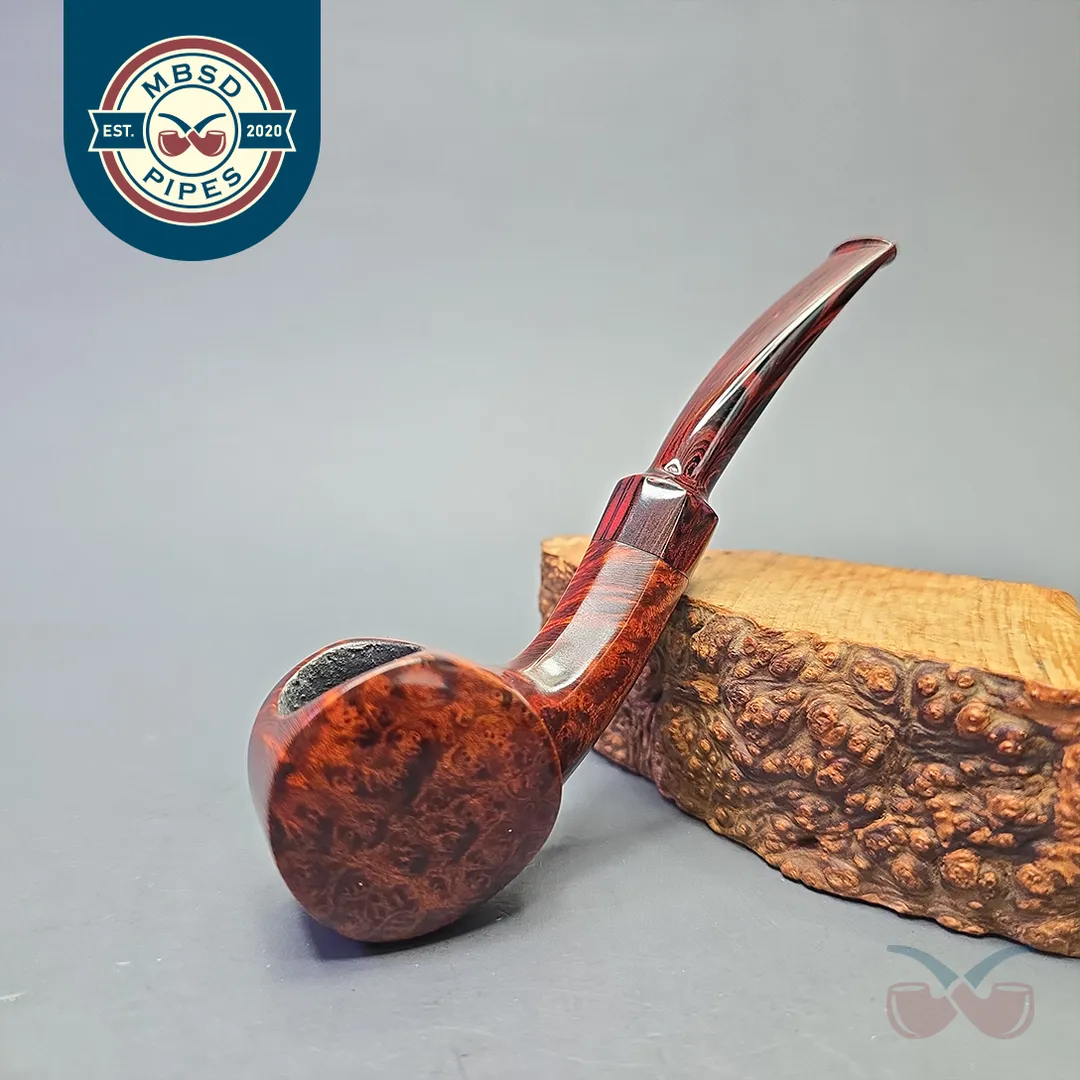
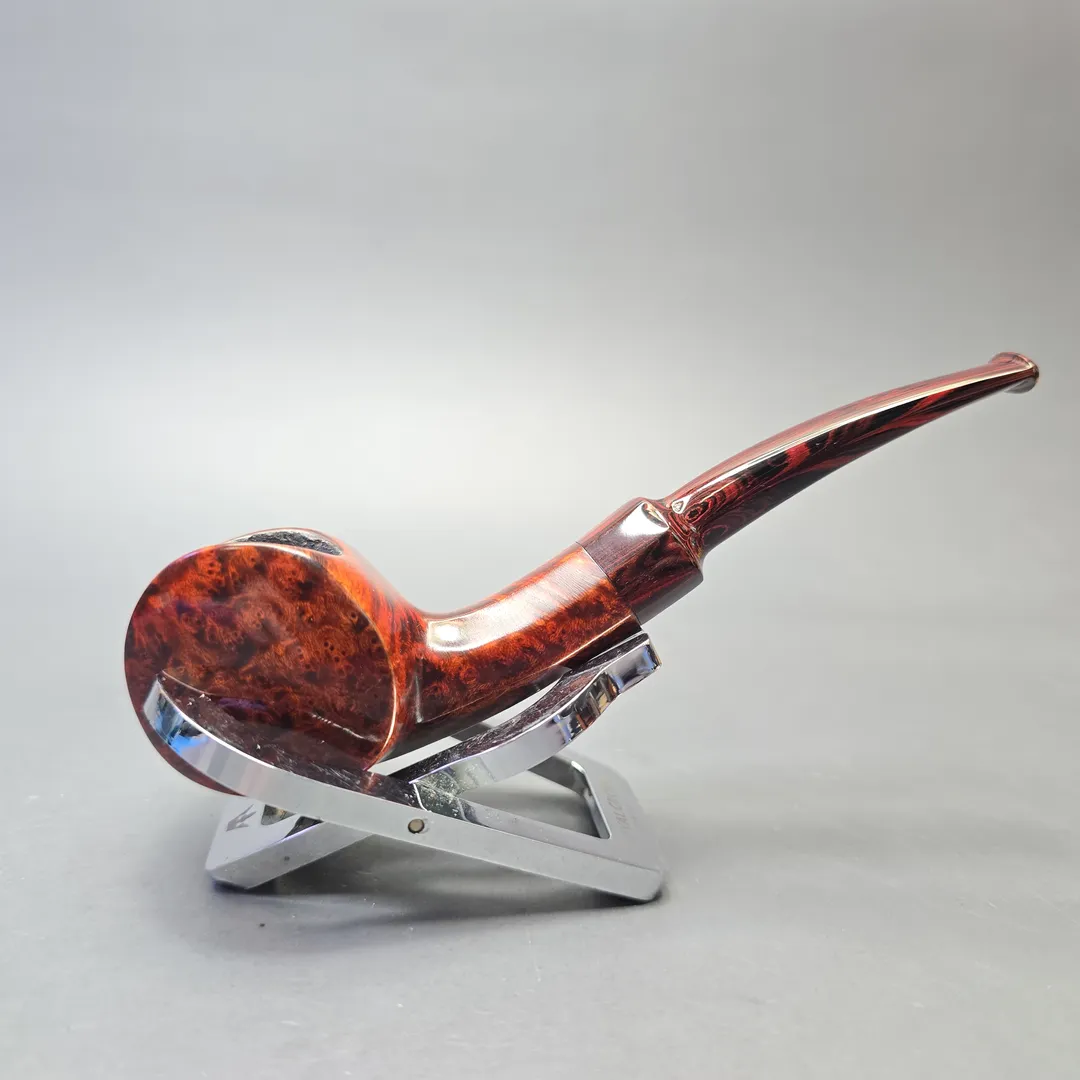
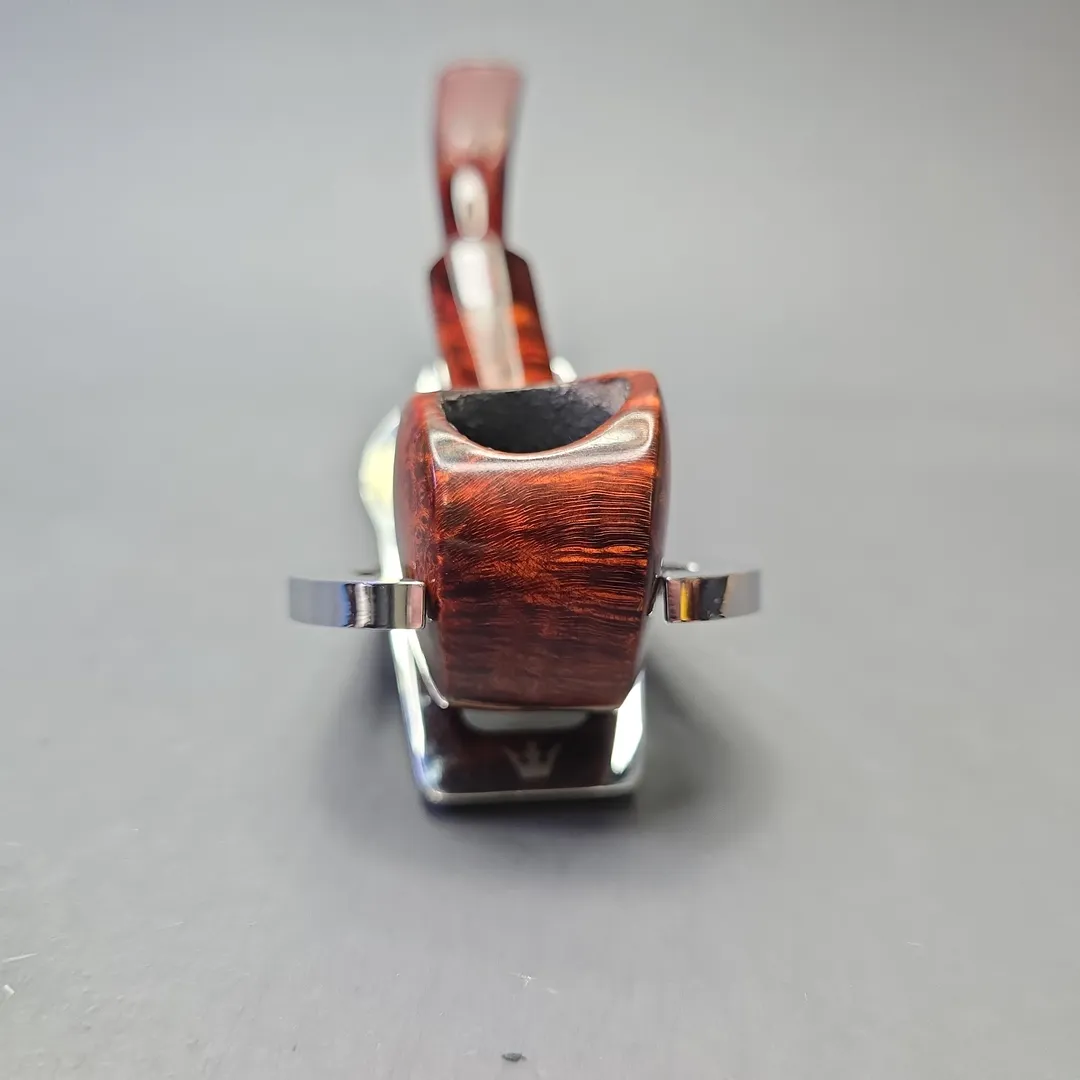
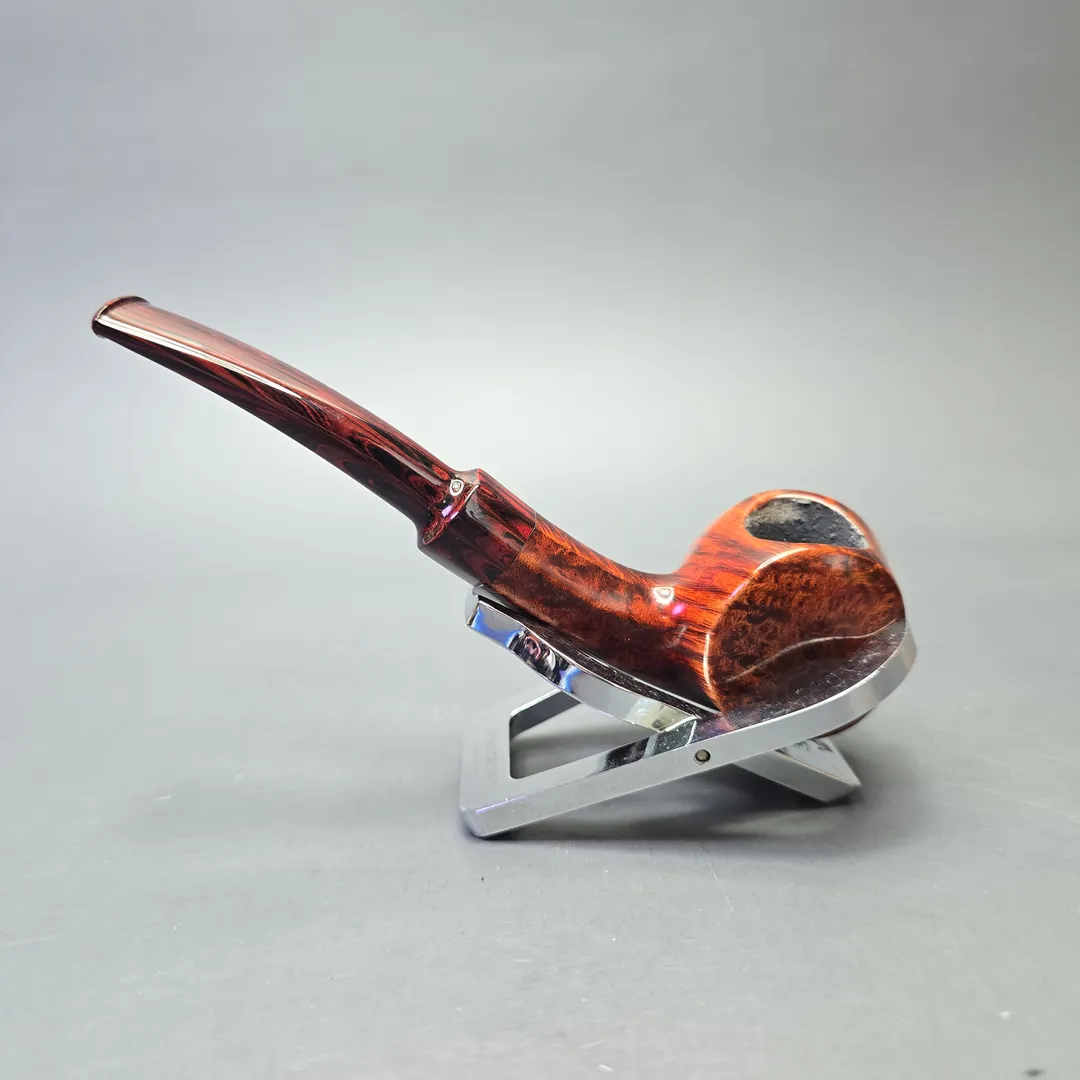
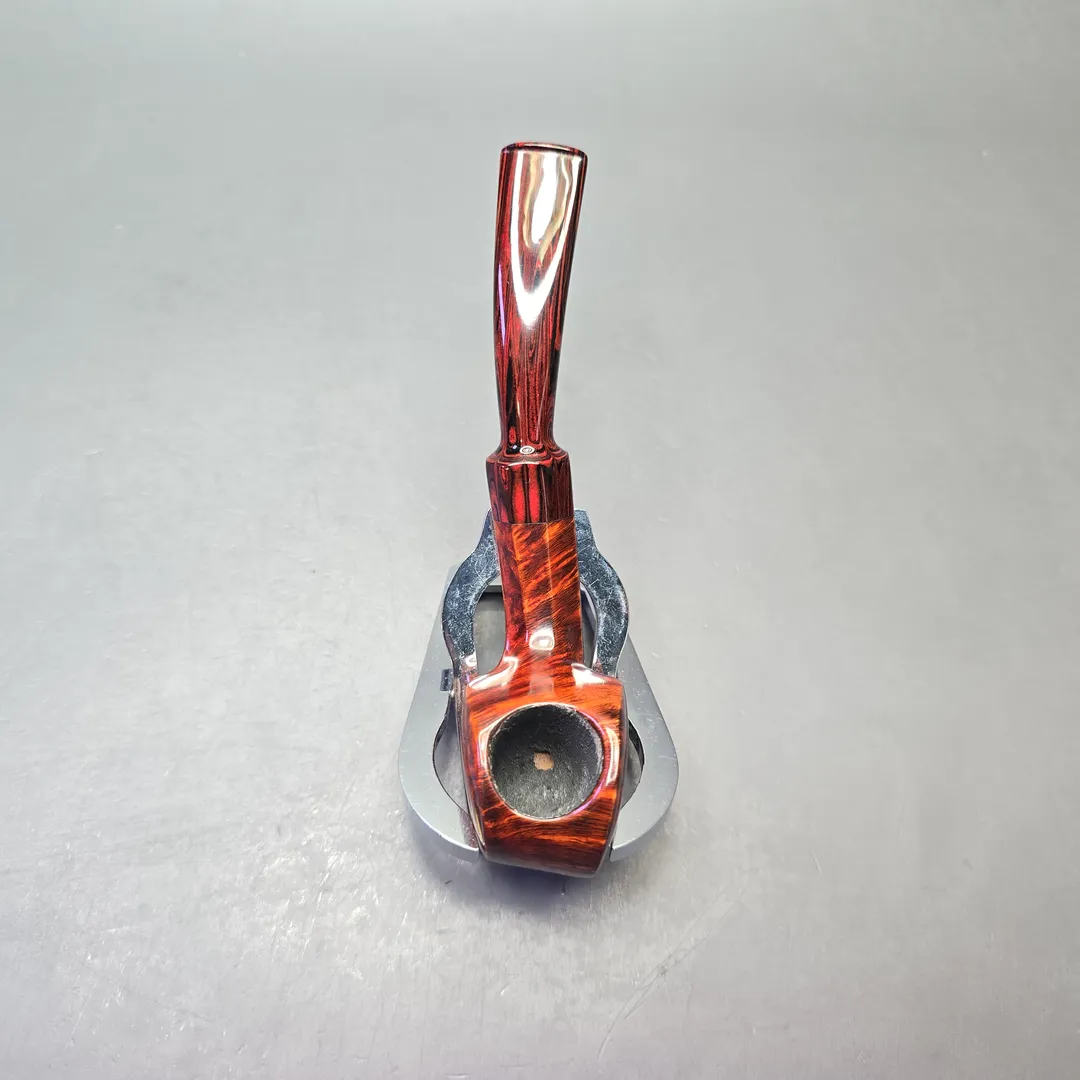
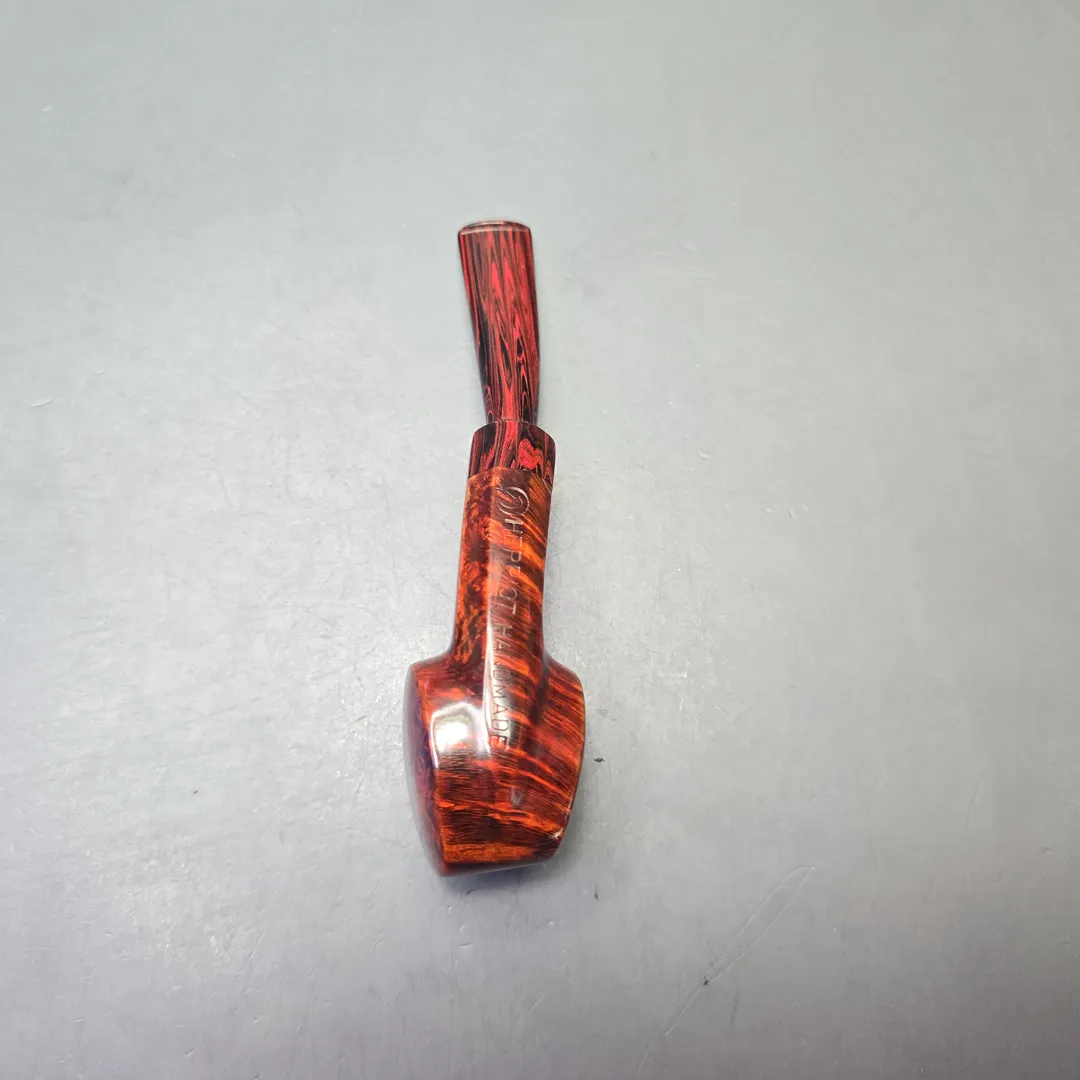
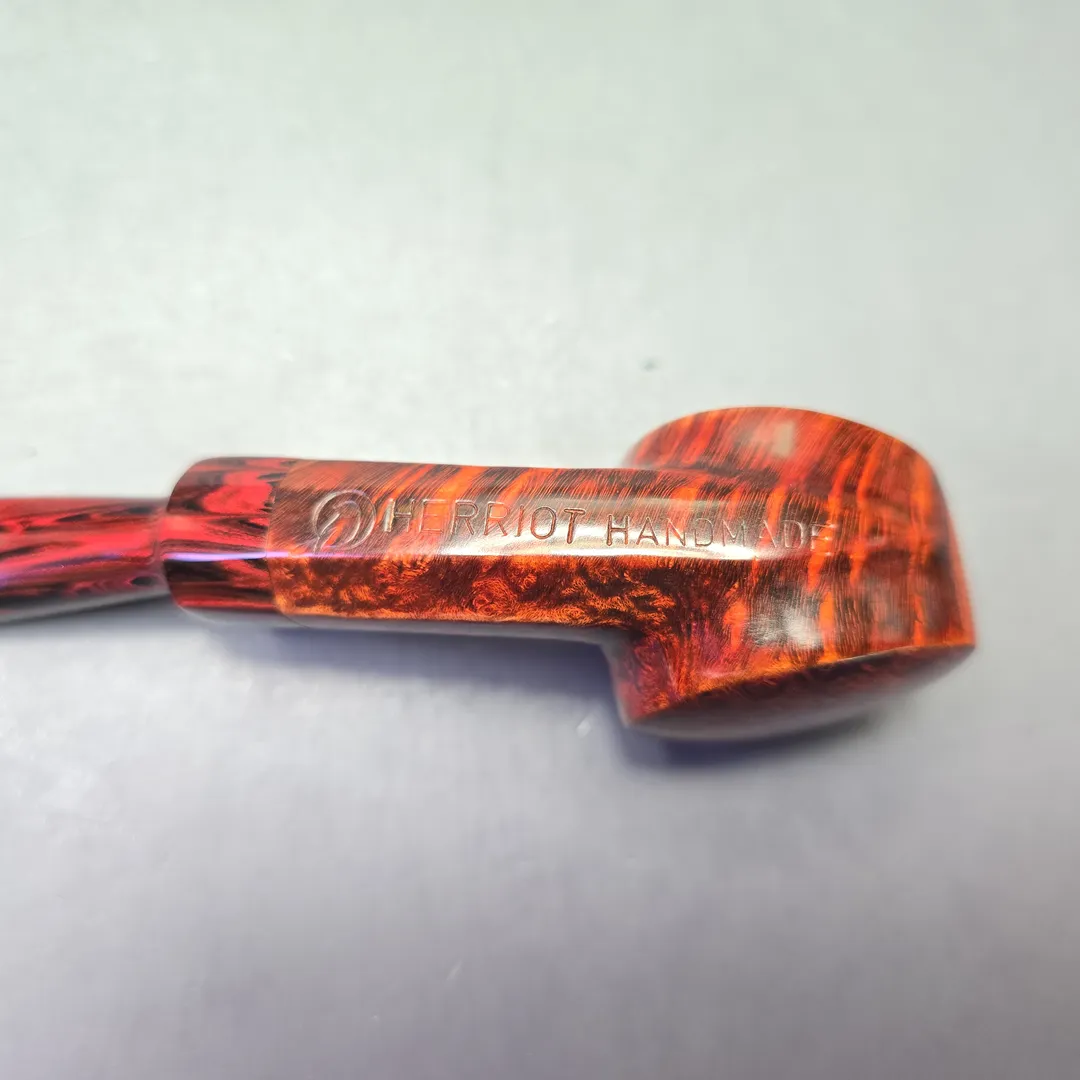
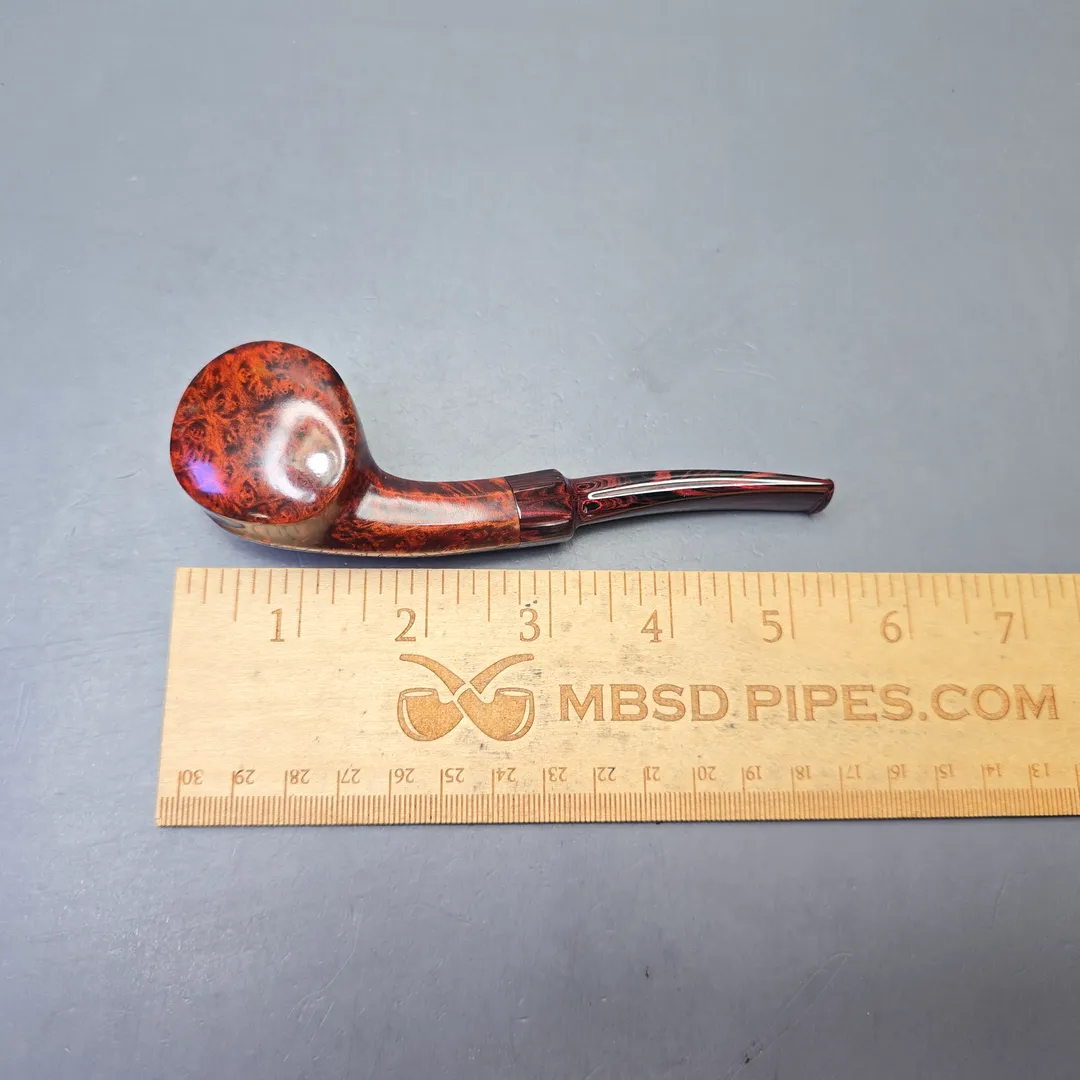
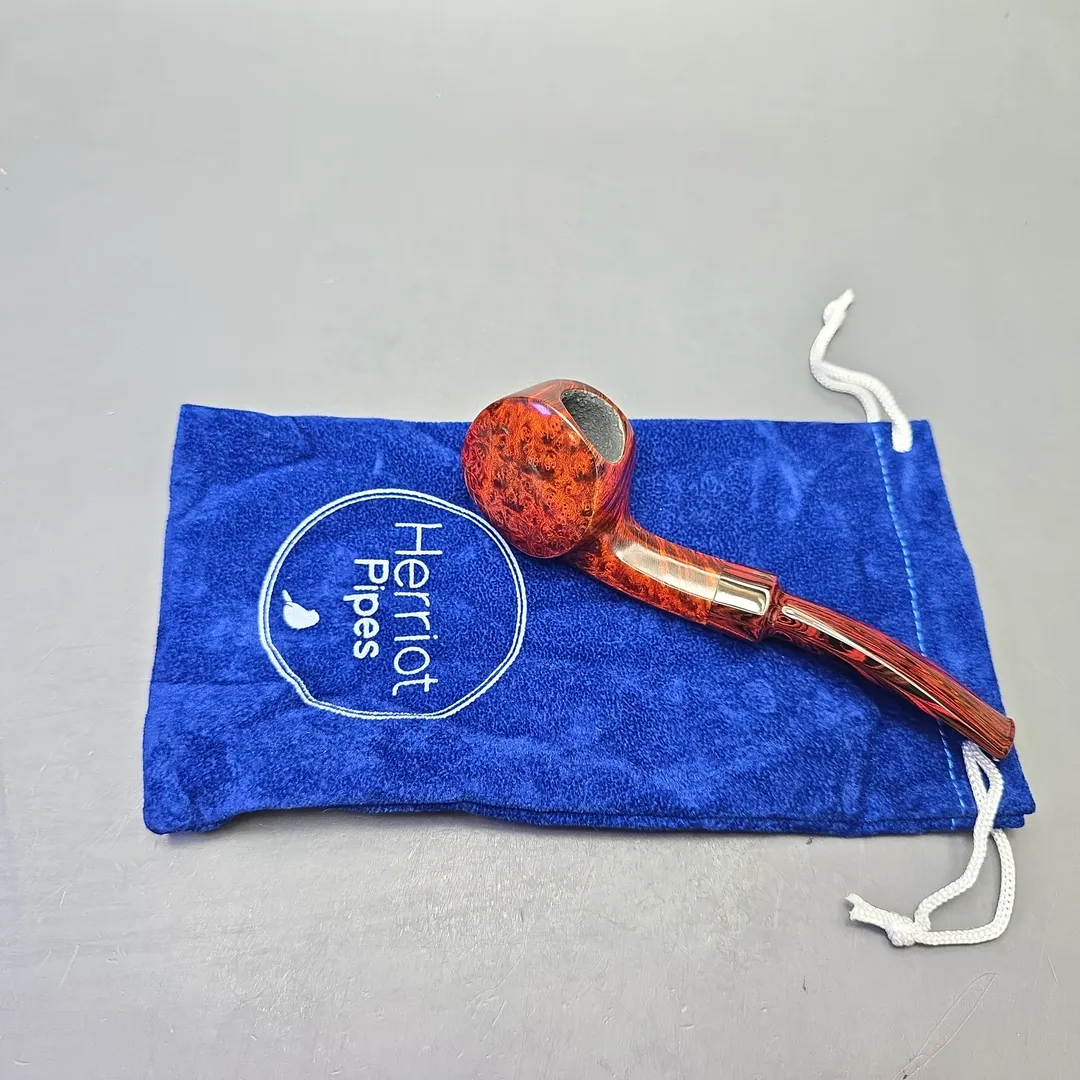
This featherweight rendition from Chris Herriot incorporates another common element among post-Scandinavian fugu renditions into its design, namely motion. By tracing a graceful bend from bowl to button, the shape appears to “swim” along, just like its namesake, glistening with bird’s-eye chatoyancy as it goes.
Details:
Length: 5.4″ / 137.1mm
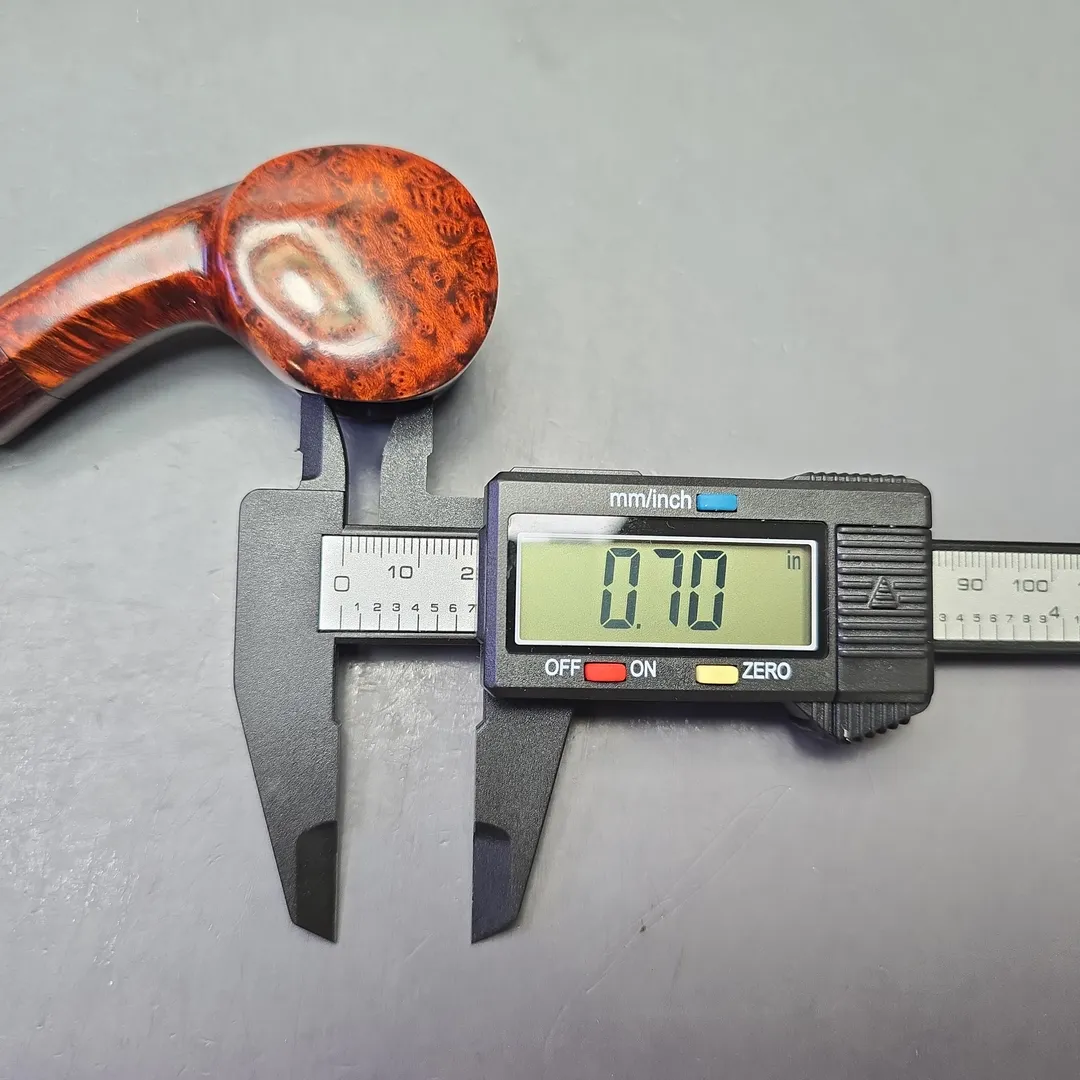
Bowl Width: 0.70 / 17.78mm
Bowl Depth: 1.19″ / 30.22mm
Weight: 0.9oz / 28g