
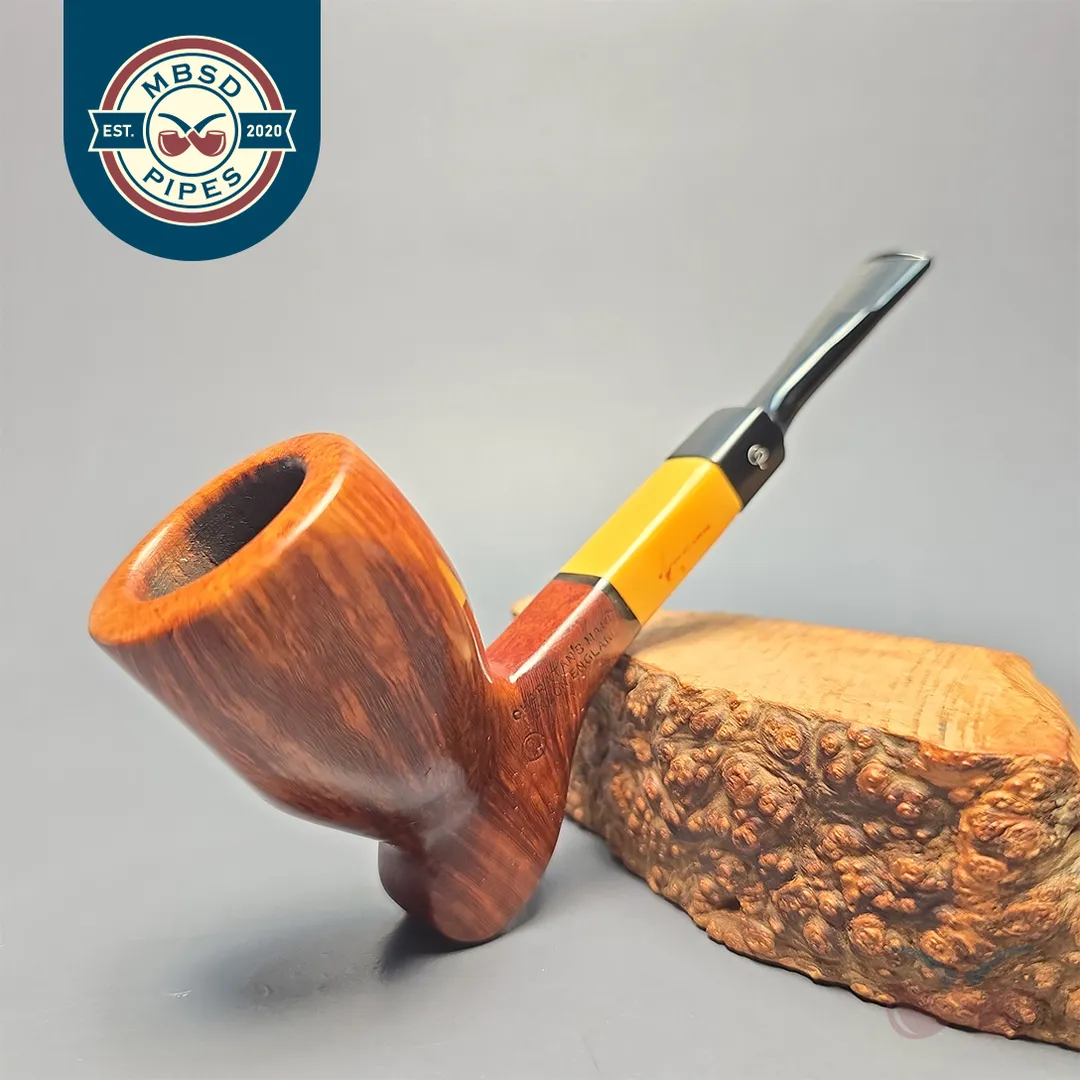
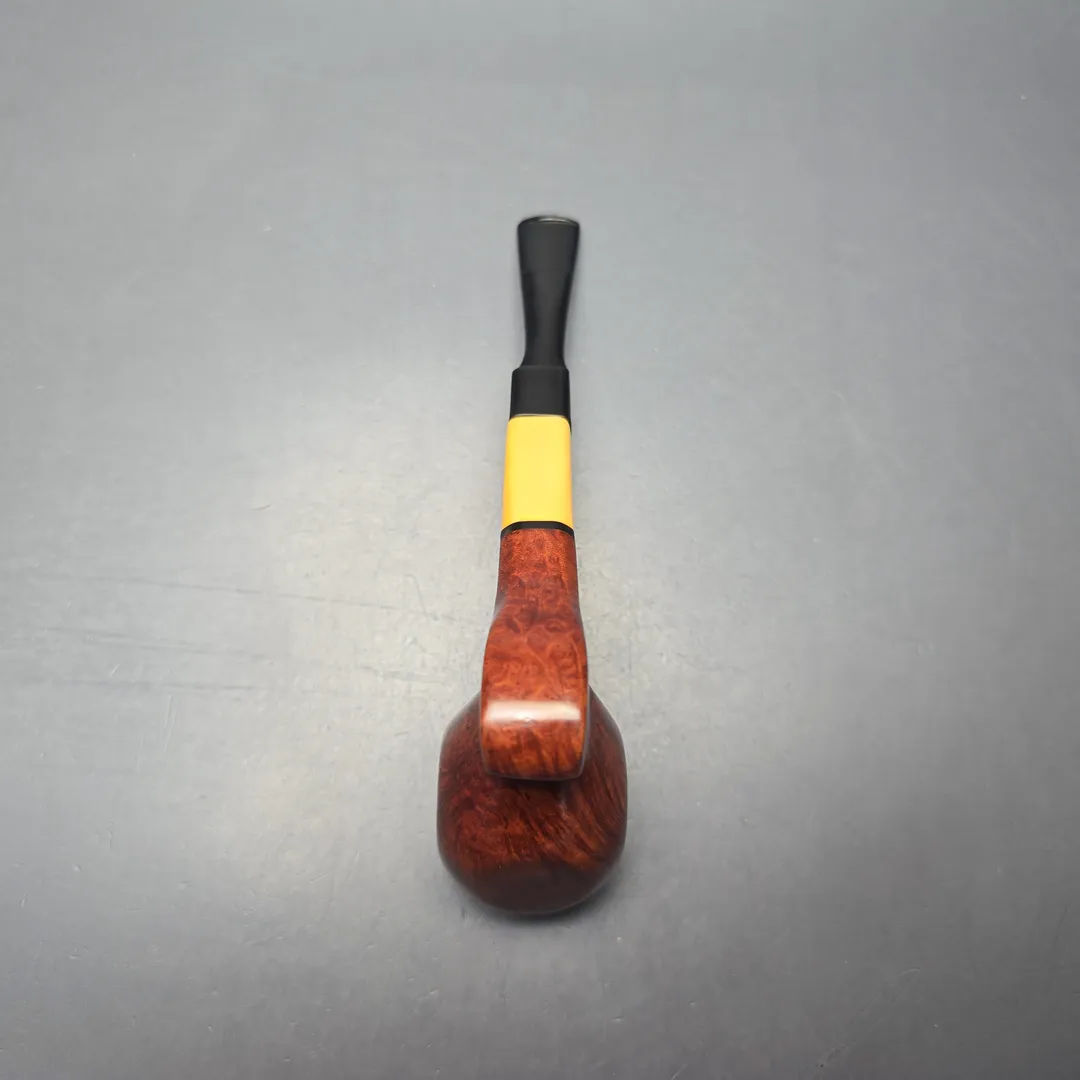
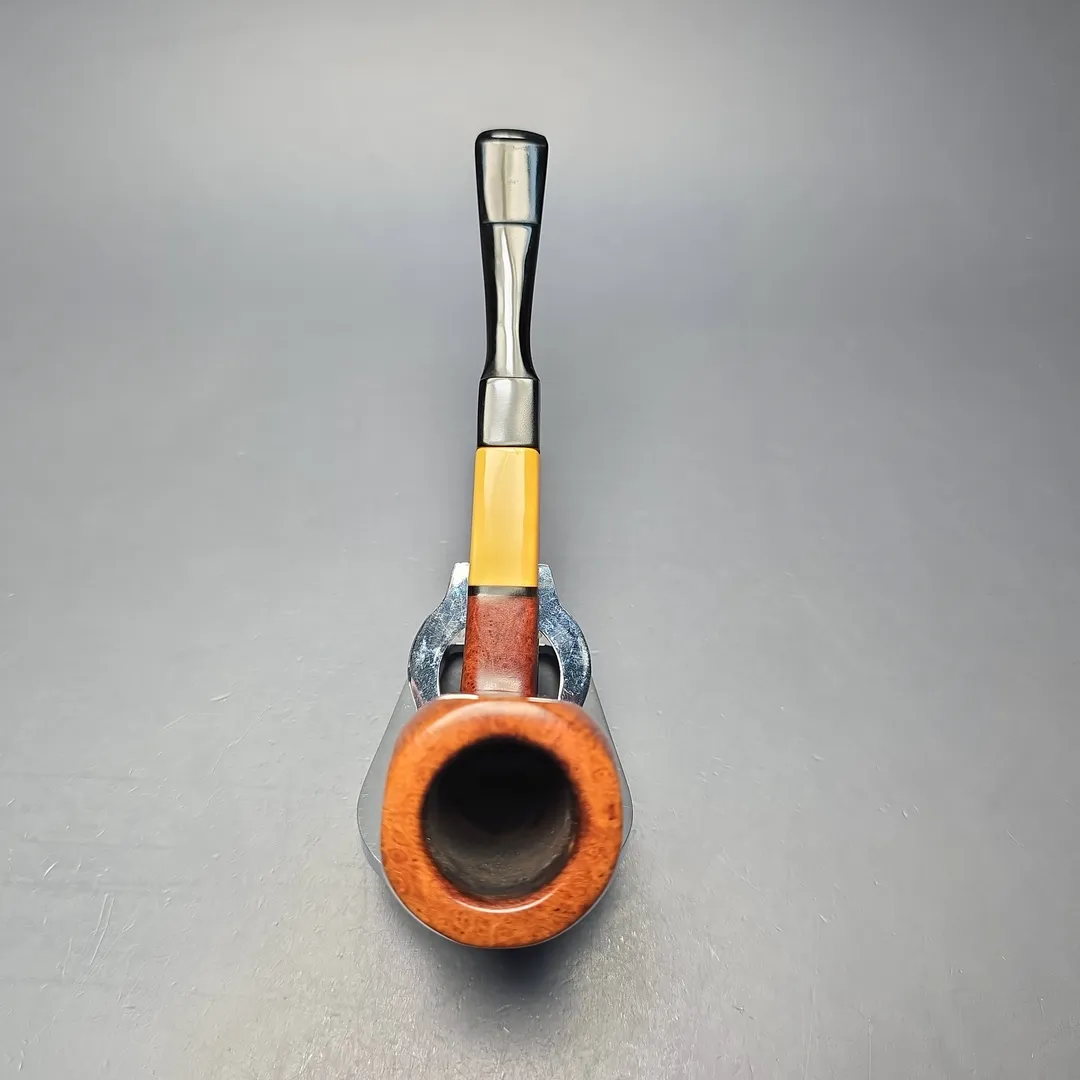
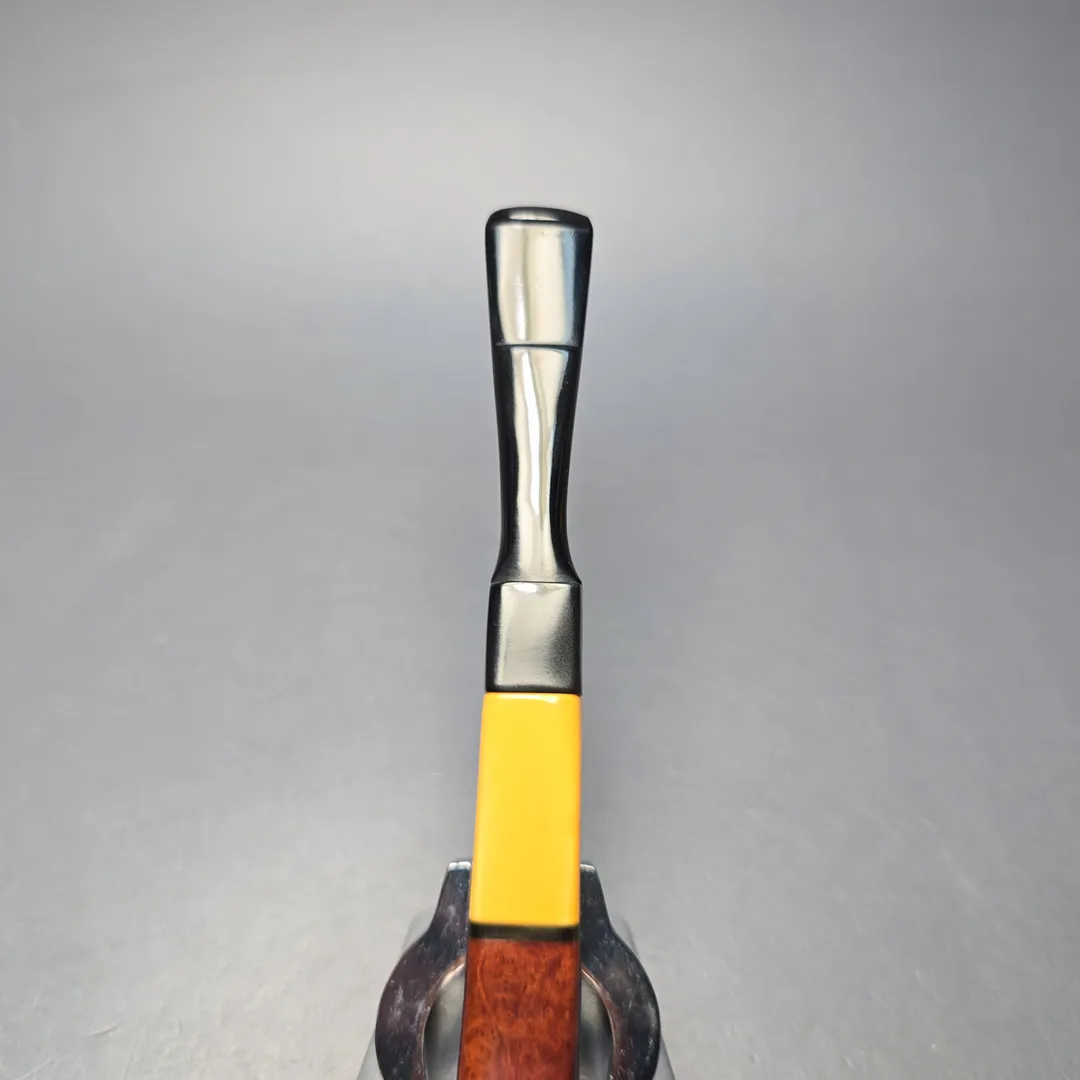
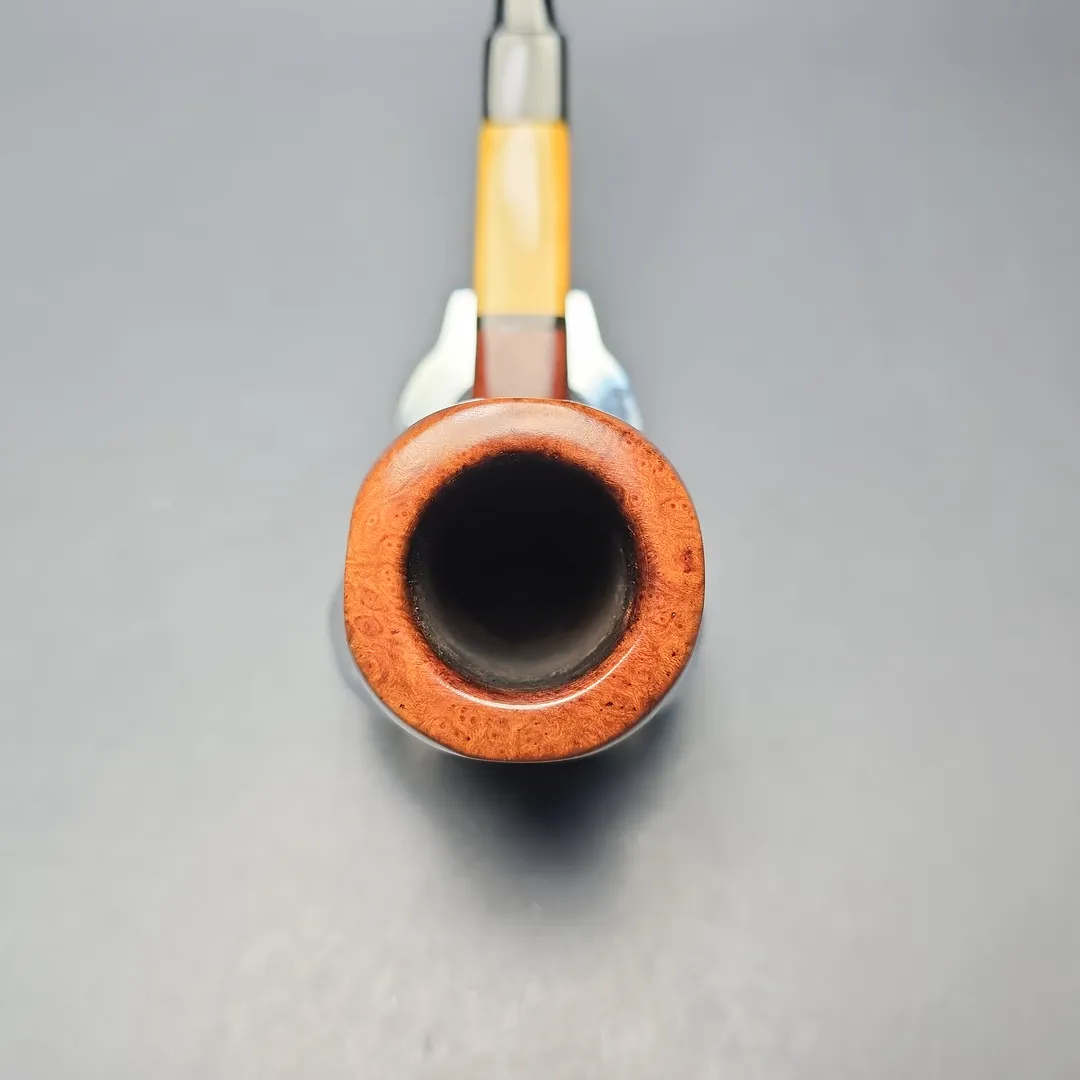
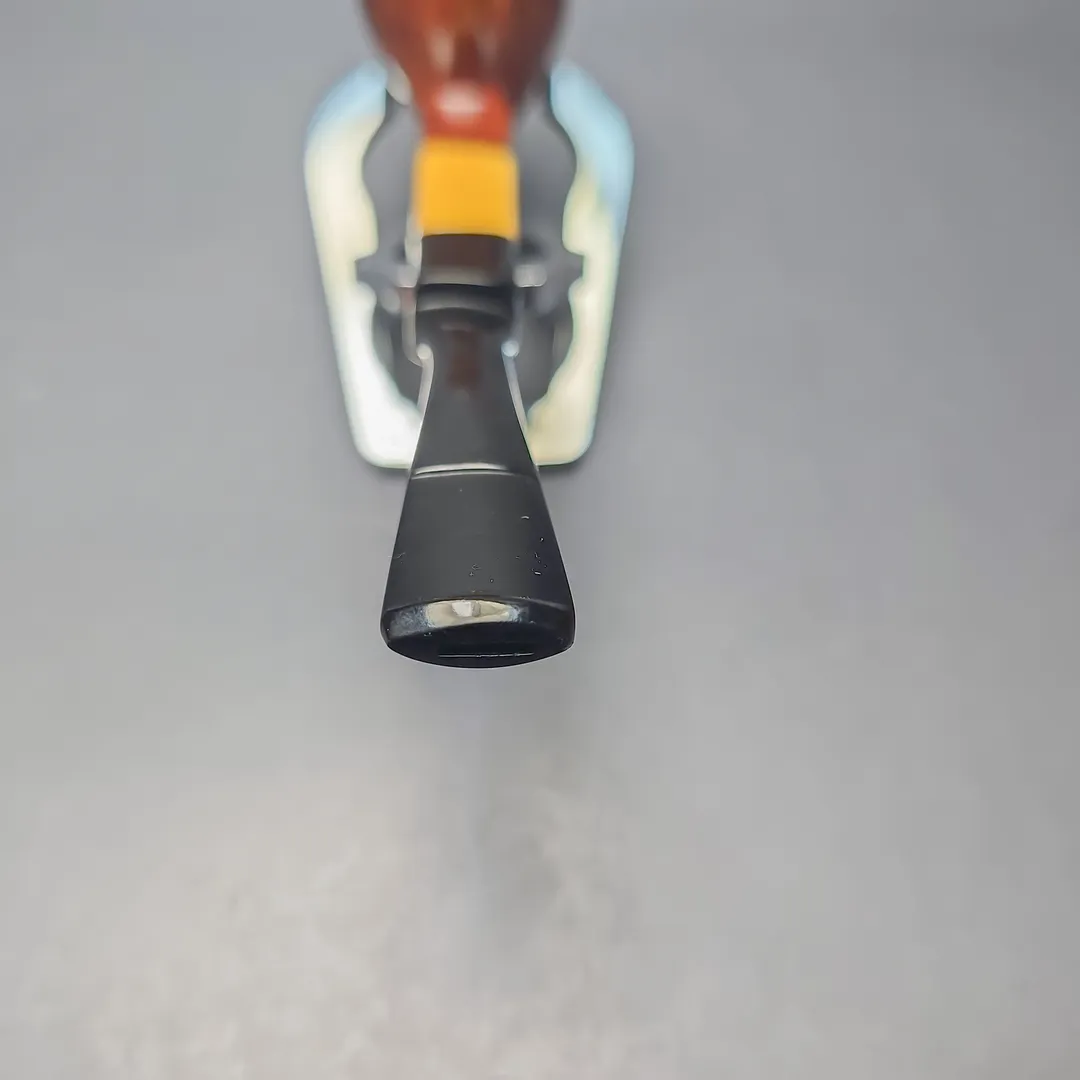
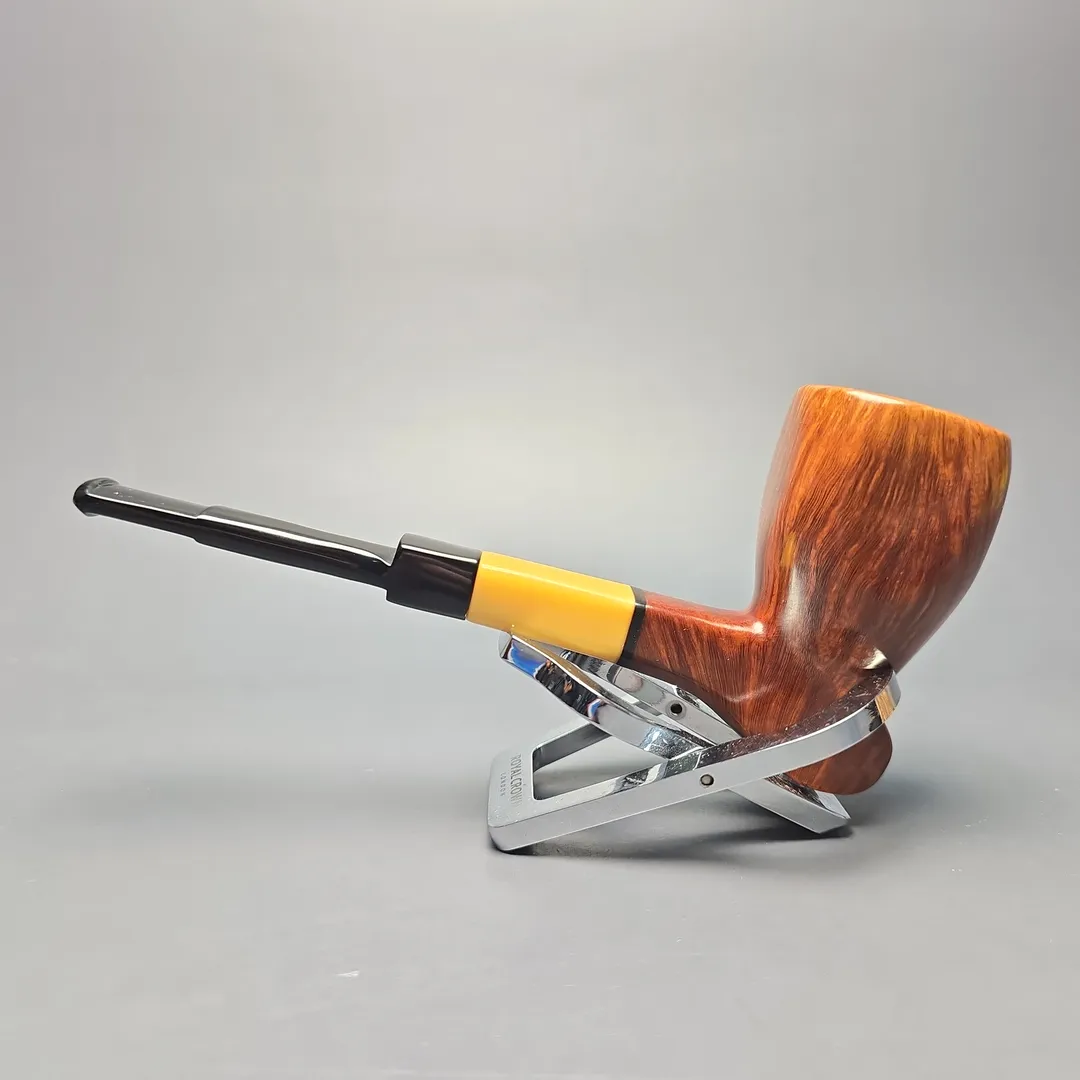
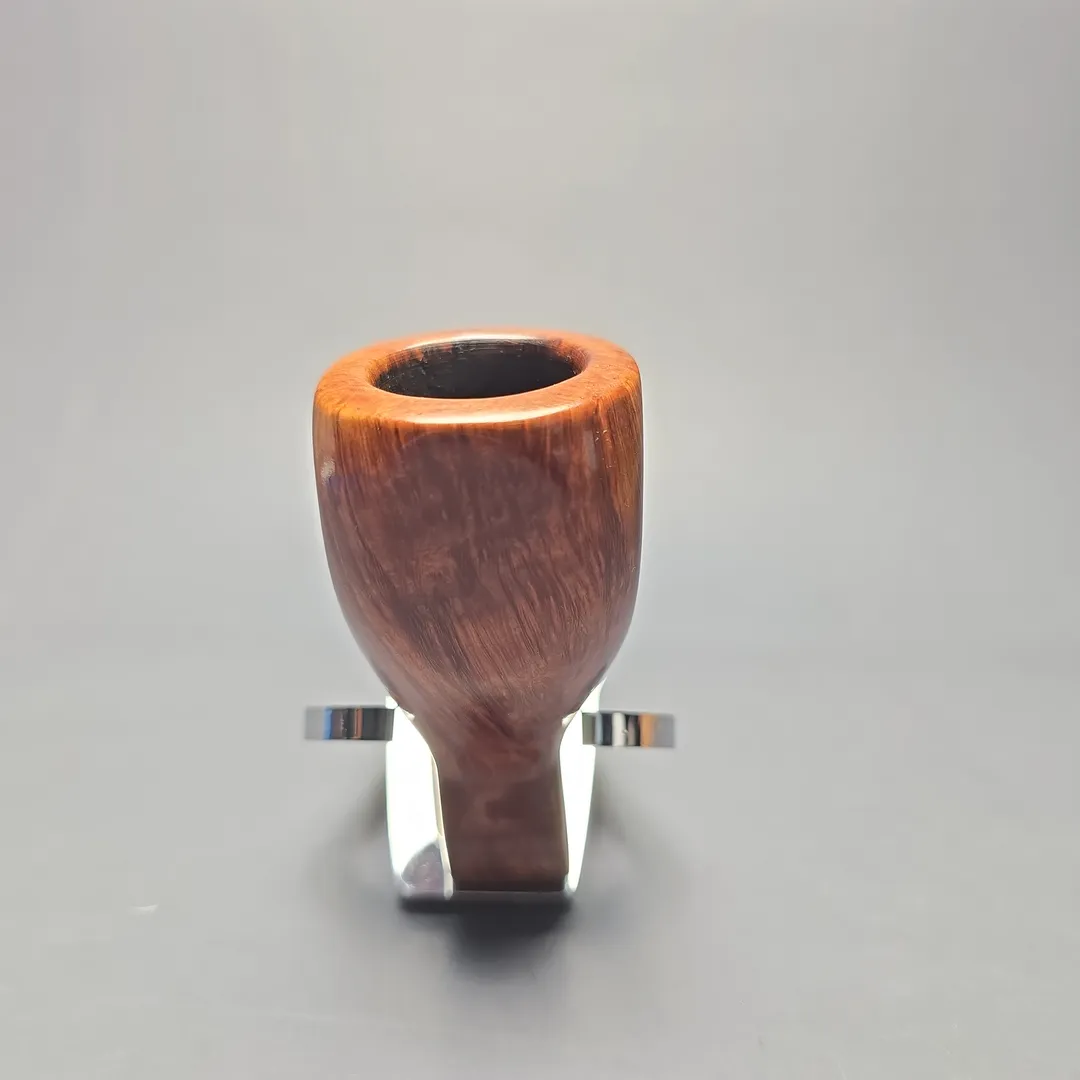
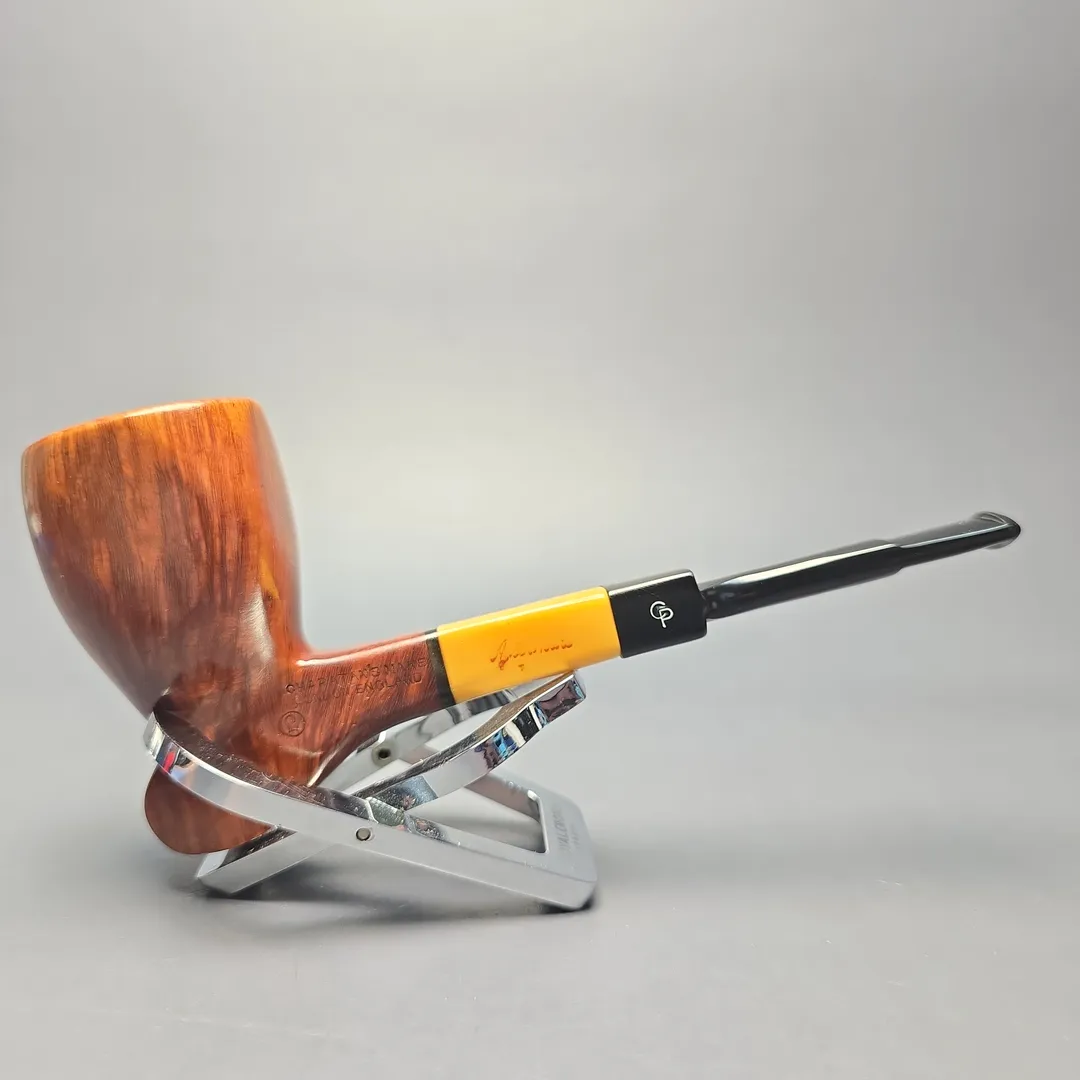
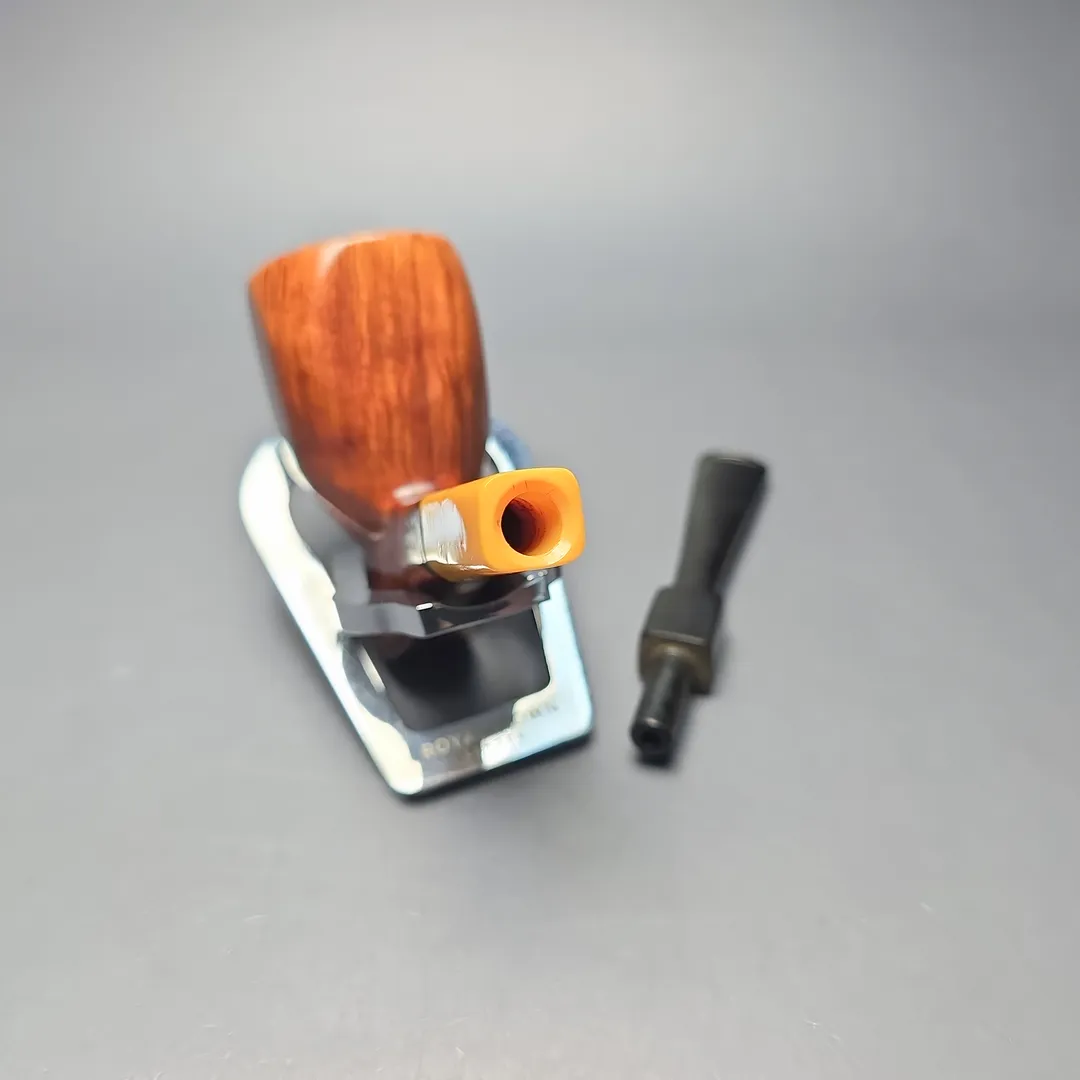
Charatan’s Make (Lane Era) After Hours Smooth Freehand Cavalier (Estate)
$300.00
1 in stock





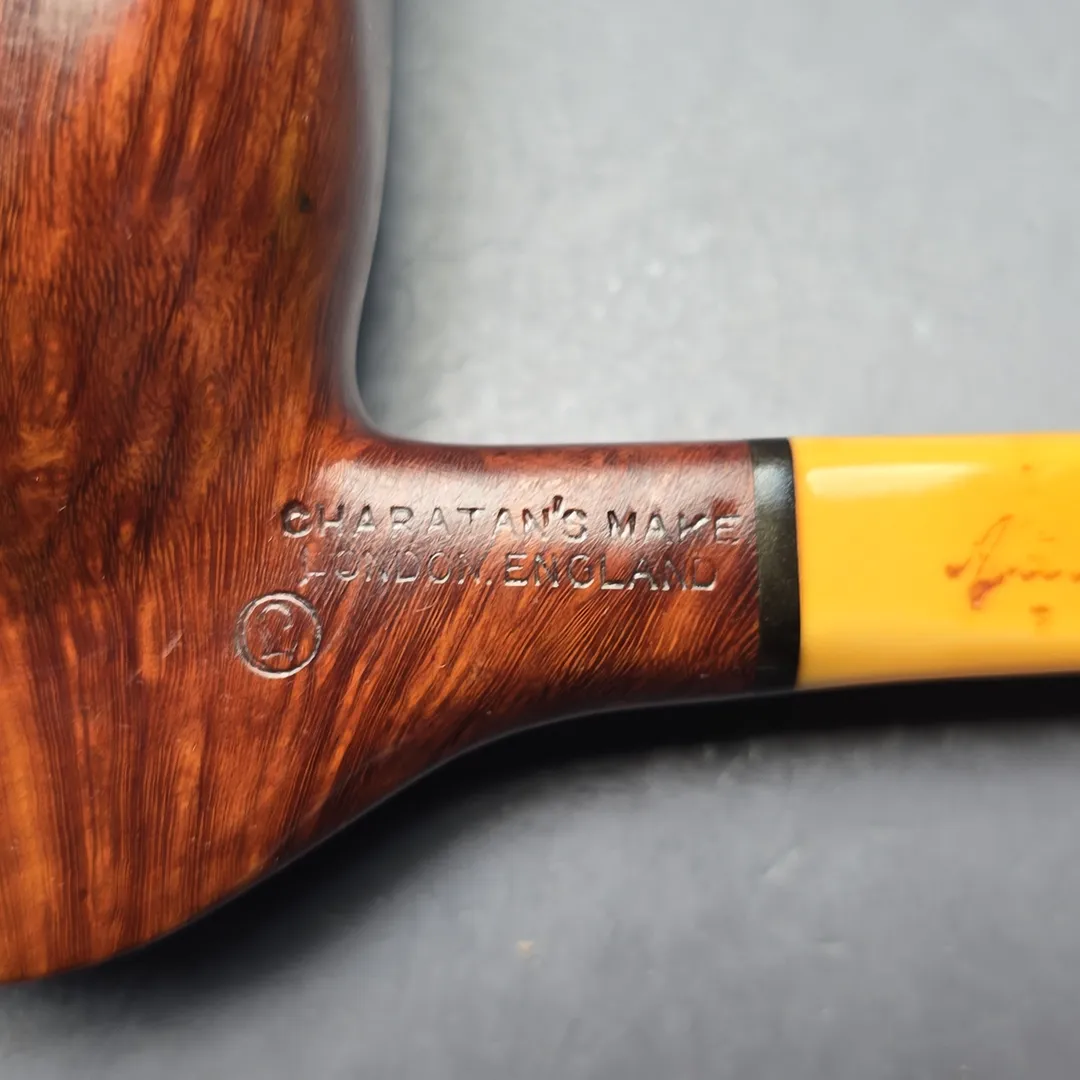
While Dunhill may be Britain’s most famous pipe brand, Charatan is not only older, but has the honor of being the first to have made its pipes entirely in-house. “Charatan’s Make” referred to the fact that, at a time when other pipe companies were sourcing stummels and stems carved from other companies before assembling them in their factories and workshops, Charatan made every part of their pipes on the Charatan premises. So began a legacy of high-quality pipe-making under the Charatan name, one whose employees, at one time or another, included Joel Sasieni (who went on to work at Dunhill, before leaving again to start the Sasieni make), Dan Tennison, Stan Haney (later of Ashby Hall), and Ken Barnes and Barry Jones (later of James Upshall).
Charatan’s After Hours series is a fascinating one. The shape and style of these pipes varied wildly, but their one common feature was a golden shank extension, made from materials such as Bakelite and acrylic. The purpose this extension was the same in each case, and could be considered a “solution” to the same “problem” that led to the use of materials such as bamboo or Brylon, as well as the emergence of the “freehand pipe,” in the post-war years. After all, briar is expensive, especially following a period of massive disruption in global production and distribution of such, so minimizing the amount of briar used per pipe is a good way to weather that disruption. If a stummel was found to have an imperfection in the briar around the shank portion, for example, one could still save the bowl by removing the stummel entirely and replacing it with another, more readily available material. For some pipe makers, the aforementioned bamboo became the go-to in this regard; for Charatan, it was synthetics (and, later, vulcanite in some instances).
Like the bamboo-extended works of other contemporary makes, Charatan’s After Hours proved popular well beyond the post-war briar shortage, and remains a favorite even today (though production of the series ended decades ago). This particular example will have been made at the height of Charatan’s Freehand production, during the legendary “Lane era.” I was not able to narrow down which period of the Lane era it was made during based on the nomenclature, so I’ll err on an approximate dating of 1961-76.
The condition is good. Some inner rim darkening, slight handling marks, and possibly and a slightly un-flush tenon. On that note, I’m fairly sure the stem is original, though I’ve knocked down the price a little just in case.
Details:
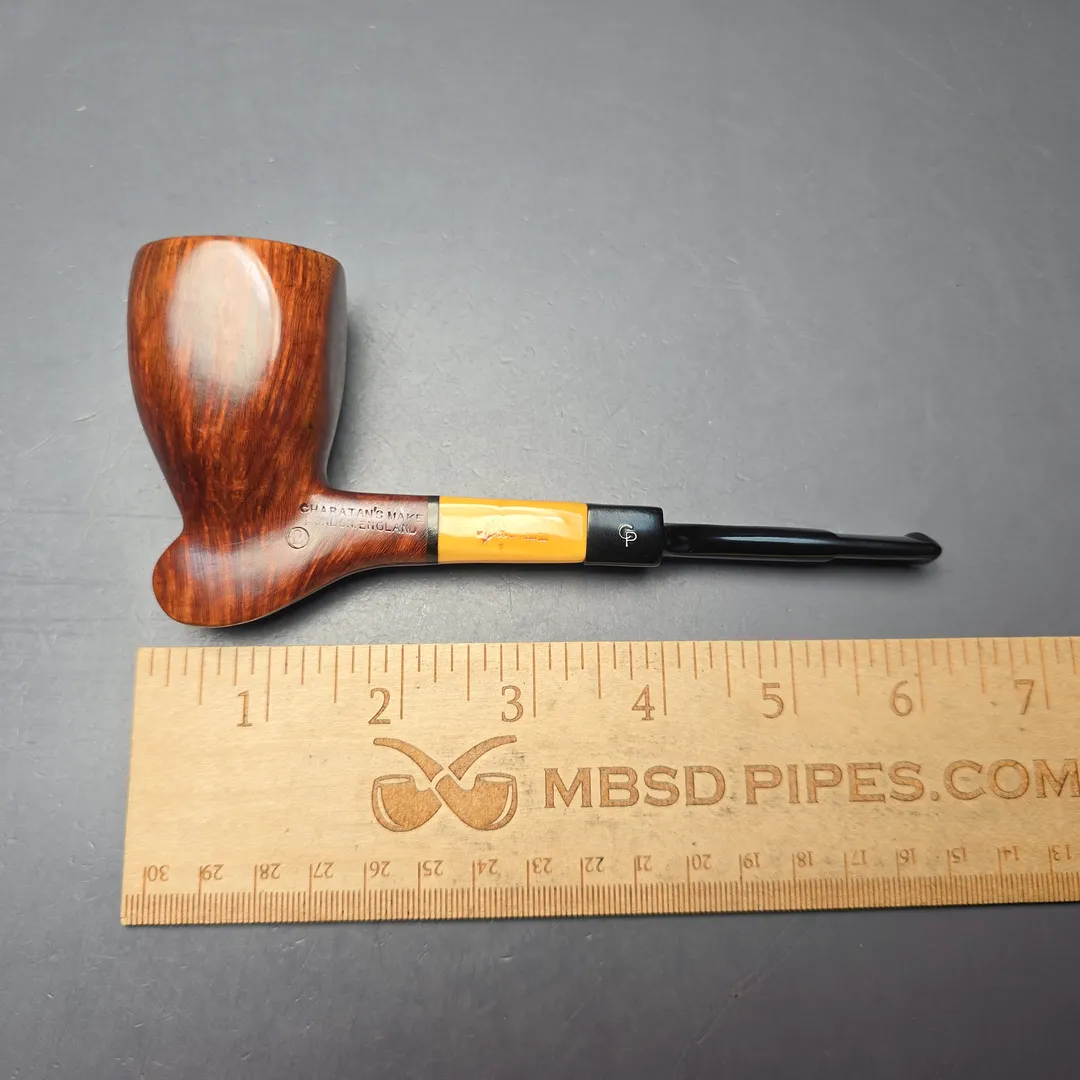
Length: 6.2″ / 157.4mm
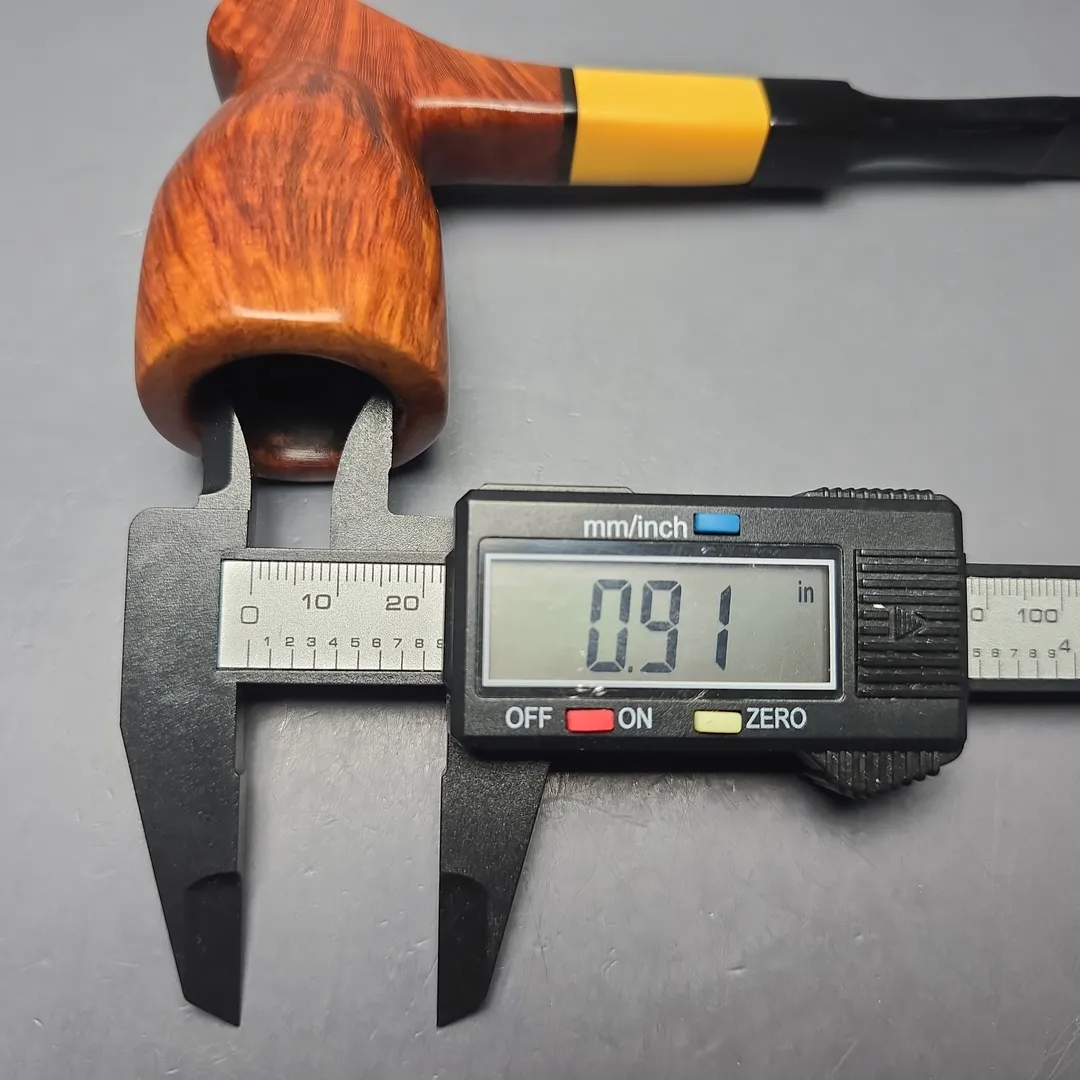
Bowl Width: 0.91 / 23.11mm
Bowl Depth: 2.14″ / 54.35mm
Weight: 1.5oz / 44g
| Weight | 15 oz |
|---|
| Condition | Used |
|---|---|
| Notes | Refurbished. |


