
Walt Cannoy Cardinal House Morton Rusticated Amphora Handmade Briar Pipe, New
Out of stock





Walt Cannoy first emerged as a major figure in the the North American pipe making renaissance around the turn of the millennium. Originally an R&D mechanic, Cannoy carved and sold his first pipe in 1999, having been inspired by artisan pipe makers as diverse as Preben Holm, Robert “Micoli” Burns, and Joe Mariner. Cannoy would soon rise in the ranks of the North American artisan scene, becoming one of its premier high-grade carvers.
Named after various landmarks in Cannoy’s native Florida, “Cardinal House” began as a side-project of sorts, whereby Cannoy could offer relatively inexpensive pipes alongside his high-grade, high-demand Signature works. While the first Cardinal House pipes were akin to “seconds,” Cannoy soon became dissatisfied with this approach, leading him to rethink what it would mean to make high-quality, artisan pipes that were comparable in price to reputable factory makes. Instead of reducing costs by using cheaper materials, or utilizing pre-fabricated components (such as stummels and stems), Cannoy focused instead on streamlining his manufacturing process, leading to Cardinal House as it is known today. Handmade from the same briar blocks, ebonite rods, and various ornaments as the Walt Cannoy Signature series, Cardinal House’s enduring affordability represents simply the culmination of decades spent isolating and refining all of the essential techniques involved in one’s craft.
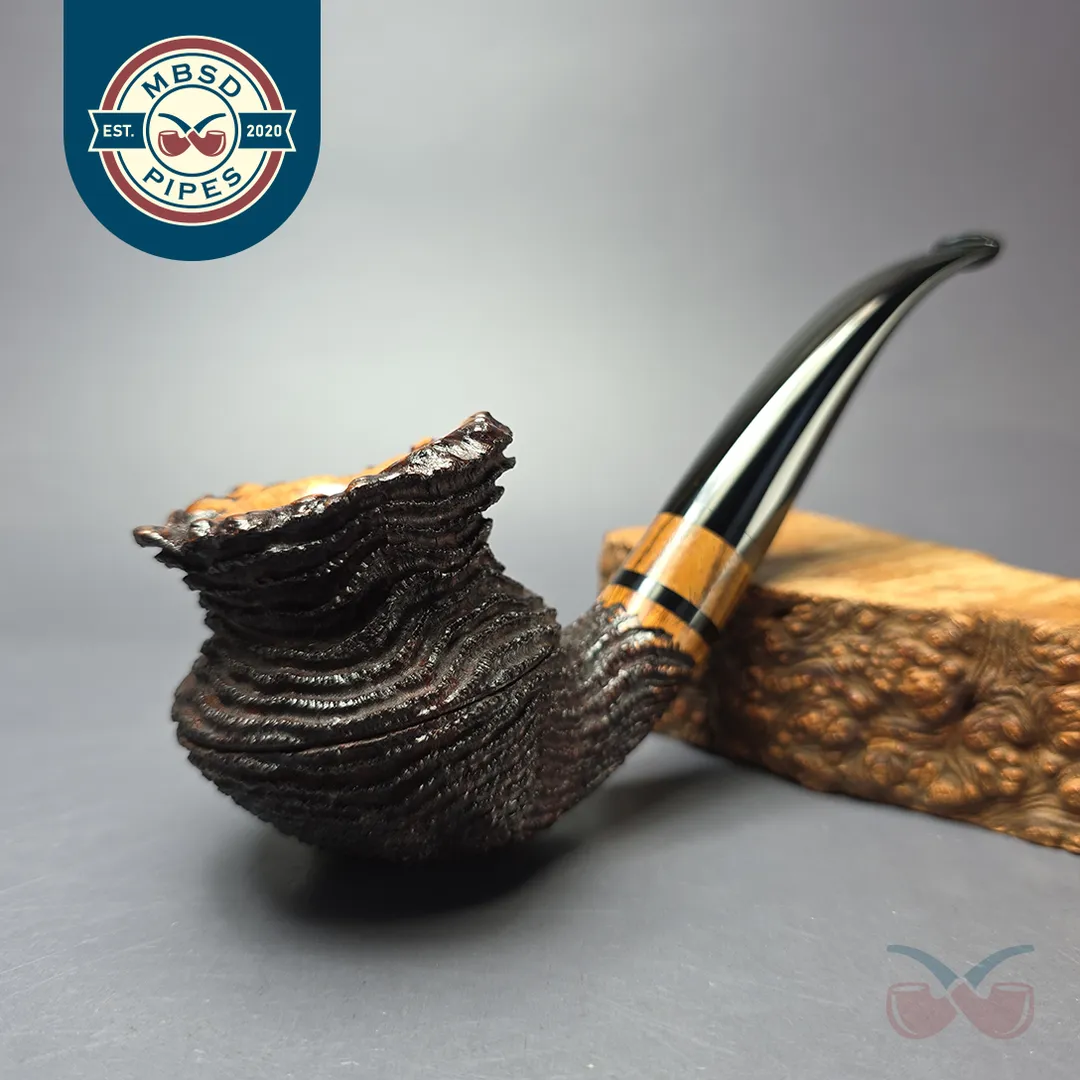
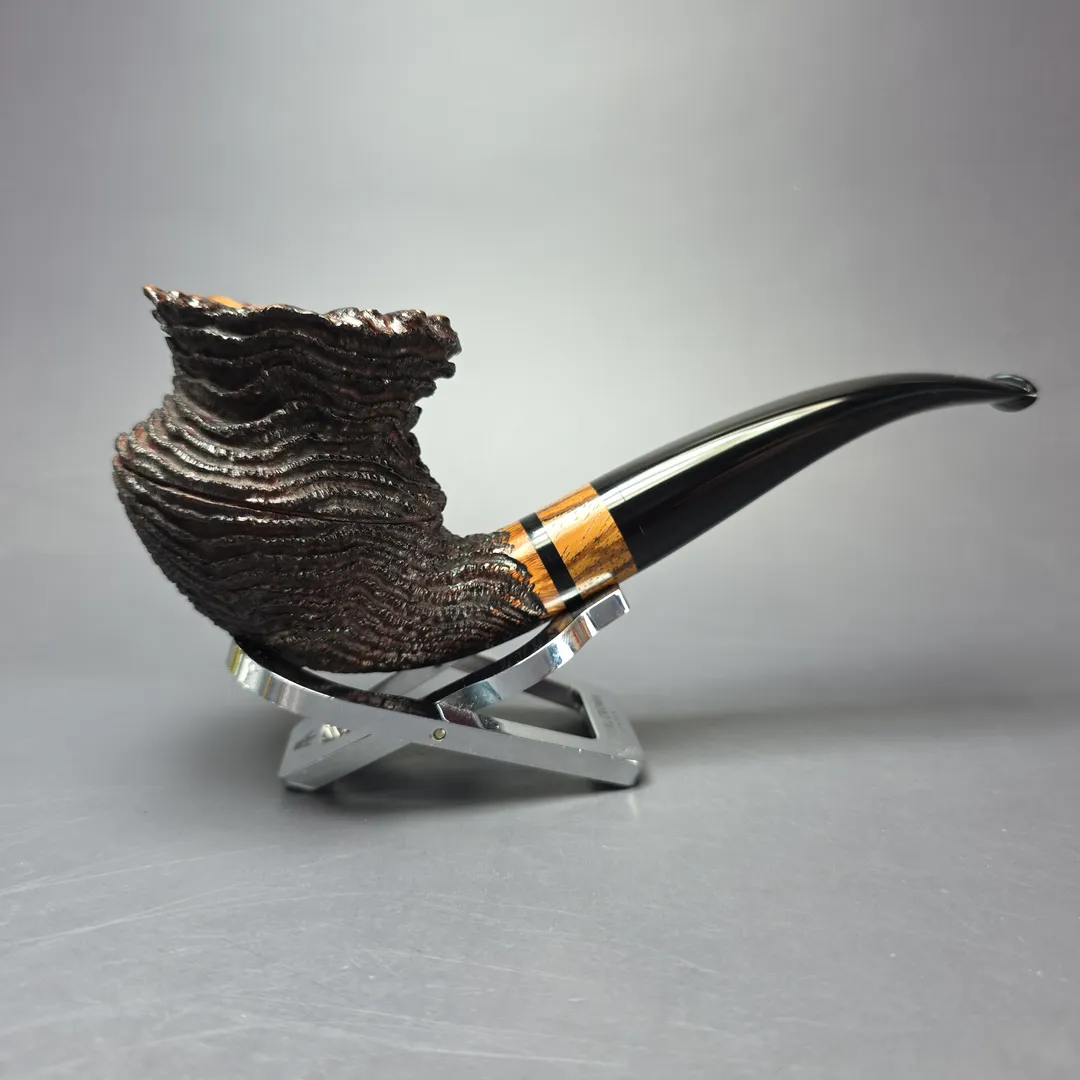
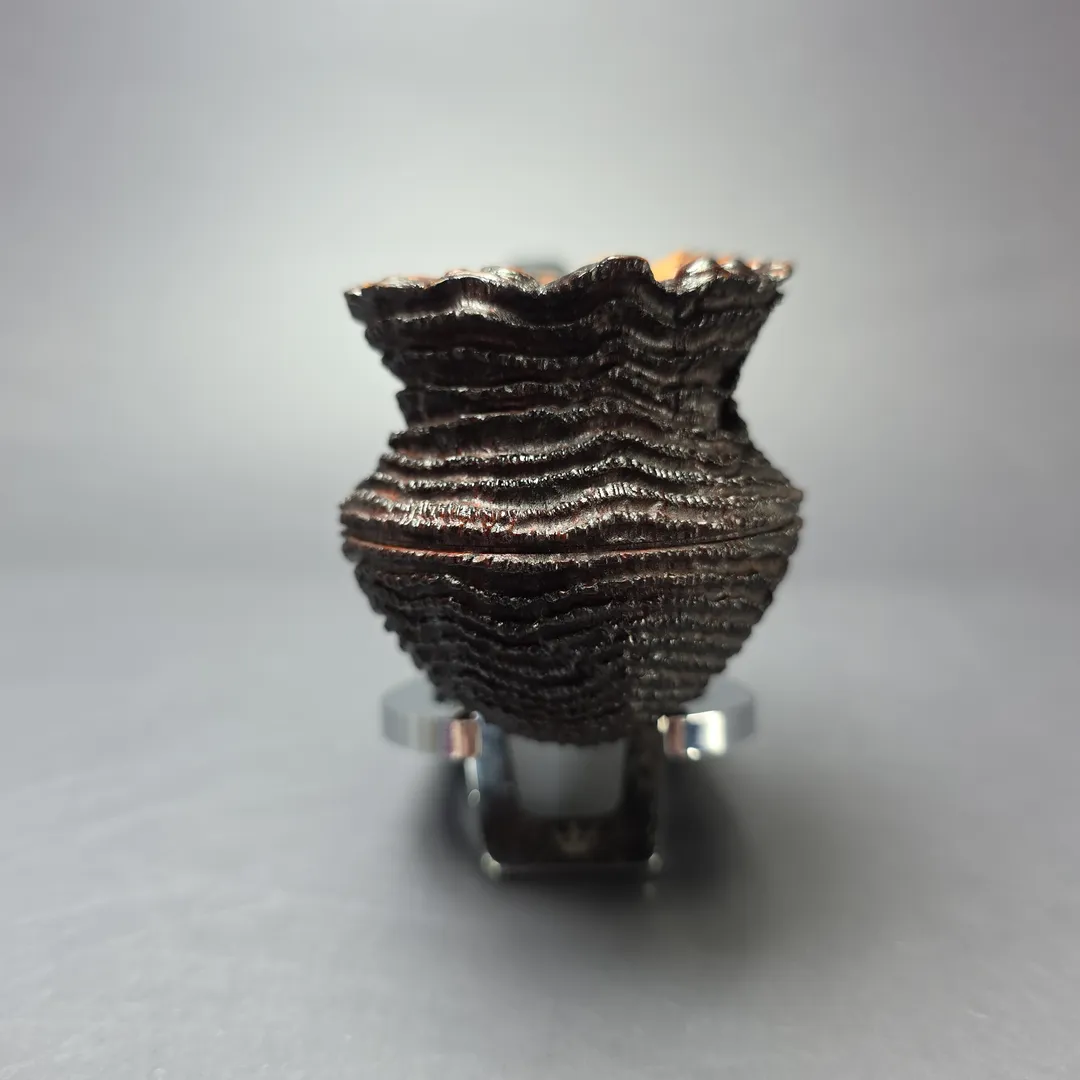
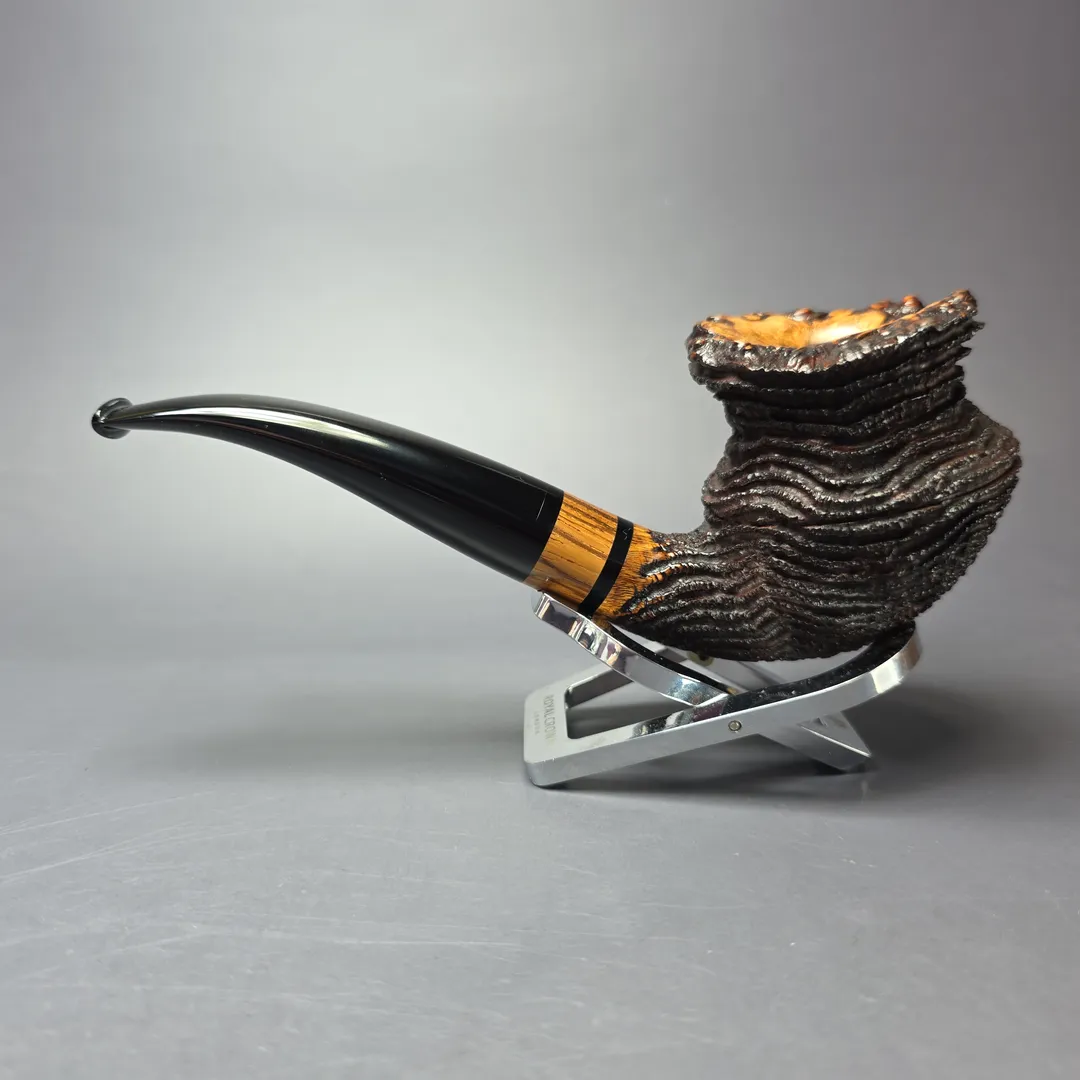
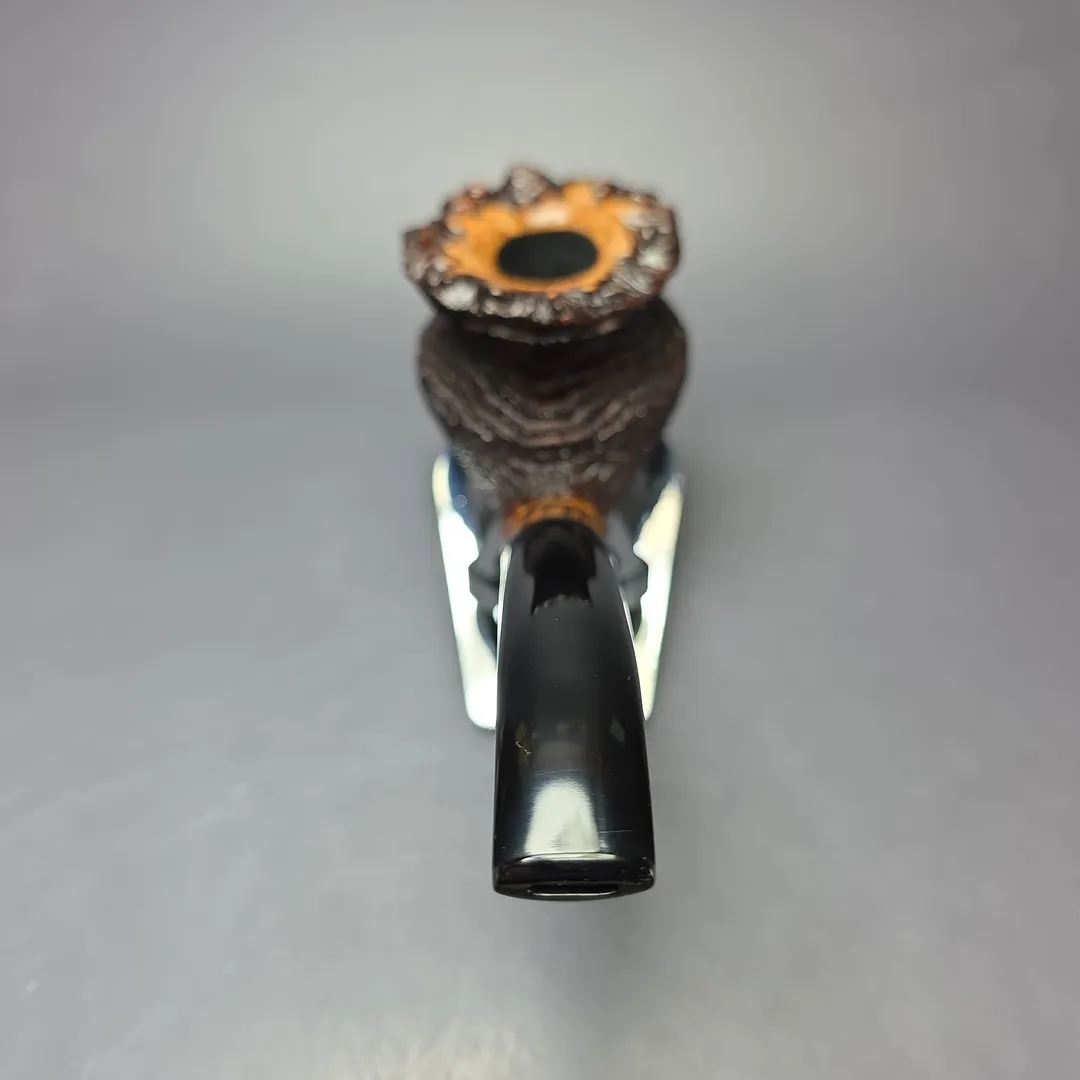
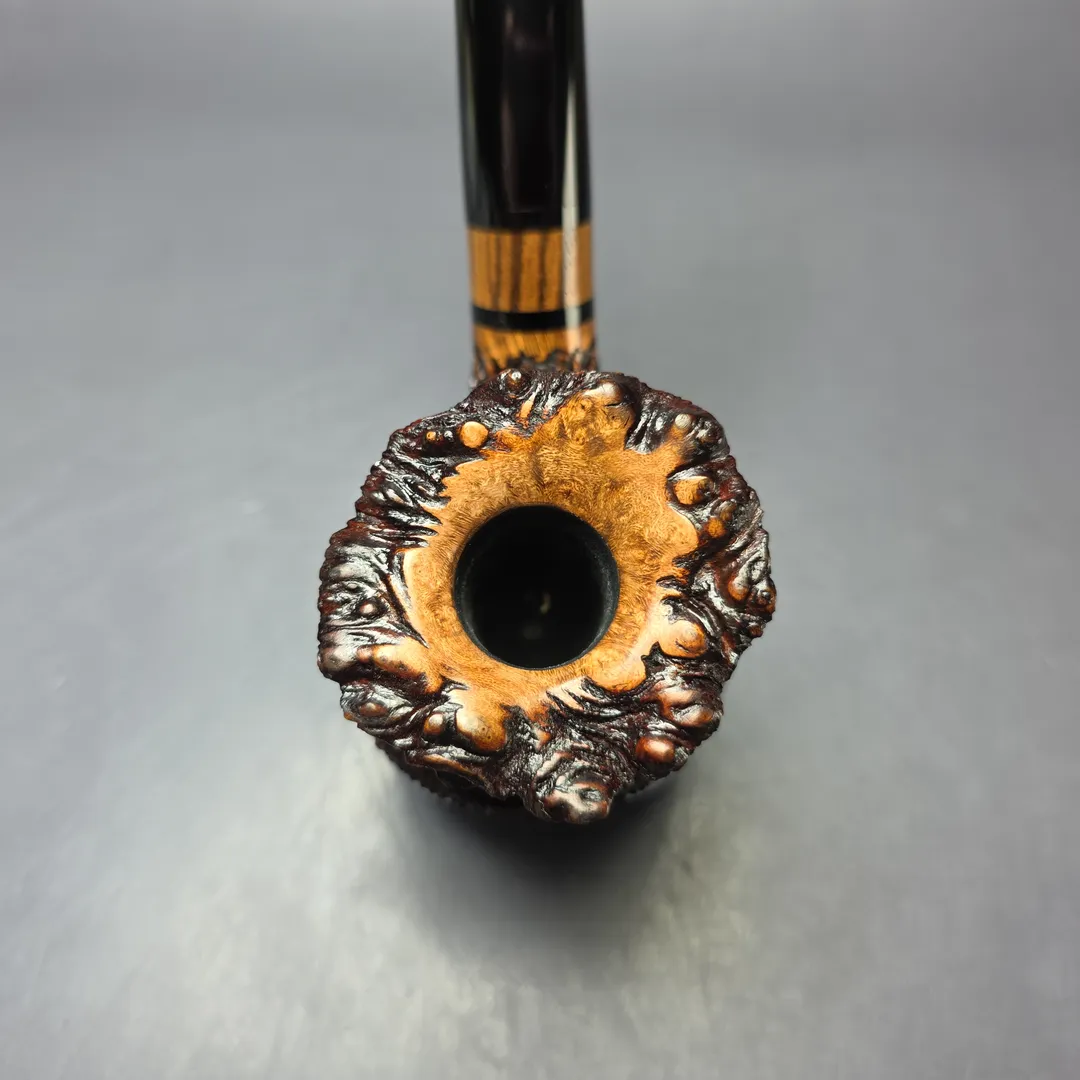
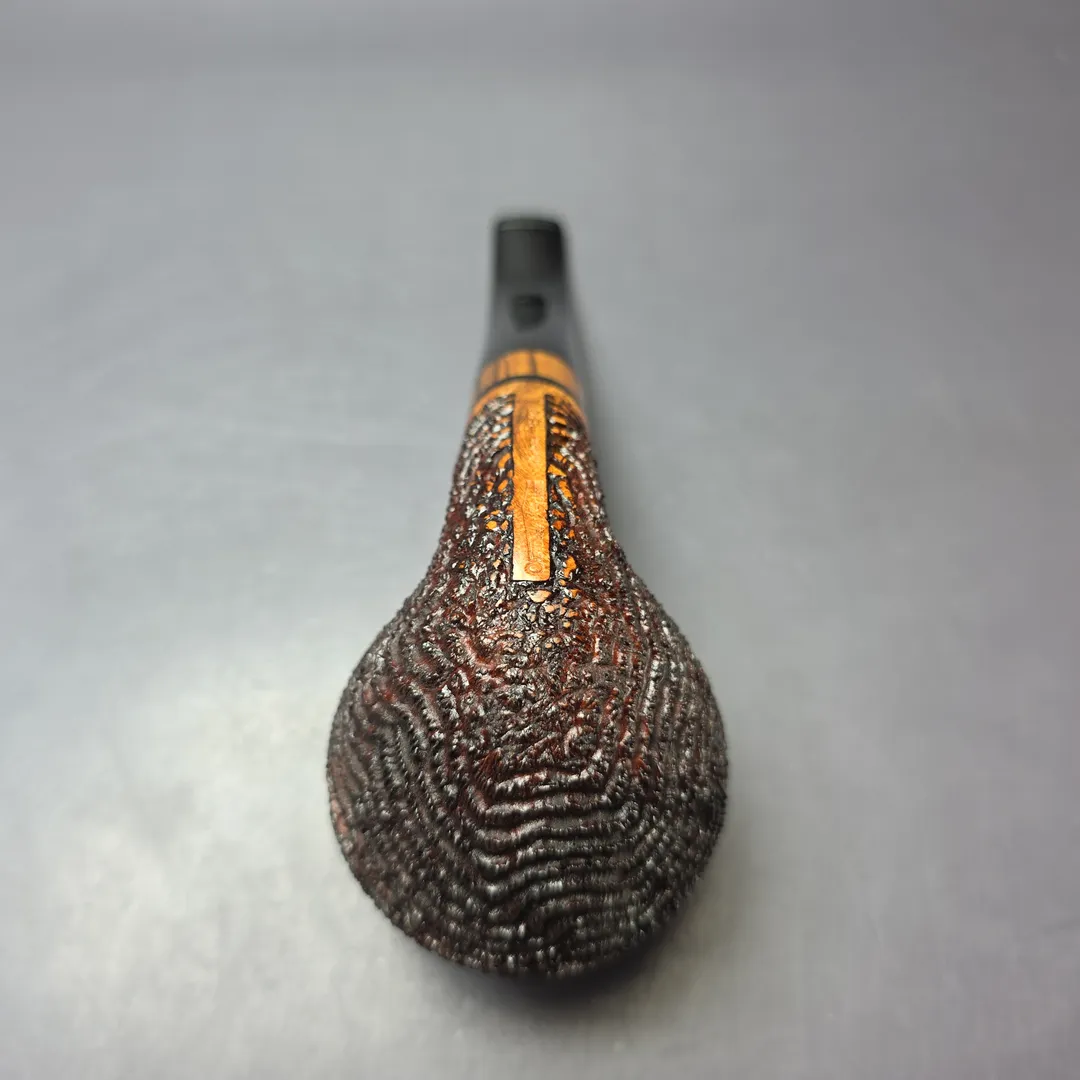
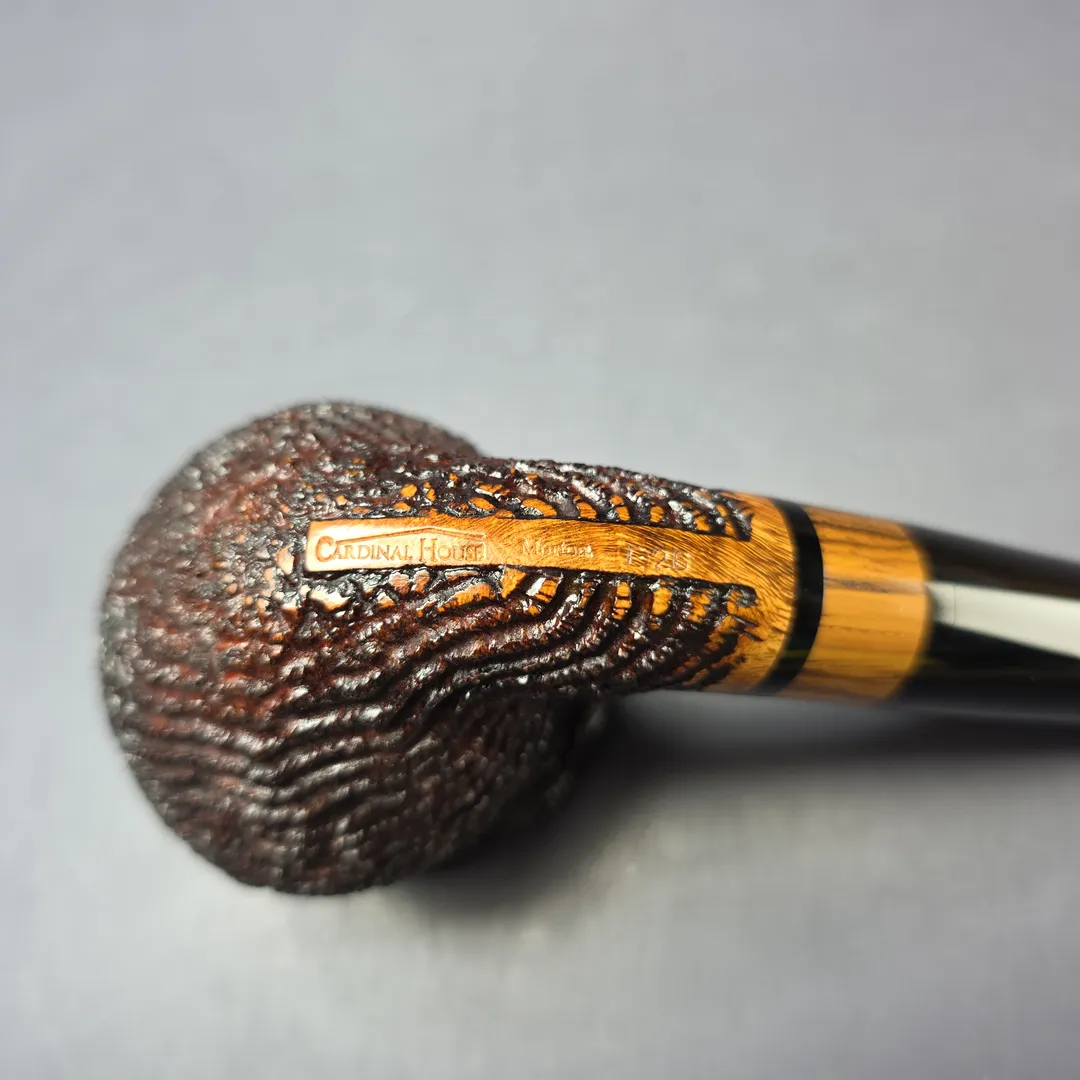
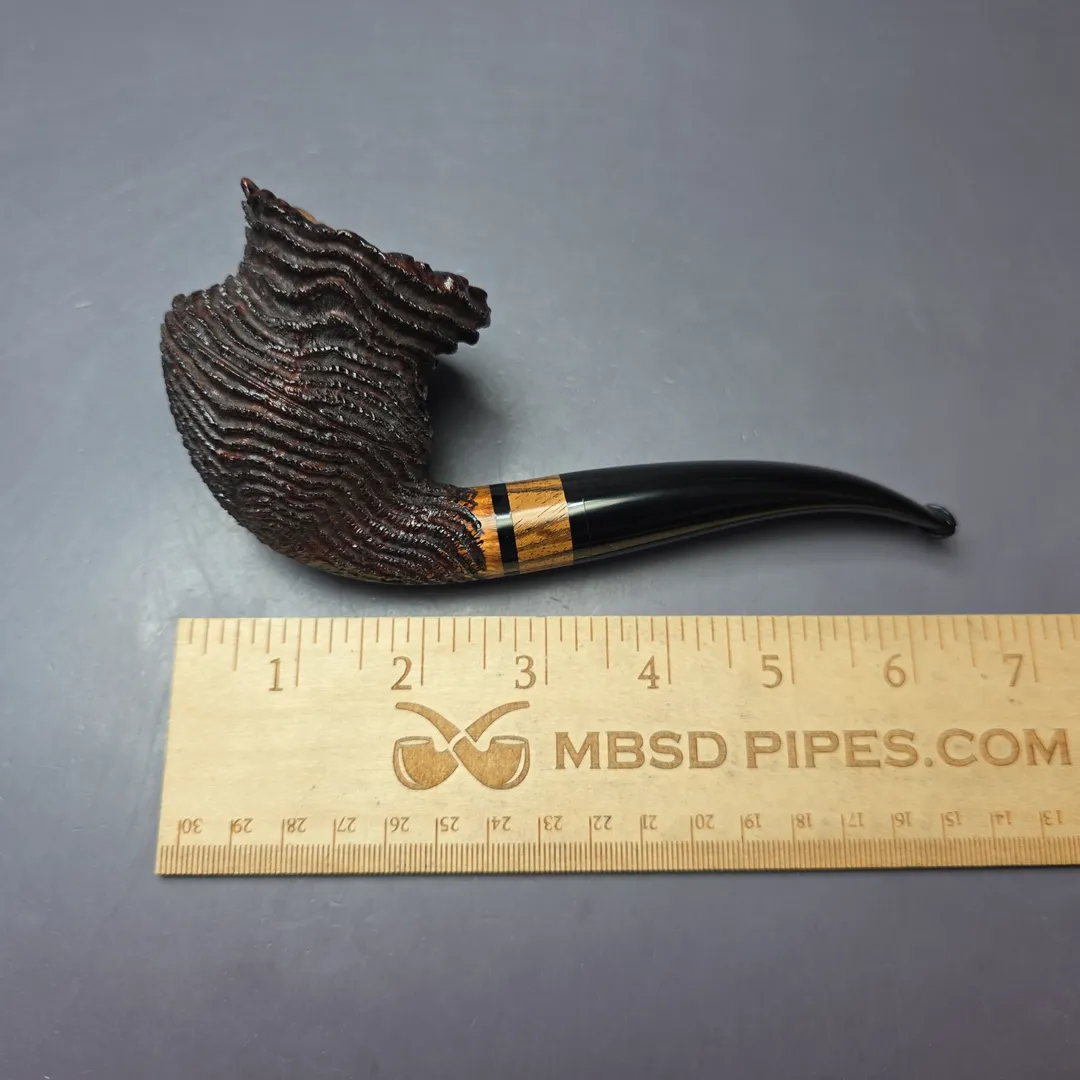
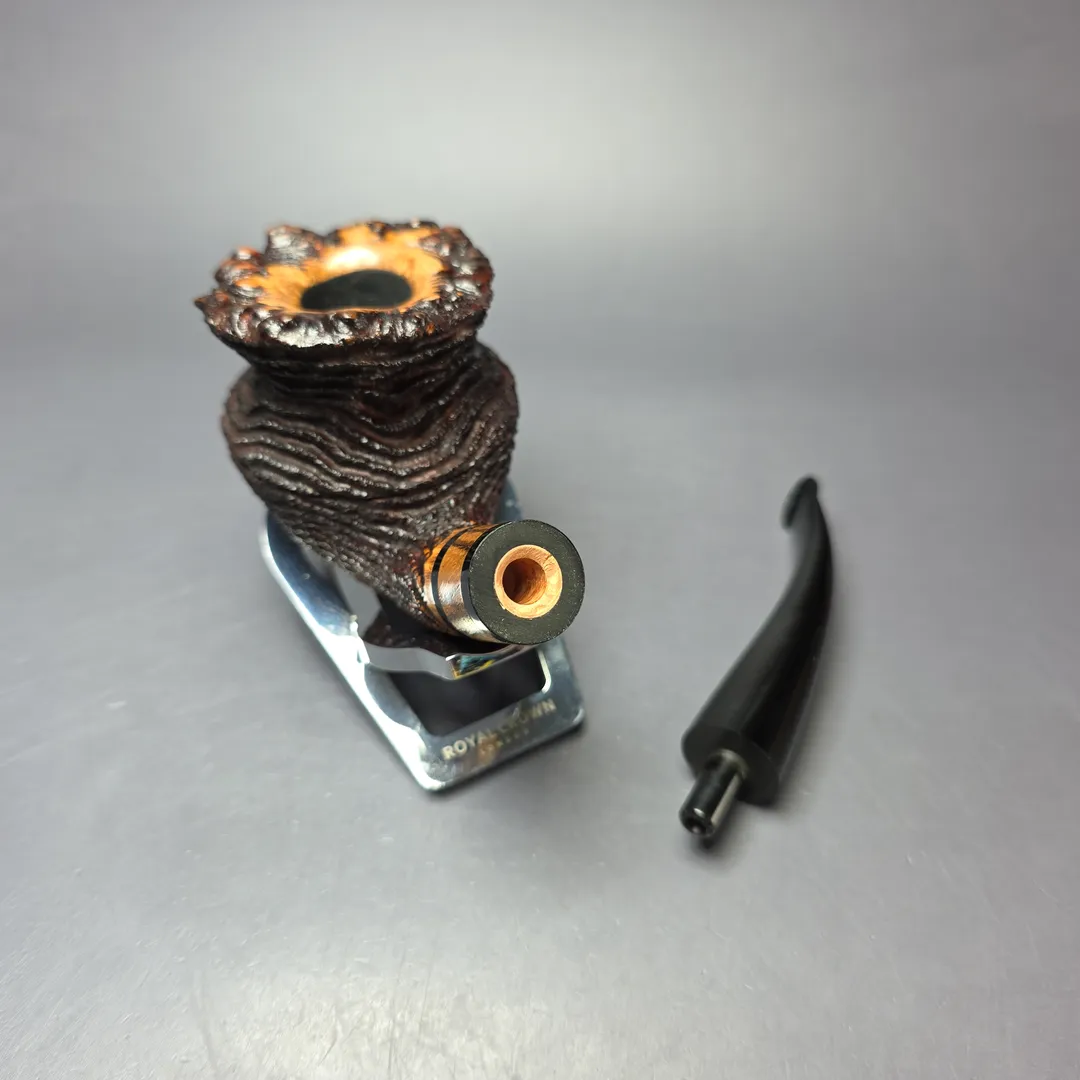
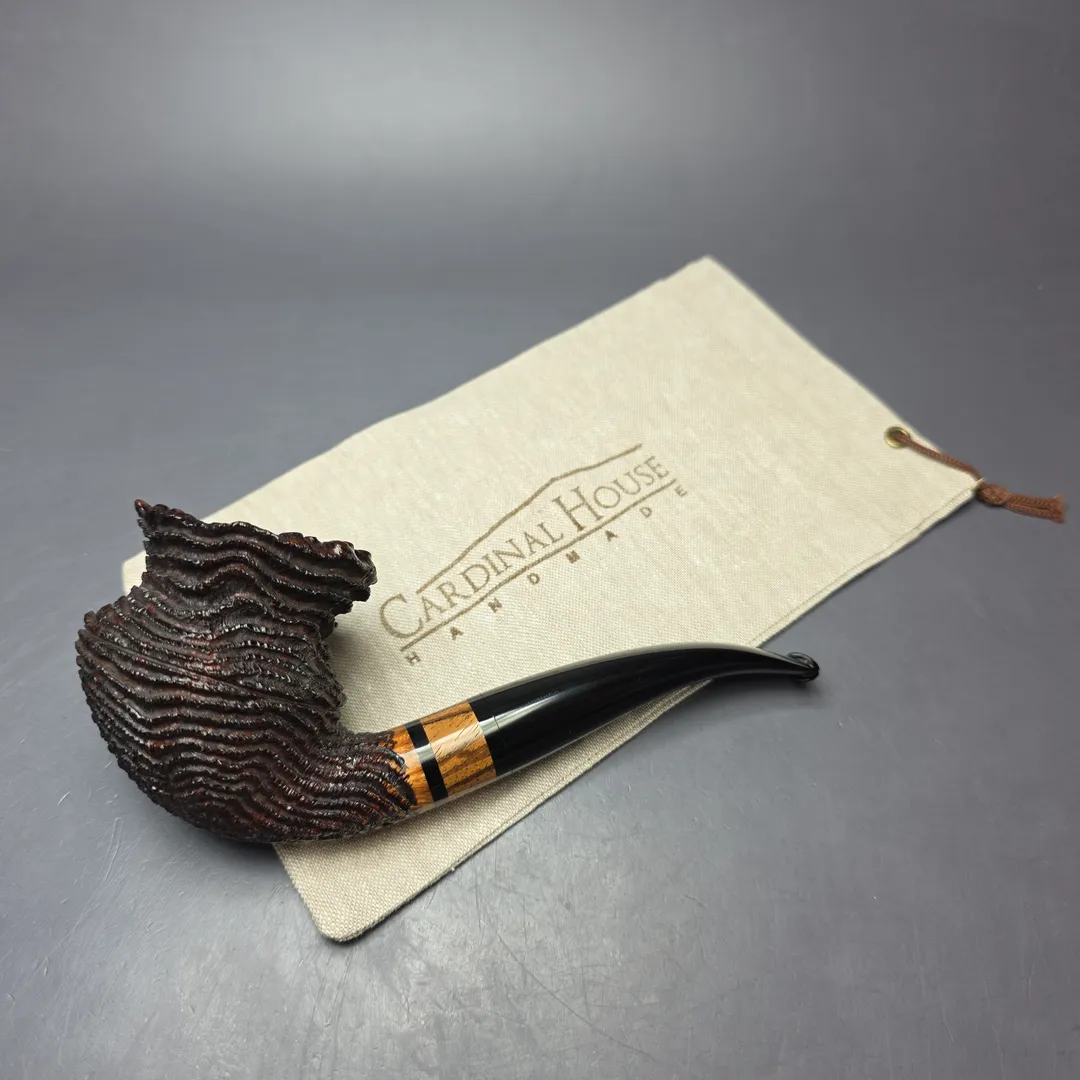
While Walt Cannoy’s Cardinal House series tends to lean toward traditional shapes, or distinctly modern renditions of such, the series will, on occasion, feature a design that is decidedly unorthodox, even by contemporary standards. Bearing affinities with the earthenware-inspired pipes of the Italian high-end, such as those of Le Nuvole or Don Carlos, this Cardinal House Morton is distinguished by its striking, amphora-like bowl. Unlike the Italian approach, however, this one has a far more rugged, or rustic, aesthetic, and not just because it is dressed in a hand-carved, ring-grain style finish. With its plateaux top, slight asymmetry, and black and tawny tones, there is a little of the “archeological” to it, as if it was some Roman redware urn that had survived almost intact for millennia, before being unearthed in another time.
Details:
Length: 6.4″ / 162.5mm
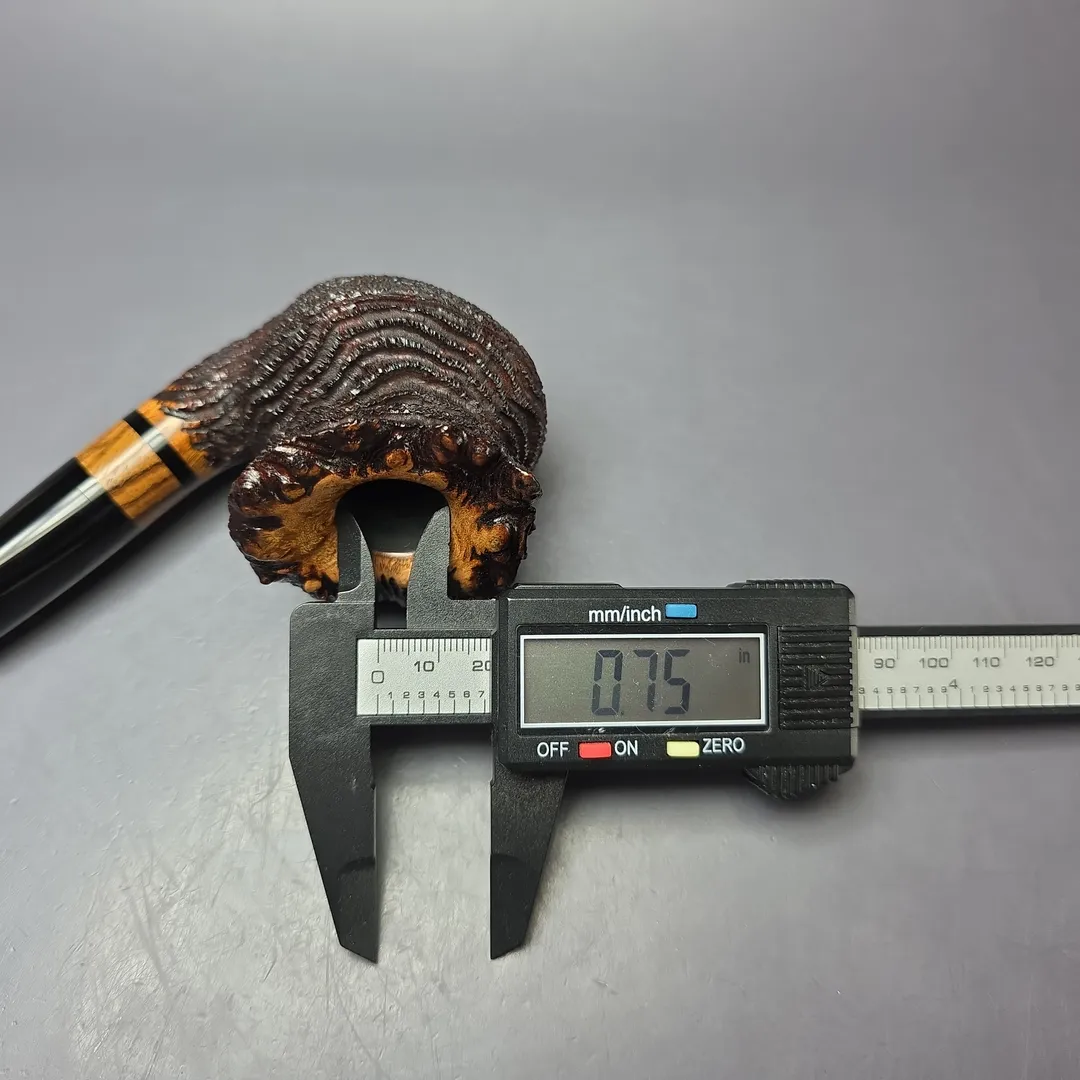
Bowl Width: 0.75″ / 19.05mm
Bowl Depth: 1.74″ / 44.19mm
Weight: 3.3oz / 94g
| Weight | 15 oz |
|---|
| Condition | New |
|---|


