
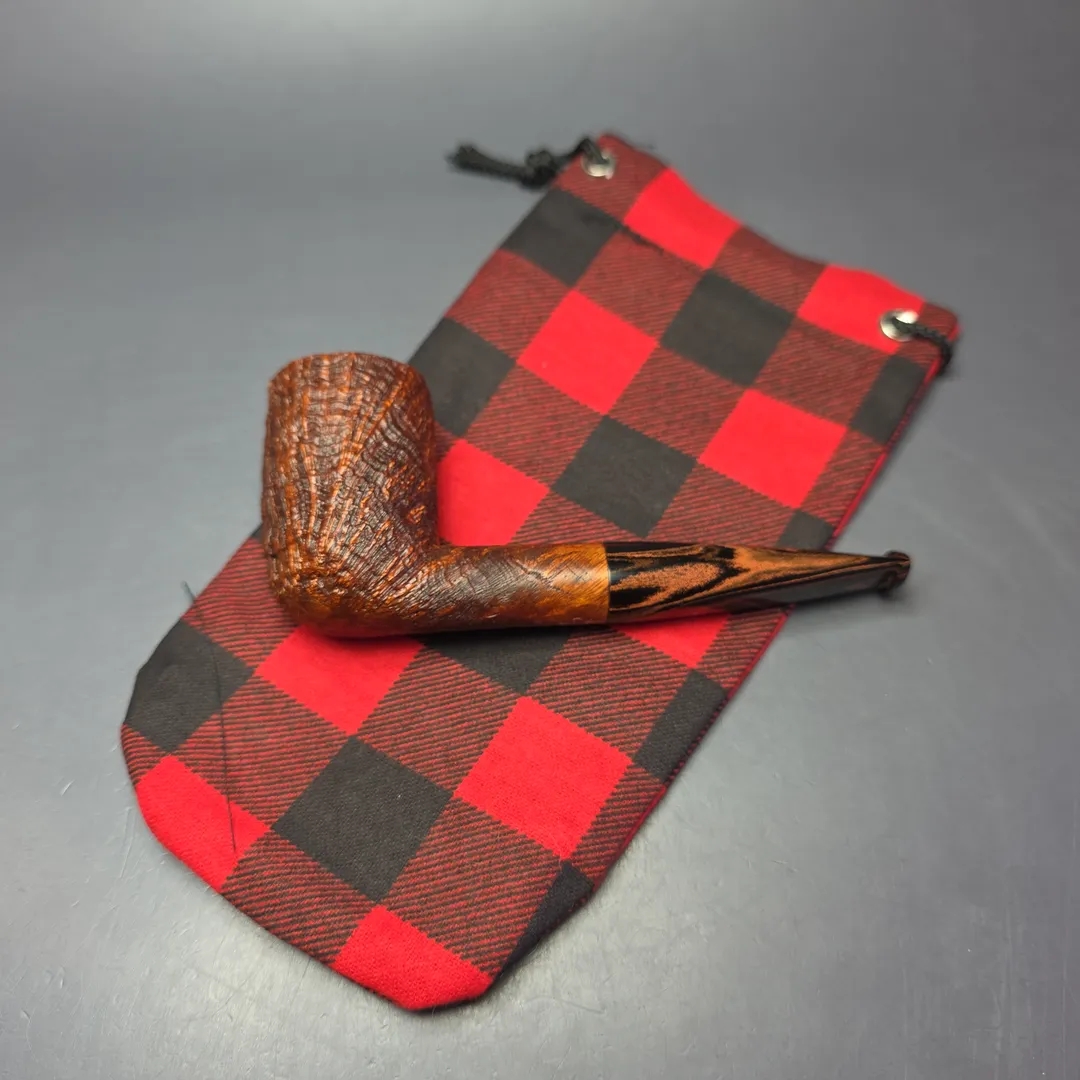
Nate Rose Contrast Sandblasted “LB” Billiard Handmade Briar Pipe, New
Out of stock





As I always say, when it comes to pipe makers, what Canada lacks in quantity it more than makes up for in quality. Nate Rose is no exception. A former student of the legendary Canadian artisan Michael Parks, Rose first turned his expertise as an automotive engineer into a career as a pipe maker in the mid-2010s. One of his first endeavors in this vein was a collaboration with Michael Parks on the Commonweal project, which Parks personally selected Rose for. Commonweal pipes took their name from the British Commonwealth, as they were made from stummels turned by Les Wood, of Ferndown, which Parks finished and Rose cut stems for. Though he remains firm friends with Parks, Rose operates as a purely solo carver these days, putting out high-grade pipes via his Rose Pipes. Mixing a expressed fondness for classic Anglo-French shapes with a genuinely experimental streak, Rose can be counted alongside some of his fellow countrymen, such as Parks, Julius Vesz, and Todd Bannard, as well as others in the wider artisan scene, as a pipe maker at the very forefront of the contemporary neoclassical movement.
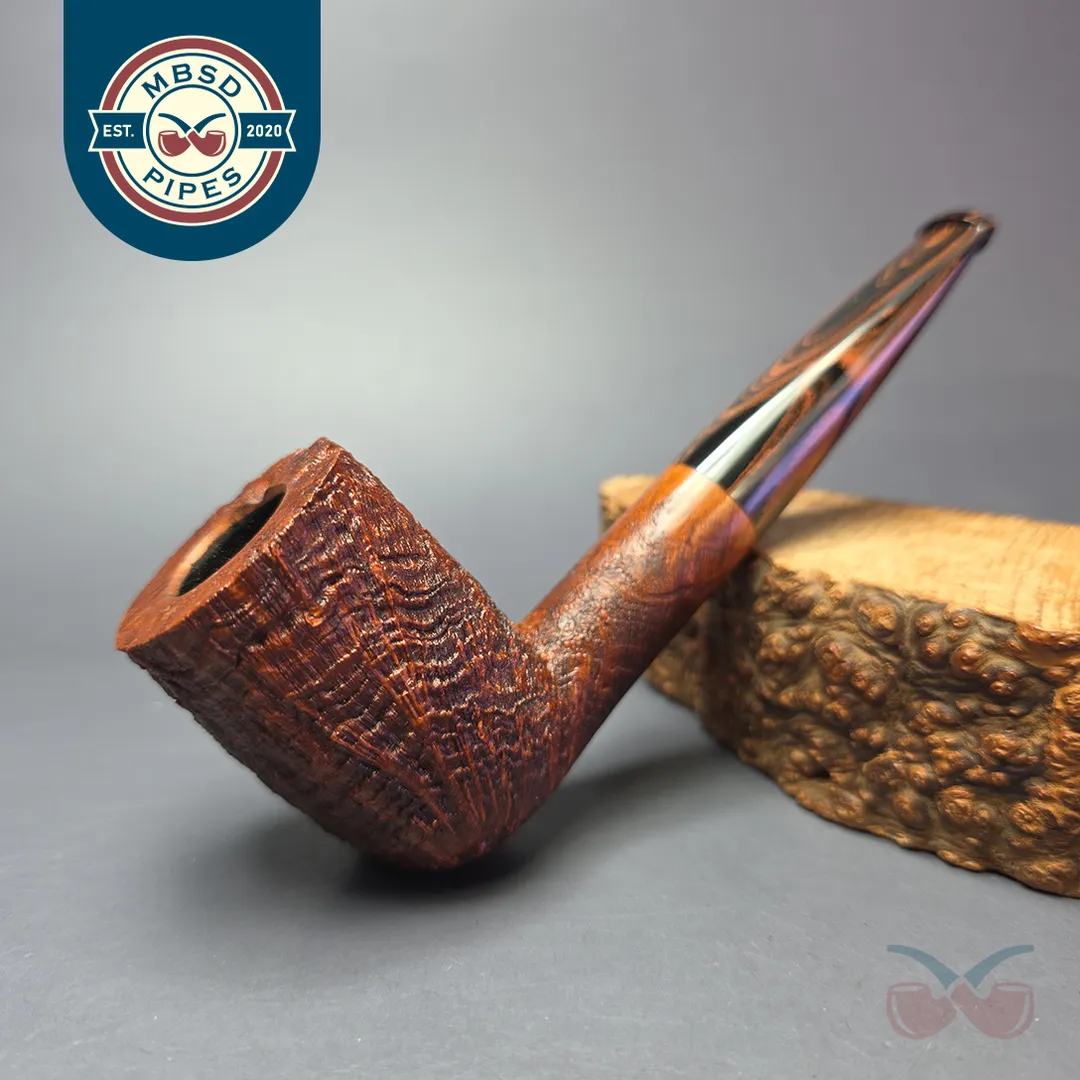
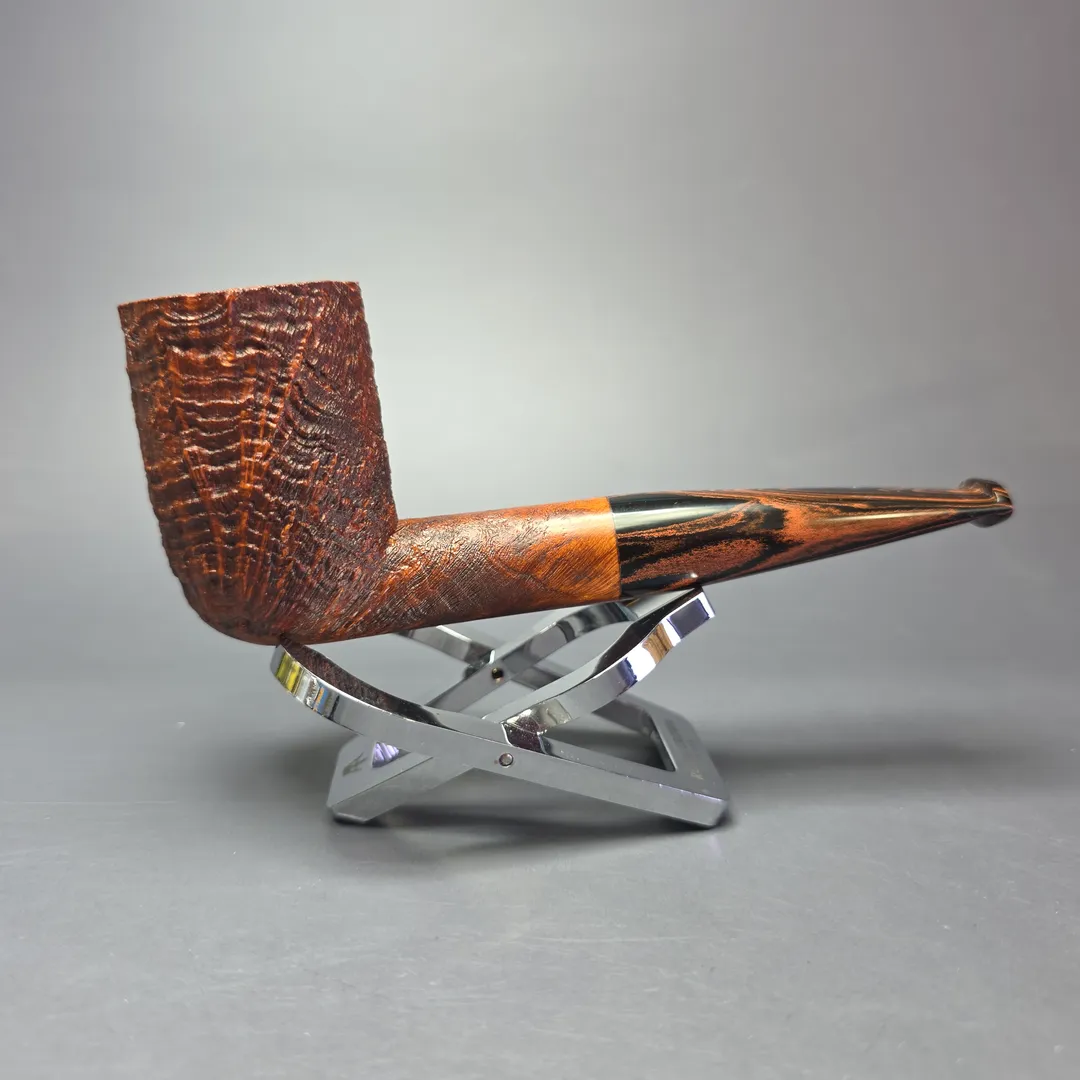
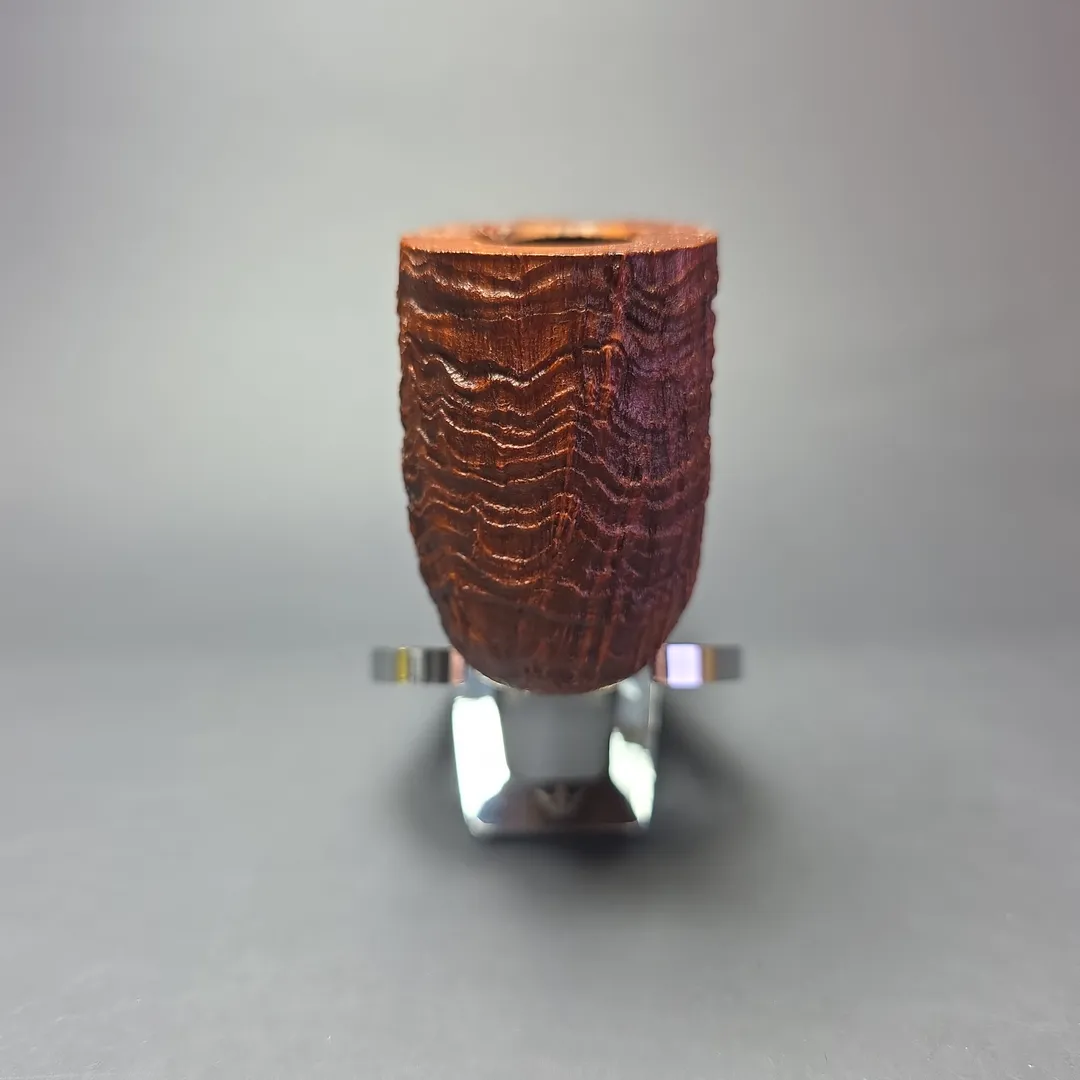
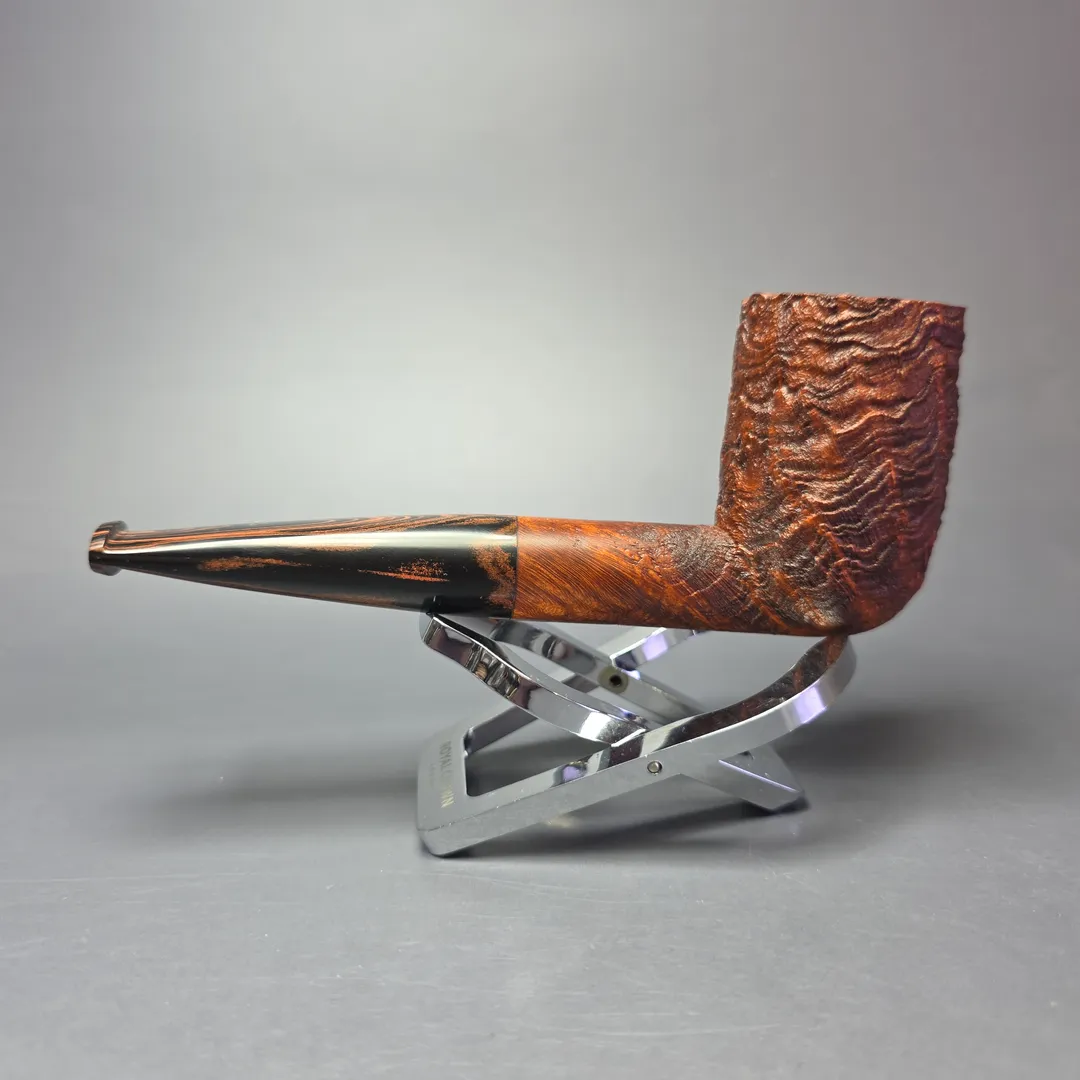
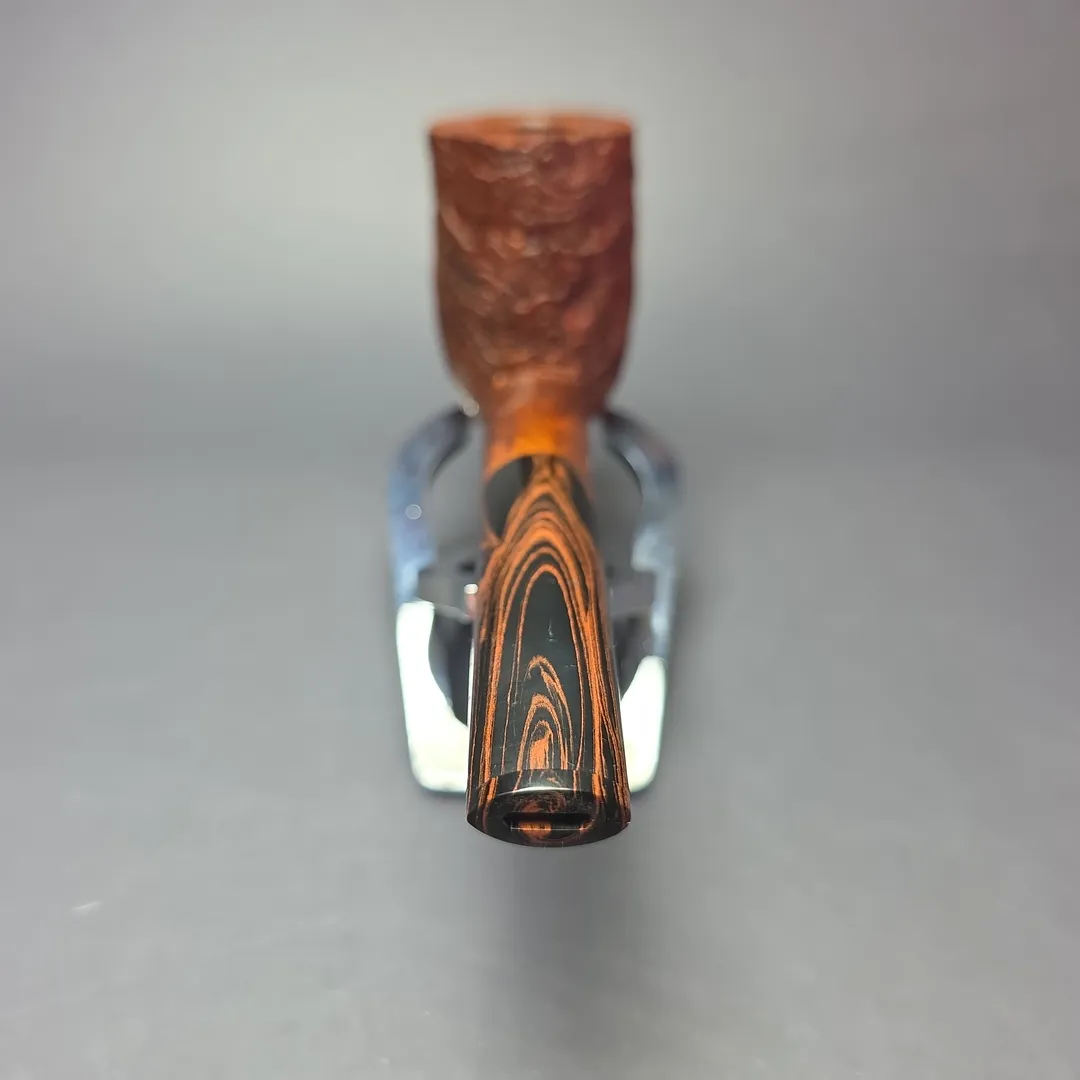
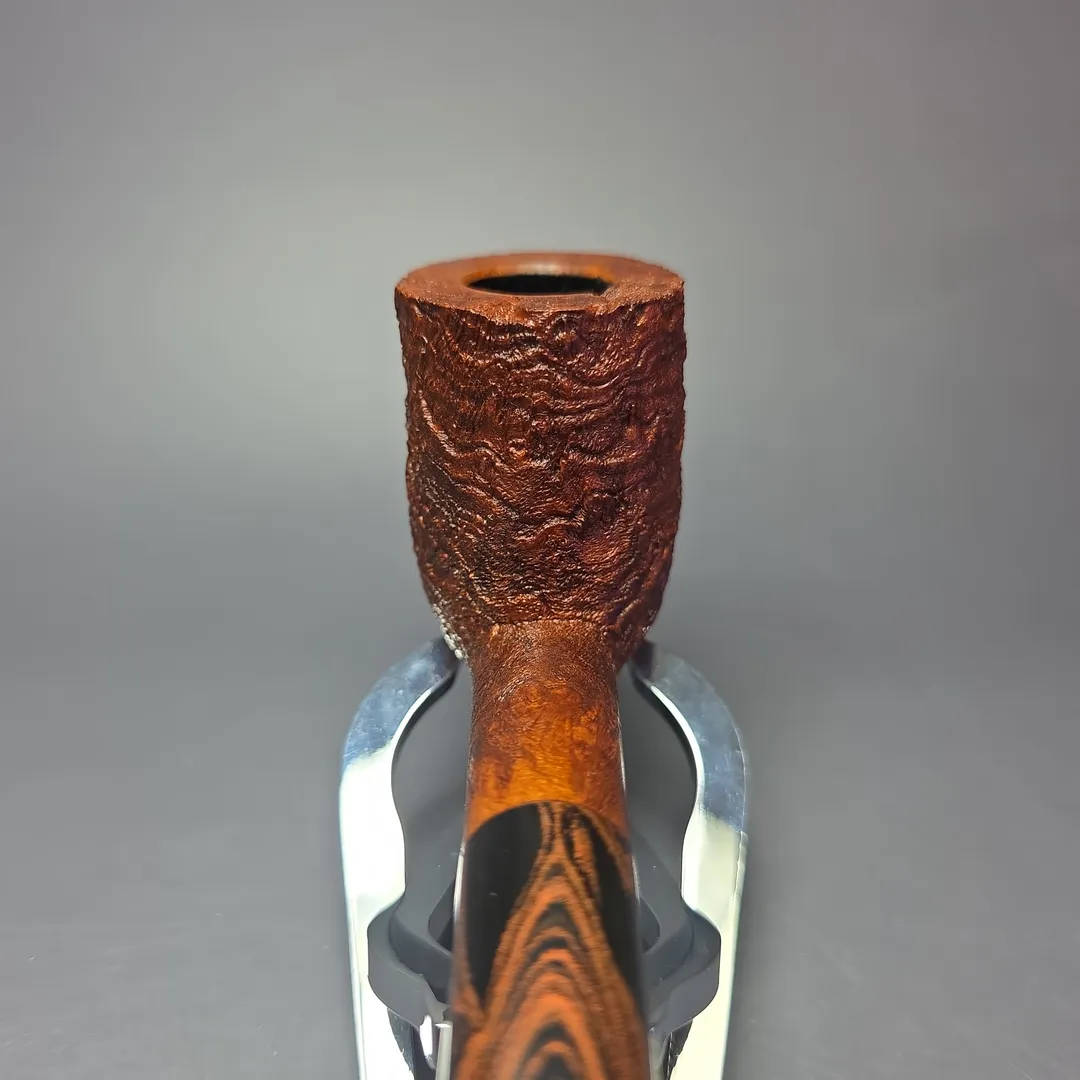
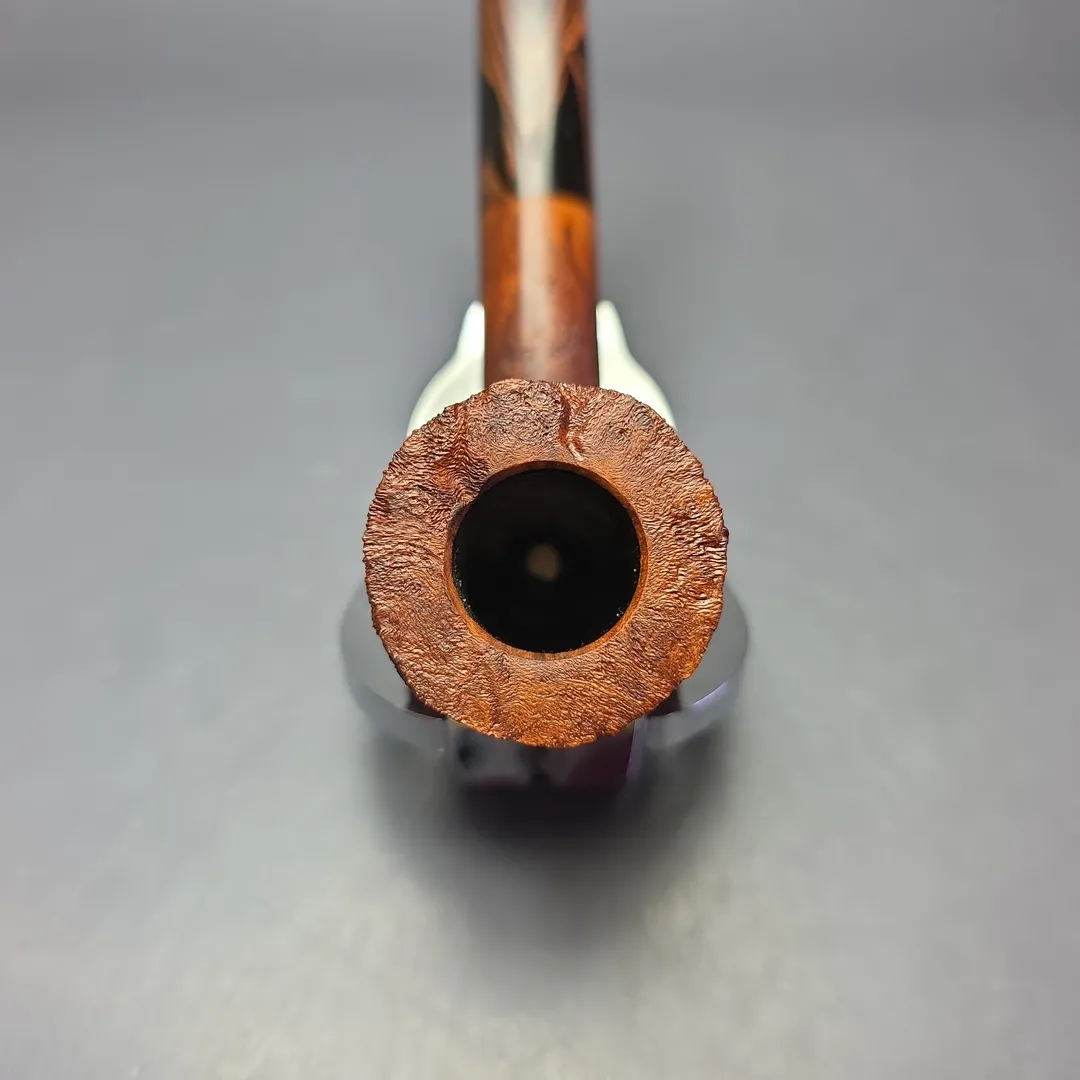
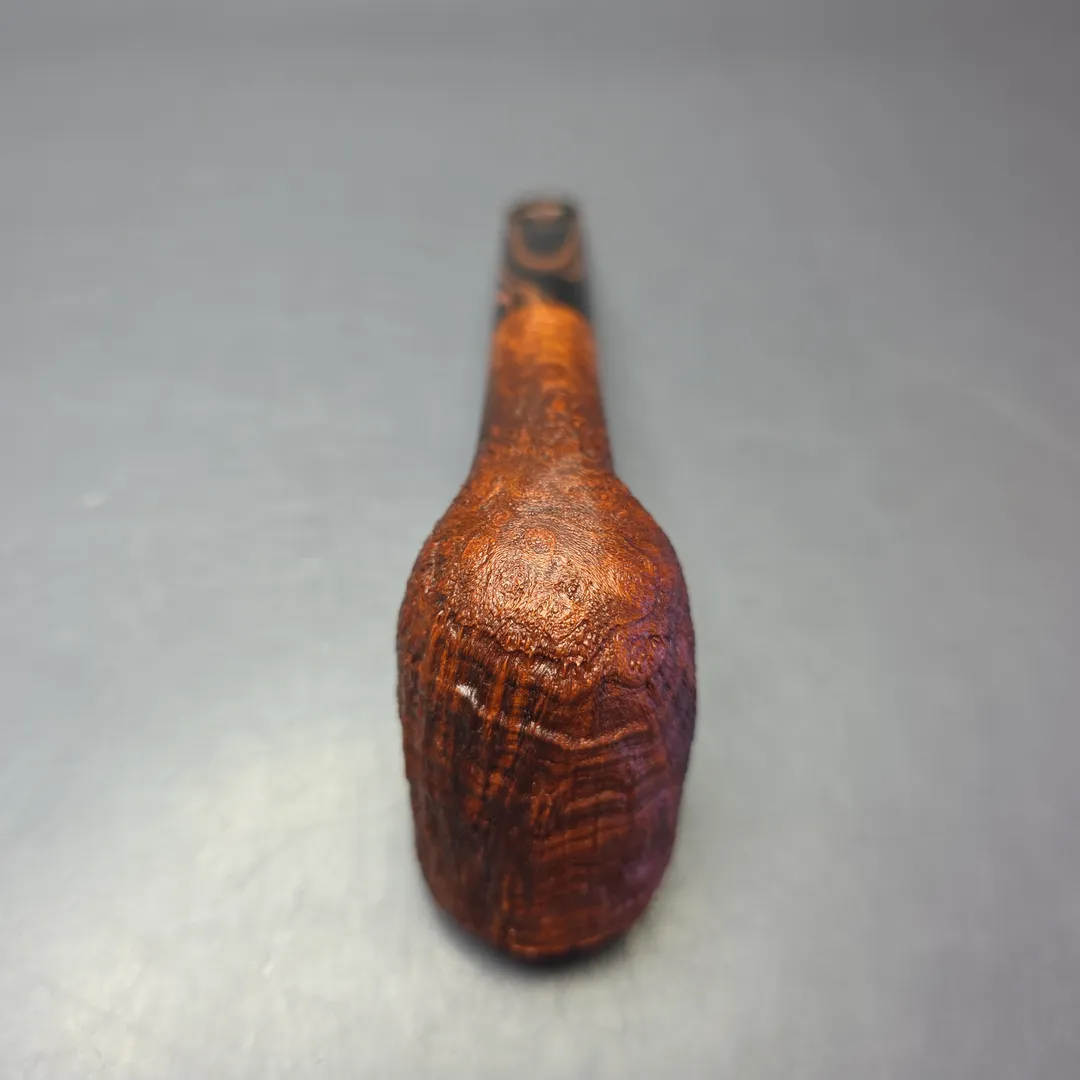
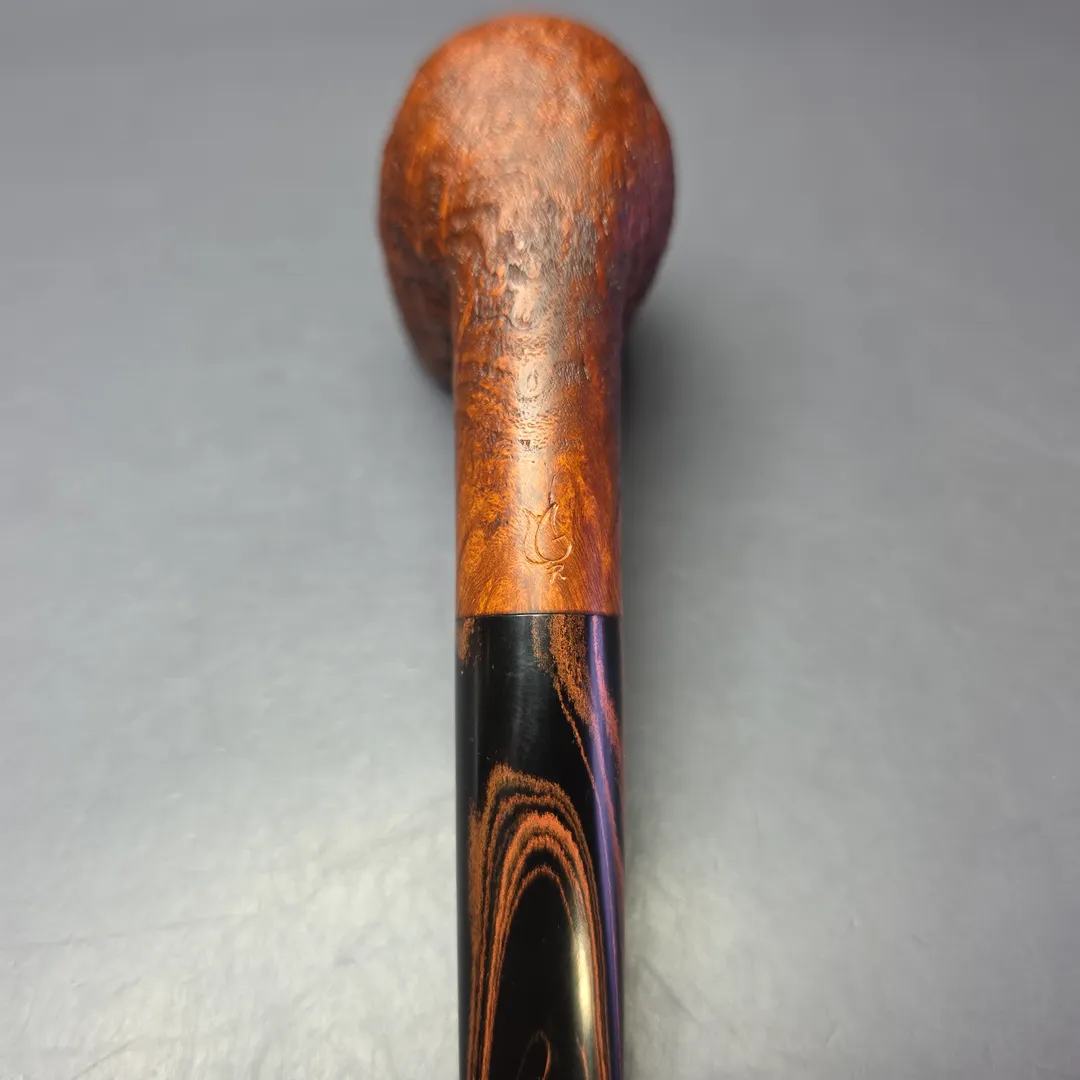
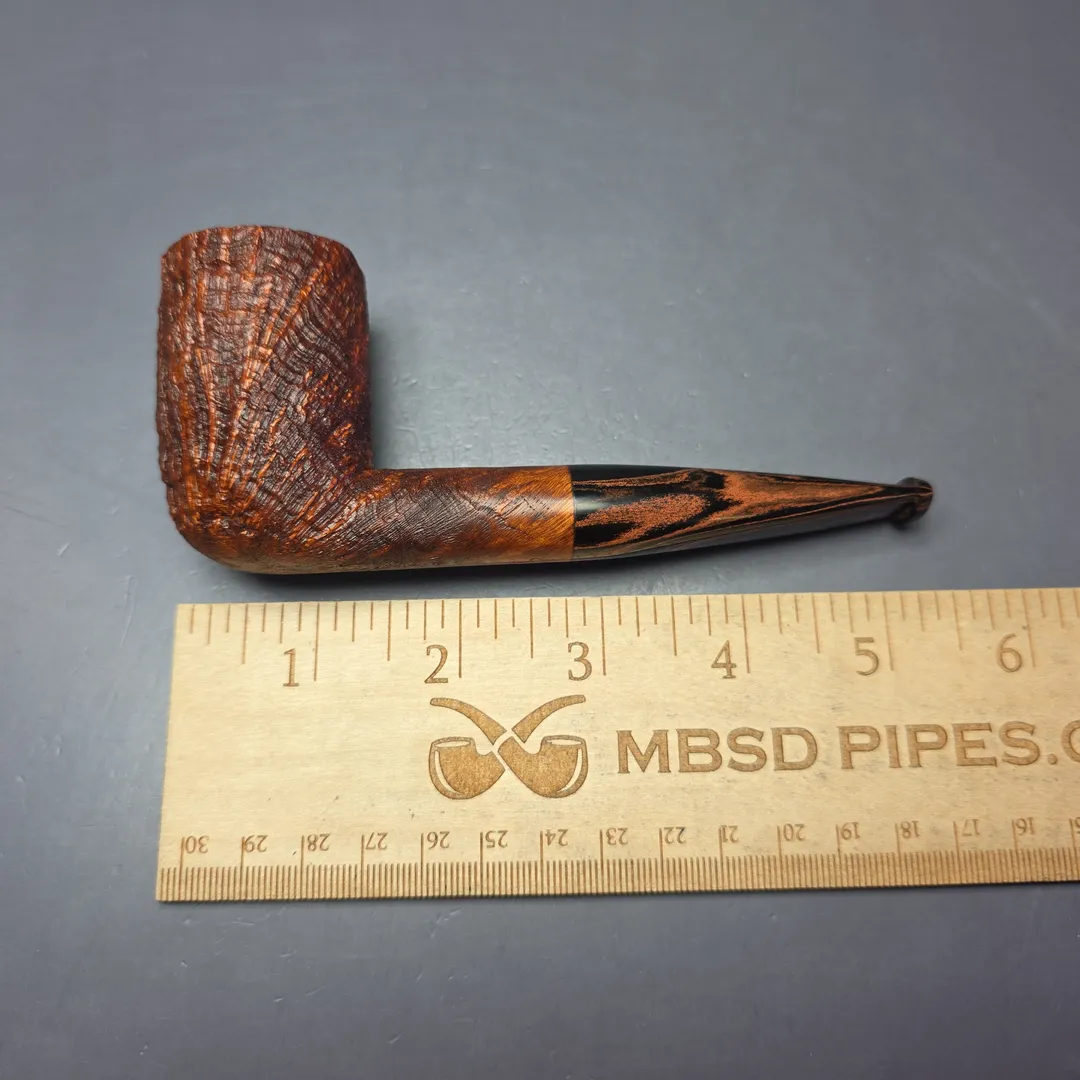
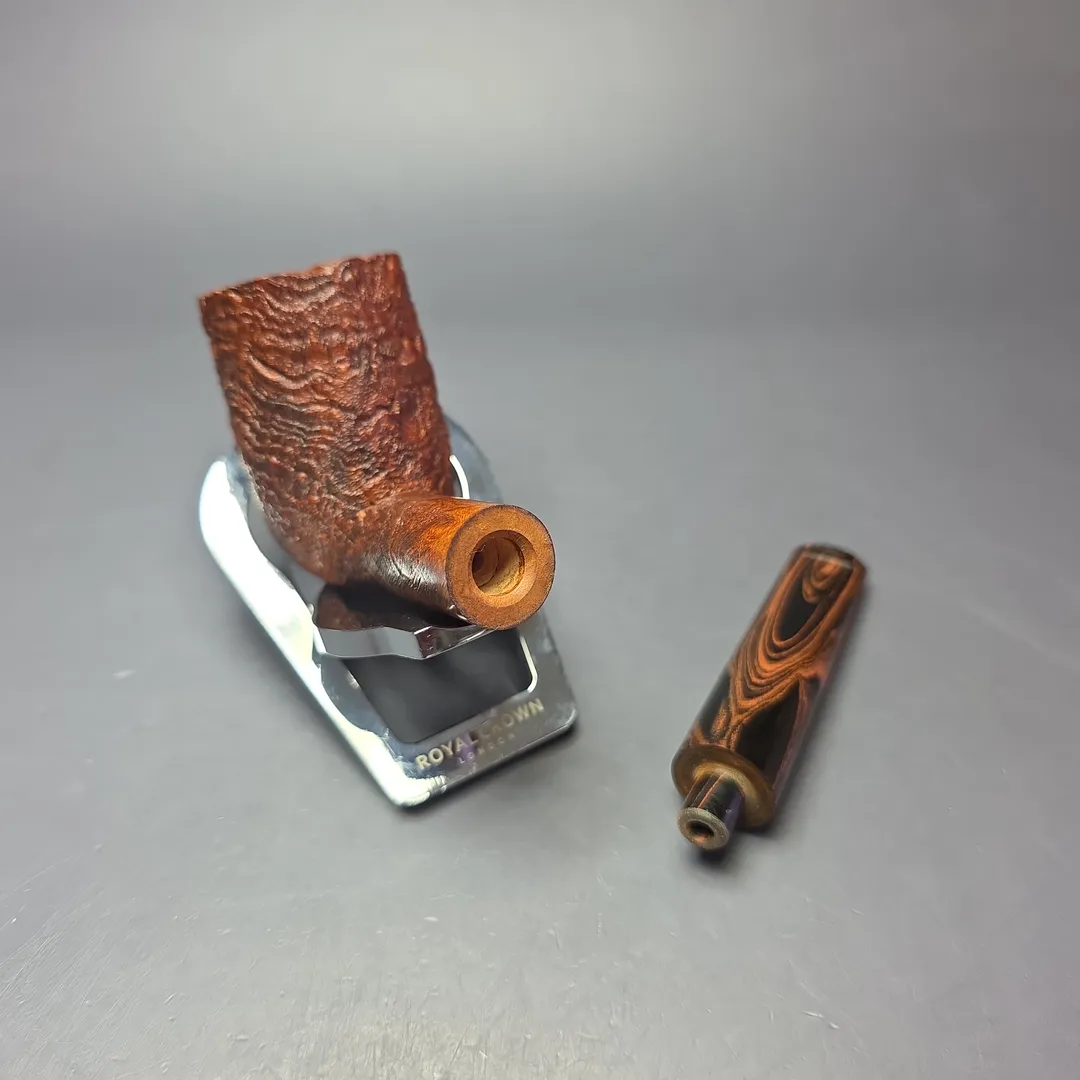
This particular pipe is the second of the most “classical,” or “neoclassical,” pipes in Nate Rose’s latest batch for us, and it is arguably the most so of the bunch. Though he’s no stranger to the modern and the novel when it comes to pipe design, Rose is a true believer in the power of the humble billiard. And like a number of his contemporaries, such as fellow countrymen Michael Parks and Todd Bannard, as well as others in the states down south (the recently retired J.T. Cooke being a prime example), Rose is especially fond of the great, early 20th century billiard renditions—variations that have come to be known by shorthands such as LB (“Large Billiard), after Dunhill, or Maigret in Francophone contexts. Typically shorter than many contemporary billiards (they were “large” in their own time, after all), yet markedly muscular, Rose’s interpretations tend to lean closely toward the large billiards of the 1910s and 1920s as far as shaping is concerned. As for finishing, Rose also tends to emulate the deep, craggy sandblast finishes of that era, as seen quite prominently here, though his color palette is a little more expansive and contemporary, with this one wearing a deep, reddish contrast stain and being paired with a brindled ebonite mouthpiece of matching tones.
Details:
Length: 5.4″ / 137.1mm
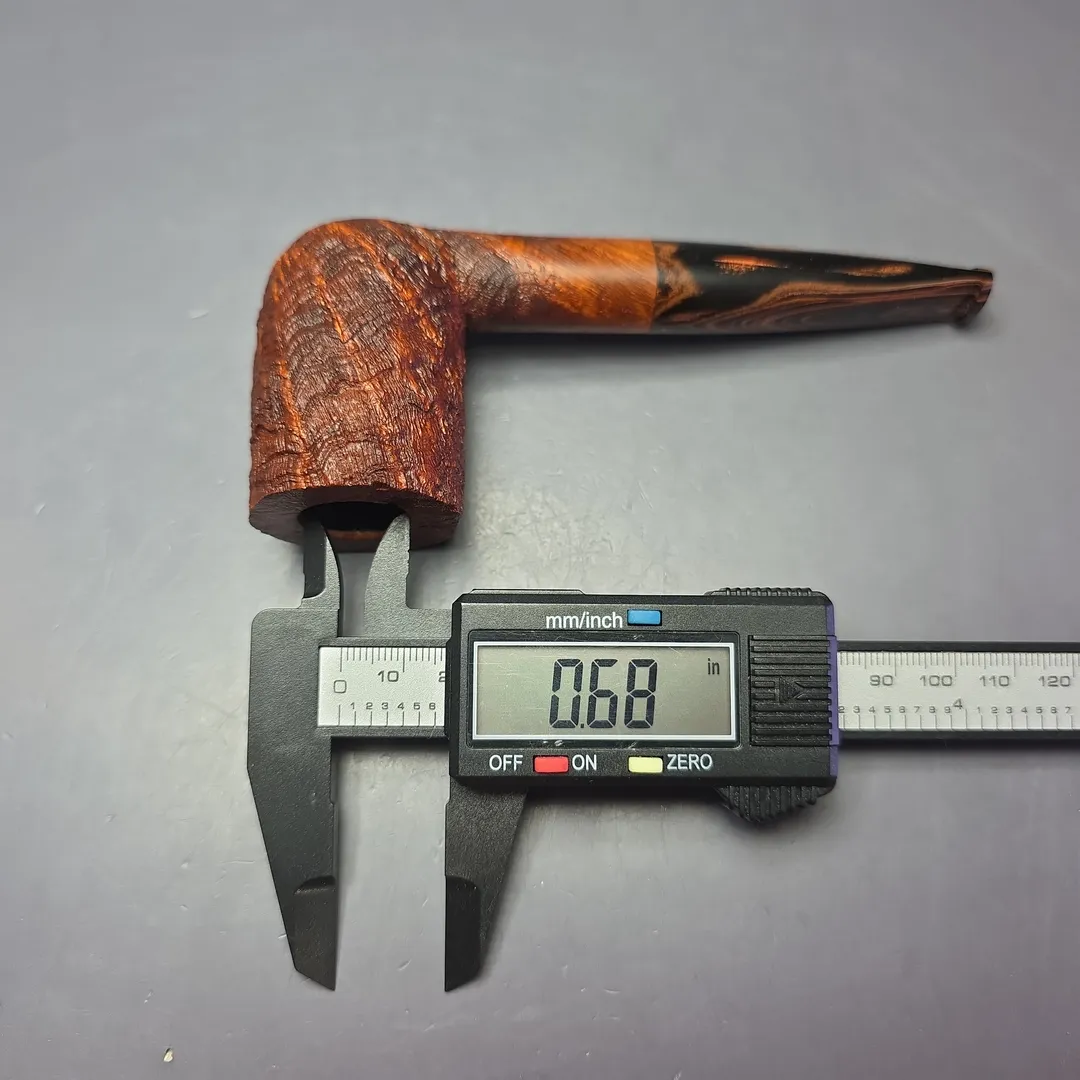
Bowl Width: 0.68 / 17.27mm
Bowl Depth: 1.85″ / 46.99mm
Weight: 1.7oz / 50g
| Weight | 15 oz |
|---|
| Condition | New |
|---|


