
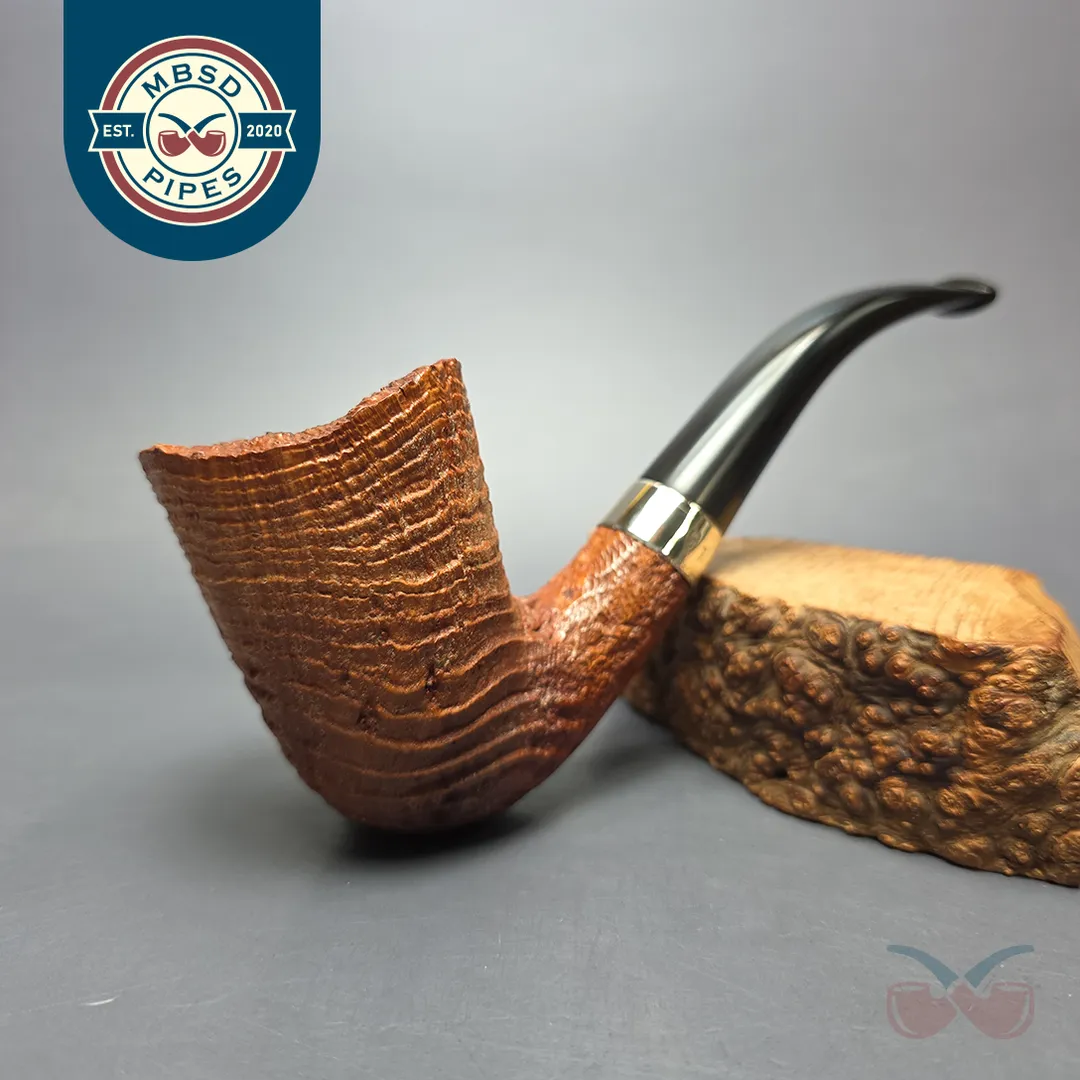
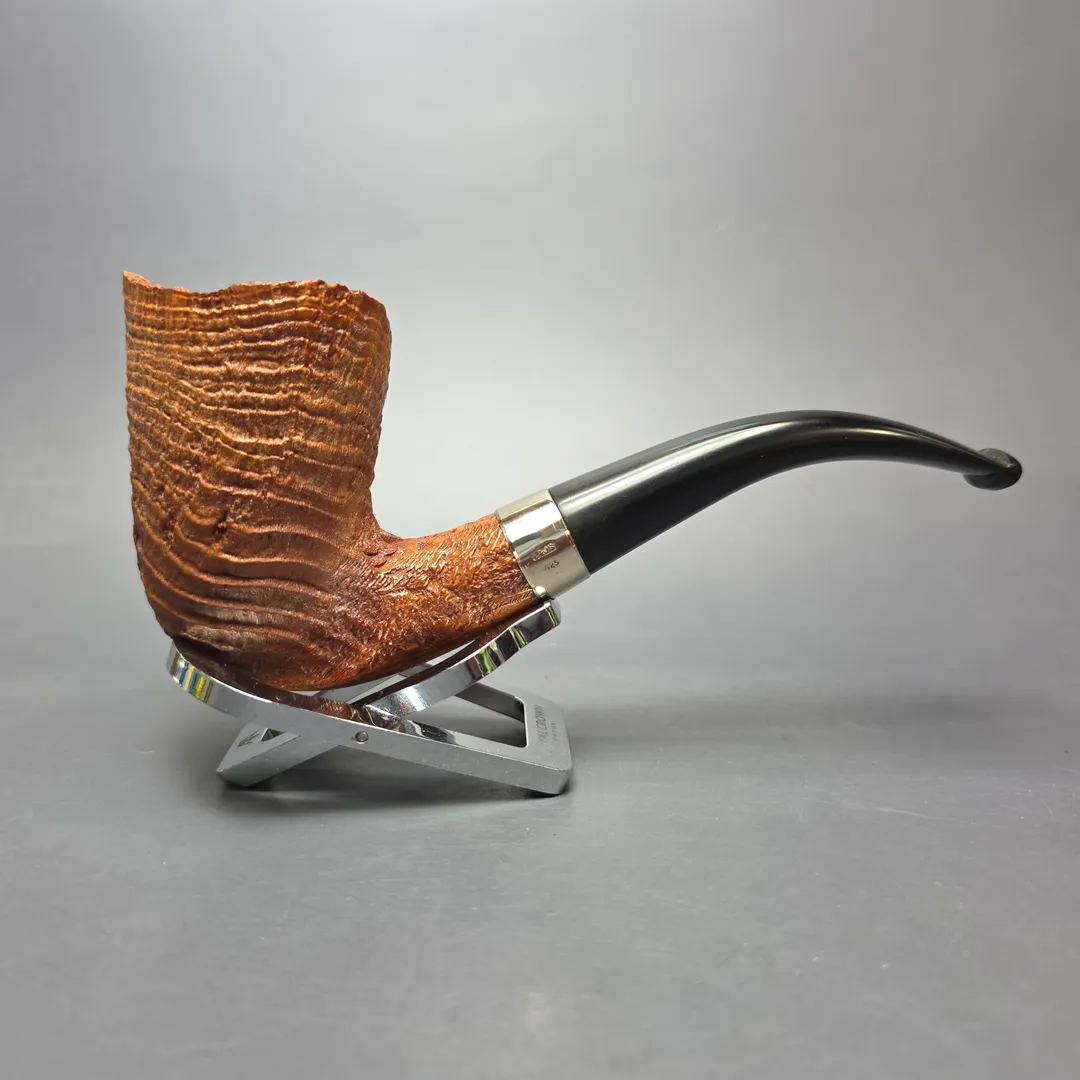
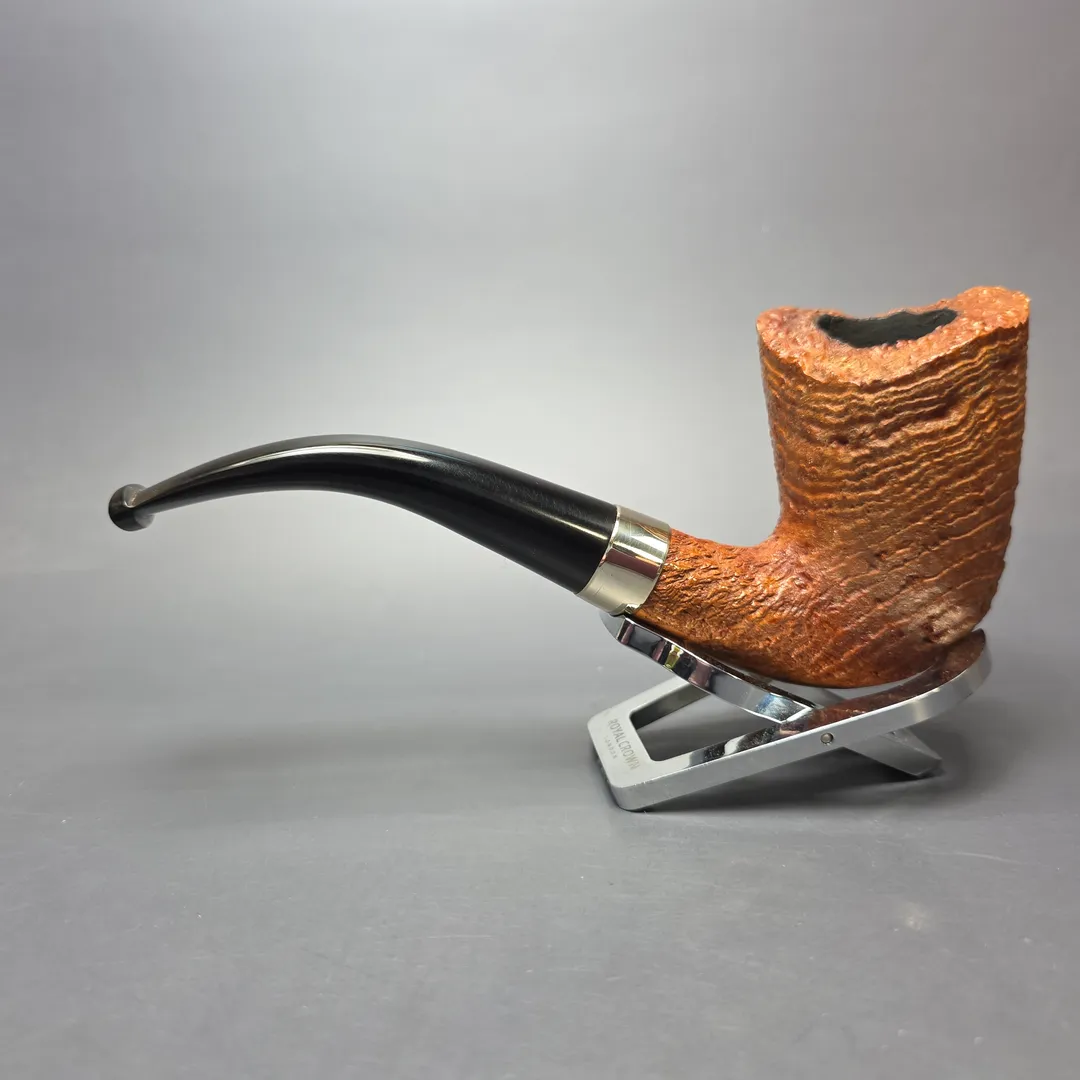
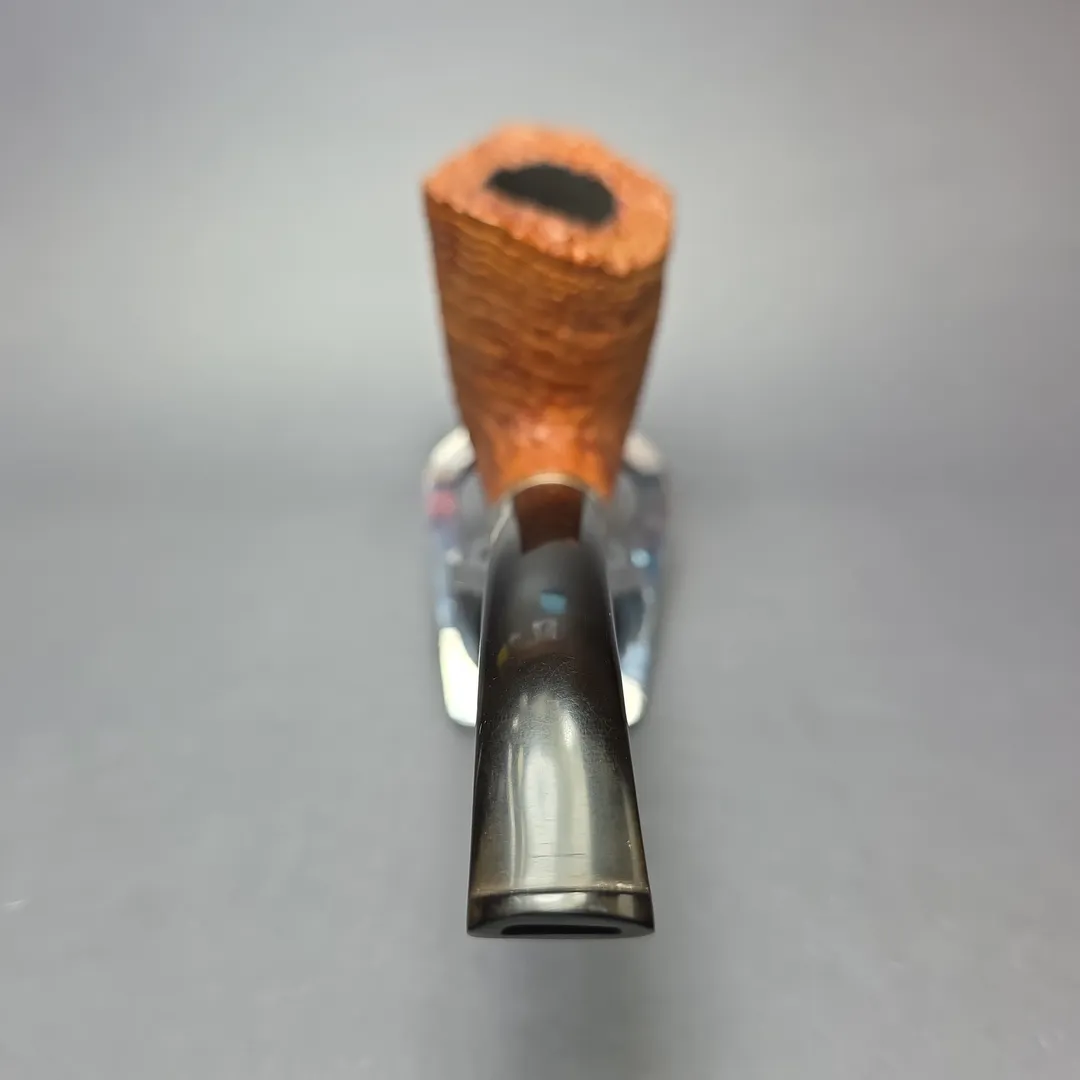
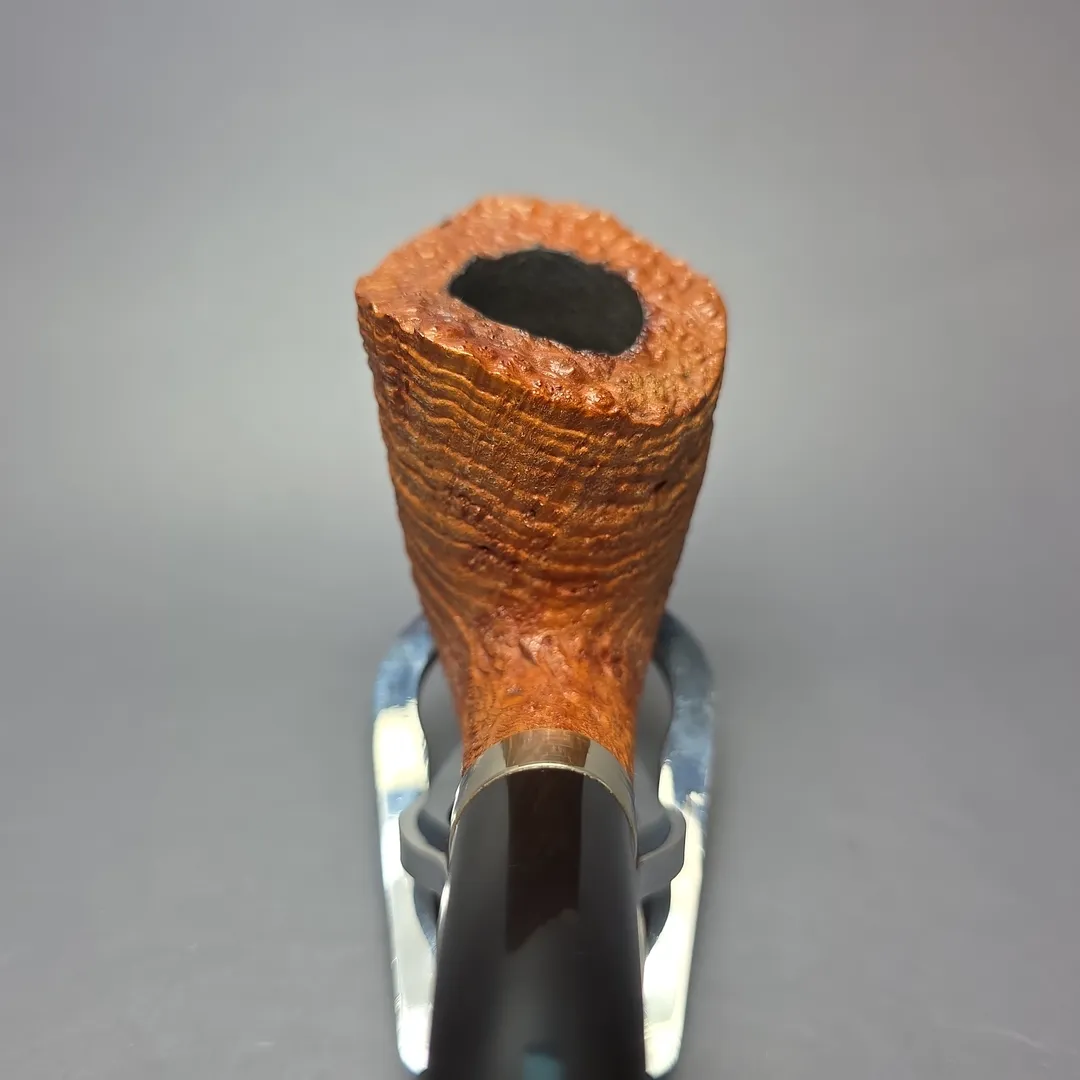
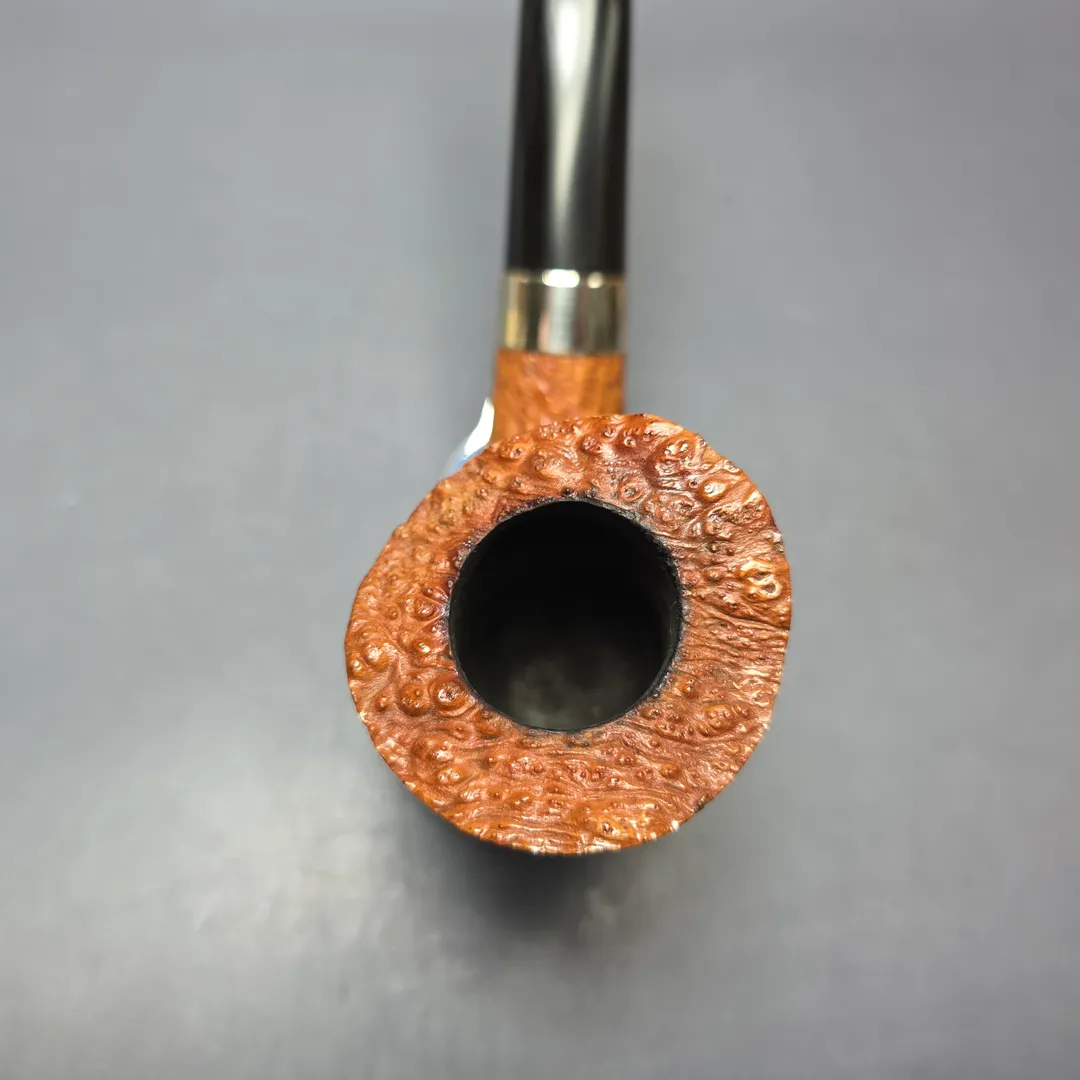
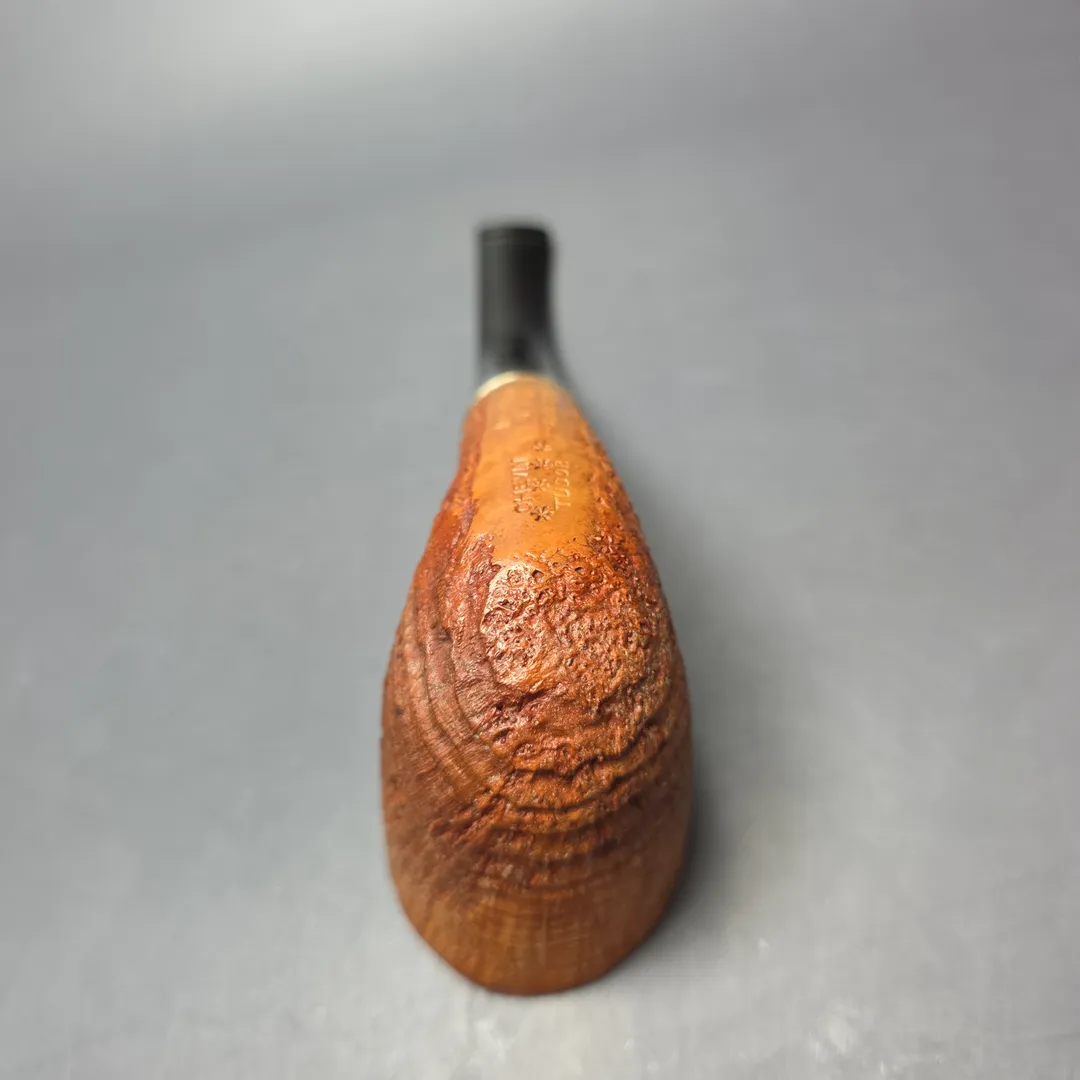
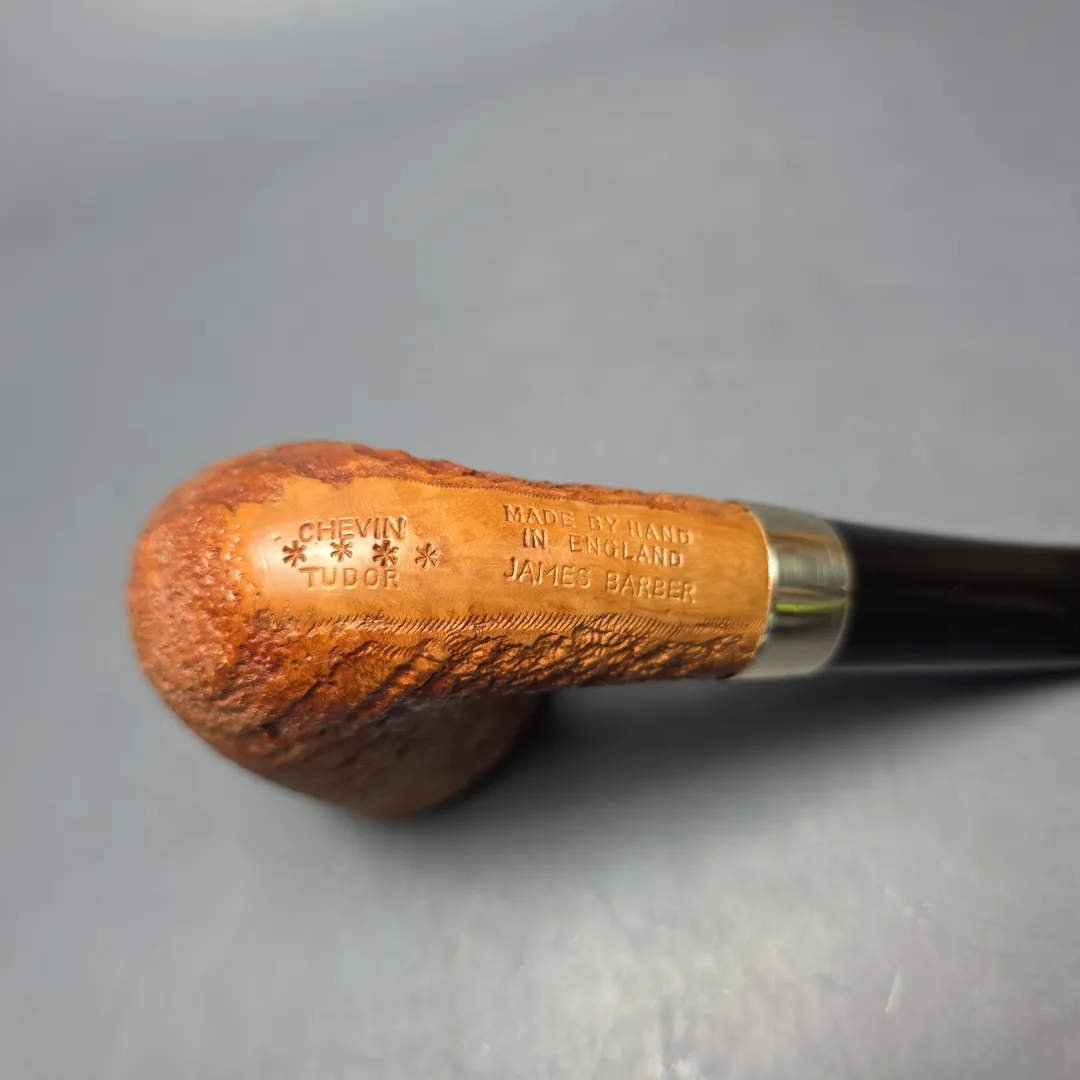
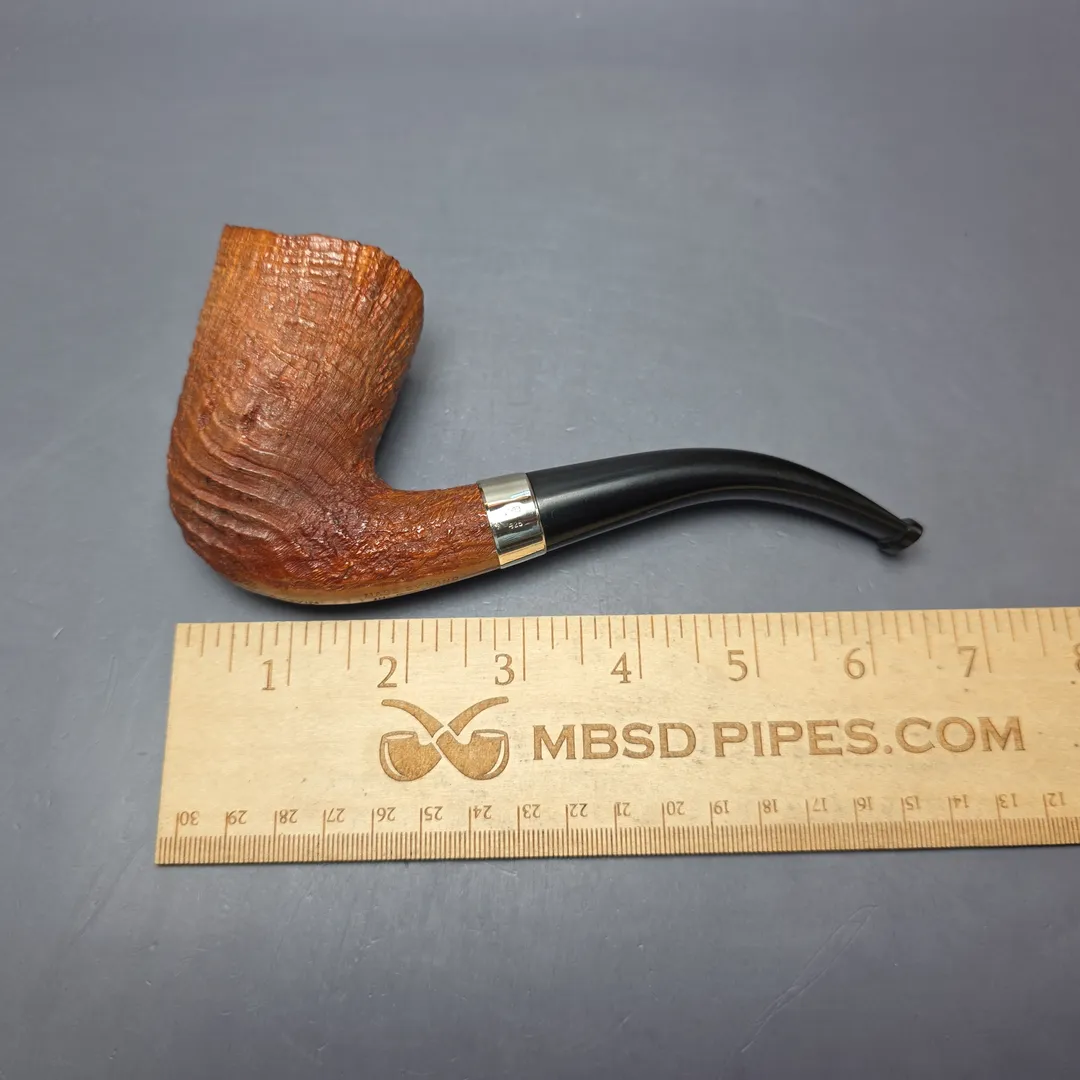
James Barber (Ferndown) Chevin Tudor 4 Star Sandblasted Dublin w/ Silver Estate Briar Pipe
Out of stock




Ferndown pipes were made by the legendary British pipe maker Leslie “Les” John Wood, along with his wife Dolly. Both Les and Dolly previously worked for Dunhill, where Les developed his skills and reputation as Britain’s premier pipe silversmith. After leaving Dunhill, Les and Dolly began making their own pipes, with their combined knowledge and experience, yielding pipes of a quality that, arguably, exceeded even that of their former employer. Ferndown pipes are highly coveted by pipe smokers due to their superlative craftsman(and woman!)ship, being constructed from high-grade, oil-cured briar, hand cut ebonite, and, in many cases, sterling silver or solid gold ornamentation turned by Les himself. Les and Dolly retired from pipe making in 2016, making Ferndown pipes rather scarce—especially given how difficult it is to get their owners to part with them.
James Barber is a tobacconist in Otley, England, and it’s one that had a long history with Les and Dolly Wood, of Ferndown. In fact, I’m fairly certain that it still does have a connection to the two, as the Woods and the Barbers are good friends, last I checked. As regards pipes, however, back in the early 2000s, James Barber wanted to sell Ferndown pipes, but there were issues with the make’s existing distribution agreements that could not easily be resolved. This led to Les and Dolly making house-brand pipes for James Barber using the latter’s name, and instead of the usual names for Ferndown finishes, names of locales in the Otley area were adopted. Thus, instead of the Ferndown Root, James Barber sold the James Barber York. They were essentially the same pipe, just like Ferndown’s pipes for Astleys, and, just as in the case of the latter, it is a case of “a rose by any other name” as far as fine English pipes go.
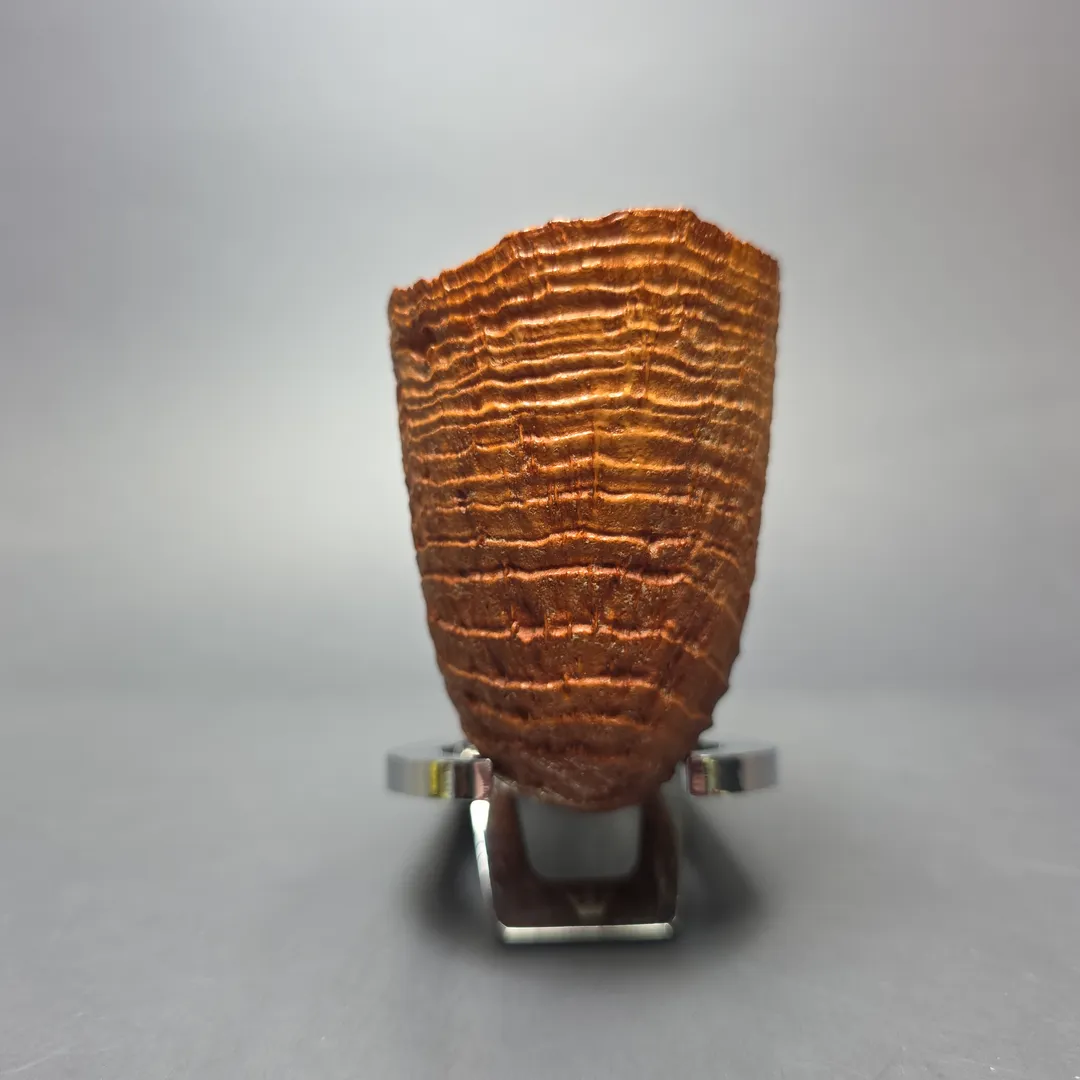
But there is something quite unique about this James Barber pipe: the finish. After all, this is a sandblasted James Barber pipe, which means that it is a sandblasted Ferndown, and if you know anything about Ferndown pipes, you’ll know that sandblasting was not something that Les and Dolly typically did for their pipes. And, stranger still, this is a James Barber in the “Chevin” finish, a name that evoked the hillsides of Otley and normally corresponded to a Ferndown in the make’s rusticated “Bark” finish. Fear not—the pipe is authentic, but it does require some explaining, which I will now do (with some material copied from other writeups on our site).
The “Bark” was, quite famously, a unique, rusticated finish used by Les Wood and Dolly Wood for the majority of their pipes. 90% of the pipes Les and Dolly made, whether they were for the Ferndown make, for their Elwood make in Germany, for the Astleys house brand in London, or for the James Barber house brand in Otley, were “Barked” in this manner. At a time when the notion of a high-grade rusticated finish was mostly confined to Italy (and, to an extent, America) this was very unusual, and yet it paid off, with the Ferndown Bark becoming immensely sought-after by casual pipe smokers and collectors alike. “Barking,” as Les and Dolly termed it, was done not with a hand tool, but with a split drill bit, creating a distinctly fine texture that is still sometimes mistaken for a sandblast finish, but most of the time, a Ferndown labeled as “sandblasted” will, in fact, have been rusticated instead. After all Les and Dolly did not have a sandblasting cabinet in the workshop adjoined to their home, out of which nearly all Ferndown pipes came. However, there are main two exceptions to this rule—one situated near the very beginnings of Les and Dolly’s career as independent pipe makers, and one right at the end. The latter was a collaboration between Les and Dolly and Canada’s Michael Parks, with Parks being sent unfinished Ferndowns from the English couple and sandblasting them. These pipes were called the Ferndown Bark Premier. The other exception is a little more complicated. While Les and Dolly’s home workshop did not have the tools for sandblasting Ferndown pipes, the workshops they had used prior to that point did. After Les left Dunhill, he established a workshop in London, which he shared with other ex-Dunhill craftsmen, including Bill Taylor, who was in the process of setting up his own pipe company, Ashton. Some time later, Les and Dolly moved to a workshop in Clavering, which they shared with a furniture company. It was in these two workshops that Les and Dolly first began manufacturing pipes of their own, and this was also where the “Bark” finish was born. However, the Bark was, originally, a sandblast finish. In fact, Les and Dolly were making the “Bark” line before they were making “Ferndown” pipes, as their venture went through a series of names before “Ferndown” was chosen. Prior to Ferndown, Les and Dolly made “Jacobean” pipes (which did not take off, in part because Americans had no idea how to pronounce the word); after Jacobean, the two made “Tudor” pipes (a brand name also subsequently dropped, but which lived on, at least partly, in the Ferndown Tudor Root line). At least as early as their Tudor make, Les and Dolly were creating sandblasted pipes under the name “Bark.” This continued after Ferndown replaced the Tudor make, though it presumably ended when a tragedy at the Clavering workshop meant that Les and Dolly could no longer operate there (as it happens, Les was using the workshop’s sandblasting cabinet when that tragic event occurred). Thankfully, Peter Wilson, of Duncan Briars, later taught Les and Dolly his own technique for rusticating a pipe in a way that was very similar to a sandblast finish, which Wilson generously gave his blessing for the two to use on Ferndown pipes. Thus the “Bark” was [re]born.
When Les and Dolly began selling pipes through James Barber, the “Bark” became the “Chevin” and, in this instance, the tan variant of the “Bark,” the “Antique Bark,” became the “Chevin Tudor.” Having spoken to Mr Barber about this particular pipe, however, it appears that it was made from a stummel that was turned way back during Les and Dolly’s Clavering years, which had been seasoning in their cellar for decades, and which was finally put to use as a James Barber pipe. The Brits really do have all the luck sometimes, it seems. Taking the form of a very large (four star size) freehand Dublin with something of a Danish edge to it, the pipe is unlike almost anything I’ve ever seen made by Les and Dolly, and is something truly special, even compared to their other pipes.
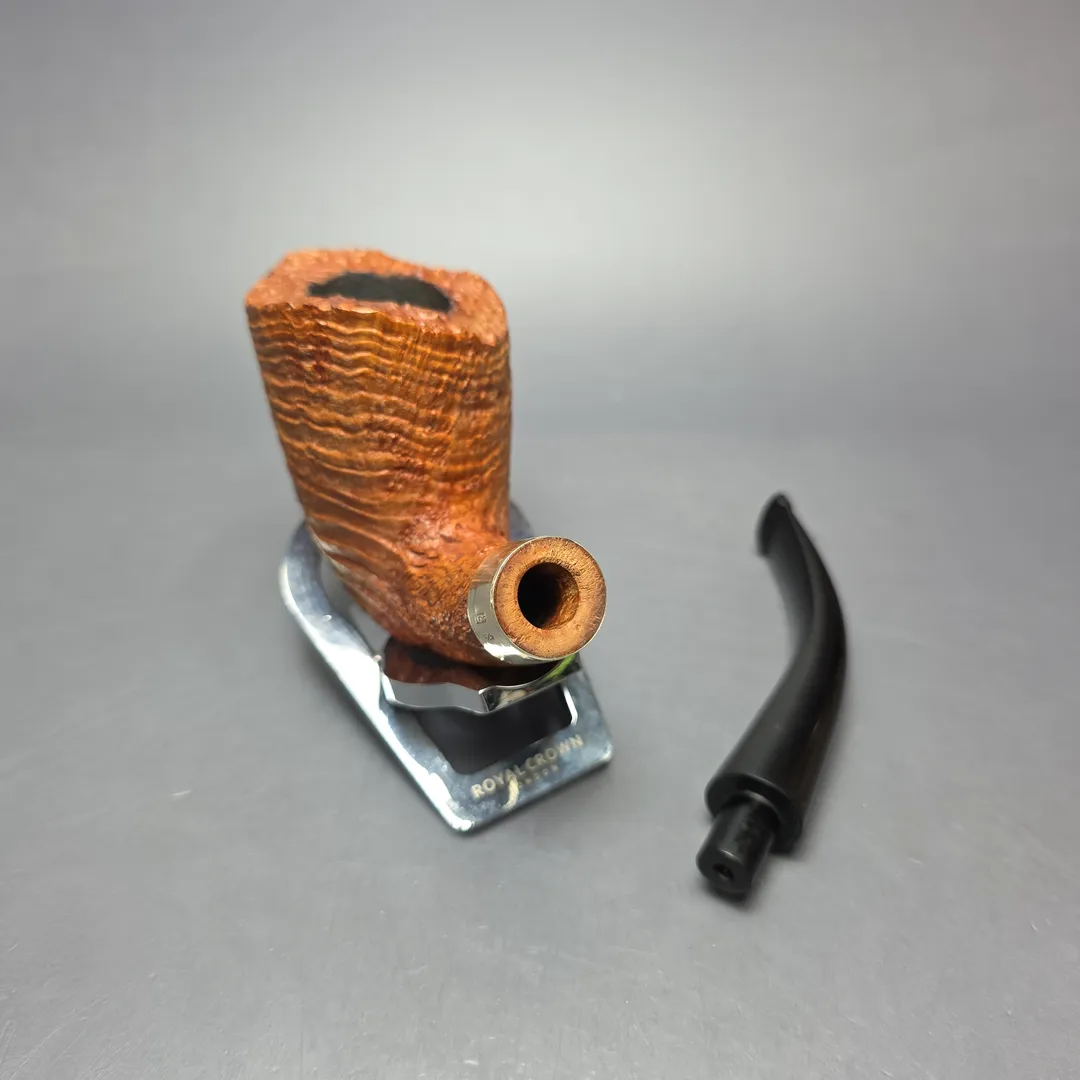
The condition is very good, too. Some inner rim darkening and very slight residual stem oxidation.
Details:
Length: 6.5″ / 165.1mm
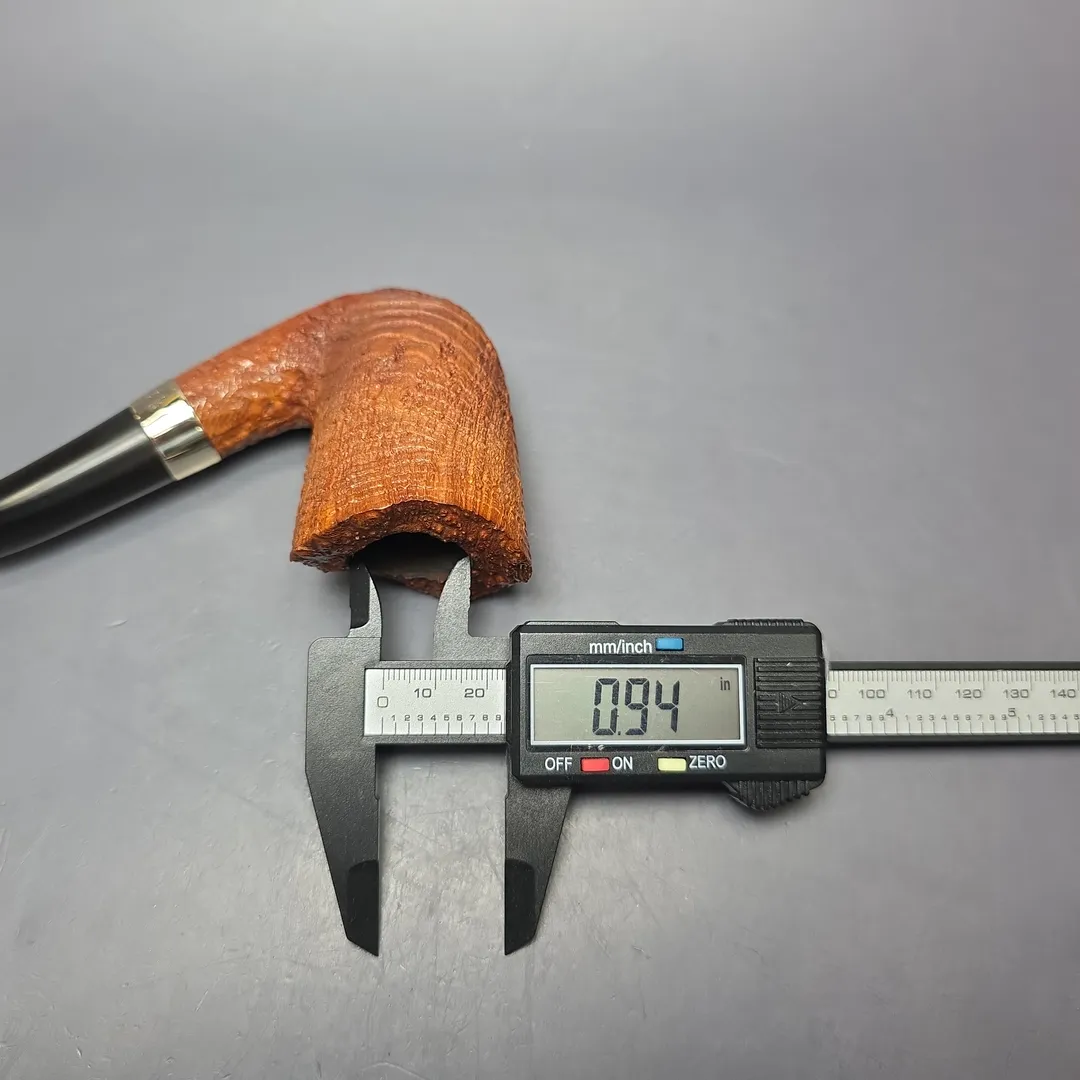
Bowl Width: 0.94 / 23.87mm
Bowl Depth: 1.97″ / 50.03mm
Weight: 2.3oz / 66g
| Weight | 15 oz |
|---|
| Condition | Used |
|---|---|
| Notes | Refurbished. |


