
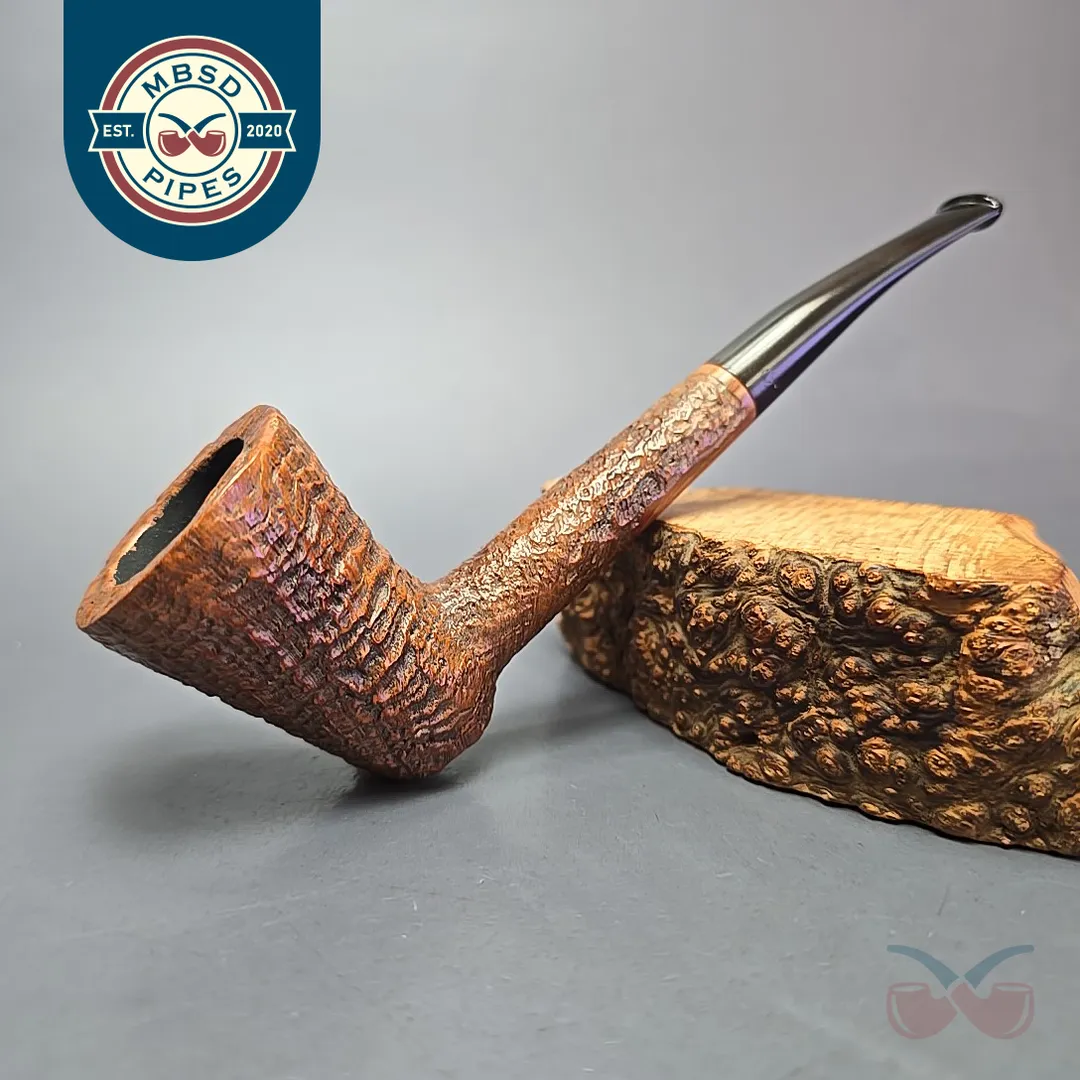
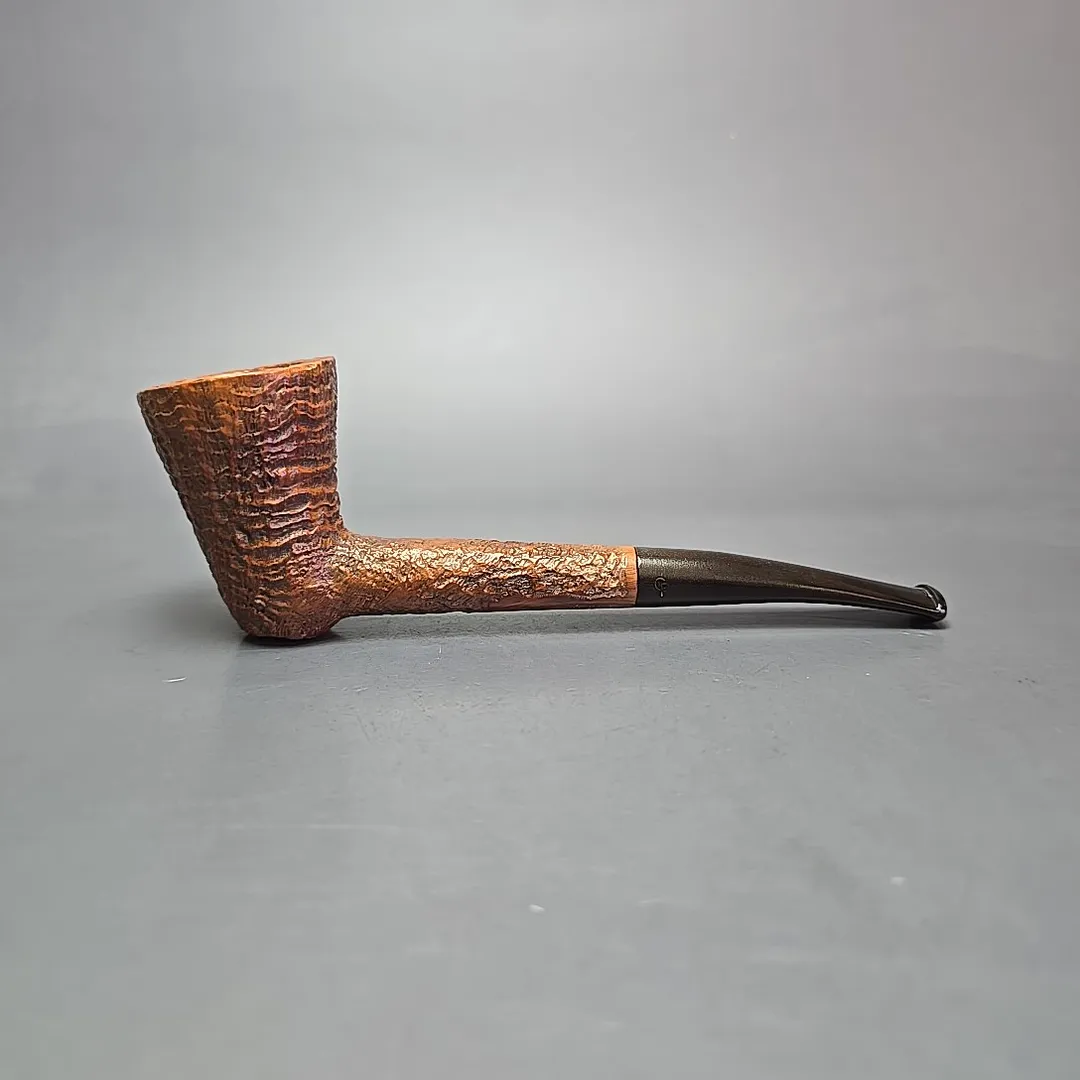
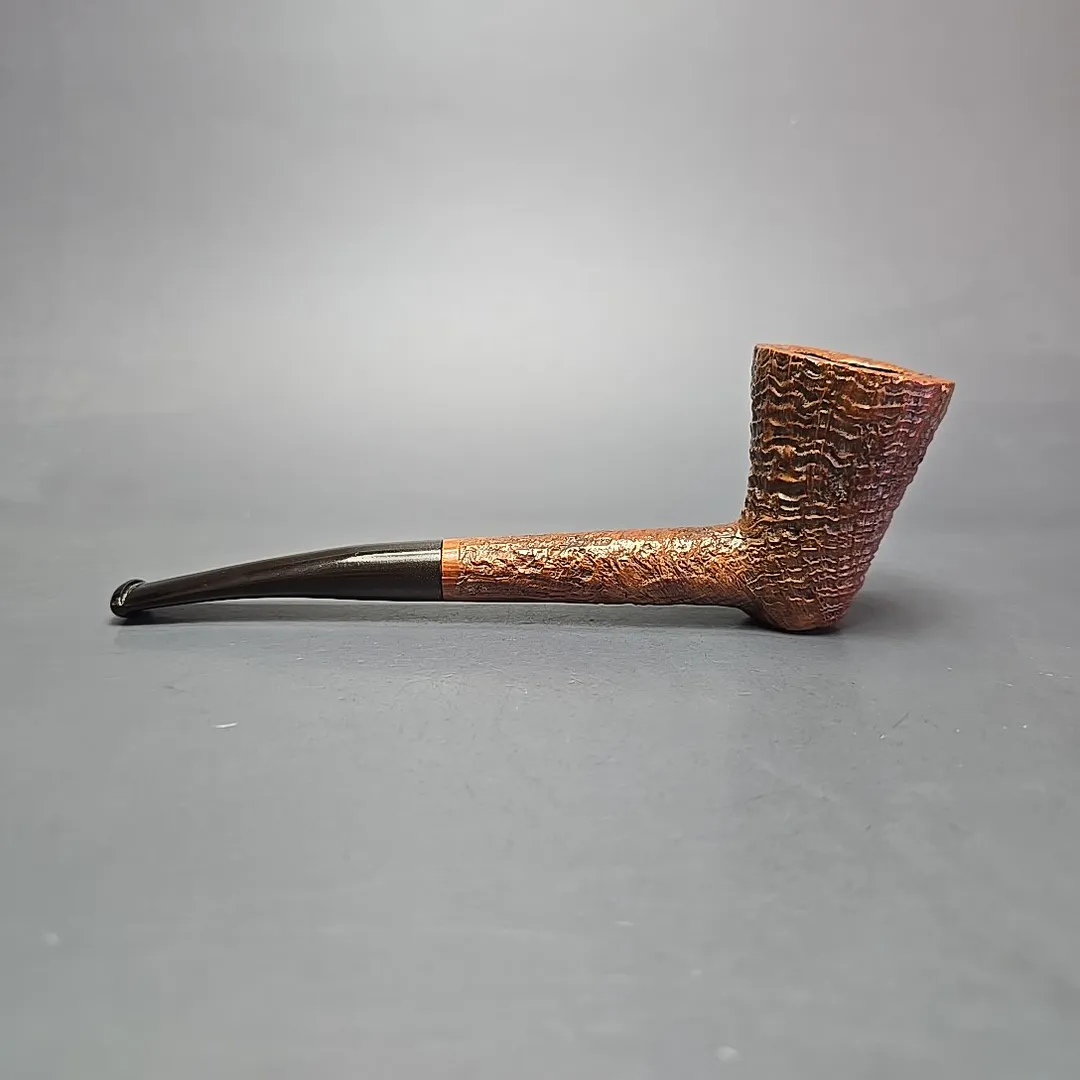
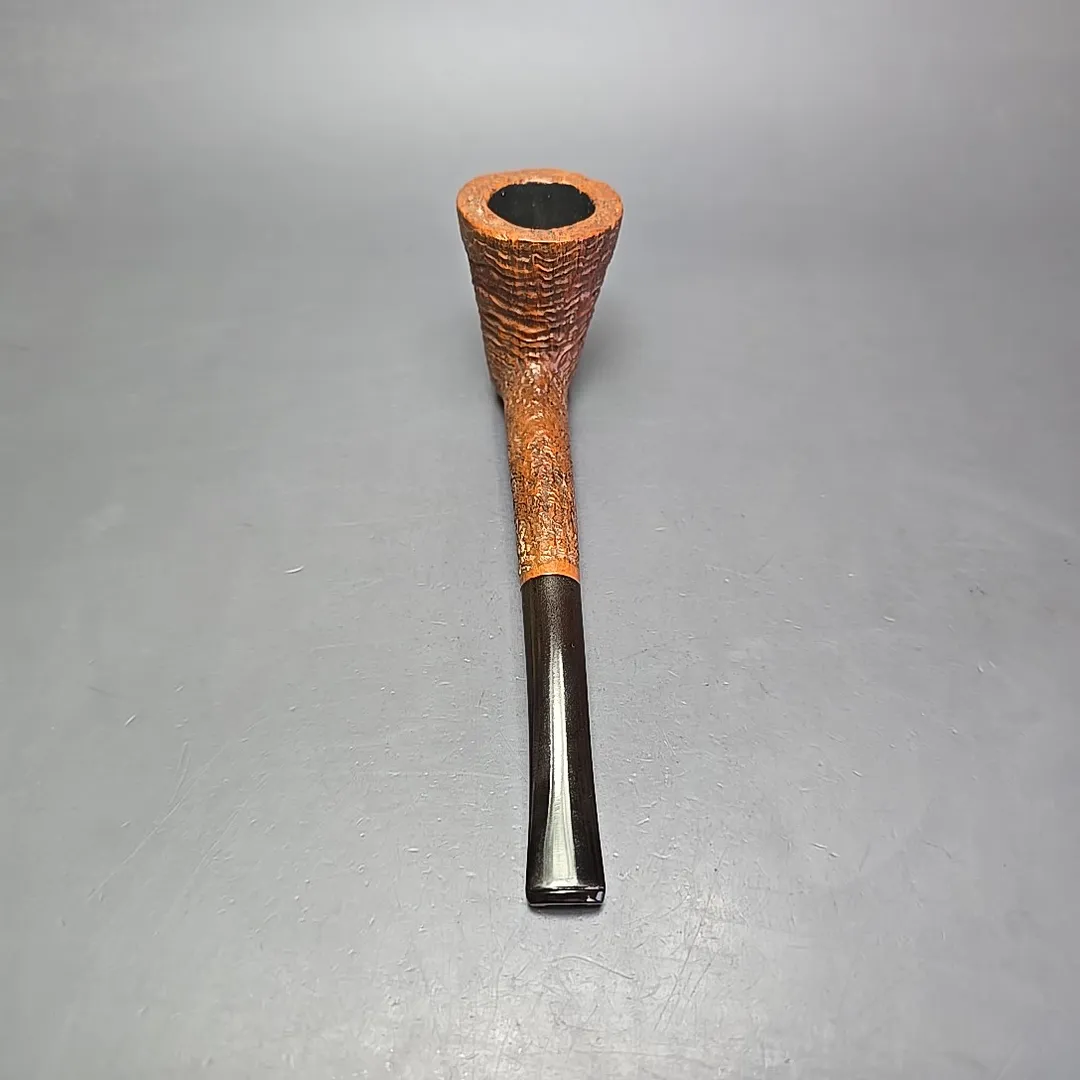
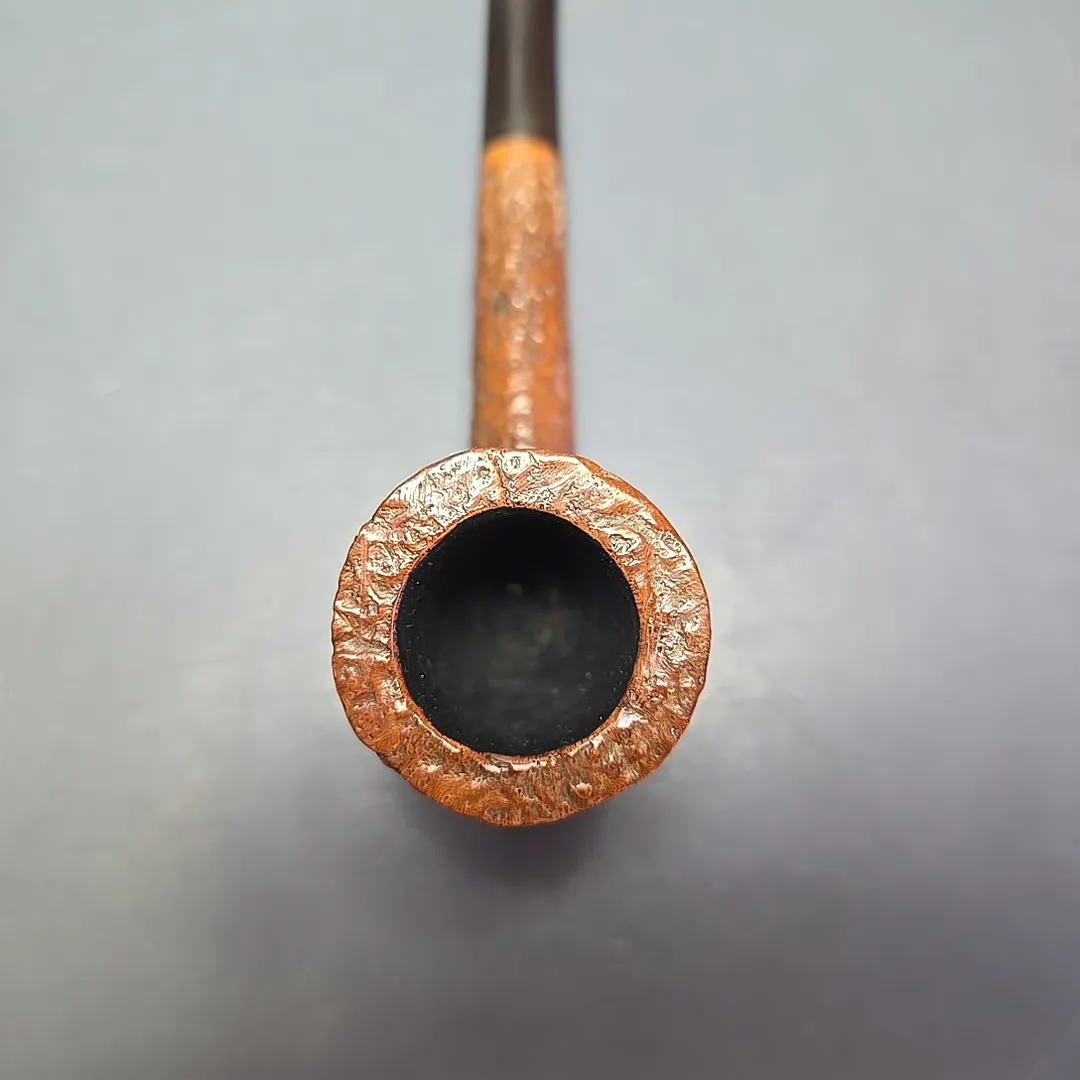
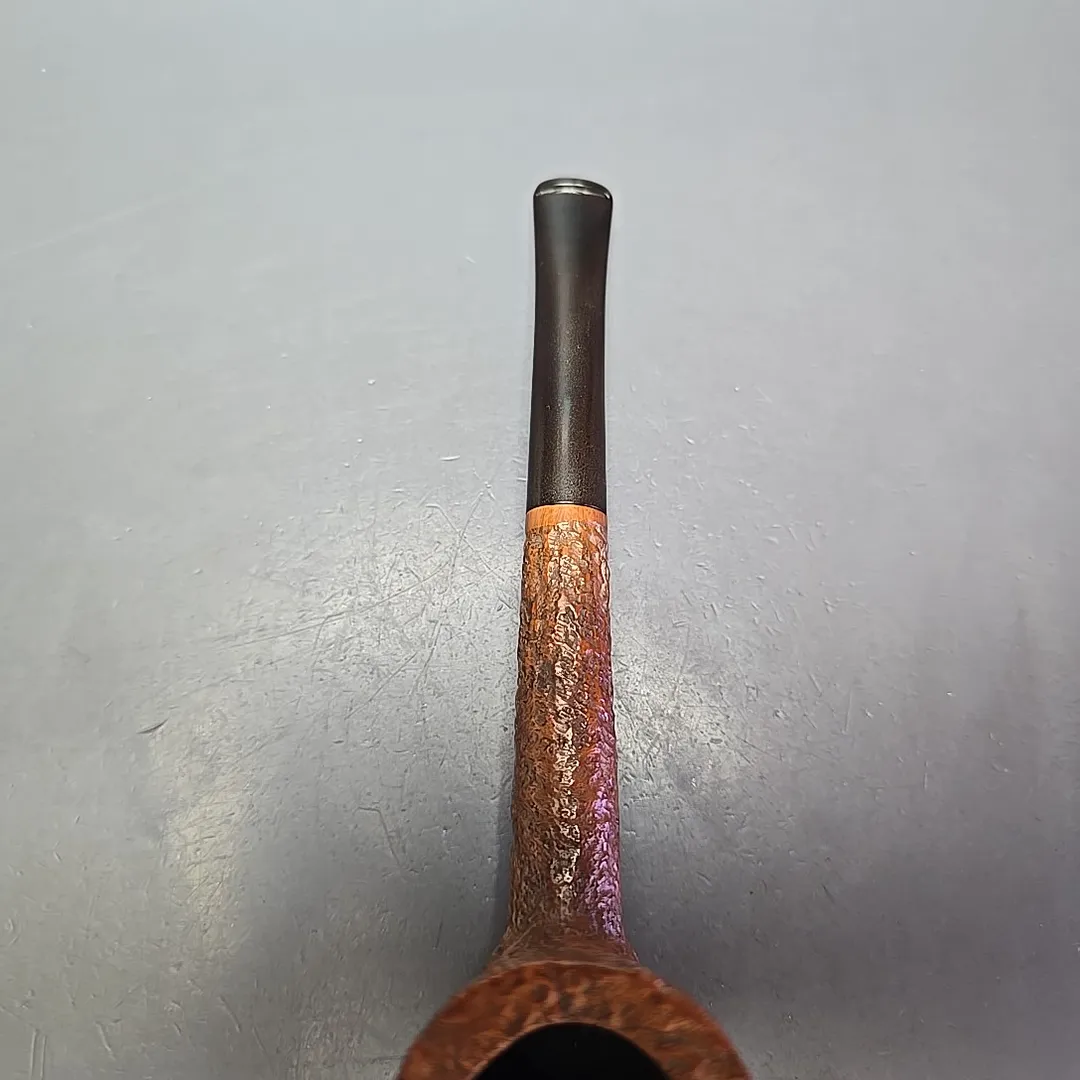
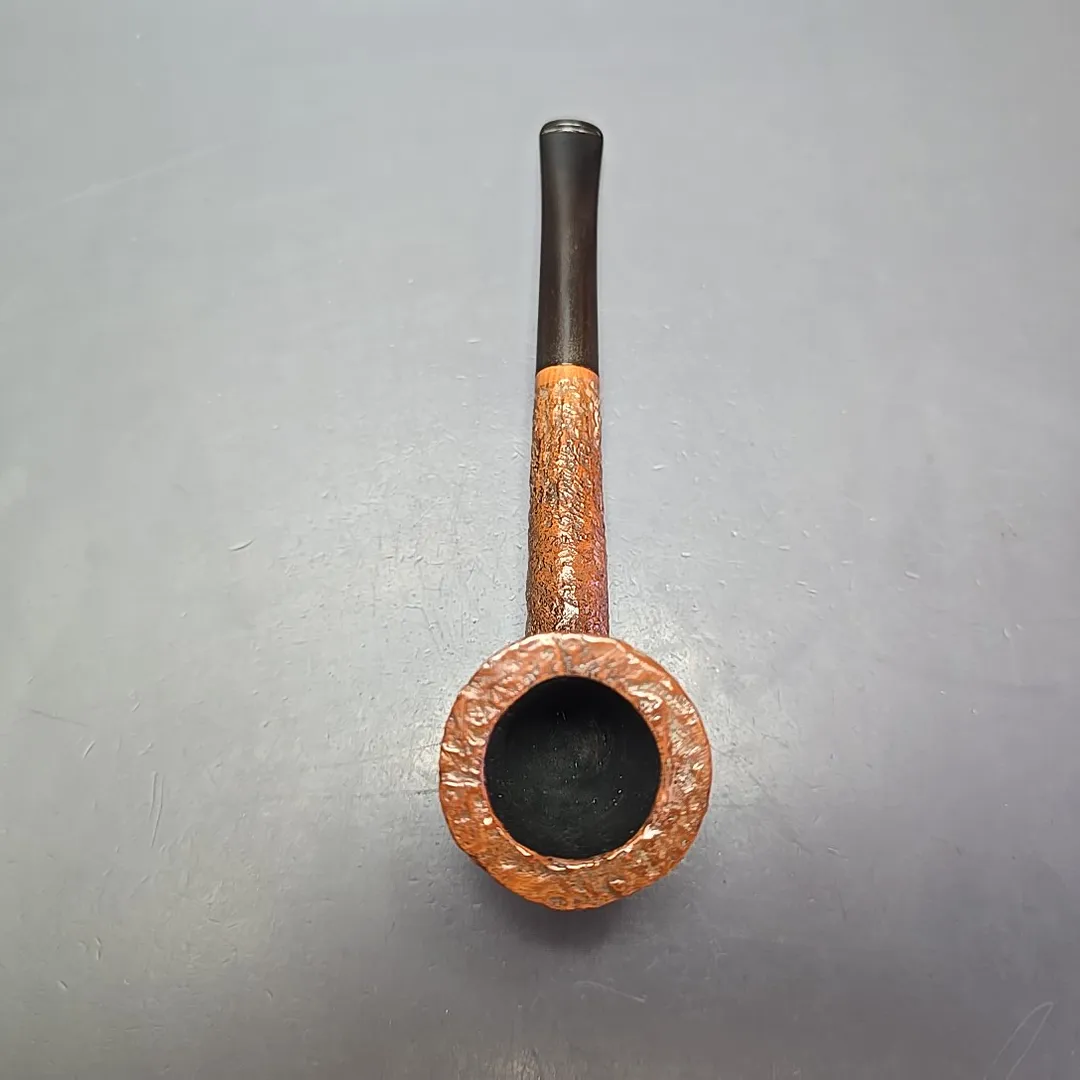
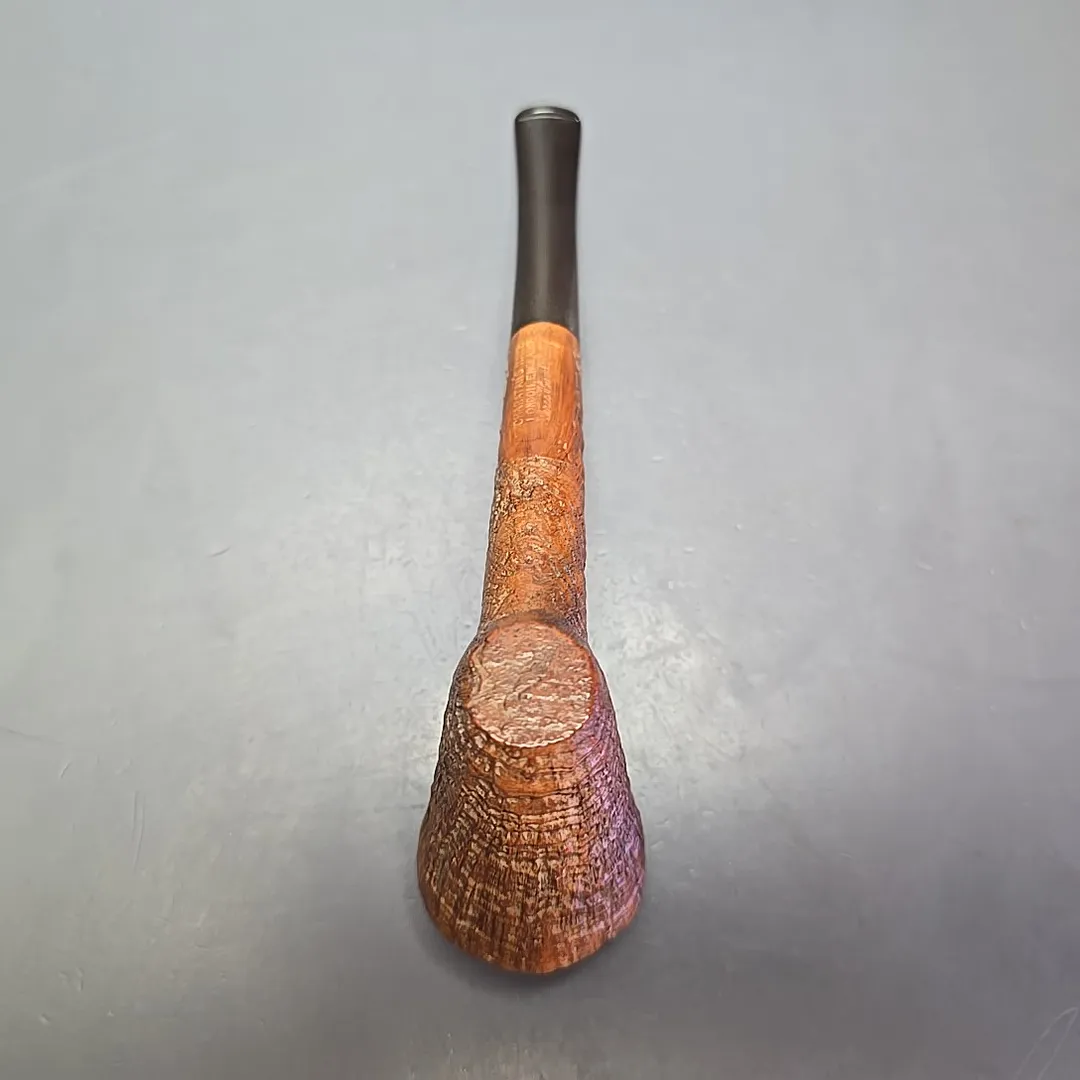
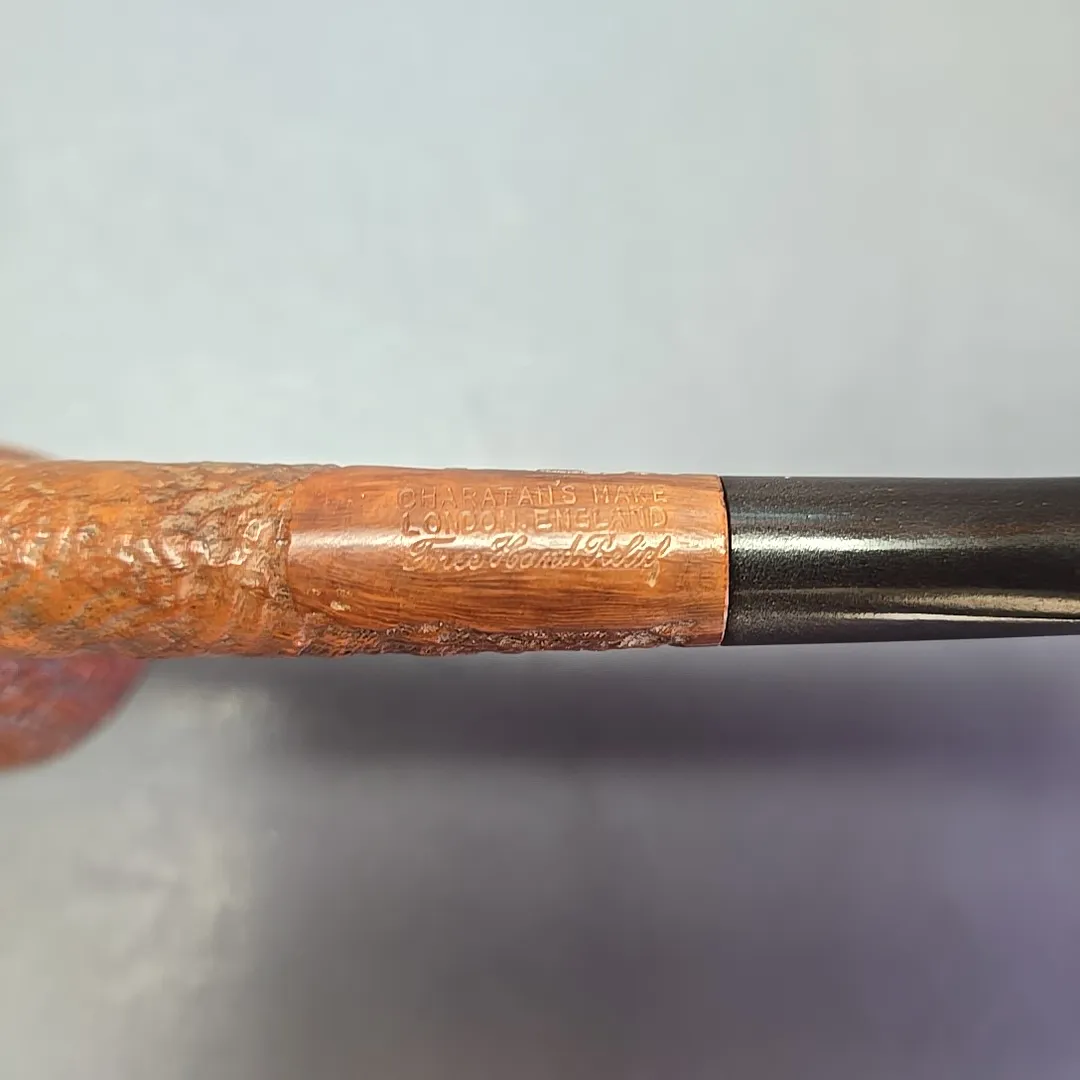
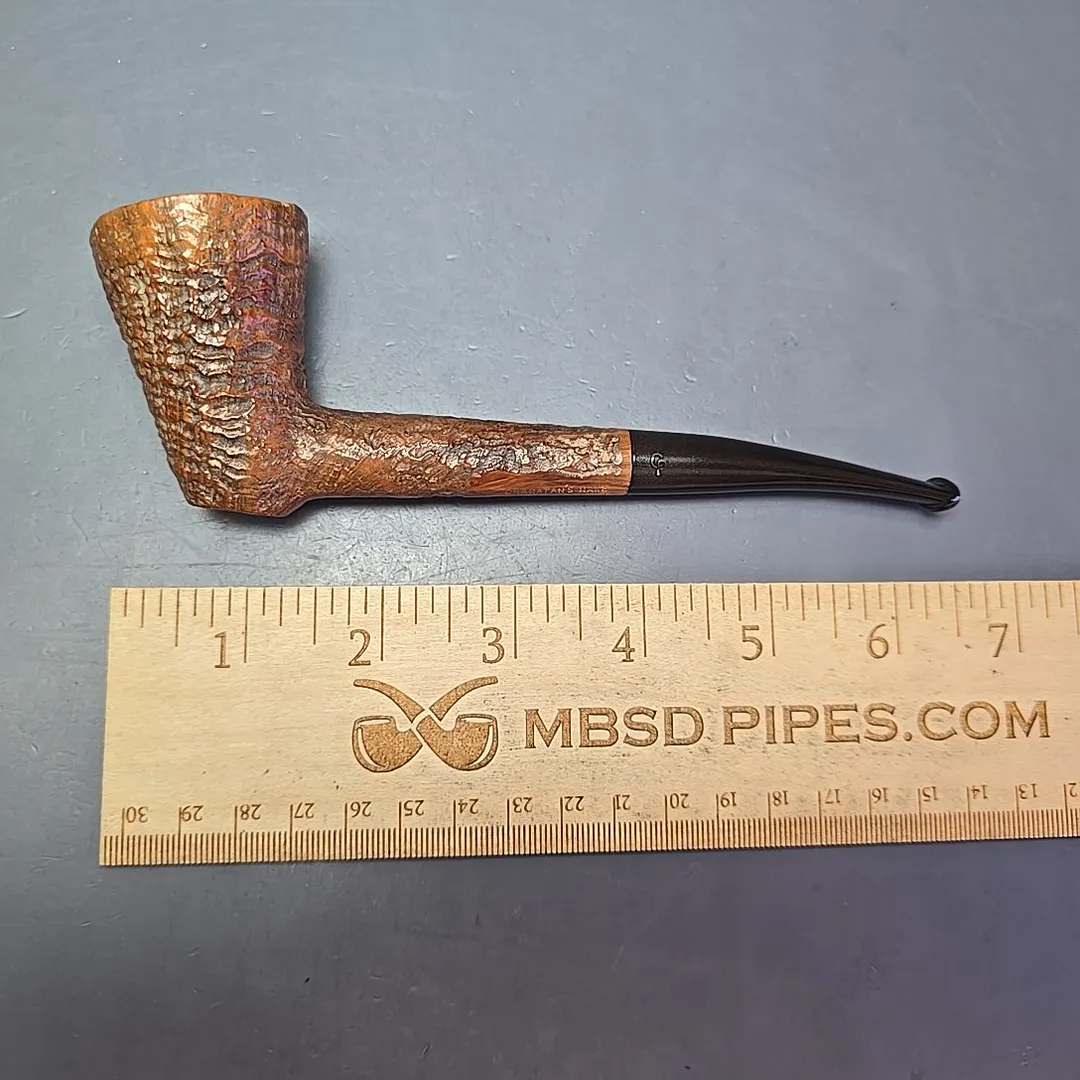
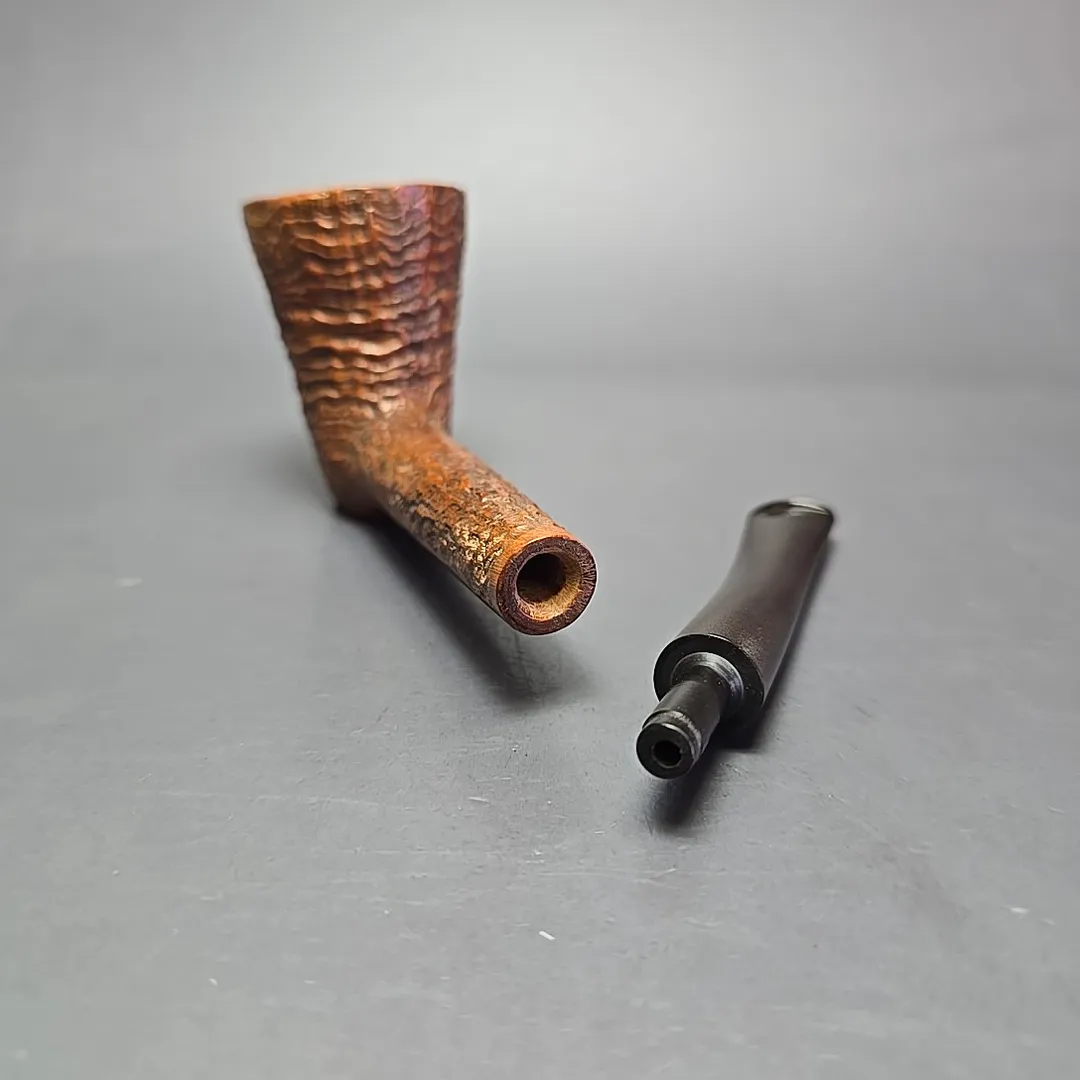
Charatan’s Make Reuben Era (c. 1950s) Free Hand Relief Sandblasted Dublin Estate Briar Pipe, English Estates
Out of stock





While Dunhill may be Britain’s most famous pipe brand, Charatan is not only older, but has the honor of being the first to have made its pipes entirely in-house. “Charatan’s Make” referred to the fact that, at a time when other pipe companies were sourcing stummels and stems carved from other companies before assembling them in their factories and workshops, Charatan made every part of their pipes on the Charatan premises. So began a legacy of high-quality pipe-making under the Charatan name, one whose employees, at one time or another, included Joel Sasieni (who went on to work at Dunhill, before leaving again to start the Sasieni make), Dan Tennison, Stan Haney (later of Ashby Hall), and Ken Barnes and Barry Jones (later of James Upshall).
F. Charatan & Son was rather late to the sandblasting game, all things considered. In fact, when they were introduced during the Reuben Era, the blasting process itself was outsourced to a window glazing company. Ultimately, Charatan brought sandblasting in-house and, soon enough, the company had created one of the most memorable relief finishes of the 20th century. Like the Barling Fossil, Charatan’s sandblasts were especially craggy and decked in ring grain patterns; like the Dunhill Tanshell, many of Charatan’s sandblasted pipes were given a very natural dress, which allowed the pipe to color over time as it was smoked. With the inauguration of its freehand workshop in the 1950s, the Free Hand Relief was born, which combined these aspects of Charatan’s sandblast finishing with the freeform designs of its master carvers.
This one is a very early example of the Free Hand Relief in action, and seems to have been made near the end of the 1950s, back when Reuben Charatan was still the owner and operator of F. Charatan & Son. The absence of any Lane Ltd. nomenclature points to this being the case, as does the pipe’s tapered vulcanite mouthpiece. Perhaps most interesting is how it reflects certain quirks in Reuben’s own approach to pipe design, from its flaring, “bell” Dublin bowl, to its distinct “footed” appearance, evoking the clay pipes that preceded briar (if one looks at catalogs from Reuben’s era, for example, one finds many shapes explicitly modeled after old clay shapes). Given the timeframe, it’s even possible that Reuben turned the bowl himself, as he was very much a “hands-on” owner of the company.
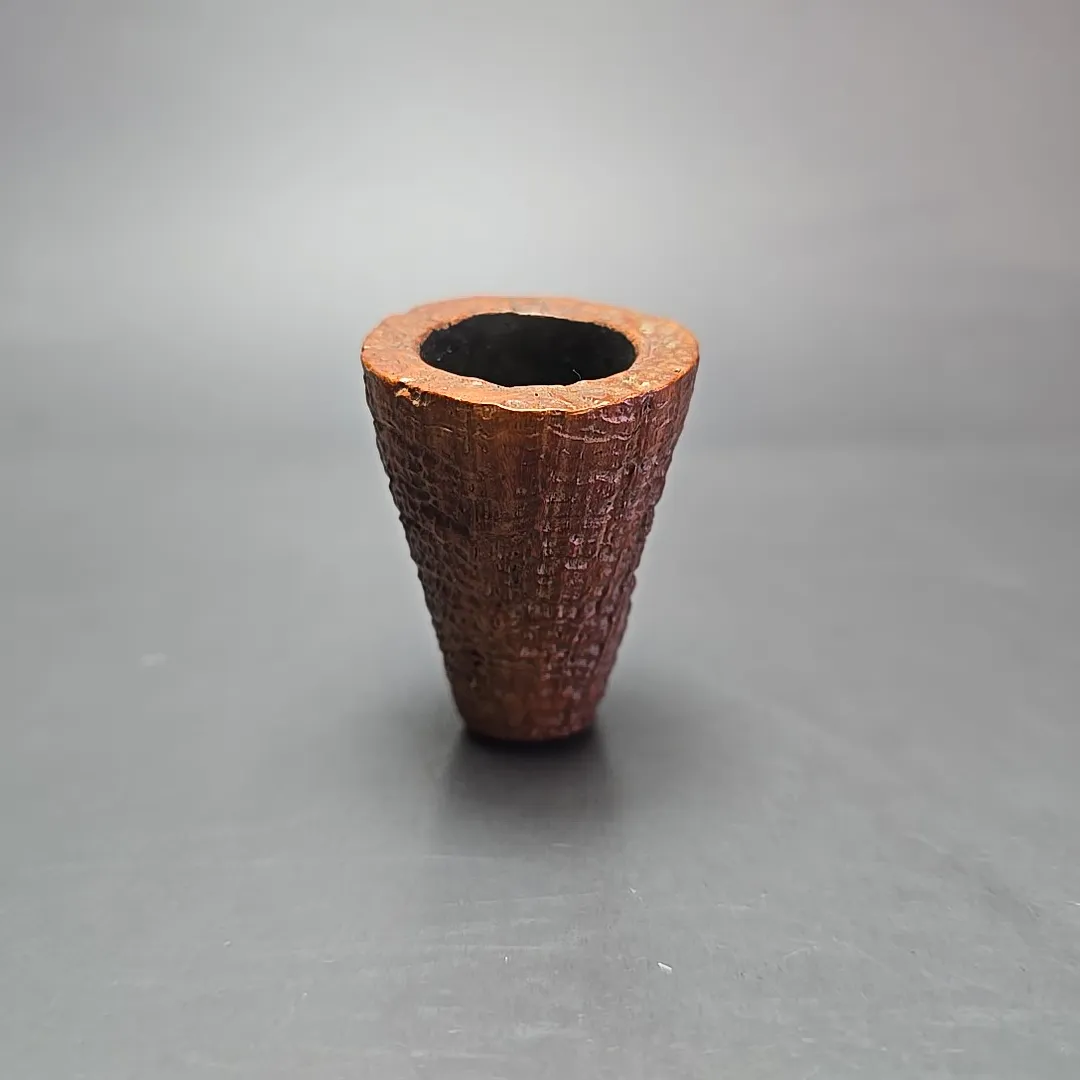
The condition is fair. Chamber slightly over-reamed, few handling marks on the bowl and some residual stem oxidation.
Details:
Length: 6.5″ / 165.1mm
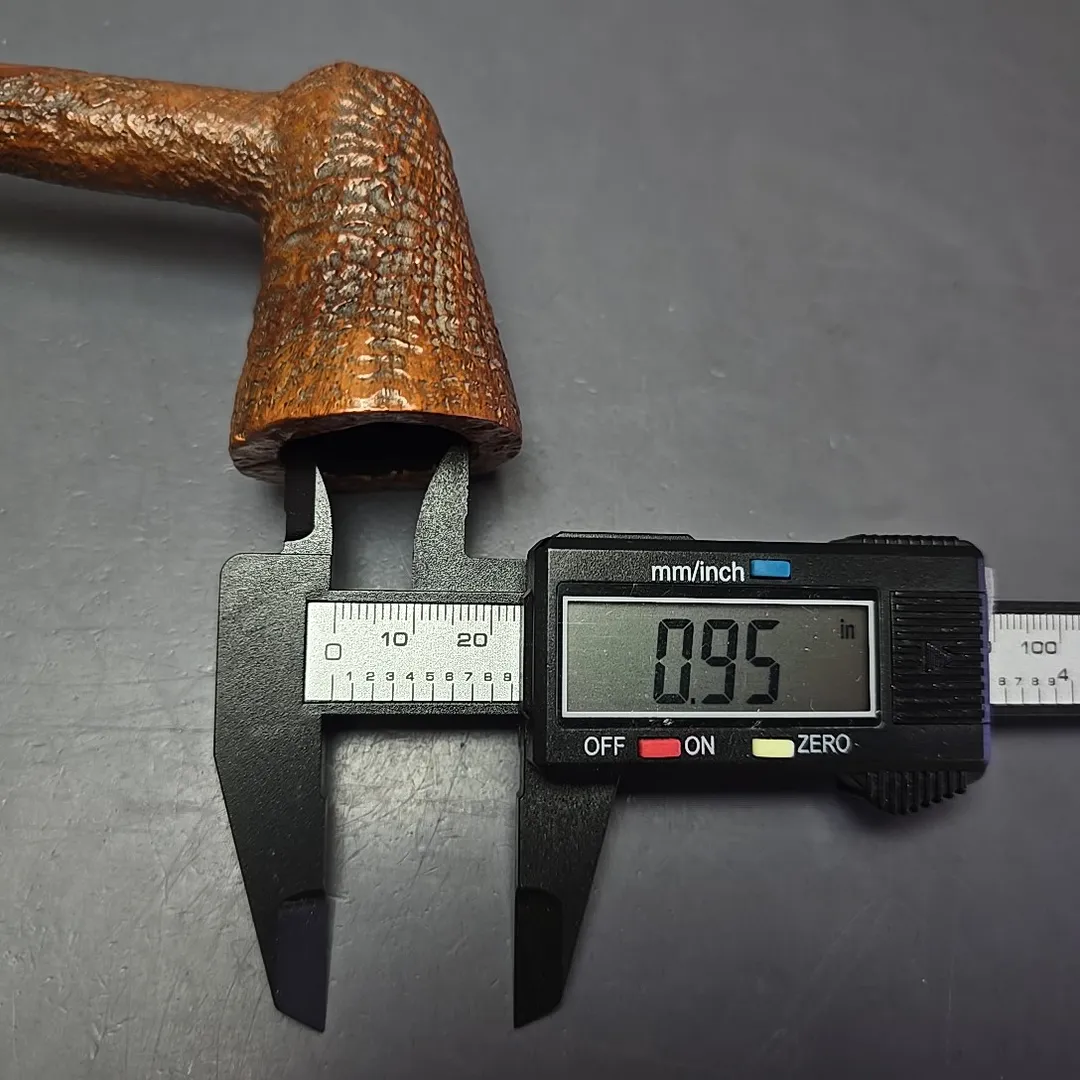
Bowl Width: 0.95 / 24.13mm
Bowl Depth: 1.65″ / 41.91mm
Weight: 1.1oz / 32g
| Weight | 15 oz |
|---|
| Condition | Used |
|---|---|
| Notes | Refurbished. |


