

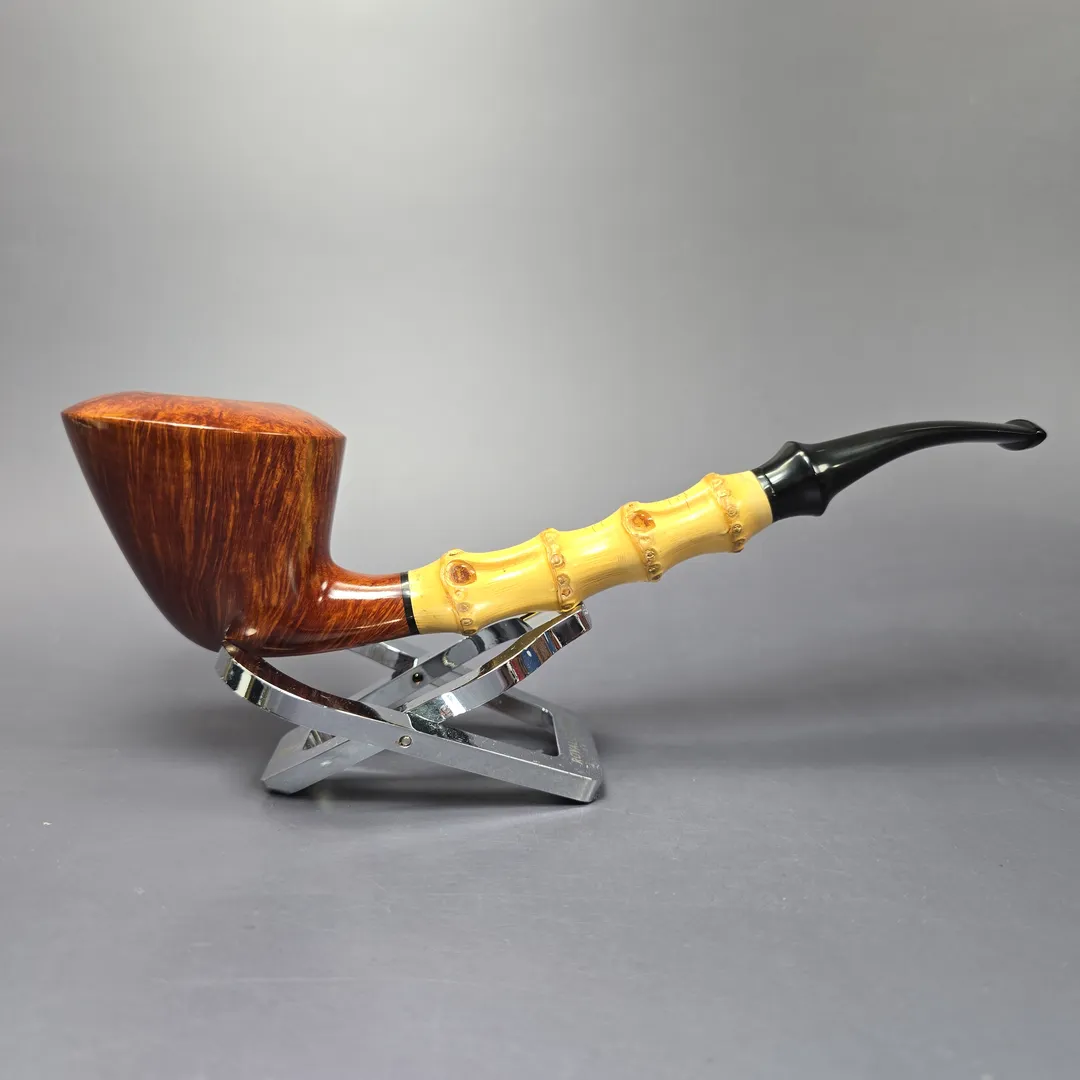



Smio Satou Smooth Dublin w/ Bamboo Estate Briar Pipe, Japanese Estates
Out of stock
Description
It cannot be overstated just how much of today’s high-grade, handmade Japanese pipes begins with just three men: Kyoichiro Tsuge (1911-2010), Kazuhiro Fukuda (1935-), and Smio Satou (1944-2023). It was Tsuge who founded the Tsuge Pipe Company in 1936. It was Fukuda and Satou, however, who were, amidst the explosion in popularity of Scandinavian pipes in the 1970s, sent by Tsuge to study pipe making under Denmark’s most venerated artisans. Most notably, this included spending time with Sixten Ivarsson and Jorgen Larsen to learn “freehand” pipe making. Upon returning to Japan, Tsuge set up a freehand workshop on its premises, under the name Tsuge Ikebana. While the rest of the Tsuge company maintained its production of more traditional Japanese pipes, as well as Anglo-French factory briars, Fukuda and Satou crafted its Ikebana pipes. It was the latter that put Japanese pipes on the map during an increasingly international and increasingly competitive high-grades scene.
Satou retired from Tsuge in the late 1980s, having worked for the company for a quarter of a century. But this was not the end of Satou’s career in pipes. Though essentially now a hobbyist, Satou returned to crafting pipes under his own name in the late 1990s, albeit with an extremely limited output of around 40 pipes per year. While the Ikebana workshop was hardly an impediment to Satou’s creative freedom, this new period of independence in his career saw him cultivate a distinct, “Satou” style. This included a liberal use of bamboo and other Japanese materials in his designs, as well as a unique approach to finishing that combined leather dyes with urushi, a highly traditional Japanese lacquer used in art and furniture. While the latter has been part of Japanese culture for centuries, it is notorious for its time consuming nature, being applied gradually in a series of layers, each of which takes several days to dry.
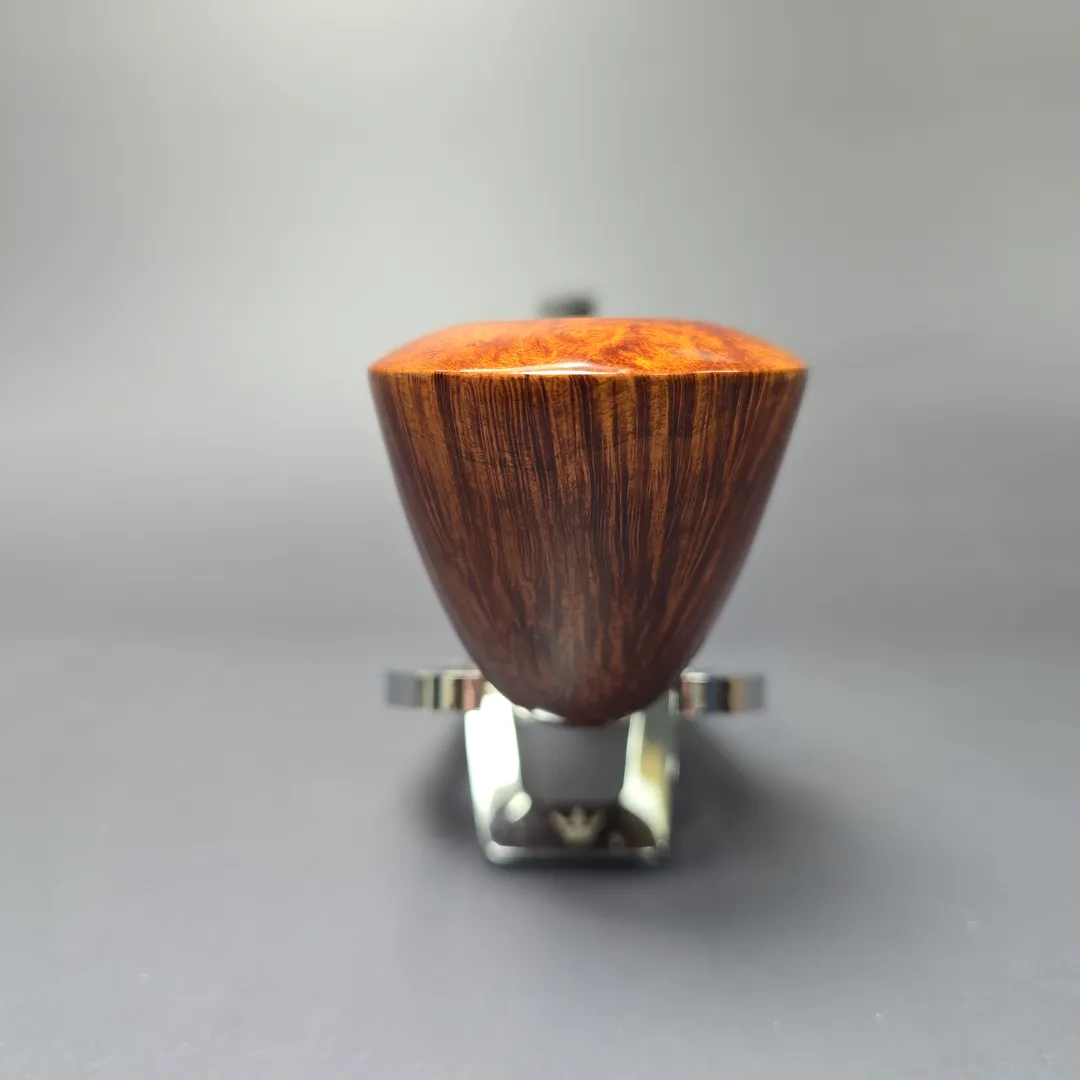
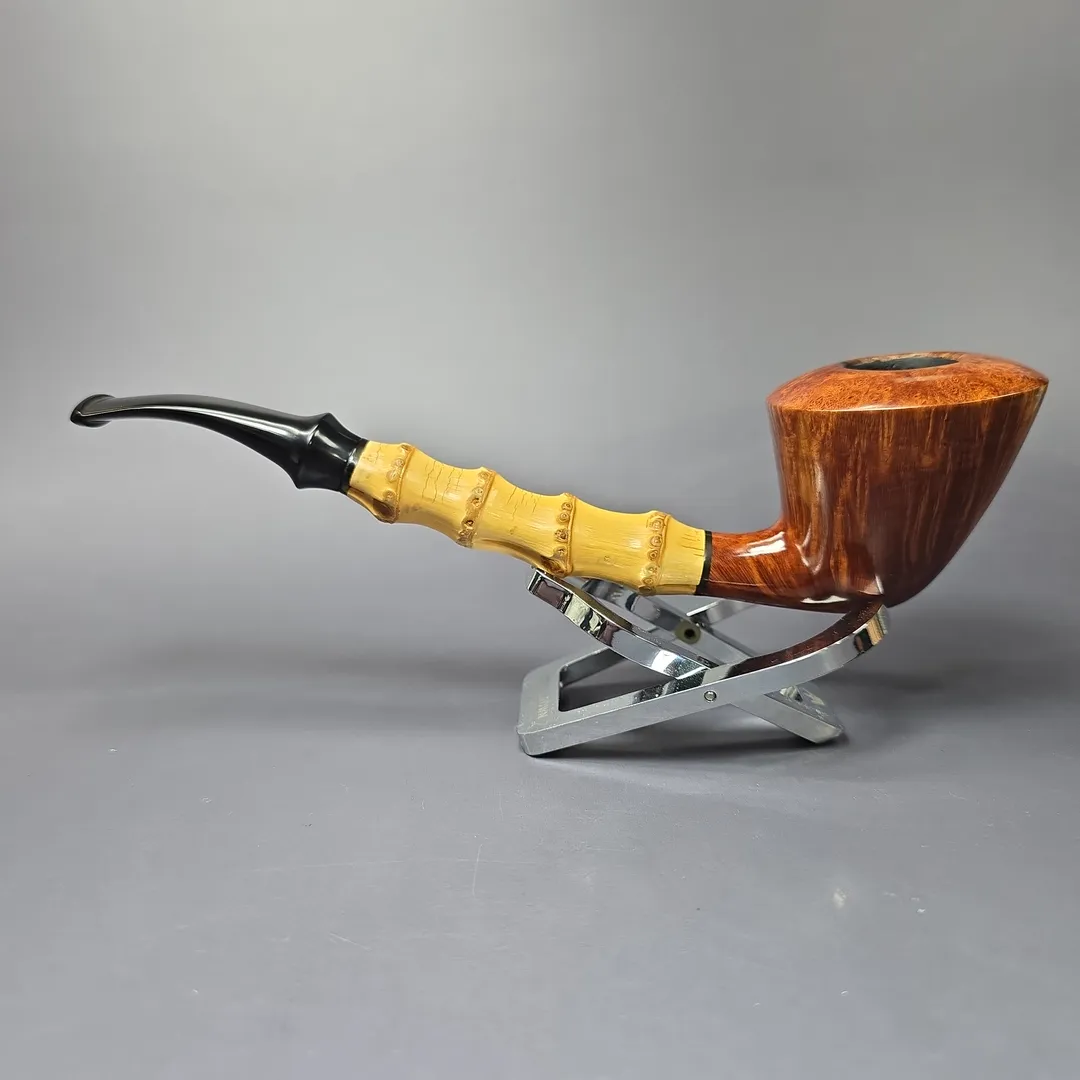
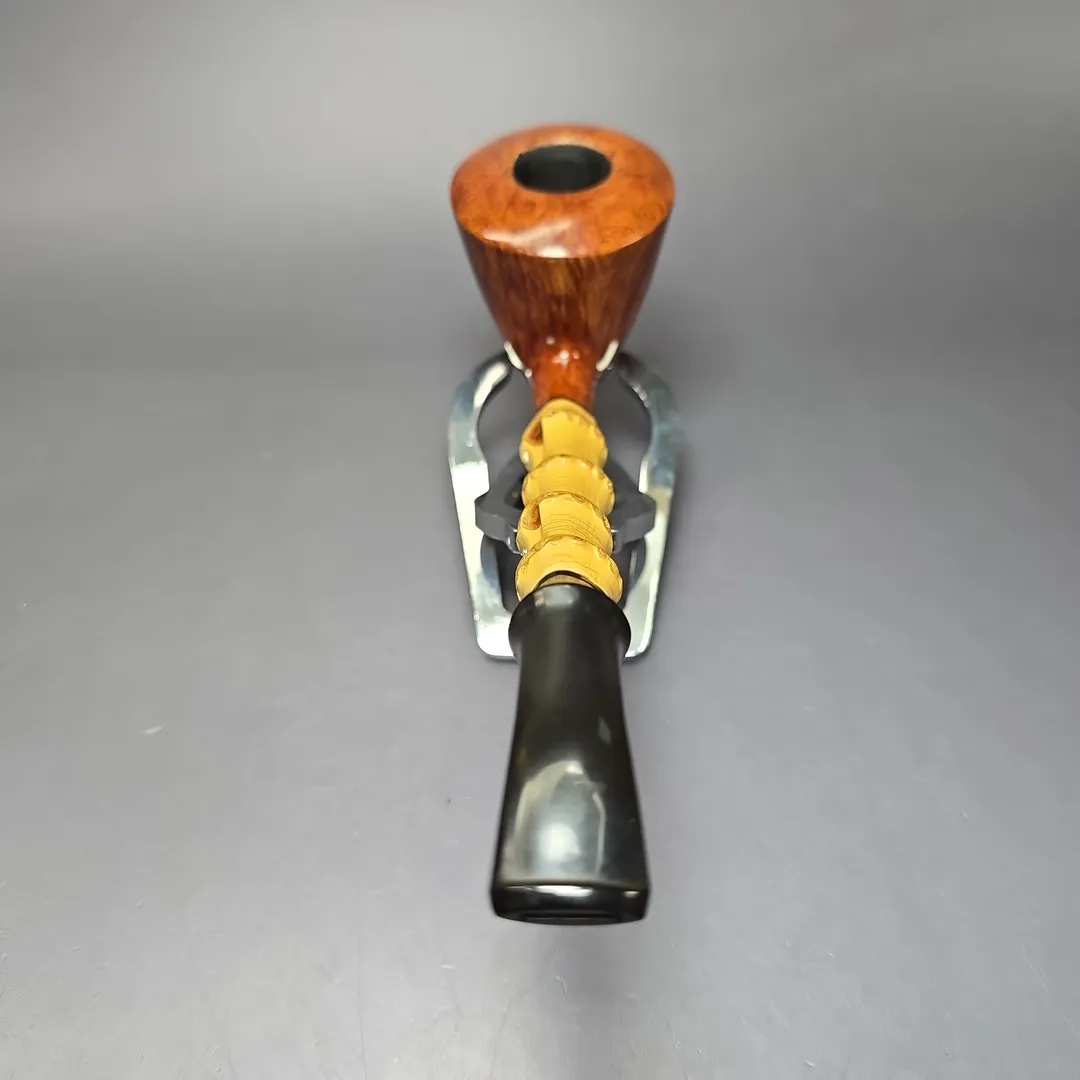
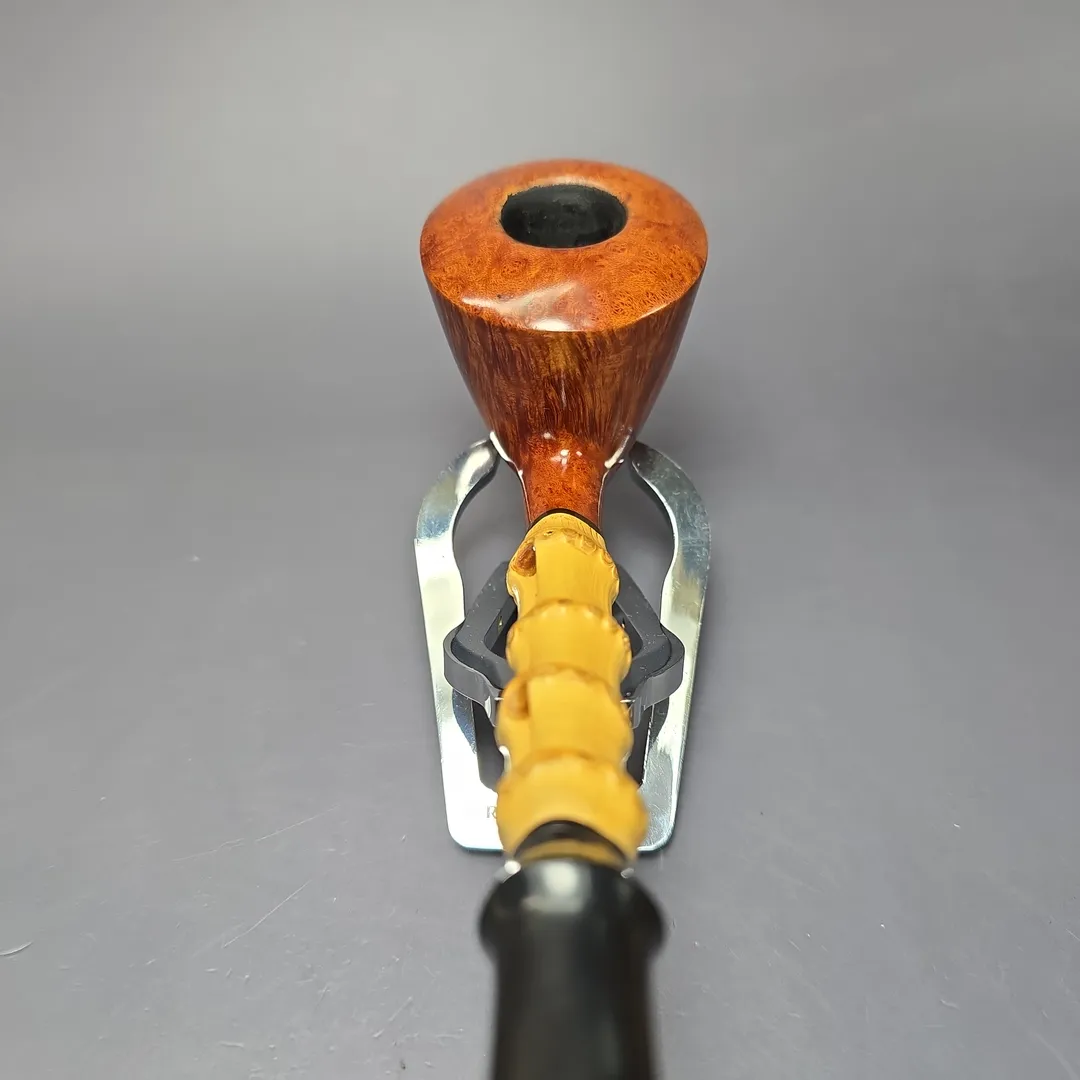
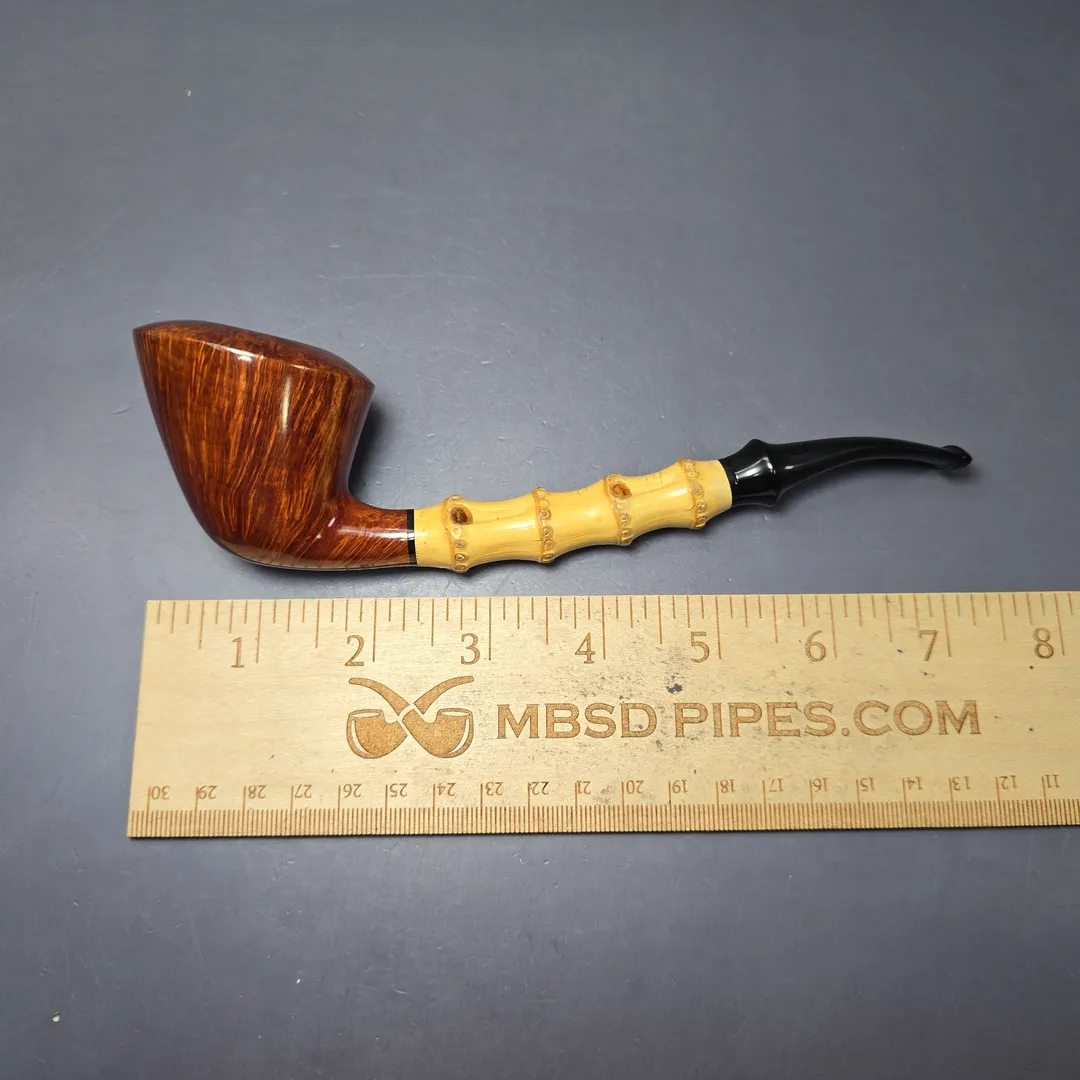
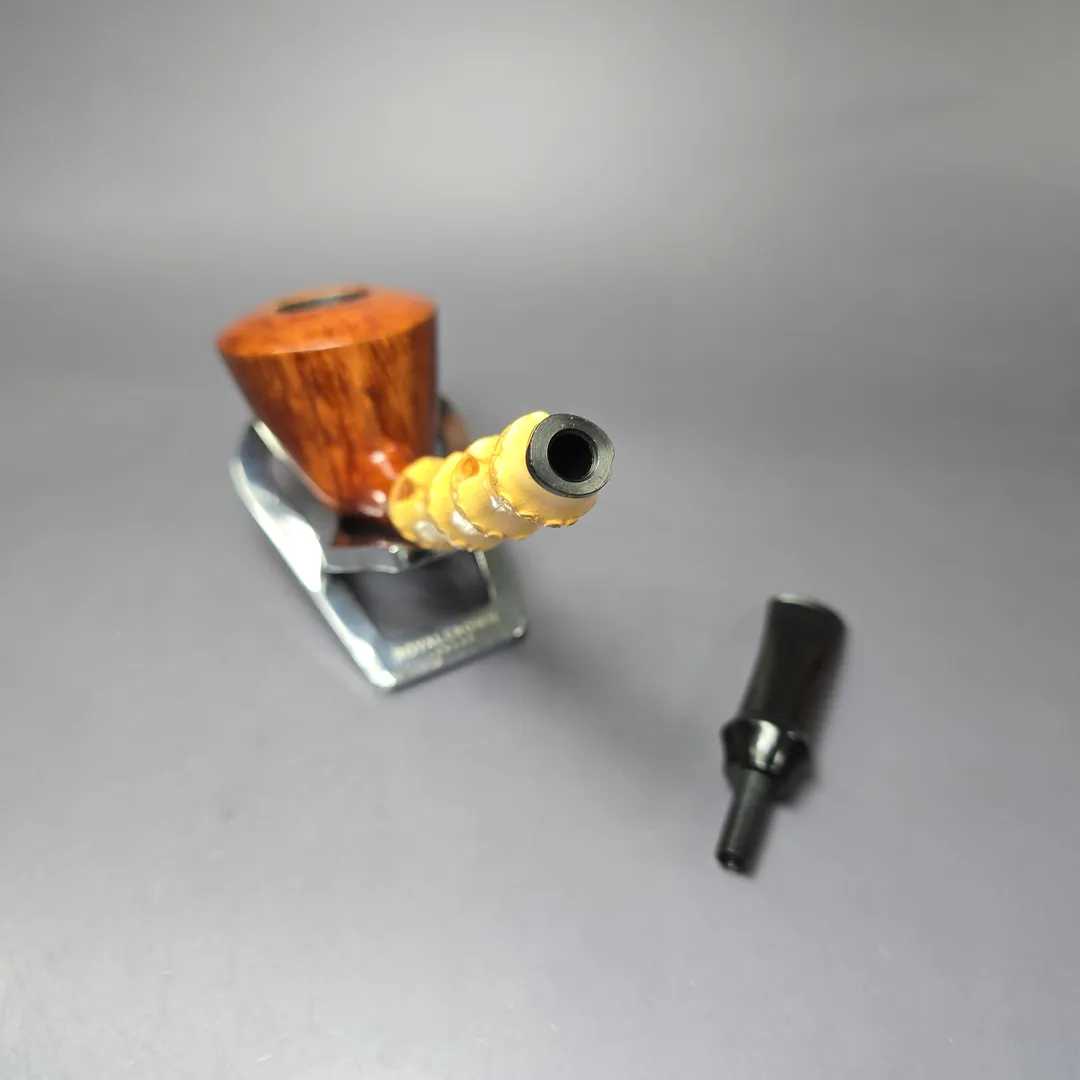
This particular Satou is strongly representative of his mature oeuvre. A quarter-bent, slightly wide Dublin—of which Satou was so fond—it combines an exceptional length with an unexpected lightness and balance, thanks in no small part to a four-knuckle bamboo shank extension. The grain is excellent; the shaping is elegant; the style is unmistakable.
The condition is great. Minor inner rim darkening and very slight handling marks, but nonetheless well preserved.
Details:
Length: 7.2″ / 182.8mm
Bowl Width: 0.76 / 19.30mm
Bowl Depth: 1.44″ / 36.57mm
Weight: 1.9oz / 56g
Additional information
| Weight | 15 oz |
|---|
| Condition | Used |
|---|---|
| Notes | Lightly refurbished. |