
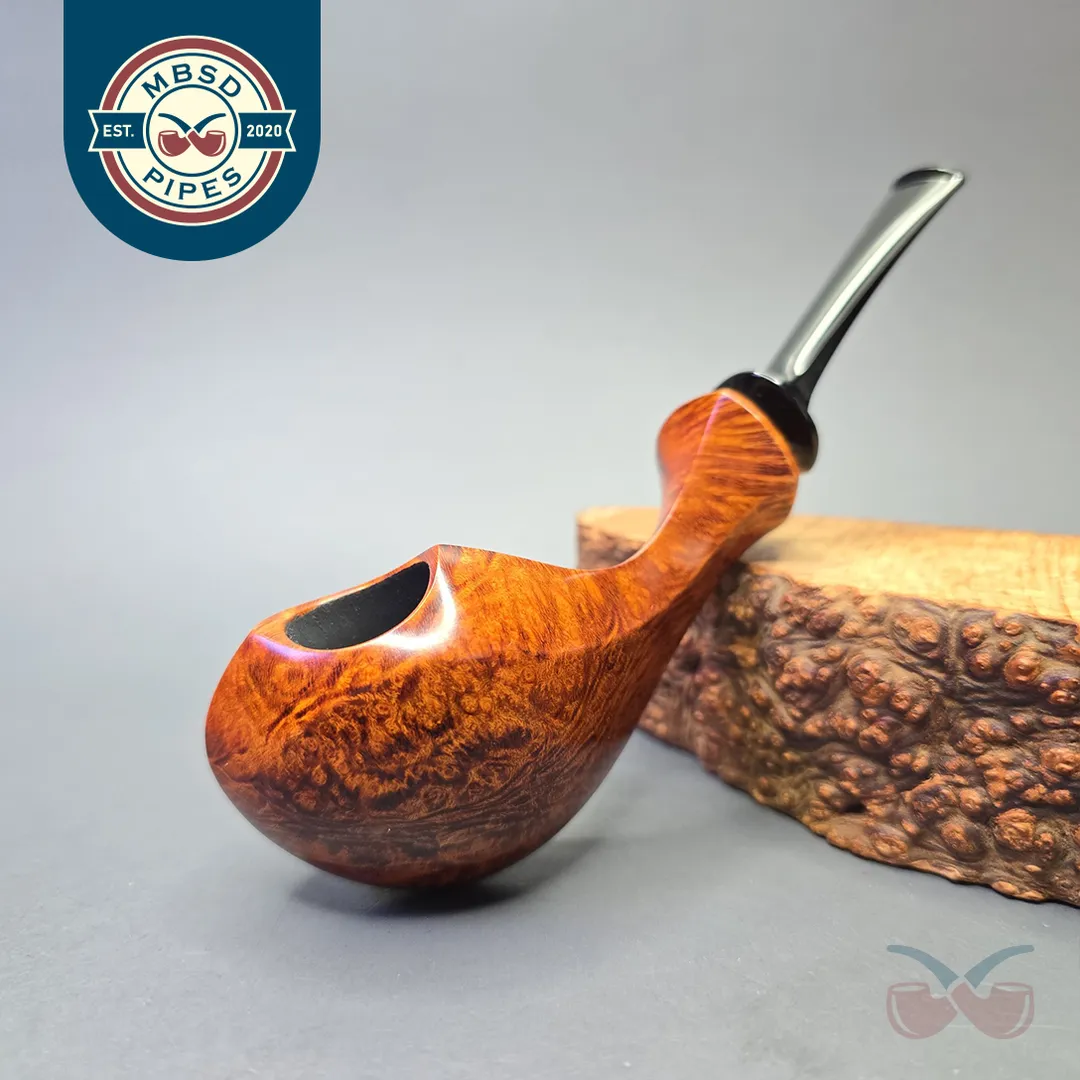
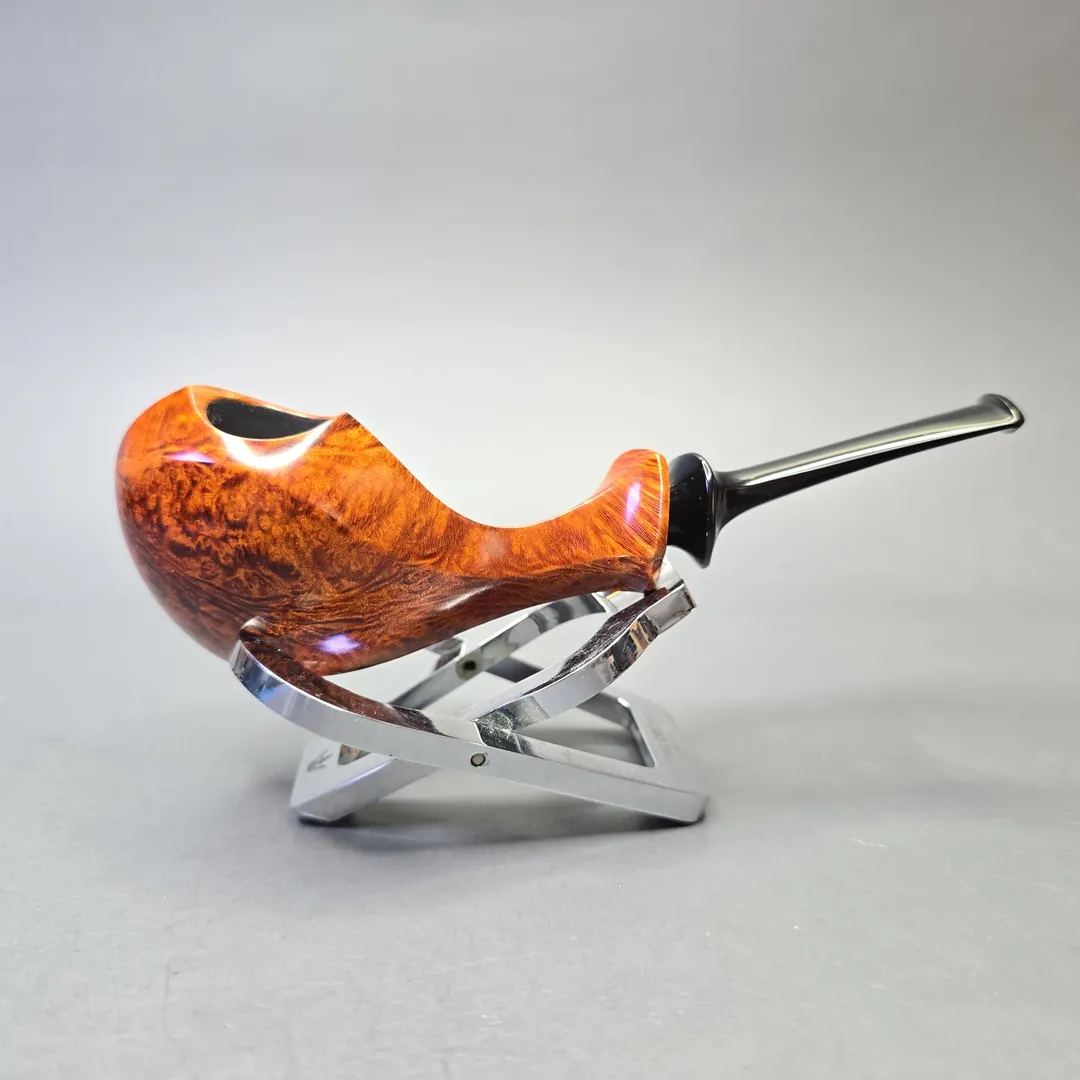
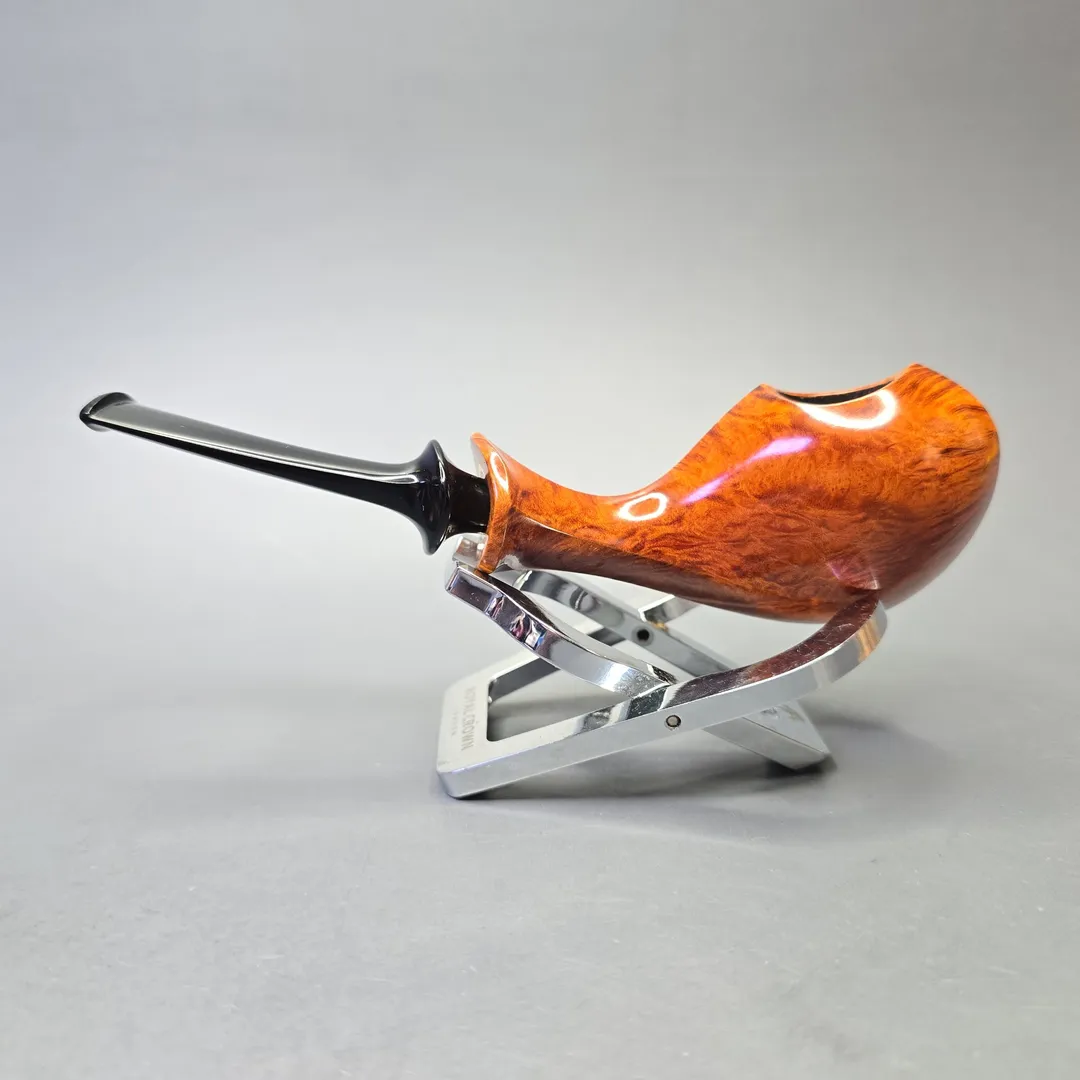
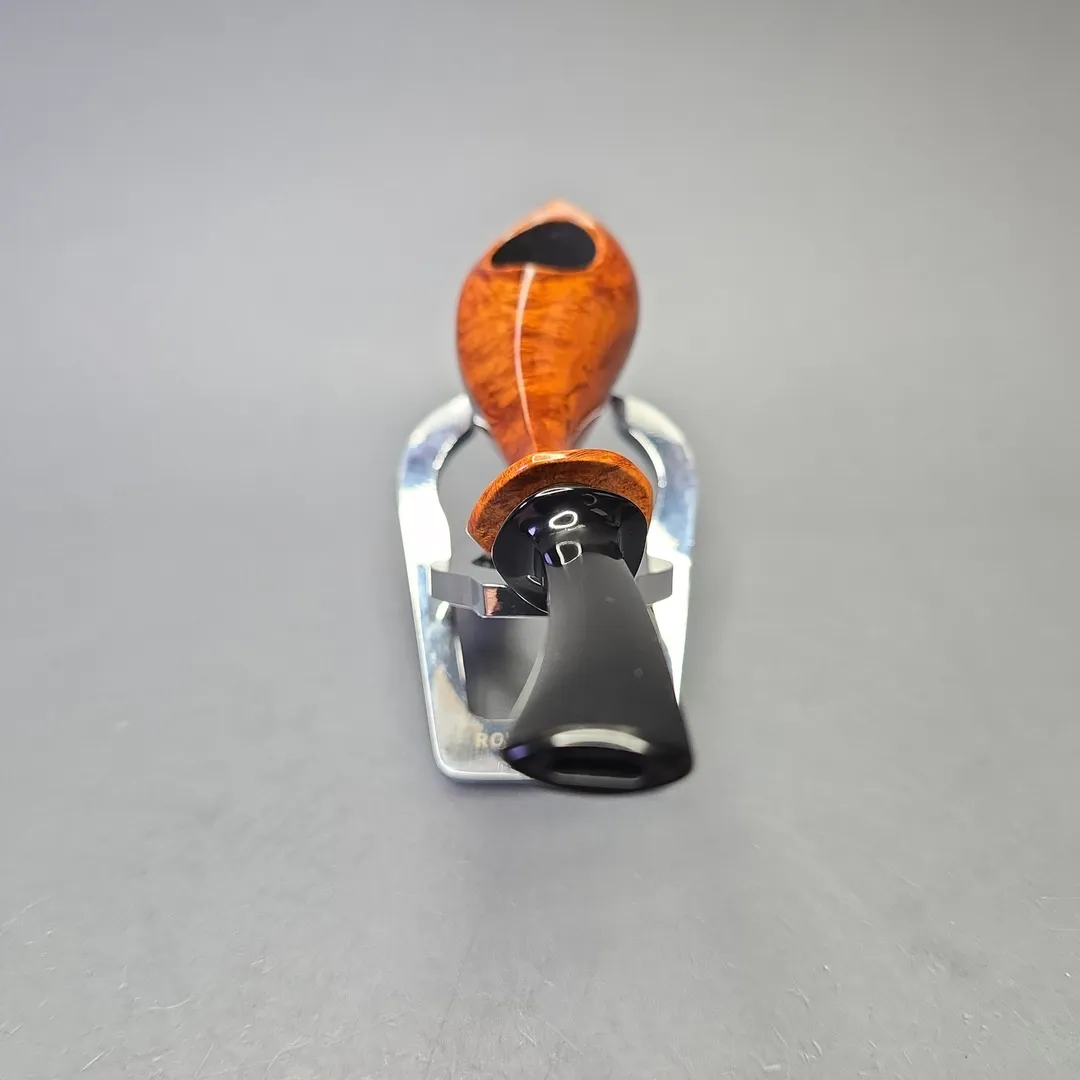
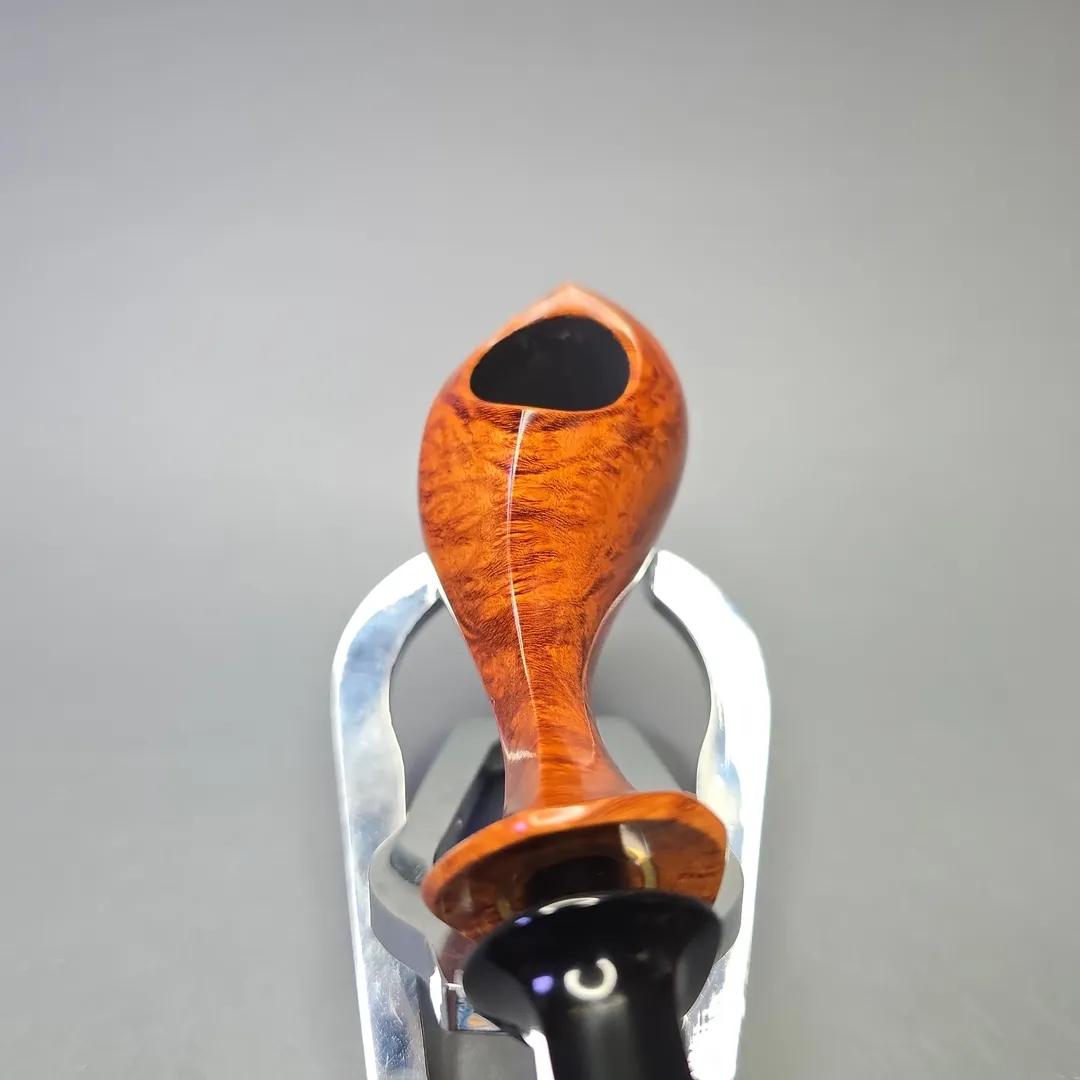
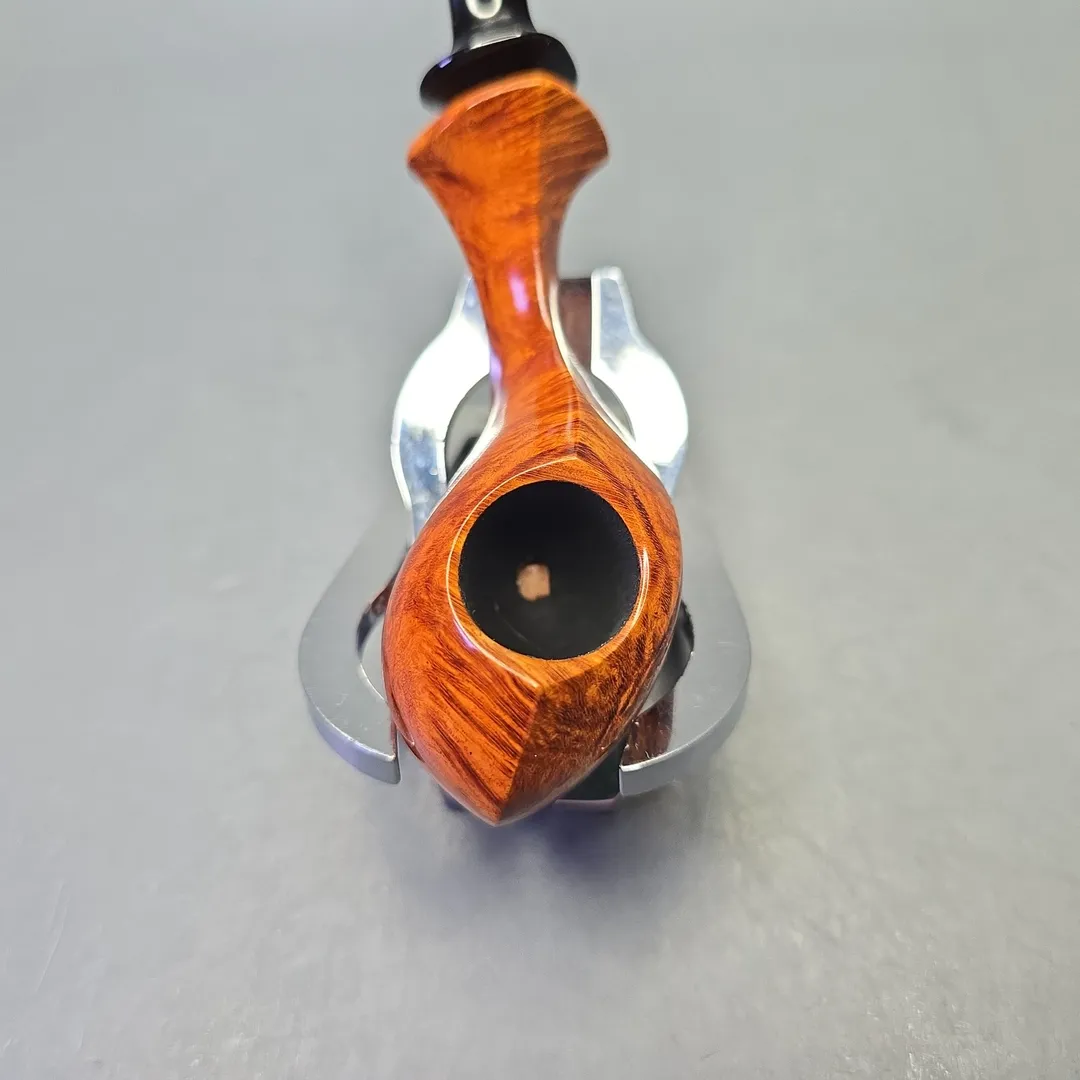
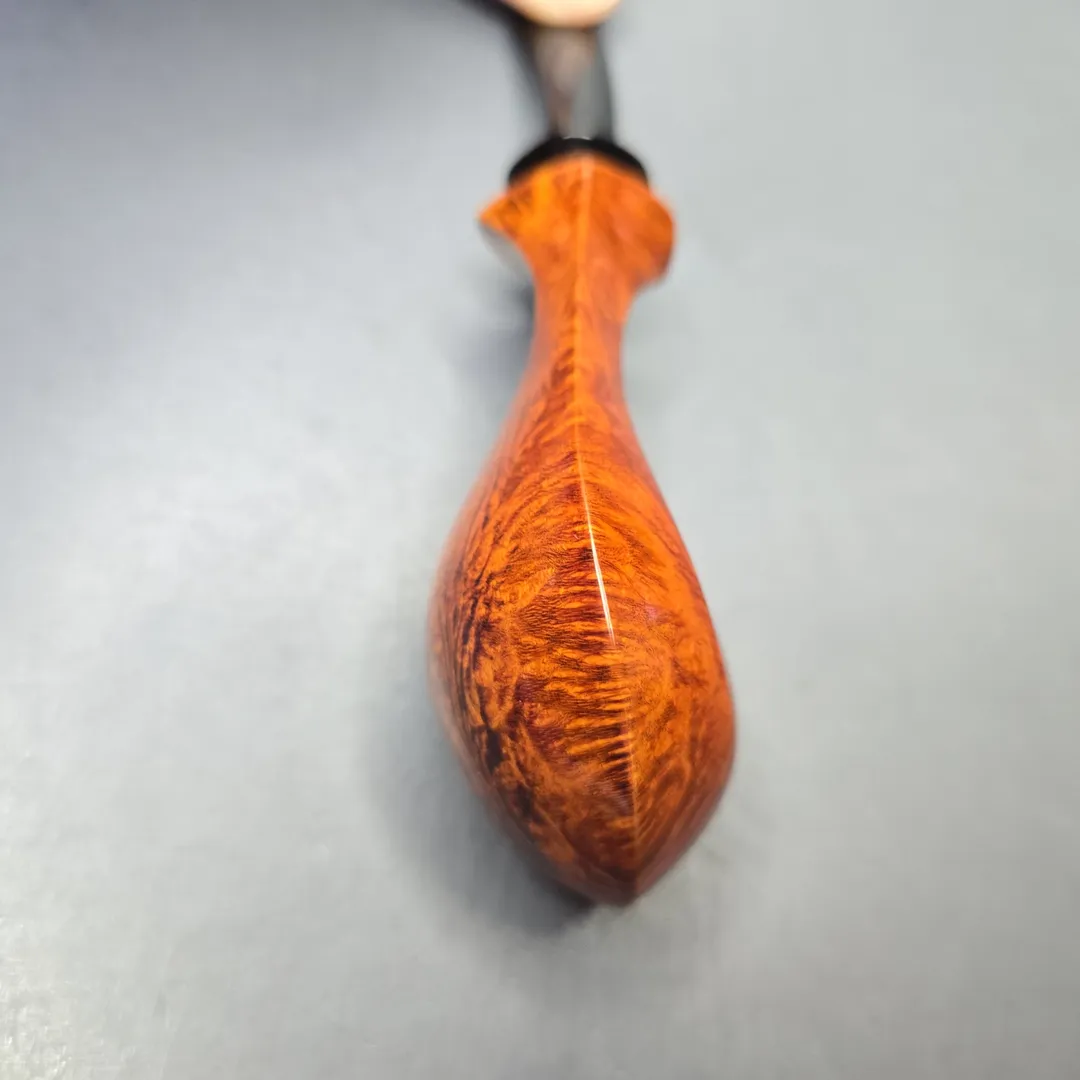
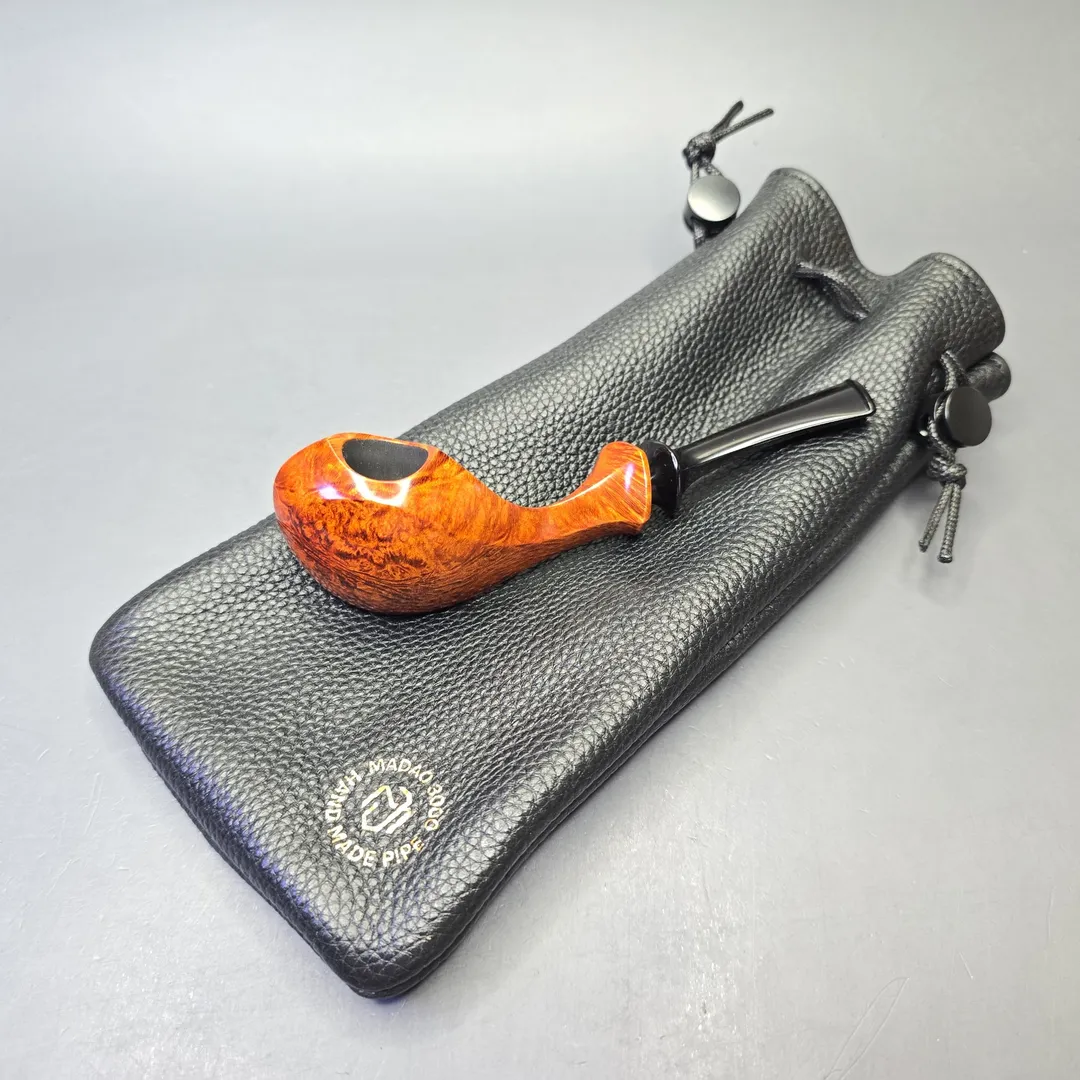
Madao 3000 Smooth River Fugu (New)
$675.00
1 in stock





Madao 3000 is the pipe making moniker of Beijing-based artisan Wang Tieyuan. Inspired equally by post-Scandinavian giants, such as Hiroyuki Tokutomi and by classical Asian art and philosophy, Tieyuan’s work is focused on exploring themes such as asymmetry and motion in ways that are, nonetheless, balanced and harmonious. A strict minimalist, Tieyuan eschews contrast stains and fanciful adornments in his designs; instead, he most often employs simple matte or natural finishes, is sparing with his use of accents (if he uses them at all), and upholds, in each pipe he makes, the primacy of line, figure, and form.
The vast majority of fugu, or blowfish, are native to ocean waters, though some can be found in rivers. That this pipe has been dubbed a “River Fugu” has nothing to do with habitat, however. Instead, its name comes from the unusual graining that has been worked into it in a rather novel way.
When it comes to high-grade pipes, we are used to seeing grain grouped into a small number of categories: straight grain, flame grain, cross-grain, ring grain, and bird’s-eye. These are more or less man-made categories, as they separate grain patterns into types based on how close they are to an ideal. Different grain patterns do, of course, occur in nature, but the way we categorize them nonetheless reflects human psychological preferences, such as our association of beauty with consistency and uniformity. Part of the reason that we don’t have so many other categories for grain patterns is that, during the making of a high-grade pipe, patterns that might be interesting, but which are visually inconsistent, are often sandblasted or rusticated over, or sloughed off entirely. These patterns come from the same natural growth processes that straight grain et al. come from, but they don’t fit the ideal, so they’re often discarded.
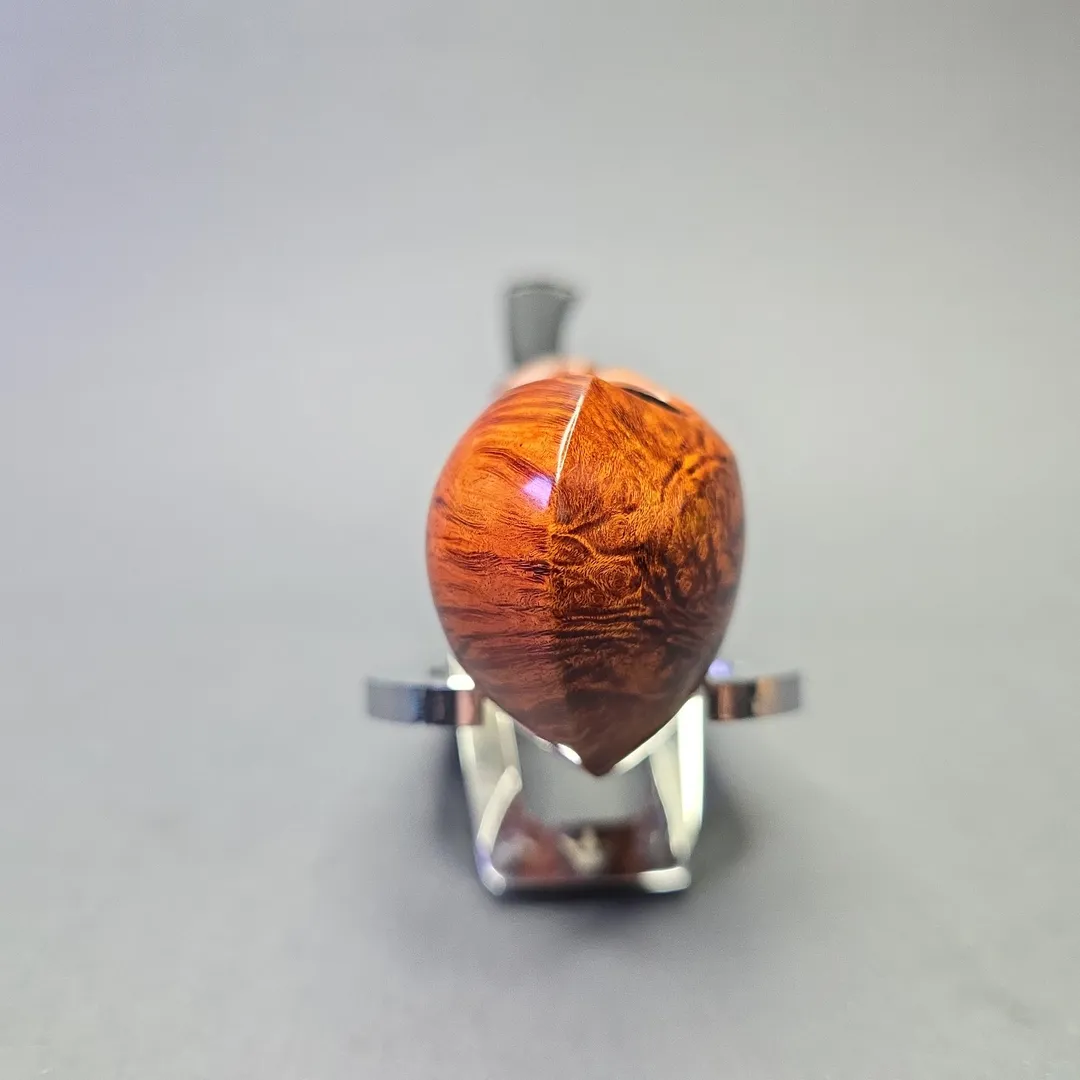
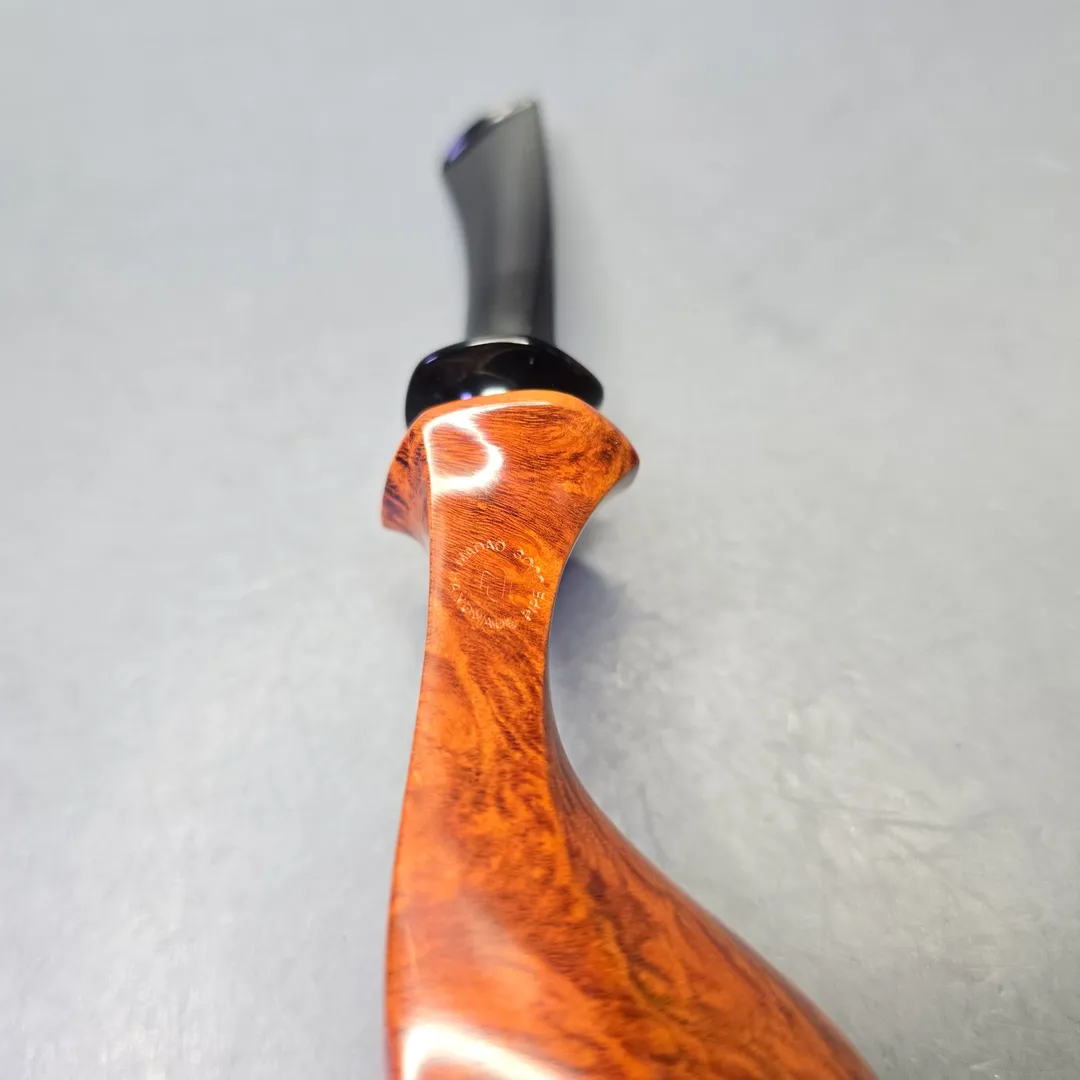
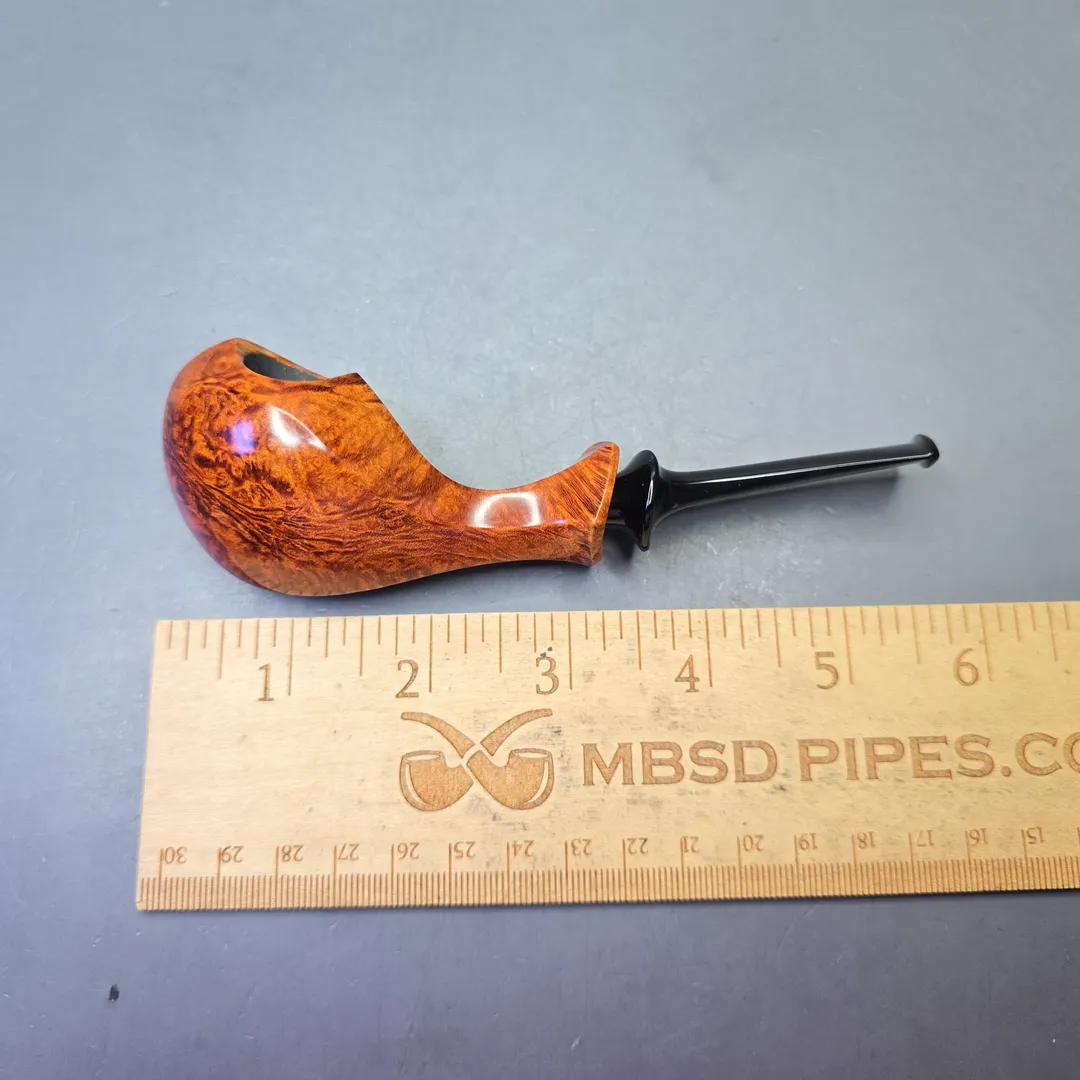
That brings us to Tieyuan’s River Fugu. It is a cross-cut pipe, meaning that the grain fibers of the briar used to make it run through the bowl cross-wise. Pipe makers will often carve fugu renditions this way, as their paneled sides consequently capture the “ends” of grain fibers, which are what make up “bird’s-eye” patterns. However, at some point during the growth of the briar used to make it, its grain fibers were interrupted as they moved outward from the center of the root. Yet it was a fortuitous disruption; it created a series of lines running along the left flank of the pipe being carved from it, lines that were—quite fittingly—evocative of flowing water. Rather than cast the stummel aside, Tieyuan opted to work it into his design, resulting in a pipe that is both beautifully grained and thoroughly different from the norm.
Details:
Length: 5.45″ / 138.4mm
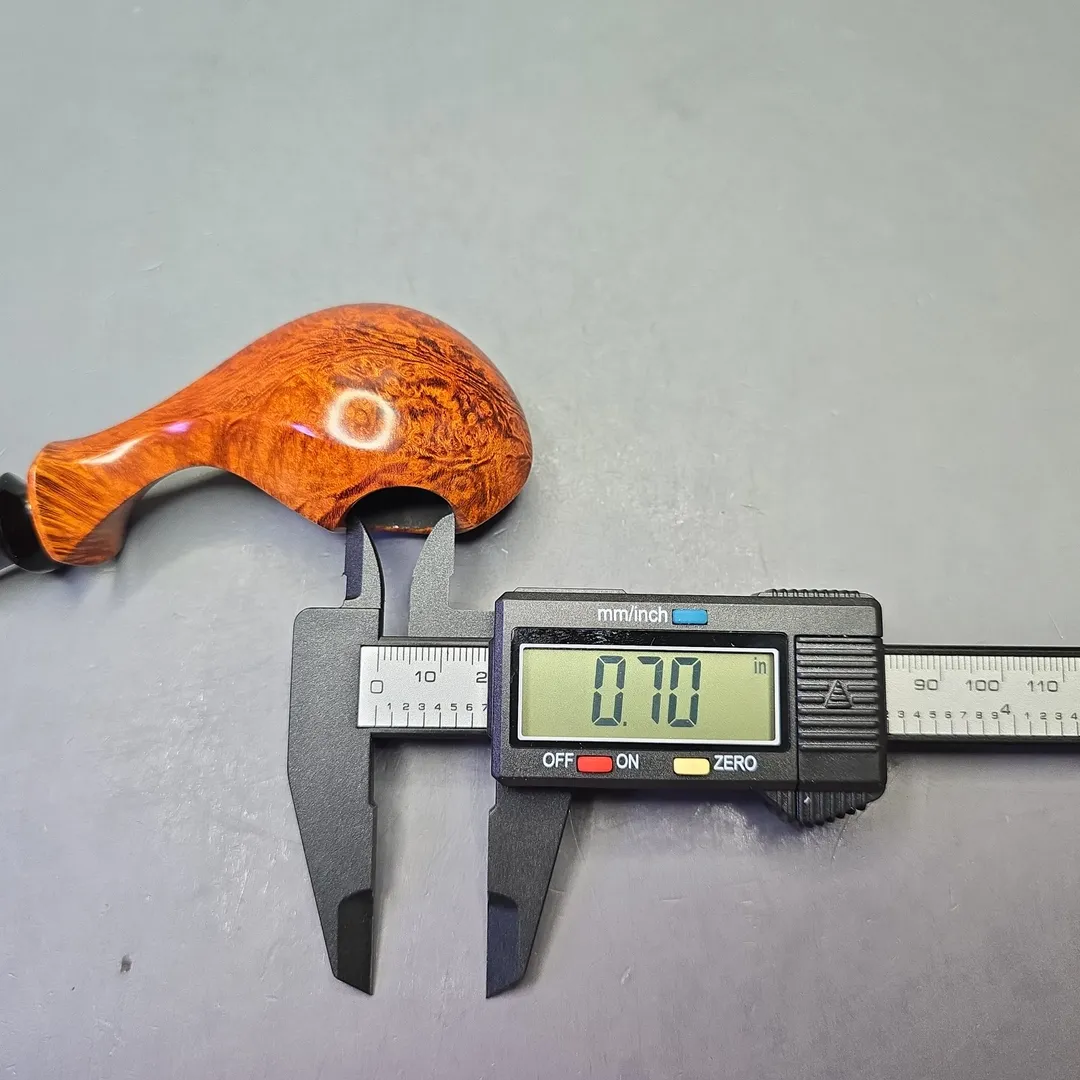
Bowl Width: 0.70″ / 17.78mm
Bowl Depth: 1.10″ / 27.94mm
Bowl Height: 1.53″ / 38.86mm
Weight: 1.1oz / 32g
| Weight | 15 oz |
|---|
| Condition | New |
|---|


