
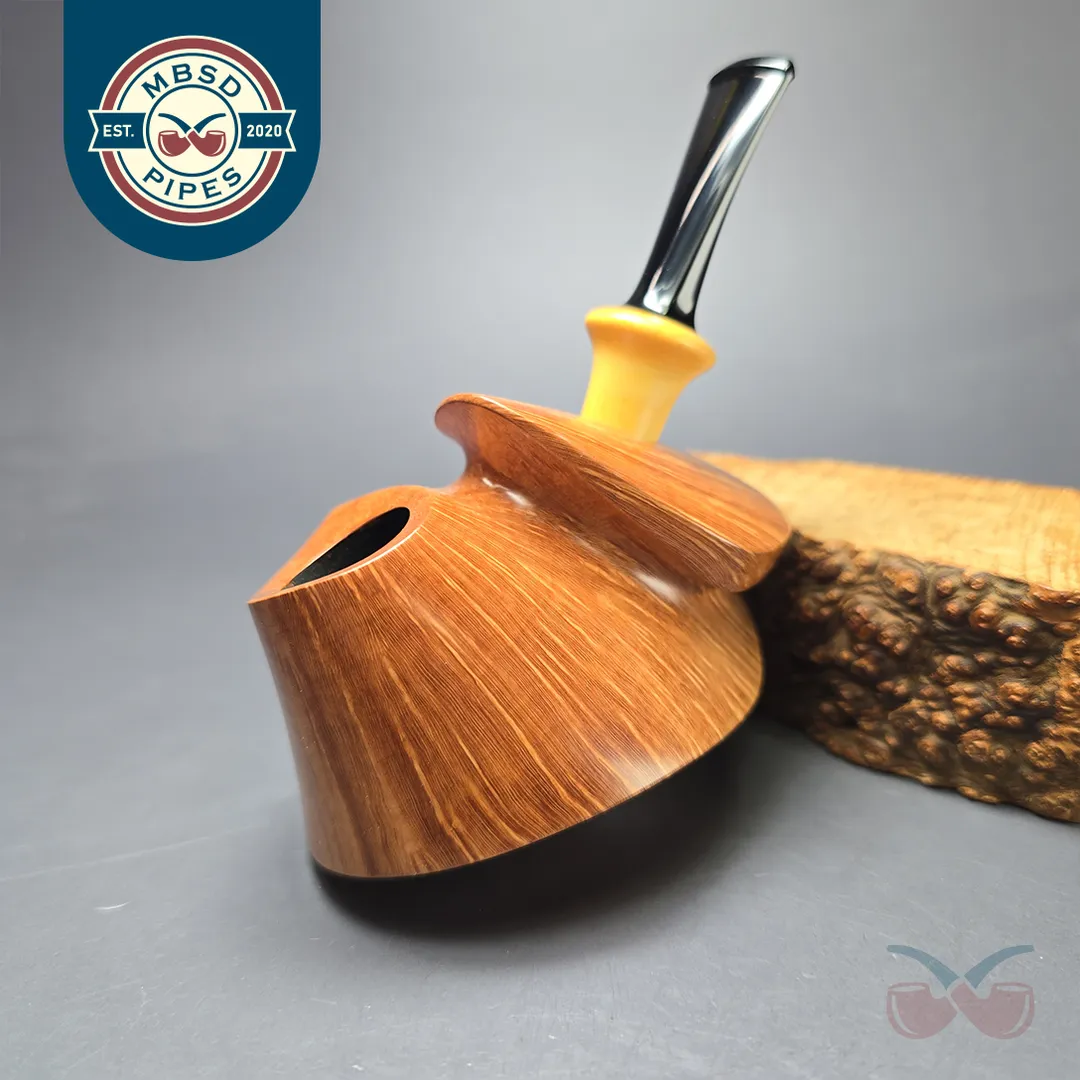
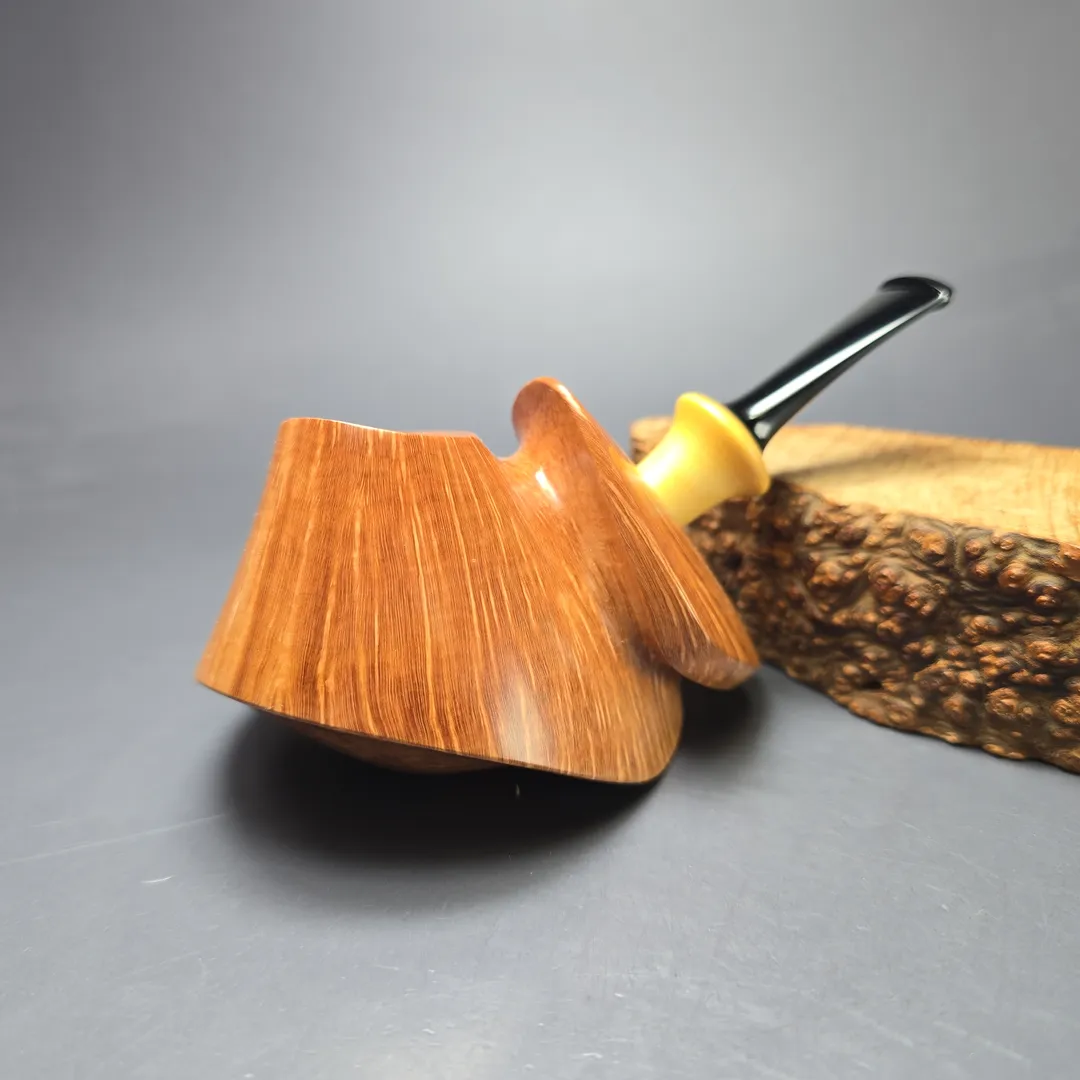
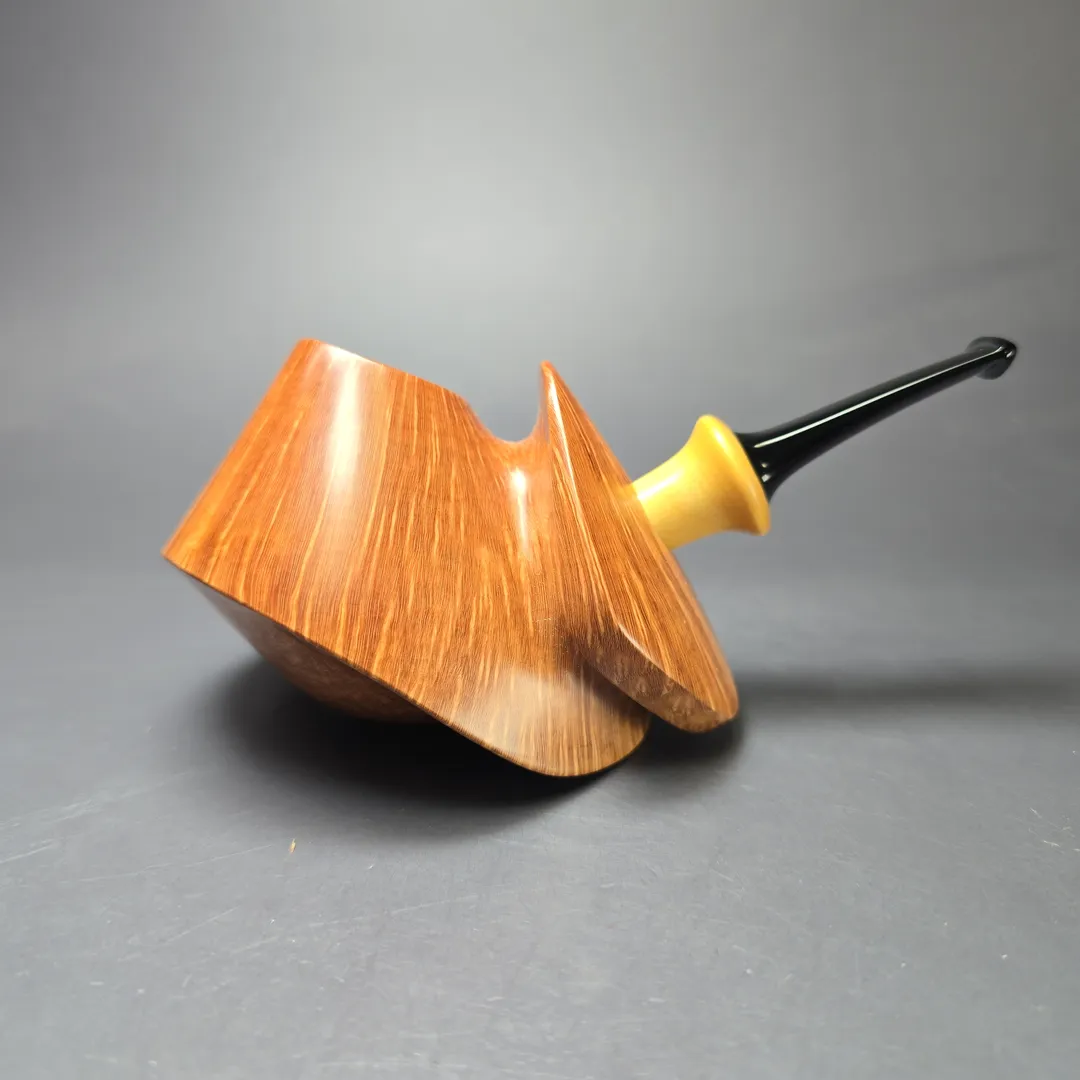
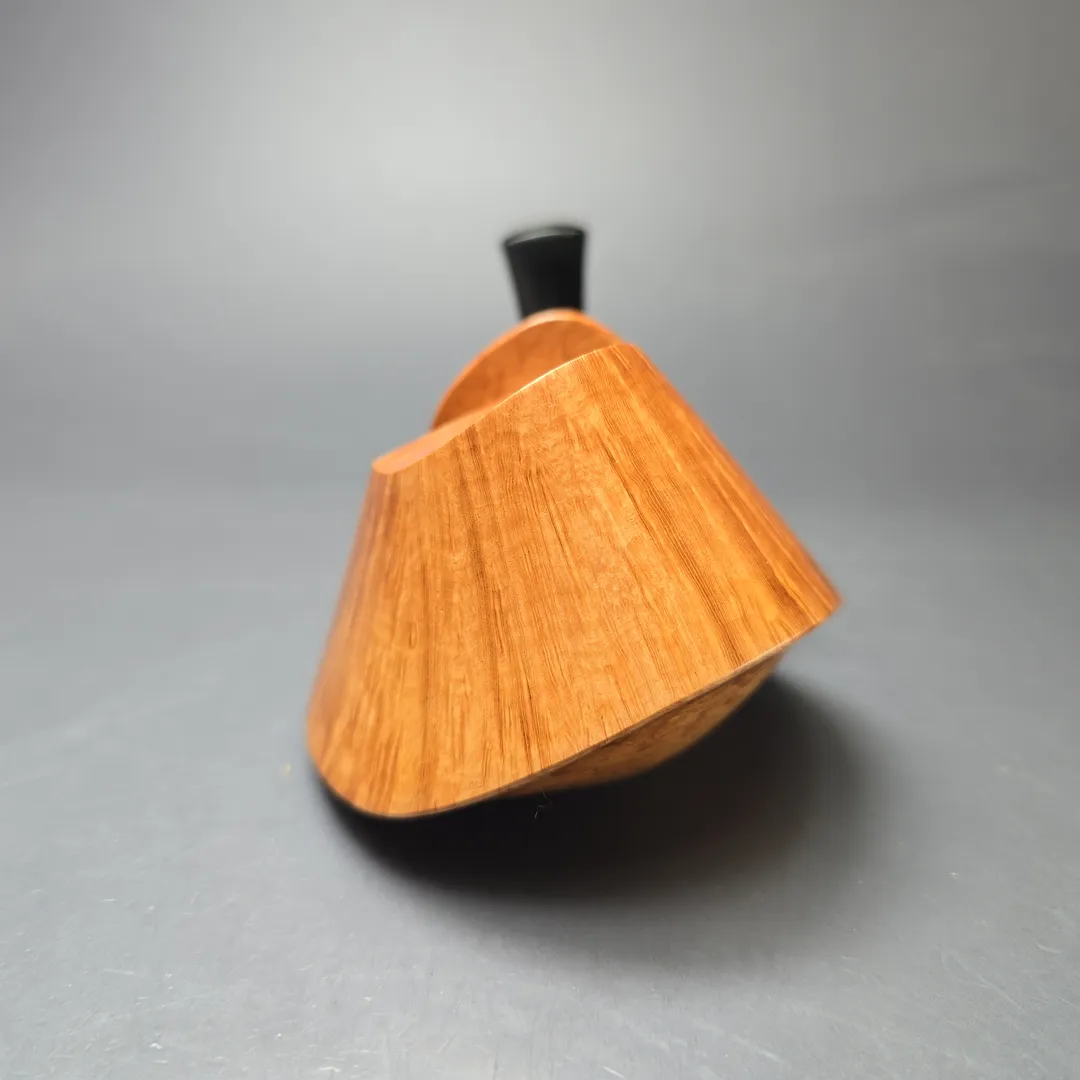
Madao 3000 Smooth Asymmetric Volcano w/ Boxwood Handmade Briar Pipe, New
$660.00
1 in stock
Please fill in the fields below with the shipping destination details in order to calculate the shipping cost.
Description
“Madao 3000” is a strange name for a pipe maker, but it is one, like “Le Nuvole” or “Il Cerchio,” that nonetheless carries with it a great deal of meaning. As the pipe making pseudonym adopted by Beijing-based artisan Wang Tieyuan, “Madao 3000” signifies a disposition and a design philosophy.
In the founding Confucian text The Doctrine of the Mean, for example, it is said that there are the “three hundred rules of ceremony” and “three thousand rules of conduct.” These numbers are not literal, instead symbolizing something else; that there are many rules one must follow in order to be virtuous, but that, given the constant flux of circumstance, it would be impossible specify or quantify every choice and decision an individual encounters on their path to virtue. In other words, “3000” is a metaphor for that which is infinite. “Madao,” on the other hand, is more tongue-in-cheek and self-deprecating, meaning something like “a worn out old man.”
Together, one might interpret such a name as “a worn out old man, nonetheless chasing the infinite.” How does one pursue the infinite? As far as pipe making goes, at least, Tieyuan’s answer is “asymmetry.” While he displays a prodigious talent for crafting the acorn, brandy, and Dublin shapes associated with post-war Danish pipe making, Tieyuan’s favorite shapes are those that go beyond established conventions and categories. Influenced equally by legendary pipe makers such as Kei’Ichi Gotoh, Hiroyuki Tokutomi, and Alex Florov, and the masterworks of classical Chinese painting and poetry, Tieyuan’s strives to make pipes that are abstract and freeform while also being balanced and harmonious. Instead of contrast stains or fanciful adornments, Tieyuan’s pipes are minimalist in dress, especially compared to his peers. When he does use accents, they are intended to serve as focal points rather than the pipe’s focus. If any one part of Tieyuan’s designs is to be its focus, it is its shaping: its elementary lines and figures; its interplay of symmetries and asymmetries; and its palpable senses of motion and rest.
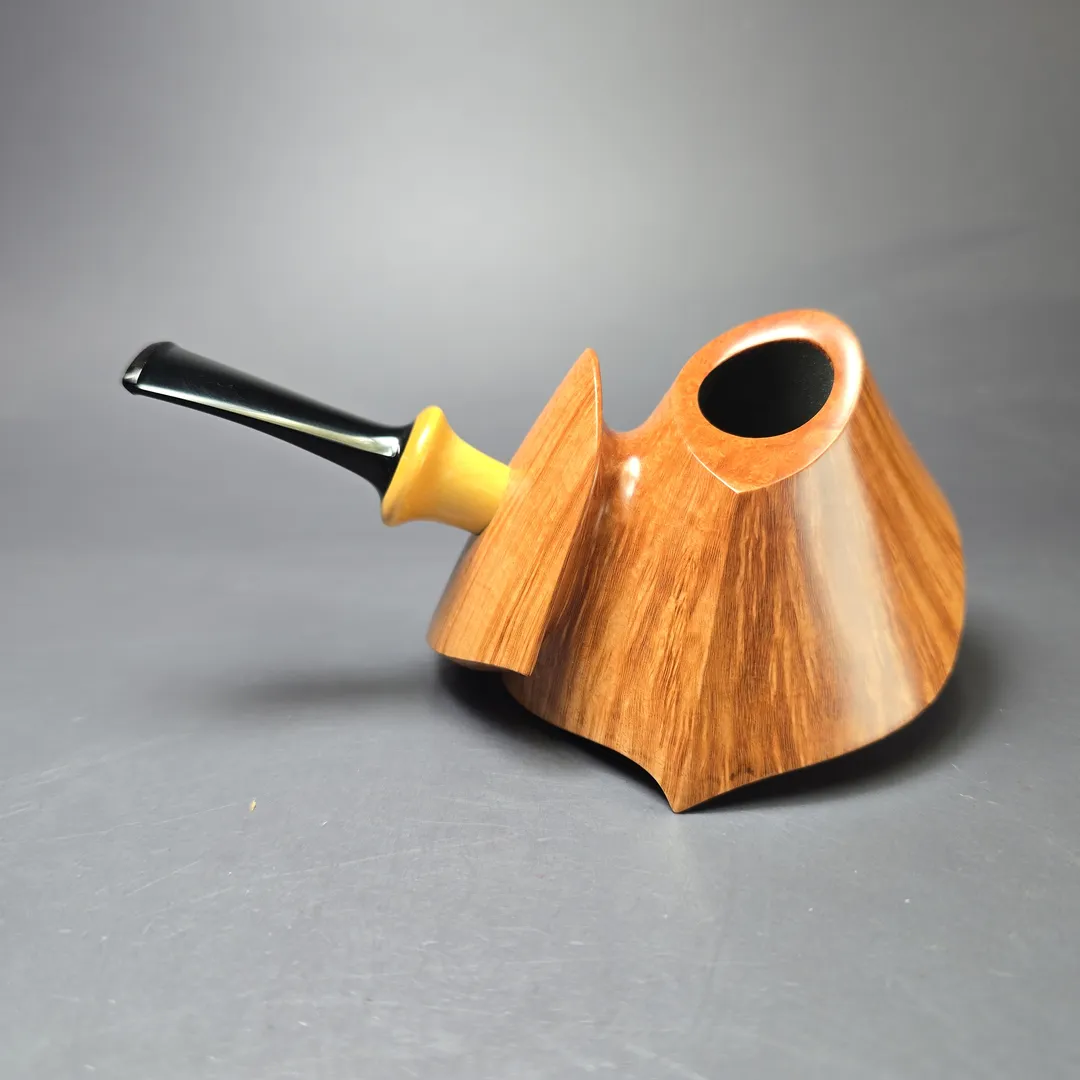
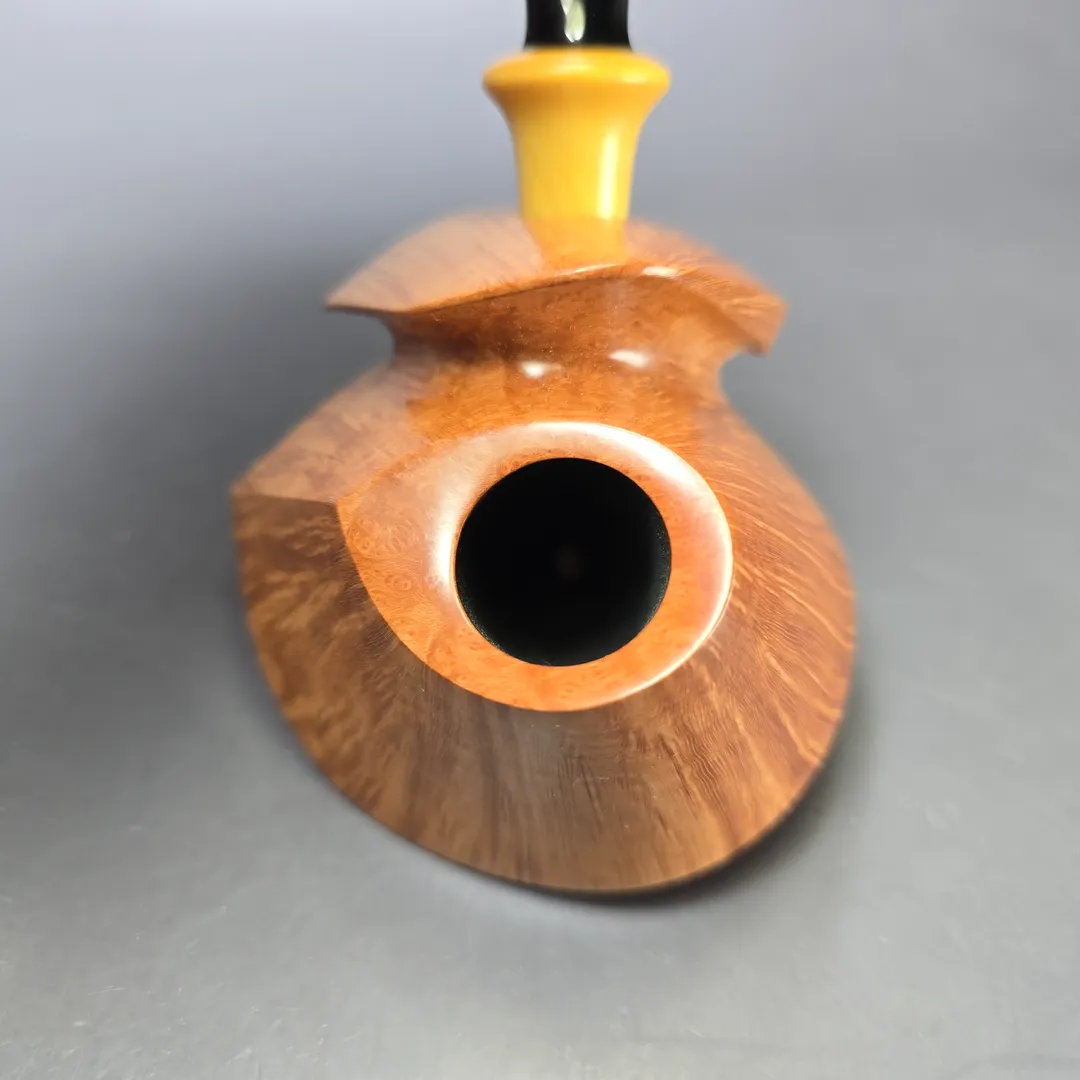
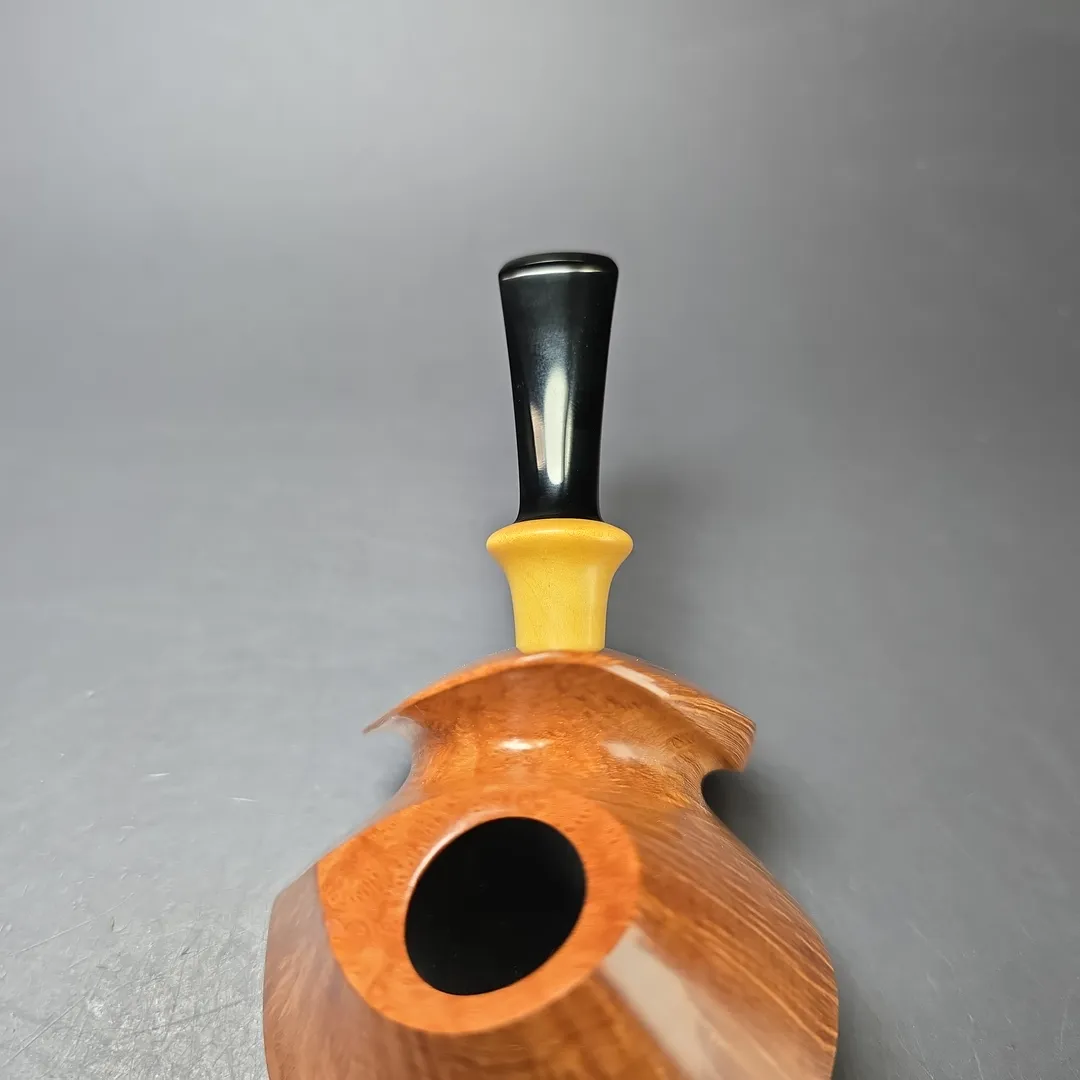
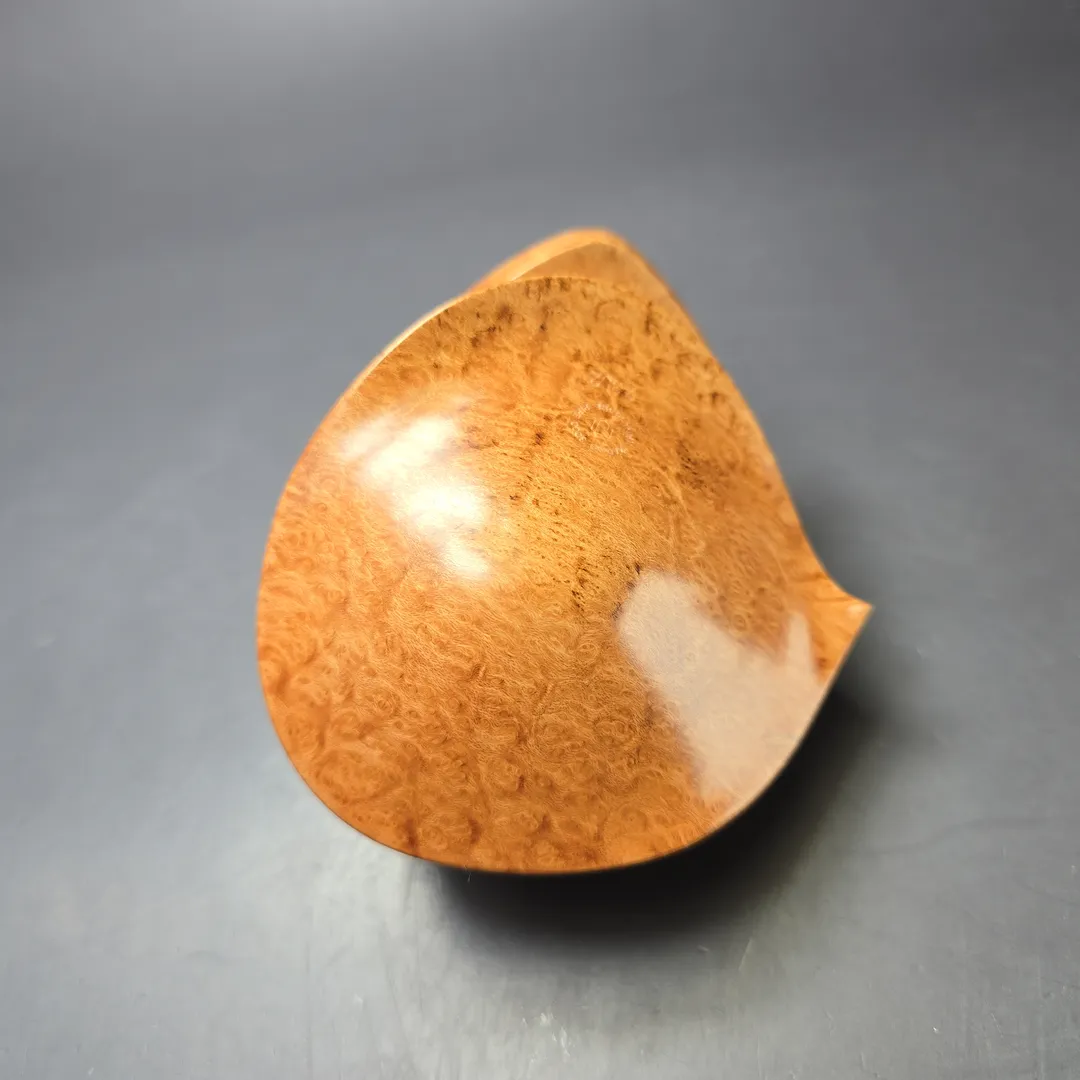
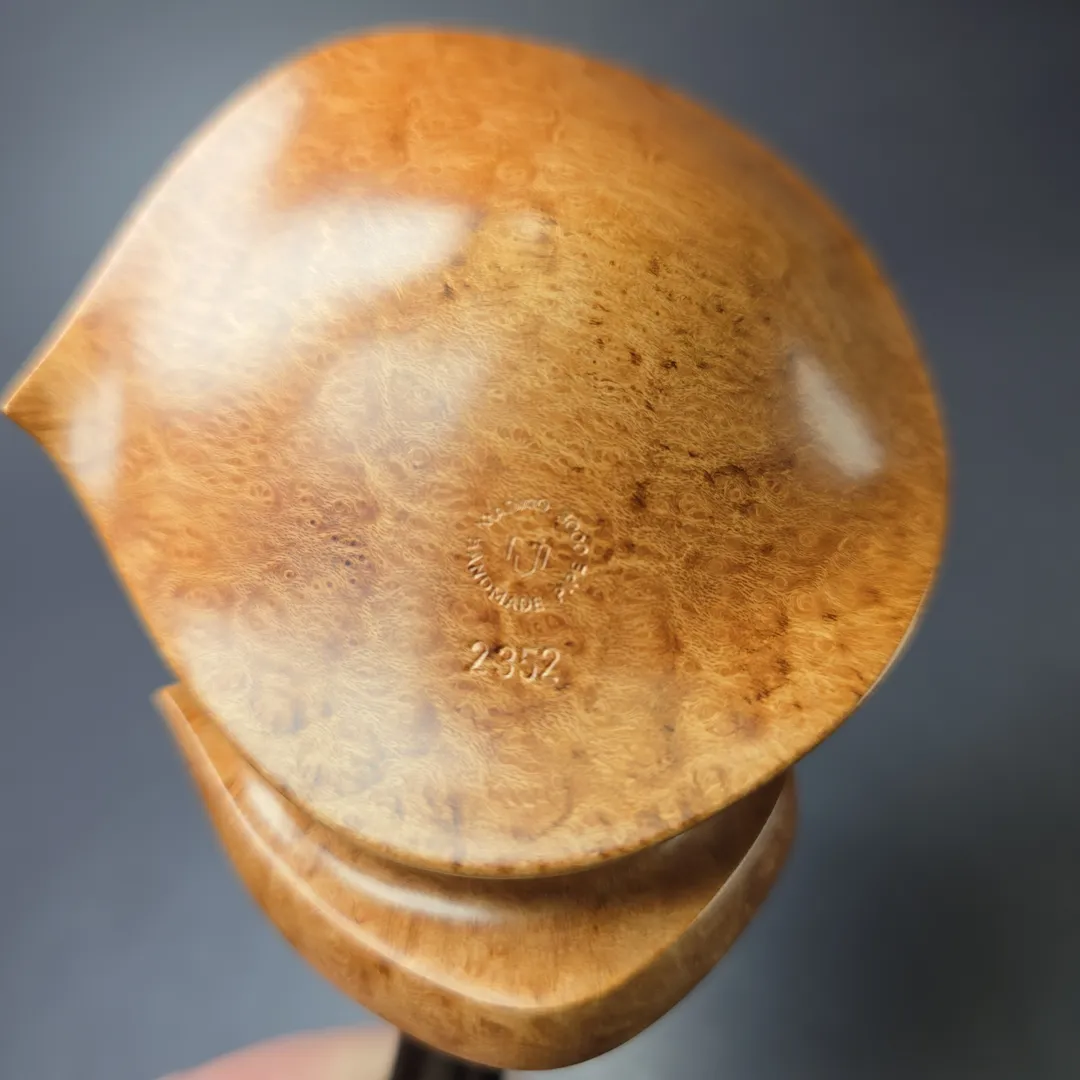
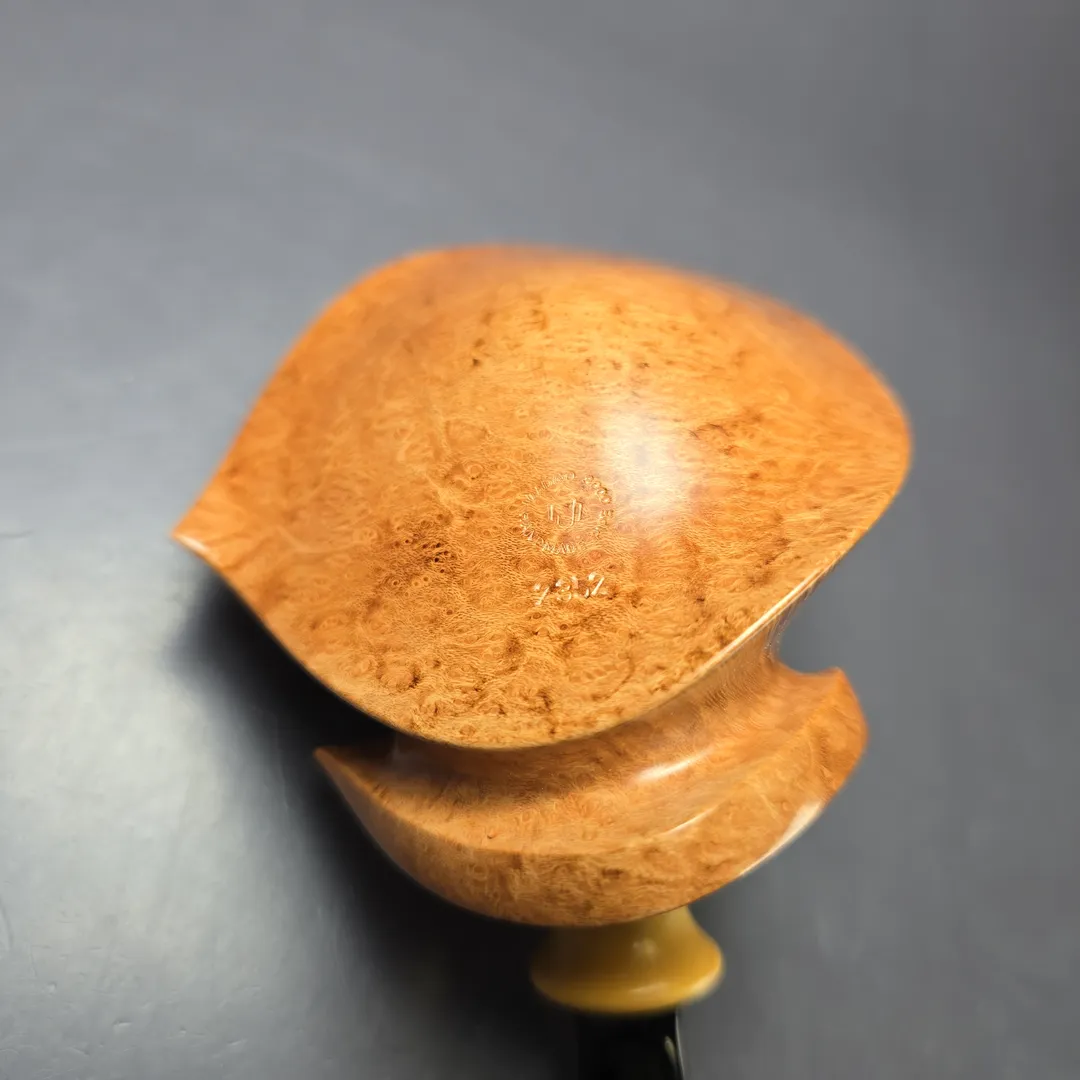
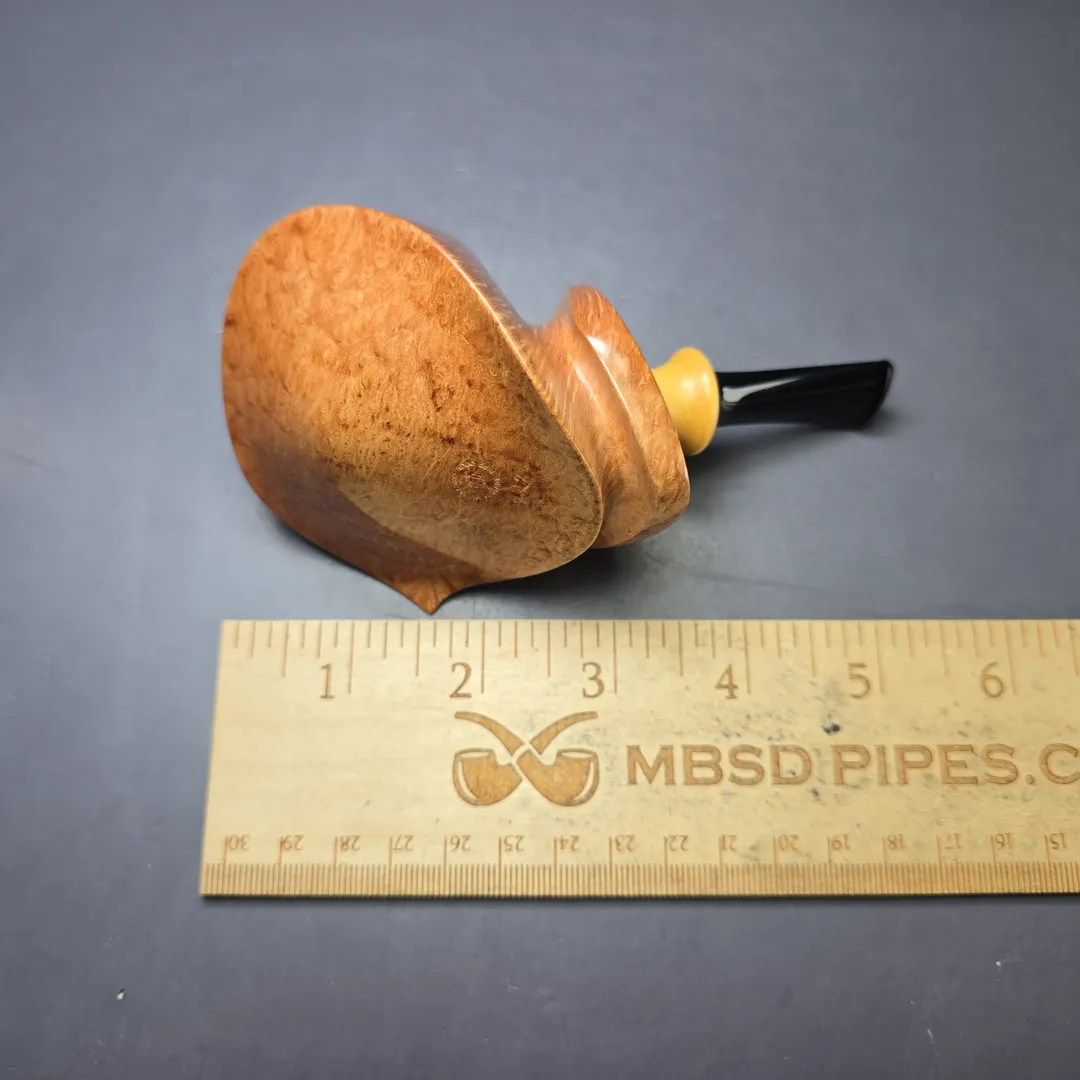
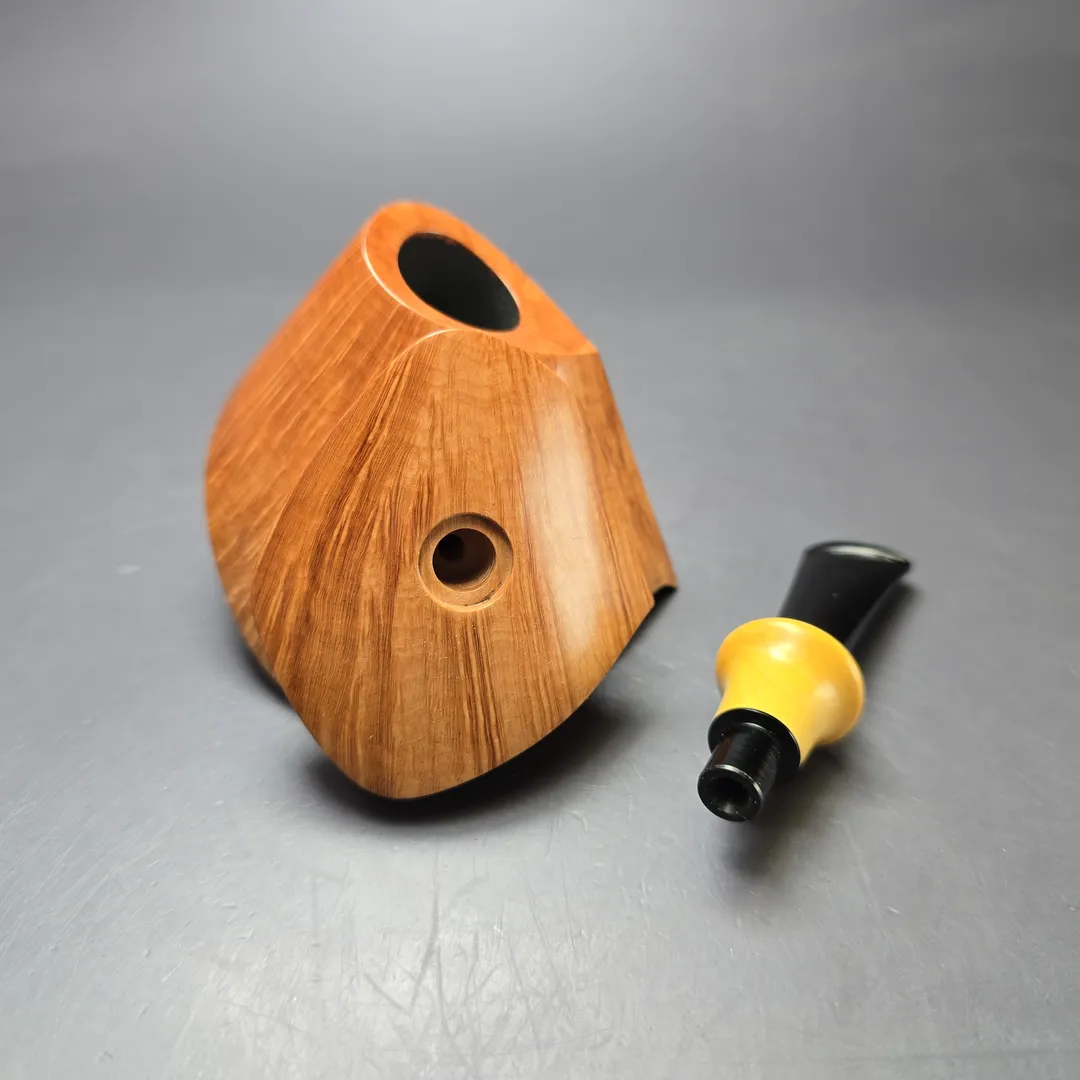
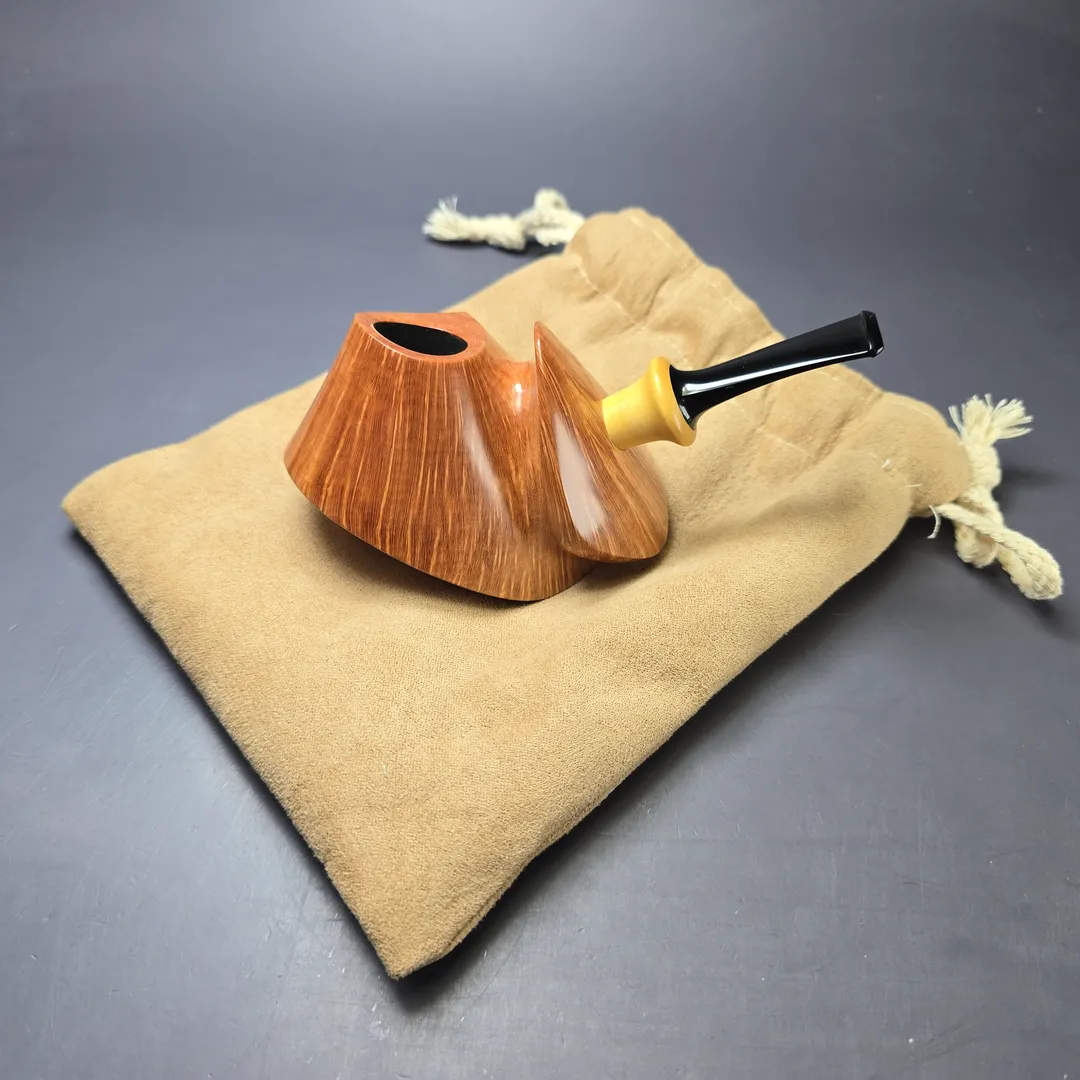
This particular pipe is one of the very few of Tieyuan’s pipes to have escaped the sandblasting cabinet. The reasons for this are twofold: Tieyuan’s standards for a smooth pipe are incredibly high, meaning that even a relatively small sandspot or whorl in the briar will not do; furthermore, as Tieyuan avoids contrast stains, leaving his smooth pipes with just a light, natural finishes, any cosmetic imperfections would be ostensibly “laid bare.” When the briar is right, however, a smooth will make it out of Tieyuan’s workshop, with its form on full display. Here we find Tieyuan in his element, as the volcano is one of his favorite shapes to work with. I would be remiss if I didn’t note the clear Tokutomi influence, though with a pipe as beautifully carved as this one, aspects like that become a second thought, if thought at all. As for the form itself, the incorporation of a teardrop rim is an excellent touch, with its tip continuing down the side of the bowl in the form of a ridge that breaks up the plane otherwise circling it. While this addition breaks the symmetry of the bowl, a drastic, wide flare at the shank end instead adds a dimension of symmetry in its mirroring of the bowl’s angles and curvature—right down to its warped, slightly bulging base.
Details:
Length: 5″ / 127.0mm
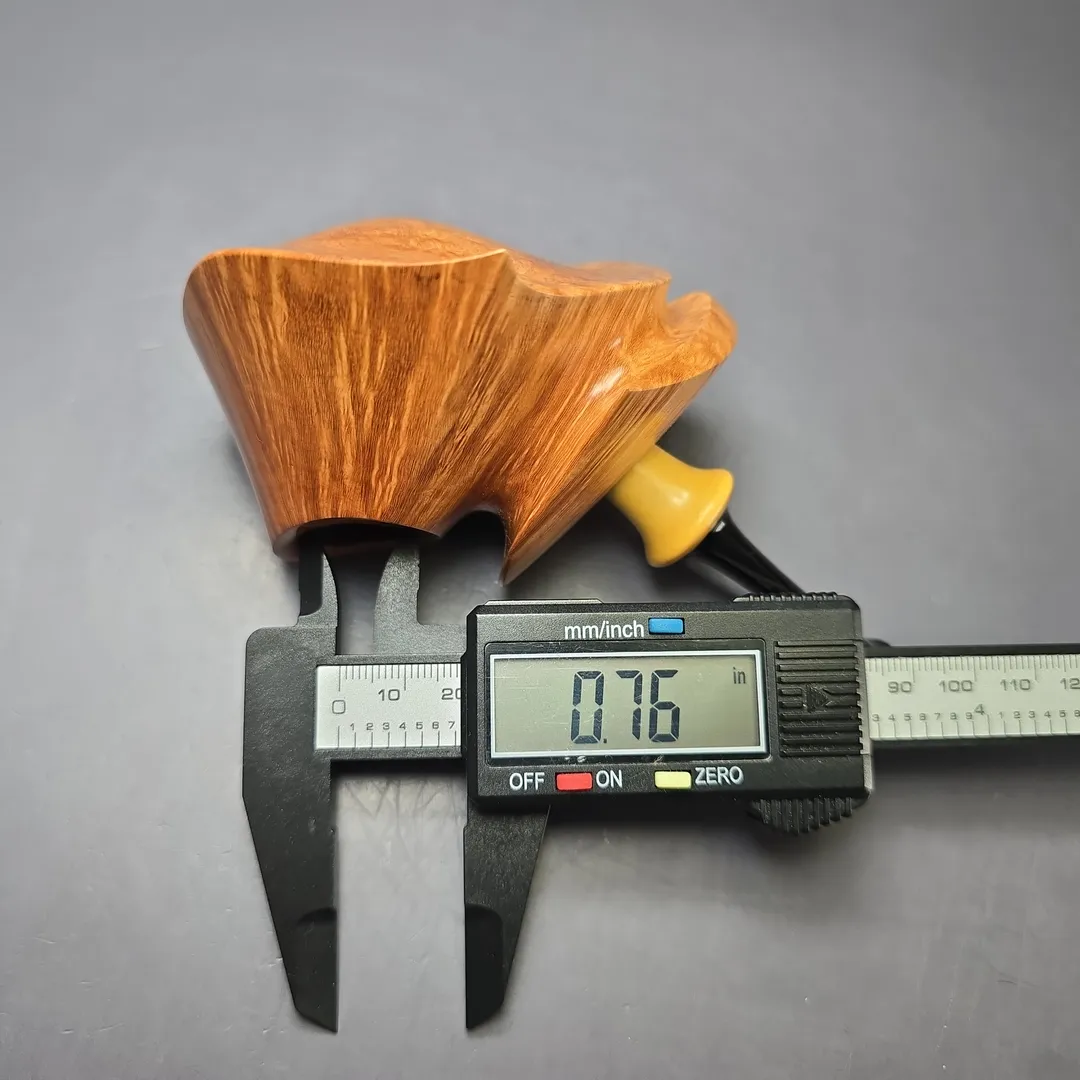
Bowl Width: 0.76 / 19.30mm
Bowl Depth: 1.49″ / 37.84mm
Weight: 3.7oz / 106g
Additional information
| Weight | 15 oz |
|---|
| Condition | New |
|---|